Your 2026 Handbook for Industrial PVC Flange Components
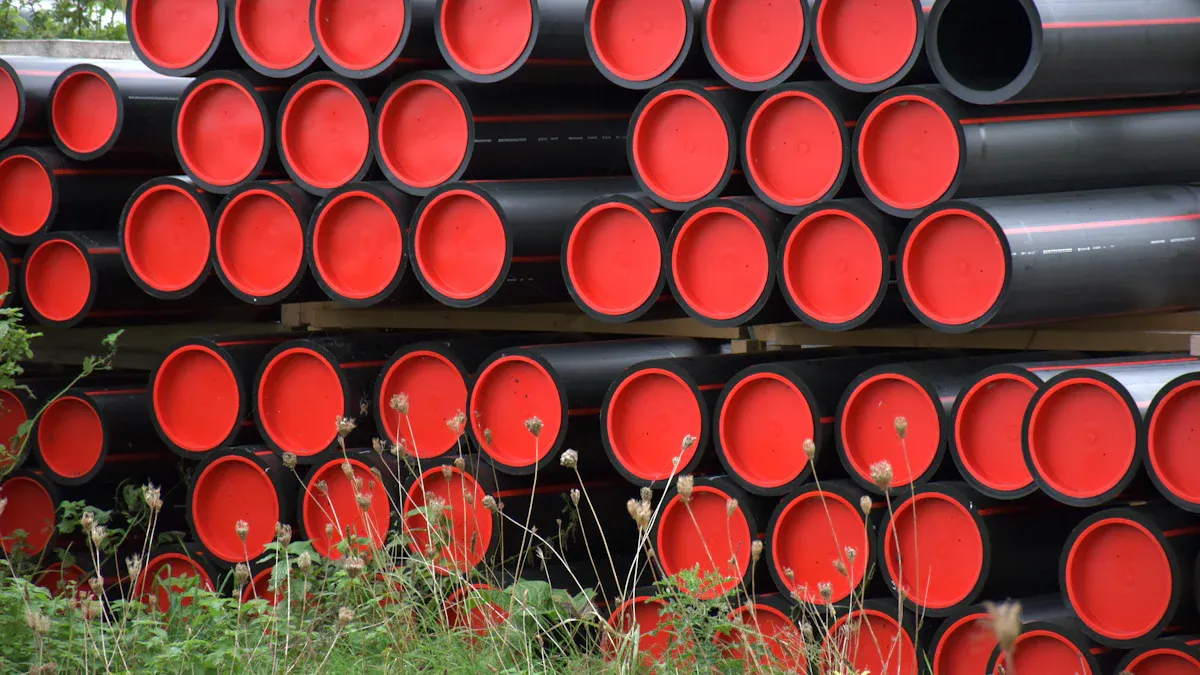
Selecting the correct industrial PVC flange components and unions is critical for the longevity and efficiency of any heavy-duty industrial project. The global PVC threaded flange market currently stands at a robust $780 million, with projections showing a Compound Annual Growth Rate (CAGR) of 5.8% through 2028. This growth underscores the increasing reliance on materials like chemical resistance PVC in various applications. This guide provides a comprehensive framework for making informed decisions in 2026, ensuring optimal performance and safety for your systems.
Key Takeaways
- Industrial PVC is strong and resists many chemicals. It works well in tough places and costs less than other materials.
- When choosing PVC parts, check if they can handle the chemicals, heat, and pressure. Make sure they meet safety rules.
- PVC unions help fix pipes easily. They let you take apart pipes without cutting them, which saves time.
- Install PVC parts correctly. Do not overtighten bolts or use wrong sealants. This stops leaks and damage.
- Check PVC parts often. Protect them from the sun. This helps them last a long time.
Understanding Industrial PVC for Heavy-Duty Applications
Key Characteristics of Industrial-Grade PVC
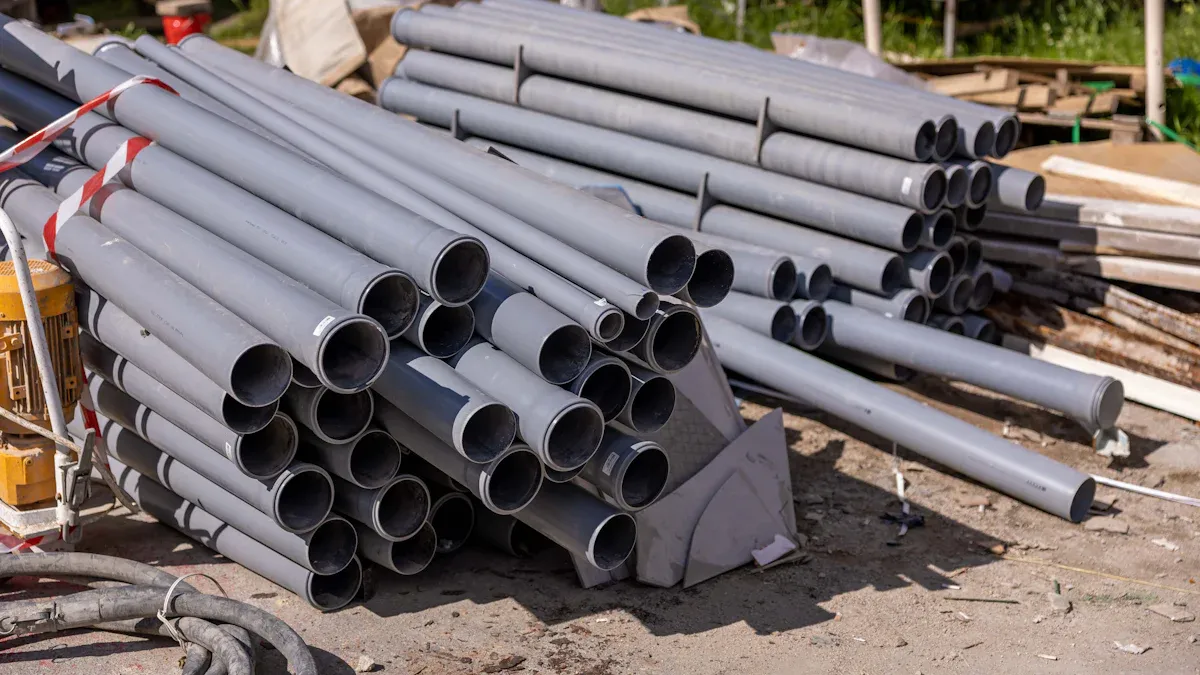
Industrial-grade PVC stands out for its robust material properties, making it suitable for demanding applications. This material exhibits excellent chemical resistance. It resists acids, alkalis, and many organic solvents. Industrial PVC performs well in environments exposed to moisture and a wide range of chemicals. Manufacturers design these components to withstand specific operational conditions.
| Characteristic | Standard UPVC Fittings | Special Formulations (Industrial/High-Temp) |
|---|---|---|
| Temperature Rating | 0°C to 60°C (32°F to 140°F) | Extended ranges (e.g., hot water systems, industrial processes) |
| Pressure Rating | Up to 150 psi | Higher ratings available for specialized industrial/commercial applications |
These ratings ensure the material maintains its integrity under various operational stresses.
Advantages of Industrial PVC in Harsh Environments
Industrial PVC offers significant advantages in harsh industrial settings, primarily due to its exceptional corrosion resistance and cost-efficiency. PVC pipe maintains durability and functionality in challenging chemical environments. This includes corrosive wastewater, acidic solutions, and alkaline substances. Chemical processing plants widely use it for transporting corrosive chemicals, acids, and caustic solutions. This minimizes leaks, spills, or contamination. PVC is an inert material. It does not react with most chemicals, acids, alkalis, or solvents, maintaining structural integrity and performance. The smooth, non-reactive surface of PVC pipe minimizes chemical reactions. This preserves the purity and integrity of conveyed substances.
Industrial PVC fittings are ideal for areas with moisture or chemical exposure. They are widely used in underground piping systems, sewage lines, and chemical drainage systems. In coastal areas, where salt air causes rapid corrosion in metals, PVC performs exceptionally well. This material’s resistance to rust and corrosion ensures consistent operation and minimal maintenance. An Industrial PVC flange, for example, provides long-term reliability and safety.
| Material | Cost-Efficiency |
|---|---|
| PVC | Significantly more affordable than PU, ideal for budget-sensitive applications. One of the most affordable polymers, widely available and easy to process, reducing manufacturing costs. |
| PU | More expensive than PVC, but justifies cost with superior performance in heavy-duty applications. |
| Both PVC and PU | Cost-effective compared to materials like metals or ceramics due to efficient mass production and minimal waste. |
PVC is known for its durability and long lifespan. It resists corrosion, impact, and extreme weather, lasting decades without significant wear. This reduces replacement costs and requires minimal maintenance, leading to long-term savings.
Selecting the Right Industrial PVC Flange Components
Choosing the correct industrial PVC flange components is paramount for system integrity and operational success. Engineers must consider various factors, including the specific application, environmental conditions, and material compatibility. This careful selection prevents costly failures and ensures long-term reliability.
Types of Industrial PVC Flanges and Their Applications
Industrial PVC flanges come in several configurations, each designed for specific pressure and application requirements. Understanding these types helps in making informed decisions for heavy-duty industrial projects.
| Type of Flange | Standards | Pressure Rating | Characteristics |
|---|---|---|---|
| PVC / CPVC pressure pipe flanges | Machined to ASME B16.5 Class 150 bolt pattern; ASTM D4024, D1784 (material), F437/F439 (fittings) | Approximately 150 psi at 73°F (decreases at higher temperatures) | Bolt pattern compatible with Class 150 steel flanges, but joint pressure limited by plastic material. Typically use flat-face flanges with full-face gaskets; RTJ facings are unsuitable. |
| Plastic piping systems (general) | Follow ANSI/ASME B16.5 Class 150 bolt pattern | Pressure ratings limited by the plastic material | Flanges physically mate with standard drilling. |
| Flat Face (FF) flanges | N/A | N/A | Typical for cast iron, ductile iron, and plastic to prevent overstressing brittle materials. |
These flanges are crucial for connecting pipes, valves, and equipment within a system. For instance, flat face flanges are often preferred for plastic piping systems. They prevent overstressing the material, which can occur with raised face flanges. The compatibility with ASME B16.5 Class 150 bolt patterns allows for integration with existing metal systems, offering flexibility in design.
Critical Selection Criteria for Industrial PVC Flanges
Selecting an industrial PVC flange requires a thorough evaluation of several critical factors. These factors ensure the component performs reliably under specific operational demands.
First, chemical compatibility is essential. Engineers must assess PVC’s compatibility with all chemicals involved in the process. Consulting detailed chemical resistance charts is critical. PVC should not be used with incompatible chemicals, such as Tetrahydrofuran, Acetone, Xylene, Methyl ethyl ketone (MEK), Alcohols, Ethers, Esters, or aromatic/chlorinated hydrocarbons. These substances can cause softening, swelling, reduction in tensile strength, or stress cracking.
Second, temperature and pressure ratings are paramount. While PVC offers economic advantages, it cannot handle high-temperature applications. Its strength and integrity decrease significantly at elevated temperatures. For more demanding conditions, CPVC provides superior chemical resistance and a higher heat distortion temperature. This makes CPVC suitable for both corrosive and high-temperature environments where PVC would fail. Testing PVC under specific operating conditions (temperature, pressure) is vital due to potential changes in chemical behavior.
Third, adherence to industry standards and certifications ensures product quality and safety. NSF/ANSI 14 is a crucial certification standard for industrial PVC flange selection. NSF International developed this standard. It evaluates plastic piping system components, including PVC, for physical performance, material safety, structural integrity, and labeling. This certification ensures products are tested and approved for various applications, including potable water systems and drain, waste, and vent (DWV) systems. Adhering to NSF 14 demonstrates compliance with regulatory and performance standards, ensuring reliability and safety for end-users. Reputable manufacturers often hold multiple international certifications, such as CE, NSF, SABs, GOST, WRAS, SIAA, and SKZ, indicating their commitment to quality.
Fourth, durability and long-term performance are key considerations. PVC fittings offer significant chemical resistance to a wide range of acids, alkalis, salts, and other aggressive substances. This prevents degradation, rust, or corrosion, ensuring long-term performance in harsh environments like chemical plants and wastewater treatment facilities. They also resist biological growth, making them suitable for clean systems and reducing replacement frequency. However, PVC has lower impact resistance compared to other materials, making it vulnerable to mechanical damage. Engineers must consider operating conditions and system design to mitigate these limitations. Routine inspections are necessary to check for signs of chemical absorption, such as swelling or reduction in tensile strength. Proper handling and storage, including protection from UV exposure, are also essential to maintain chemical resistance and mechanical properties.
Gasket and Bolting Considerations for Industrial PVC Flange Assemblies
Proper gasket and bolting practices are crucial for creating leak-free and durable industrial PVC flange assemblies. Incorrect procedures can lead to system failure and safety hazards.
When selecting gaskets, engineers typically choose full-face gaskets for plastic flanges. These gaskets distribute the compressive load evenly across the entire flange face, preventing localized stress that could crack the plastic. Materials like EPDM or Viton are common choices due to their chemical resistance and flexibility. Always ensure the gasket material is compatible with the conveyed fluid and the operating temperature.
Bolting procedures require careful attention. Overtightening bolts can easily damage plastic flanges, leading to cracks or deformation. Manufacturers provide specific torque specifications for their flanges. Following these guidelines is essential. Using a torque wrench ensures consistent and appropriate tightening. It is also advisable to tighten bolts in a star pattern, gradually increasing torque in several passes, to achieve uniform compression across the gasket. This method prevents uneven stress distribution and ensures a secure seal. Using washers under bolt heads and nuts helps distribute the load and protect the flange surface.
Proper care and maintenance, including correct installation to prevent cracking or over-belling, are crucial for the longevity of PVC piping. PVC piping requires more frequent support than steel piping (approximately half the allowable span) to maintain integrity and prevent damage from vibration. Using specially formulated solvent cement is critical for leak-free joints in PVC systems.
Exploring Industrial PVC Unions for System Flexibility
Industrial PVC unions offer crucial flexibility and ease of maintenance within piping systems. They provide a removable connection point, which simplifies repairs and modifications. This adaptability makes them indispensable in various industrial settings where system uptime and efficient servicing are critical.
Advantages and Applications of Industrial PVC Unions
Industrial PVC unions provide significant operational benefits, particularly in system maintenance and repair. They enable easy disassembly and maintenance. This allows repairs without cutting or replacing entire pipes. This feature is crucial for minimizing downtime and water loss in systems like water supply. A report by the Plumbing Manufacturers International (PMI) indicates nearly 80% of maintenance tasks are simplified by using pipe unions. They offer ease of installation and maintenance. Technicians can quickly disassemble and reassemble them to replace or repair pipeline sections without significant downtime. This is especially beneficial in industrial settings for operational efficiency.
PVC union fittings facilitate faster and safer repairs. They eliminate the need for cutting pipes or using glue. They simplify installation and maintenance. Technicians can quickly disassemble and replace parts without moving the entire pipe system. This reduces downtime. Their lightweight nature often permits single-person installation, lowering labor costs. Connections and disconnections can be done by hand. This removes the need for hazardous chemicals or open flames, increasing safety. Strong chemical resistance ensures a long service life in harsh environments. This leads to fewer replacements and reduced maintenance costs.
PVC unions provide significant operational flexibility across various industrial applications:
- Irrigation Systems: PVC unions enable quick disconnection and maintenance of irrigation lines. They do this without disrupting the entire system. This ensures efficient water distribution.
- Water Treatment: They facilitate the control of water supply to systems like filtration and storage tanks. Ease of maintenance is a key benefit.
- Water Distribution: These fittings allow for quick shut-off in emergencies. They also regulate pressure and flow rate within buildings or facilities.
- Construction and Plumbing: PVC unions provide adaptability for seamless integration of new sections or modifications to existing installations. This enhances efficiency in both residential and commercial settings.
PVC unions, particularly union-type valves, are valued for their exceptional chemical resistance, lightweight design, and ease of maintenance. Their adaptability allows for quick disconnection and service. This is crucial for efficient operations and minimizing downtime across various industries. These include agricultural irrigation, water treatment, and chemical processing.
Types of Industrial PVC Unions and Installation Methods
Industrial PVC unions primarily come in two main types: threaded and solvent weld. Each type has specific installation requirements to ensure a secure and leak-proof connection.
Threaded PVC Unions Threaded unions offer a mechanical connection. Installers can easily assemble and disassemble them. When installing threaded PVC unions, several best practices apply:
- Do Not Over-tighten: Finger tighten, then add one or two turns, but no more. Over-tightening can cause stress cracking, especially in smaller diameter fittings. Tapered threads increase strain.
- Use Specific Sealants: Do not use PTFE tape, which is intended for metal pipes. Avoid sealants that lubricate excessively. Instead, use a non-hardening sealant specifically designed for plastic fittings. This sealant must be compatible with plastics and should not encourage over-tightening.
- Consider Schedule 80 Nipples: Schedule 80 fittings are stronger. However, they do not prevent splitting from over-tightening. For threaded connections, use Schedule 80 PVC nipples with both Schedule 40 and 80 PVC fittings. Schedule 40 pipe nipples are not available due to compromised strength when threaded.
Solvent Weld PVC Unions Solvent welding creates a permanent, molecular bond between PVC components. This method is ideal for high-pressure or chemically aggressive systems. Solvent welding is a chemical process. It softens the surfaces of PVC pipe and fitting. This causes them to fuse into a single, continuous piece as the solvent evaporates. This creates a molecular bond. It ensures a strong, leak-proof connection with structural integrity. For industrial applications, such as underground piping, chemical transport, or commercial plumbing, solvent welding is the safer and more reliable choice compared to adhesive bonding. It is crucial to use proper ventilation, wear gloves, and allow sufficient curing time to ensure joint integrity. This minimizes the risk of leaks or failures.
Best practices for solvent welding include:
- Clean the surfaces thoroughly to remove dust, grease, or moisture.
- Dry-fit the pipe and fitting to check alignment and depth.
- Apply primer (if required) to soften and prepare the surfaces.
- Evenly apply solvent cement to both the pipe and fitting.
- Push and twist the pipe into the fitting quickly. Then hold it in place for 15–30 seconds.
- Allow sufficient curing time before pressurizing the system. Improper or rushed installation can compromise the bond. This can lead to future leaks or failures.
Proper pipe preparation is also critical for solvent welding:
- Proper Pipe Preparation: This involves several critical steps:
- Cutting: Use a pipe wrap to ensure a ‘squarely’ cut end. This provides maximum surface area, fusion, and joint strength.
- Deburring: Remove rough burrs from the inside edge using a deburring tool. This prevents blockages.
- Chamfering: Remove the sharp outside edge at a 10-15 degree angle (minimum 3/32 inches). This streamlines assembly and ensures leak-free joints.
- Cleaning: Clean off any dirt or grease from the pipe edge before applying primer and cement.
- Selecting the Right Primer and Cement: The choice depends on pipe material, size, and job conditions:
- Primer: Use primers like Oatey Industrial Grade Primer to remove contaminants and soften the pipe surface.
- Cement Type: Use specific cement for PVC, CPVC, or ABS pipes.
- Cement Viscosity: For larger pipes, use thicker viscosity cement:
- Medium-body cement for pipes up to six inches in diameter.
- Heavy-body cement for pipes over eight inches in diameter (e.g., Oatey heavy-duty cement for up to 12-inch pressure PVC, or extra heavy-duty for up to 24-inch pressure PVC).
Selection Factors for Industrial PVC Unions
Selecting the appropriate industrial PVC union requires careful consideration of several factors. These factors ensure compatibility, performance, and longevity within the system.
Industrial PVC unions are designed to provide a removable connection point in plumbing systems. They facilitate maintenance and repairs. These unions typically consist of two halves, a nut, and a gasket for sealing. When connecting PVC/CPVC pipes to different materials such as copper, PEX, or galvanized steel, specialized transition fittings are necessary. It is crucial to note that PVC and CPVC fittings are not interchangeable. This is due to their distinct chemical compositions and heat resistance properties.
Beyond material compatibility, engineers must evaluate the union’s pressure and temperature ratings. These ratings must align with the system’s operational parameters. Chemical resistance is another vital factor. The union material must withstand exposure to the specific fluids it will convey. Always consult chemical resistance charts to confirm suitability. Finally, consider the installation method. Choose between threaded or solvent weld unions based on the desired permanence of the connection and ease of future disassembly. Adhering to these selection criteria ensures the union performs reliably and safely in its intended application.
Installation Best Practices and Maintenance for Industrial PVC Components

Proper Installation Techniques for Industrial PVC Flanges and Unions
Correct installation of industrial PVC components is crucial for system longevity and performance. Engineers must follow precise steps to ensure leak-free and stable connections. First, carefully align the flanges and correctly position the gasket between them. Misalignment can lead to system instability and potential failures. Next, fasten flanges using a cross-pattern sequence to ensure even distribution of clamping force. This prevents warping and ensures a consistent seal. Utilize a torque wrench to adhere to manufacturer-specified torque figures. Over-tightening can distort the flange, while under-tightening may cause leaks. Double-check torque figures to confirm a proper seal. Prepare the pipe surface by cleaning it at least 12 inches from the end. Remove any defects that could compromise the gasket seal. Apply soap and water to the pipe and gasket face to aid installation. In freezing temperatures, use antifreeze to prevent gasket hardening. After applying fluid pressure, re-torque the bolts and fine-tune as needed to maintain a leak-free system.
Common Pitfalls to Avoid with Industrial PVC Components
Avoiding common installation errors is essential for the reliability of industrial PVC systems. Inadequate support and anchoring are frequent issues. Without proper support, pipes can sag, shift, or vibrate, leading to stress and premature failure. Sagging pipes cause pooling and uneven fluid distribution. Vibrations from machinery can result in cracks and leaks. Unanchored pipes move under pressure, increasing accident risks. Another common cause of failure is ‘over-belling,’ an installation defect where inserting the spigot too far causes direct contact with the PVC bell, leading to the bell splitting. This highlights the importance of precise fitting and adherence to manufacturer guidelines.
Routine Inspection and Maintenance Schedules for Longevity
Regular inspection and maintenance are vital for extending the service life of industrial PVC components. UV exposure can significantly impact PVC. UV radiation initiates degradation by breaking chemical bonds in the polymer, forming macroradicals. The PVC surface yellows to orange upon weathering. Degradation releases titanium dioxide (TiO2) from the PVC surface, resulting in chalking. Rigid PVC (uPVC) offers better resistance but remains susceptible to surface degradation. To mitigate these effects, use highly cross-linked PVC formulations. These have a tighter molecular structure, making it harder for UV rays to break down polymer chains. UV absorbers reduce direct UV penetration into PVC molecules. Hindered Amine Light Stabilizers (HALS) prevent chain scission and free radical formation. Antioxidants neutralize free radicals, slowing down oxidative degradation. For an industrial PVC flange in hot and arid climates, carbon black-enhanced UV-resistant PVC is recommended.
Future Trends and Innovations in Industrial PVC Components
The industrial PVC landscape constantly evolves. New technologies and material science breakthroughs drive this evolution. These advancements promise even greater performance and reliability for heavy-duty applications.
Advancements in Industrial PVC Material Science
Material science significantly enhances industrial PVC components. Manufacturers incorporate stabilizers, crosslinking agents, and specific functional monomers. These additions improve chemical resistance. Epoxy compounds, metal soaps, and phosphite compounds notably boost resistance to harsh chemicals. This extends material service life. Surface treatments also play a role. Plasma modification, chemical etching, and protective coatings enhance chemical resistance without changing bulk properties. Surface fluorination and silane treatments effectively improve resistance to organic solvents and corrosive chemicals. They form a protective barrier.
Copolymerization of acrylic monomers with other functional monomers creates materials with superior chemical resistance. Blending PVC with acrylic resins also significantly enhances chemical resistance. This combines PVC’s durability with acrylic polymers’ chemical stability. This improves resistance to acids, bases, solvents, and aggressive chemicals. Companies like LG Chem use proprietary multi-layer technology and specialized PVC formulations. These include novel stabilizer packages and surface modification techniques. They enhance resistance to oxidizing agents and UV degradation. Rohm & Haas developed advanced acrylic resin formulations with enhanced chemical resistance through proprietary cross-linking technology.
Innovations also focus on strength and durability. Environmentally sustainable PVC composites use waste non-metallic printed circuit board (NMPCB) with interfacial agents. These composites improve tensile strength. For example, with specific agents like ATPS, tensile strength increased by 21.50% for 10 wt.% NMPCB composites. This approaches the strength of neat PVC. Interfacial agents also improve Young’s modulus and elongation at break. This enhances filler dispersion and interfacial adhesion. PVC-fiberglass composites combine the strengths of both materials. They create pipes with improved characteristics. Researchers integrate nanotechnology, specifically graphene, into these composites. This significantly enhances resistance and stiffness under axial compression.
Smart Monitoring and Integration for Industrial PVC Systems
Smart monitoring systems represent a significant leap for industrial PVC components. These systems integrate sensors and IoT technology. They alert operators about potential failures before they occur. This proactive approach minimizes costly downtime. Smart lines provide real-time data. This allows for predictive maintenance. Operators can address issues before they become critical. This ensures continuous operation and enhances system reliability.
Engineers and project managers confidently select industrial PVC flanges and unions. They carefully consider material properties, application demands, and installation best practices. This diligent process ensures robust, reliable, and long-lasting performance for critical infrastructure. These essential components will support heavy-duty industrial projects effectively in 2026 and beyond.
FAQ
What makes industrial PVC suitable for heavy-duty applications?
Industrial PVC offers excellent chemical resistance. It withstands acids, alkalis, and many solvents. This material also provides cost-efficiency compared to metals. Its durability ensures long-term performance in harsh environments.
What are the most important factors when selecting industrial PVC flanges?
Engineers must consider chemical compatibility, temperature, and pressure ratings. Adherence to industry standards like NSF/ANSI 14 is also crucial. Durability and long-term performance are key for reliable operation.
How do industrial PVC unions improve system flexibility?
Industrial PVC unions provide removable connection points. They simplify maintenance and repairs. This feature allows for quick disassembly without cutting pipes. Unions minimize downtime and enhance operational efficiency.
What common installation errors should one avoid with PVC components?
Avoid inadequate support and anchoring. These can cause pipes to sag or shift. Also, do not “over-bell” during installation. This defect can lead to bell splitting. Always follow manufacturer guidelines for proper fitting.
How can one extend the lifespan of industrial PVC components?
Regular inspection and maintenance are vital. Protect components from UV exposure. Use highly cross-linked PVC formulations or UV absorbers. Carbon black-enhanced PVC is recommended for hot, arid climates.