Introduction
Across municipal networks, commercial buildings, and residential plumbing, material choice has a direct impact on water quality, system lifespan, and maintenance costs. UPVC pipe fittings have become a practical standard because they resist corrosion, support reliable leak-tight connections, and maintain smooth internal flow over time. This article explains the performance advantages that make UPVC a strong fit for modern water supply systems, including durability, chemical stability, installation efficiency, and long-term economic value. It also sets these benefits in the context of current infrastructure needs, helping readers understand why UPVC fittings are increasingly specified in new projects and upgrades.
Why Choose UPVC Pipe Fittings for Modern Water Supply
Unplasticized Polyvinyl Chloride (UPVC) has firmly established itself as a foundational material in modern water supply engineering. As municipalities and private developers transition away from legacy metallic piping, UPVC pipe fittings offer an optimized balance of structural rigidity, hydraulic efficiency, and chemical neutrality. Engineered for an operational design life of 50 to 100 years under standard parameters, these fittings address the critical need for sustainable, low-maintenance fluid conveyance networks.
Fit for current water infrastructure
Modernizing aging water infrastructure requires materials that mitigate the pervasive issue of non-revenue water (NRW) loss, which historically plagues metallic networks through corrosion-induced leaks. UPVC pipe fittings provide a monolithic, leak-proof network when properly solvent-welded or gasketed. By integrating UPVC components, utility engineers can routinely reduce NRW loss from a global average of 30% down to below 5% in optimized distribution grids, drastically improving municipal water conservation metrics.
Performance in municipal, commercial, and residential use
The scalability of UPVC allows it to serve highly diverse operational environments. In municipal mains, large-diameter UPVC fittings (ranging from 110mm to over 600mm) handle high-volume distribution under constant hydrostatic stress. Conversely, commercial and residential applications rely on smaller fittings (15mm to 50mm) for precise, high-velocity potable water delivery. Across these sectors, the rigid, unplasticized nature of the material ensures that fittings do not deform under standard soil loads or internal water pressure, maintaining systemic integrity from the treatment plant to the end-user’s tap.
Technical Characteristics of UPVC Pipe Fittings
The mechanical and hydraulic capabilities of UPVC pipe fittings are directly tied to their specific polymer formulation. Unlike standard PVC, UPVC contains no added plasticizers such as phthalates, resulting in a highly rigid, robust structure capable of withstanding significant internal and external stresses.
Material composition and core properties
At the core of UPVC’s structural performance is a high-density, unplasticized polymer matrix. Standard UPVC fittings exhibit a density between 1.35 and 1.45 g/cm³ and a robust tensile strength typically ranging from 50 to 55 MPa. This high tensile yield strength allows the fittings to withstand substantial hydrostatic pressure without experiencing the ductile expansion common in more flexible polymers. Furthermore, the absence of plasticizers ensures that the material does not leach volatile organic compounds (VOCs) into the water stream, preserving potable water purity.
Corrosion resistance, flow efficiency, and chemical stability
A key engineering advantage of UPVC is its outstanding hydraulic efficiency. The internal surface of a UPVC fitting is exceptionally smooth, yielding a Hazen-Williams C-factor of 150. This low friction coefficient minimizes pressure drop across complex fitting geometries—such as 90-degree elbows and tees—thereby reducing the energy required for municipal pumping. Additionally, UPVC is chemically inert to a broad spectrum of acids, alkalis, and salts, granting it total immunity to galvanic corrosion and scaling, which rapidly degrade ferrous materials.
Operating limits and application conditions
Despite its strengths, UPVC operates within strict thermal boundaries. The material is optimal for cold water conveyance, with a maximum continuous operating temperature of 60°C (140°F). As fluid temperature increases, the pressure-bearing capacity of the UPVC fitting decreases proportionally. Engineers must apply rigorous derating factors to ensure system safety.
| Operating Temperature (°C) | Operating Temperature (°F) | Pressure Derating Factor |
|---|---|---|
| 20°C | 68°F | 1.00 |
| 30°C | 86°F | 0.80 |
| 40°C | 104°F | 0.58 |
| 50°C | 122°F | 0.39 |
| 60°C | 140°F | 0.22 |
UPVC Pipe Fittings vs. Metal, CPVC, and Other Options
Selecting the appropriate fitting material requires a comparative analysis of UPVC against alternative polymers and traditional metals. While each material serves specific niches in plumbing and municipal engineering, UPVC often emerges as the most cost-effective and durable option for ambient-temperature fluid conveyance.
Key comparison criteria
When evaluating UPVC against Chlorinated Polyvinyl Chloride (CPVC), Copper, and Cast Iron, engineers must weigh thermal expansion, installation complexity, and upfront procurement costs. UPVC has a linear coefficient of thermal expansion of approximately 5 x 10^-5 /°C, which is higher than metal but manageable with proper expansion joints. Unlike copper, which requires skilled brazing or soldering, and cast iron, which demands heavy lifting equipment and mechanical joints, UPVC utilizes rapid solvent cement welding. This significantly reduces labor costs and accelerates project timelines. However, UPVC cannot match CPVC or copper in elevated temperature applications, clearly delineating its use case for cold and ambient water systems.
Comparison table for cost, durability, and performance
The following table highlights the critical comparative metrics that drive specification decisions in commercial and municipal water system designs:
| Material | Max Operating Temp | Tensile Strength (MPa) | Relative Material Cost | Primary Application |
|---|---|---|---|---|
| UPVC | 60°C (140°F) | 50 – 55 | Baseline (1.0x) | Cold potable water, irrigation, drainage |
| CPVC | 93°C (200°F) | 50 – 55 | 1.3x – 1.5x | Hot water distribution, industrial chemicals |
| Copper | 150°C+ (300°F+) | 210 – 220 | 3.0x – 4.0x | High-temp potable water, HVAC systems |
| Cast Iron | 100°C+ (212°F+) | 150 – 200 | 2.5x – 3.0x | Heavy-duty municipal mains, sanitary soil lines |
Procurement, Compliance, and Installation Considerations
Deploying UPVC pipe fittings at scale necessitates stringent adherence to procurement standards and installation protocols. System failures in UPVC networks are rarely due to material defects; rather, they stem from improper specification, substandard manufacturing, or flawed joining techniques.
Certifications, testing, and manufacturing quality
Procurement specialists must demand rigorous certification to guarantee manufacturing quality. For potable water systems, fittings must comply with ISO 1452 (Plastics piping systems for water supply) and carry NSF/ANSI 61 certification to verify non-toxicity. Furthermore, dimensional accuracy is governed by standards such as ASTM D2466 for Schedule 40 and ASTM D2467 for Schedule 80 fittings. Top-tier manufacturers maintain an Acceptable Quality Limit (AQL) of strictly <0.1% for dimensional deviations, ensuring that socket tolerances are tight enough to achieve optimal capillary action during solvent welding.
Installation practices to protect system performance
Installation practices heavily dictate the lifecycle performance of UPVC pipe fittings. Solvent cement welding remains the standard for diameters up to 110mm. This process requires thorough deburring, the application of an ASTM F656 compliant primer, and the use of an ASTM D2564 compliant solvent cement. Crucially, the system must be allowed adequate curing time—typically 24 hours for systems operating at or above 60 psi—before hydrostatic testing. For larger municipal mains exceeding 110mm, elastomeric ring seal (gasketed) joints or flanged connections are preferred to accommodate minor ground settling and thermal expansion.
Regional standards, temperature limits, and pressure ratings
Global specification requires navigating different regional sizing conventions and pressure ratings. In North America, UPVC fittings are typically specified by Iron Pipe Size (IPS) under Schedule 40 (standard pressure) or Schedule 80 (high pressure). In contrast, European and Asian markets predominantly utilize the Standard Dimension Ratio (SDR) and Nominal Pressure (PN) systems. For instance, an SDR 11 fitting correlates to a PN16 rating, meaning it is certified for 16 bar (232 psi) at 20°C. Engineers must cross-reference these regional standards against expected peak surge pressures to prevent catastrophic blowout failures.
How to Specify UPVC Pipe Fittings for Long-Term Value
Specifying UPVC pipe fittings is a strategic exercise in maximizing long-term infrastructure value. By aligning the material’s inherent strengths with the precise hydraulic and environmental demands of the project, engineers can deliver highly resilient fluid conveyance networks.
When UPVC is the right choice
UPVC is definitively the right choice for applications where fluid temperatures remain consistently below 60°C and chemical neutrality is paramount. This encompasses municipal potable water distribution, large-scale agricultural irrigation, chilled water lines in HVAC systems, and industrial chemical dosing lines handling corrosive ambient-temperature fluids. In these environments, the capital expenditure (CapEx) savings are immediately apparent, while the operational expenditure (OpEx) benefits accumulate over time due to the material’s C-factor of 150, which drastically lowers the electrical load on system pumps.
Balancing cost, reliability, and lifecycle performance
Ultimately, the specification of UPVC pipe fittings hinges on the Total Cost of Ownership (TCO). While UPVC material costs are roughly 30% to 40% lower than CPVC and up to 70% lower than copper, the true value is realized in its 50-plus year lifecycle. By eliminating the risks of tuberculation, scaling, and galvanic corrosion, UPVC minimizes the need for routine maintenance and emergency interventions. When procured from certified manufacturers and installed according to rigorous engineering protocols, UPVC pipe fittings provide a highly predictable, secure, and economically optimized foundation for modern water supply systems.
Key Takeaways
- The most important conclusions and rationale for UPVC Pipe Fittings
- Specs, compliance, and risk checks worth validating before you commit
- Practical next steps and caveats readers can apply immediately
Frequently Asked Questions
Why are UPVC pipe fittings preferred for modern water supply systems?
They resist corrosion, keep smooth internal flow, and create reliable leak-tight joints, helping cut maintenance and water loss in cold-water networks.
Are UPVC fittings suitable for hot water lines?
Not usually. UPVC is best for cold water and should run continuously at no more than 60°C; for hotter systems, CPVC is a better choice.
How do UPVC fittings compare with metal fittings?
UPVC will not rust or scale, is lighter to install, and usually costs less overall, especially in municipal, residential, and irrigation projects.
What types of UPVC fittings are commonly used in water systems?
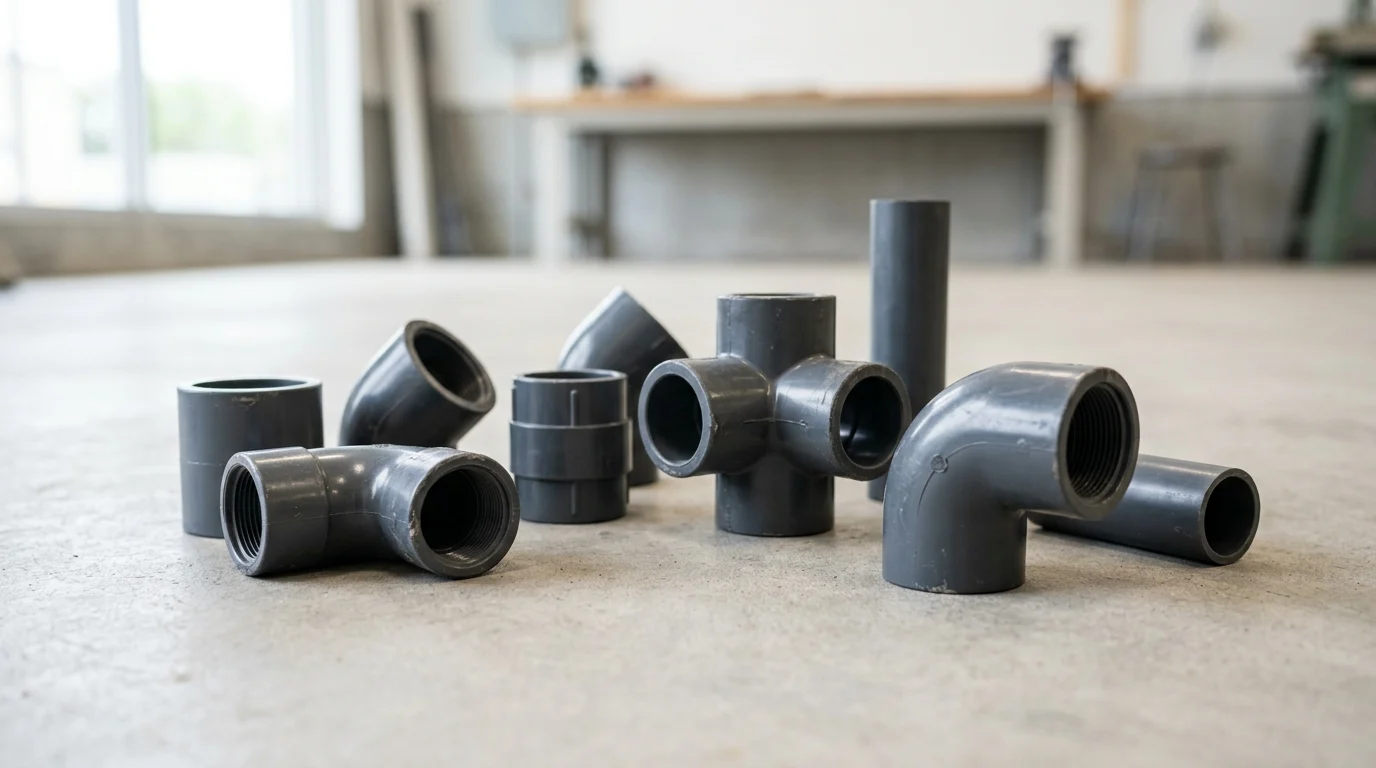
Typical options include elbows, tees, couplings, unions, reducers, adaptors, and plugs for standard and threaded pipe connections.
Can Donsen supply UPVC fittings for export projects?
Yes. Donsen manufactures plastic piping and valve products in China and supports residential, commercial, and irrigation buyers in more than 100 countries.