Why PPR Pipes Are the Preferred Choice for Underfloor Heating Systems
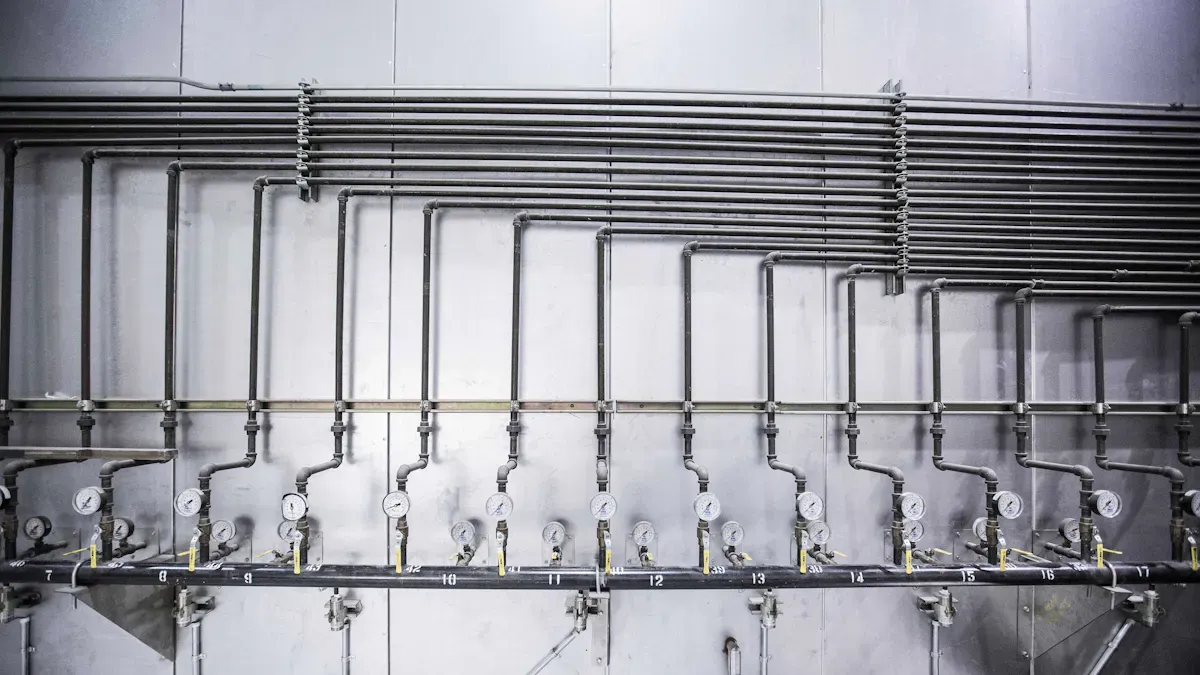
PERT pipes provide exceptional efficiency and reliability for underfloor heating systems. Their high thermal stability and low thermal conductivity ensure consistent room temperatures. Additionally, their flexibility allows for easy installation, minimizing potential leak points. Choosing PPR for underfloor heating, along with PERT floor heating pipe, leads to long-term savings and significant environmental benefits. The integration of PERT pipe and PPR pipe enhances the overall performance of underfloor heating system components, making them an ideal choice for modern heating solutions.
Key Takeaways
- PPR pipes provide excellent durability, lasting up to 50 years, making them a reliable choice for underfloor heating systems.
- Their lightweight design simplifies installation, reducing labor costs and project time significantly.
- PPR pipes enhance energy efficiency, leading to lower energy bills and a smaller environmental footprint.
Temperature Adaptability
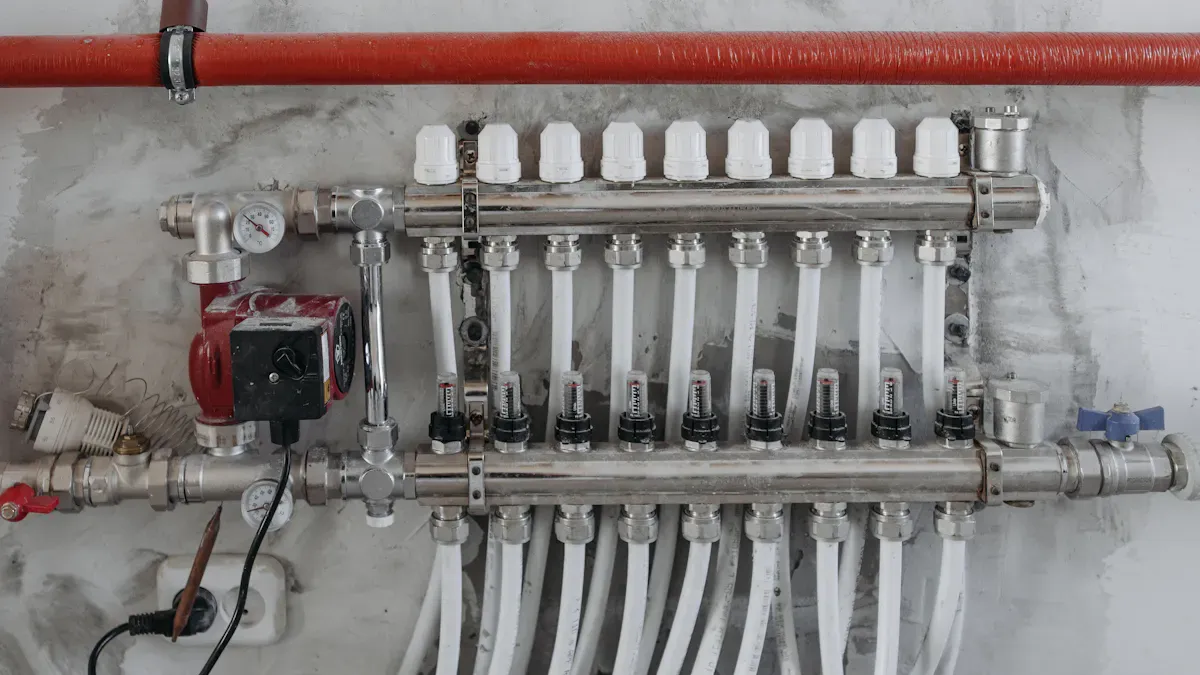
PPR pipes exhibit remarkable temperature adaptability, making them an excellent choice for underfloor heating systems. Their ability to handle a wide range of temperatures ensures efficient heating, regardless of external conditions.
- PPR pipes can operate safely at temperatures up to 95°C (203°F) for extended periods. This capability makes them suitable for both hot and cold water distribution systems.
- They can tolerate short-term peaks at higher temperatures, which is crucial during sudden heating demands.
In various climates, PPR pipes maintain their performance and structural integrity:
- Cold Climates: PPR pipes provide superior thermal insulation and freeze resistance. This feature ensures efficient heat distribution and prevents damage from freezing.
- Hot Climates: These pipes maintain their structural integrity under high temperatures, minimizing thermal expansion and degradation.
- Humid Climates: PPR pipes possess anti-corrosion properties that prevent moisture intrusion and mold growth, ensuring hygienic performance.
The thermal conductivity of PPR pipes is another factor that enhances their adaptability. Compared to other materials, PPR pipes have a thermal conductivity of 0.22 W/m·K, which is lower than that of copper. This lower thermal conductivity helps maintain consistent temperatures throughout the heating system.
| Pipe Type | Thermal Conductivity (W/m·K) |
|---|---|
| PPR | 0.22 |
| Copper | Higher than PPR |
| PEX | Not specified |
Laboratory tests demonstrate that PPR pipes retain over 70% of their tensile strength after thousands of hours under hot water conditions. This durability further supports their use in underfloor heating applications.
| Material | Temperature Resistance | Performance Characteristics |
|---|---|---|
| PPR | High | Retains over 70% tensile strength after thousands of hours under hot water conditions |
| PVC | Low (becomes brittle below 60°C) | Unsuitable for hot water systems |
| Copper | High | Prone to corrosion and heat loss |
| Steel | Moderate | Heavy, prone to rust, costly to maintain |
Overall, the temperature adaptability of PPR pipes significantly enhances the efficiency of underfloor heating systems, making them a preferred choice for various applications.
Durability and Longevity
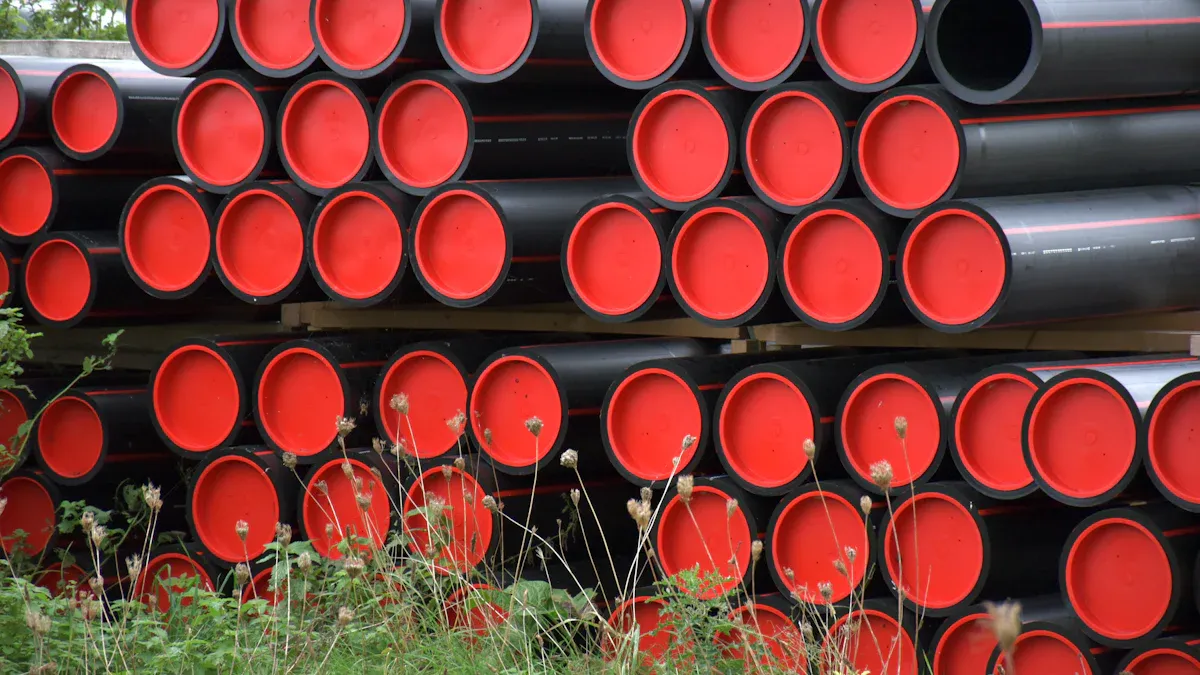
PPR pipes stand out for their exceptional durability and longevity, making them a reliable choice for underfloor heating systems. These pipes are engineered to last, with an average lifespan of up to 50 years under normal operating conditions. This longevity makes PPR pipes a sustainable option for long-term projects.
Several factors contribute to the impressive durability of PPR pipes:
- Corrosion Resistance: PPR pipes do not rust or suffer from electrolytic corrosion. This characteristic ensures consistent flow and structural integrity over time.
- Temperature and Pressure Resistance: PPR pipes can withstand continuous hot water temperatures up to 70°C and short-term exposure up to 95°C. This high-temperature resistance prevents deformation and leaks.
- Chemical Resistance: PPR pipes resist most household chemicals, ensuring they maintain their integrity in various environments.
- Flexibility: The flexibility of PPR pipes allows them to absorb minor ground shifts without cracking, further enhancing their durability.
The table below summarizes the key factors contributing to the durability of PPR pipes:
| Factor | Description |
|---|---|
| Heat Resistance | PPR pipes can withstand continuous hot water up to 70°C and short-term exposure up to 95°C. |
| Joint & Fitting Quality | Proper jointing through heat fusion creates permanent, leak-proof connections. |
| Material Compatibility | PPR is resistant to corrosion, scaling, and most household chemicals, ensuring longevity. |
| Application Environment | Environmental factors like UV exposure and mechanical damage impact pipe performance. |
| Expected Lifetime | PPR pipes have an average service life of 50 years, significantly longer than traditional materials. |
| Installation Efficiency | PPR systems reduce labor time and costs due to their lightweight design and fewer joints. |
Manufacturers typically offer warranties for PPR pipes, reflecting their confidence in the product’s durability. The table below outlines common warranty periods:
| Warranty Period | Description |
|---|---|
| 10 years | Minimum warranty offered by some manufacturers. |
| 25 years | Maximum warranty offered by leading manufacturers when installed per guidelines. |
Ease of Installation
PPR pipes simplify the installation process for underfloor heating systems. Their lightweight nature makes handling and transport easier compared to heavier materials like copper. This characteristic reduces labor costs and installation time significantly.
Installation Methods
The most common installation methods for PPR pipes include heat fusion techniques, such as butt welding. These methods lower the need for highly skilled labor, which further decreases costs. The table below illustrates the impact of various installation methods on labor costs:
| Installation Method | Impact on Labor Costs |
|---|---|
| Heat Fusion (Butt/Welding) | Reduces need for highly skilled labor, lowering costs. |
| Speed of Installation | 20-30% faster than metal piping, reducing project time. |
Despite their advantages, installers must be aware of certain challenges. PPR pipes have lower hardness and rigidity than metal pipes, requiring careful handling to avoid damage. They can become brittle at temperatures below 5 °C, necessitating caution during winter installations. Additionally, UV degradation poses a risk for outdoor installations, and the large coefficient of linear expansion (0.15mm/m °C) means that technical measures must be taken to prevent deformation.
In terms of cost, PPR pipes are more budget-friendly than copper, which can be 3-5 times more expensive. PPR systems also allow for quicker installations, leading to long-term savings due to lower maintenance costs. The table below summarizes the cost comparison:
| Pipe Type | Cost Comparison | Installation Efficiency |
|---|---|---|
| PPR | More cost-effective for large-scale applications | Moderate installation time |
| Copper | 3-5 times more expensive than PPR | Higher labor costs due to soldering |
| PEX | Slightly higher material cost than PPR | Faster and less labor-intensive installation |
Overall, the ease of installation of PPR pipes makes them a preferred choice for underfloor heating systems.
Environmental Benefits
Energy Efficiency
PPR pipes significantly enhance energy efficiency in underfloor heating systems. These systems are known for their ability to reduce energy consumption, leading to lower energy bills for homeowners. Here are some key points regarding their energy efficiency:
- Underfloor heating systems with PPR pipes operate at lower temperatures than traditional heating methods. This characteristic reduces energy consumption and costs.
- The smooth inner surface of PPR pipes minimizes water friction, further enhancing energy efficiency.
- PPR pipes are durable and resistant to temperature extremes, contributing to the longevity and efficiency of heating systems.
By utilizing PPR pipes, homeowners can enjoy both financial savings and environmental benefits.
Recyclability of PPR Materials
PPR pipes are made from recyclable polypropylene, which contributes to a lower environmental impact. Their recyclability is a significant advantage over other materials. Consider the following comparisons:
- PPR pipes are fully recyclable and lighter, which helps reduce transportation emissions.
- Copper pipes are also recyclable but can be energy-intensive to produce.
- PEX pipes are recyclable but require more energy due to their cross-linking process.
The trend towards using recycled PPR in plumbing and heating systems indicates a commitment to sustainability. While specific recyclability rates may vary, the use of recycled materials in construction reflects a growing awareness of environmental responsibility.
- PPR pipes offer outstanding efficiency and long-lasting durability for underfloor heating systems.
- Their lightweight design and simple installation reduce labor and costs.
- Environmental benefits make PPR pipes a sustainable choice.
Choosing PPR pipes ensures reliable, comfortable, and eco-friendly heating solutions for any space.
FAQ
What are the advantages of using PPR pipes in underfloor heating systems?
PPR pipes offer durability, energy efficiency, and resistance to corrosion, making them ideal for underfloor heating applications.
How long do PPR pipes typically last?
PPR pipes can last up to 50 years under normal operating conditions, ensuring a long-term solution for heating systems.
Can PPR pipes handle high temperatures?
Yes, PPR pipes can safely operate at temperatures up to 95°C, making them suitable for various heating applications, including those using PERT pipe.