Introduction
In pressurized water and irrigation systems, the fitting often determines whether a pipeline stays reliable or becomes a maintenance problem. PP compression fittings stand out because they combine corrosion resistance, strong sealing performance, and fast installation without welding or solvent bonding. Their design supports secure connections for polyethylene pipes while reducing labor, downtime, and the risk of leaks in buried or exposed networks. This article explains what makes these fittings effective, how their materials and locking components work together, and why they are often preferred over metal or more complex jointing methods in long-term fluid distribution applications.
Introduction
Polypropylene (PP) has fundamentally transformed modern fluid conveyance architecture, offering a highly reliable, corrosion-resistant alternative to legacy metallic systems and unplasticized polyvinyl chloride (UPVC) networks. In high-stakes fluid dynamics, selecting the optimal connection mechanism is critical for ensuring long-term hydraulic integrity, mitigating surge pressures, and minimizing structural maintenance liabilities over the infrastructure's lifecycle.
Background
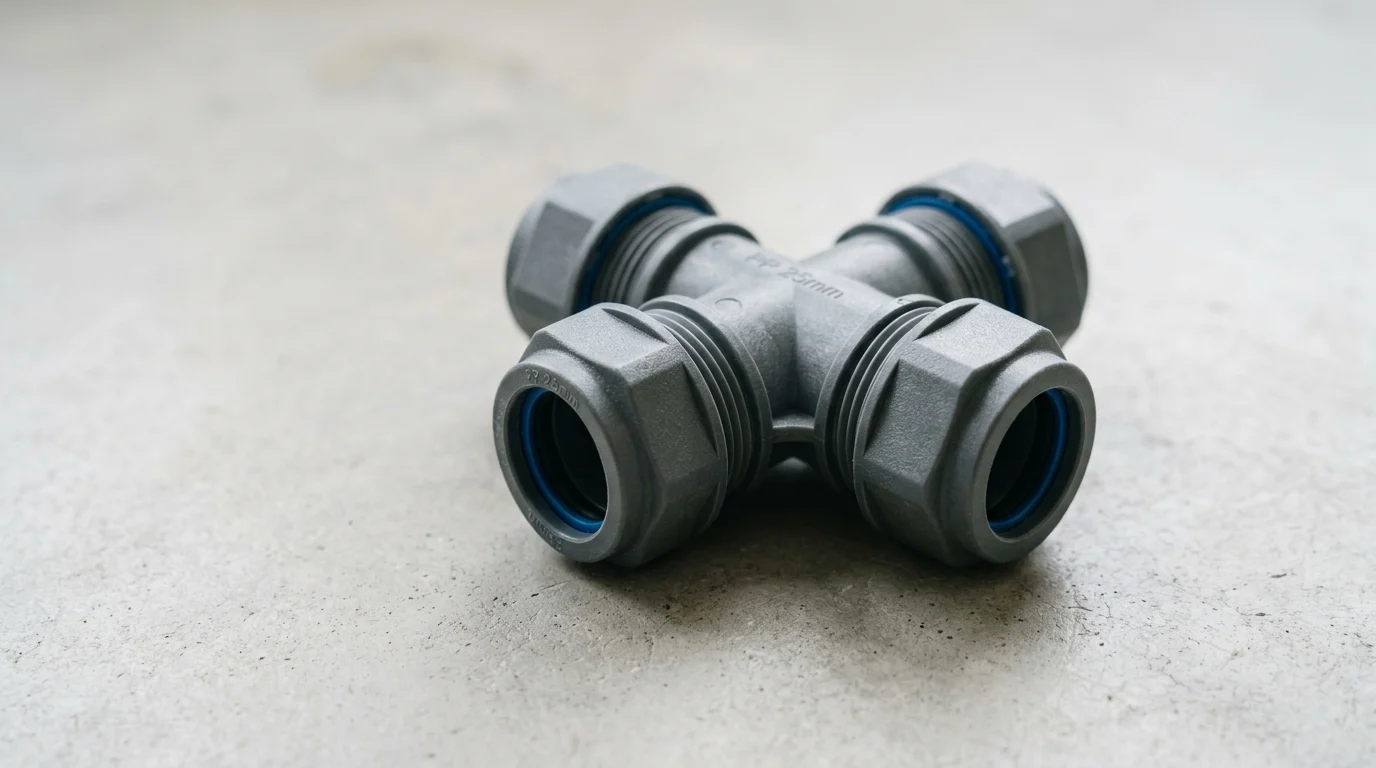
The engineering shift toward thermoplastic polymers in pressurized water networks stems from the material's inherent resistance to scaling, galvanic corrosion, and biological fouling. Specifically, pp compression fittings have emerged as the industry standard for joining high-density polyethylene (HDPE) and low-density polyethylene (LDPE) pipe assemblies. These fittings utilize a highly engineered mechanical grip and elastomeric seal, entirely eliminating the need for thermal fusion equipment or volatile solvent cements.
Designed to withstand nominal pressures up to PN16 (16 bar or 232 psi) at standard ambient temperatures, they deliver fail-safe performance in high-stress subterranean environments. The structural composition typically includes a UV-stabilized polypropylene block copolymer body, a polyacetal (POM) clinching ring that bites into the pipe exterior, and a high-grade NBR O-ring. Together, these components ensure leak-free performance and accommodate axial pipe movement over a projected 50-year service life.
Purpose
The objective of this technical analysis is to evaluate the mechanical, economic, and operational advantages that establish these mechanical joints as the superior choice for fluid transport. By examining the intersection of material science and practical field deployment, engineers, agricultural planners, and procurement specialists can accurately calculate the total cost of ownership (TCO) benefits.
This evaluation includes analyzing the drastic reduction in labor costs during installation, the mitigation of non-revenue water loss through enhanced sealing mechanisms, and the broader implications for scaling municipal, agricultural, and industrial piping infrastructure without requiring specialized welding certifications.
Market and sourcing context
The global supply chain for thermoplastic piping components is undergoing rapid geographic and volumetric expansion. This growth is heavily driven by aggressive infrastructure modernization initiatives and the global agricultural sector's urgent shift toward high-efficiency micro-irrigation and fertigation systems.
Demand drivers
Market demand for mechanical jointing solutions is accelerating rapidly, with the thermoplastic fittings sector projecting a steady compound annual growth rate (CAGR) of approximately 5.8% through the current decade. Agricultural irrigation currently accounts for nearly 45% of this total volume. Farm operators aggressively seek modular systems capable of sustaining operating pressures between 10 and 16 bar without the brittle failure rates commonly associated with traditional threaded PVC.
Furthermore, municipal water distribution networks are increasingly adopting mechanical PP joints to combat non-revenue water (NRW) losses, which currently average an alarming 30% globally due to aging metallic infrastructure. The rapid assembly time—often 50% to 60% faster than comparable electrofusion welding—serves as a primary economic driver for civil contractors facing severe skilled labor shortages and tight project delivery deadlines.
Supplier landscape
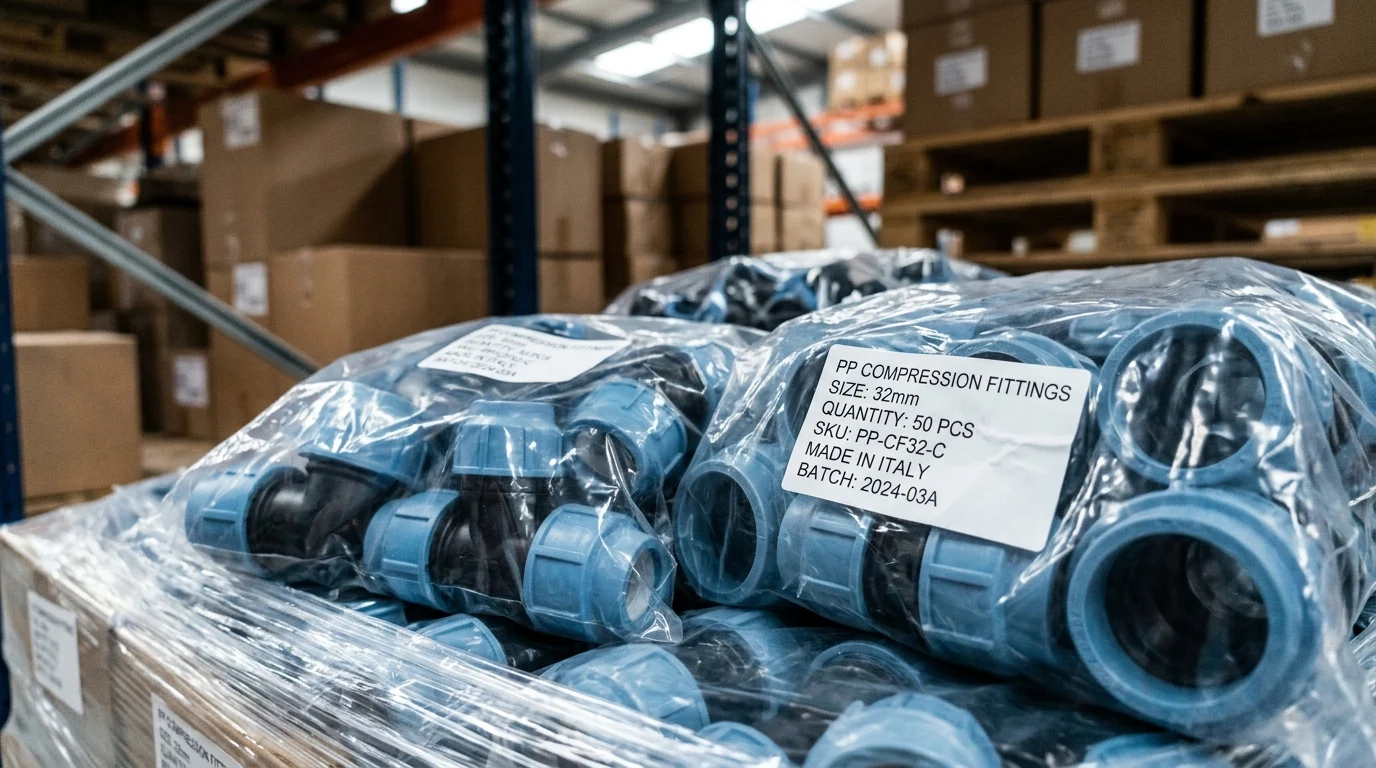
The manufacturing base is heavily concentrated in specialized industrial zones across Asia and Southern Europe, where advanced injection molding facilities produce tens of millions of units annually. For enterprise buyers and wholesale distributors, mastering standard commercial terms is vital for optimizing procurement cycles. Typical Minimum Order Quantities (MOQs) for factory-direct sourcing range from 3,000 to 5,000 pieces per dimensional SKU. Standard production lead times oscillate between 25 and 40 days, heavily dependent on the spot market availability of raw polypropylene copolymer resins.
| Material Class | Typical MOQ (Units/SKU) | Est. Lead Time (Days) | Unit Cost Index vs. Brass | Max Nominal Pressure |
|---|---|---|---|---|
| PP Compression | 3,000 – 5,000 | 25 – 40 | 0.30x | PN16 |
| Brass / Bronze | 1,000 – 2,000 | 45 – 60 | 1.00x | PN25 |
| UPVC (Solvent) | 5,000 – 10,000 | 15 – 30 | 0.20x | PN16 |
Implementation and compliance
Deploying thermoplastic mechanical joints requires strict adherence to international testing standards and material certifications to guarantee hydraulic stability. Proper execution during the physical installation phase minimizes the risk of catastrophic joint blowouts under sudden pump surge pressures.
Key requirements
Regulatory compliance dictates that mechanical fittings for polyethylene piping systems must meet the stringent criteria of ISO 17885 or equivalent regional frameworks such as EN 12201-3. These standards mandate rigorous pull-out resistance testing and intensive 1,000-hour long-term hydrostatic pressure trials. Premium quality PP fittings are explicitly engineered to maintain a PN16 pressure rating at a baseline of 20°C.
However, pipeline engineers must apply appropriate thermal derating factors when operating temperatures exceed 25°C, with the maximum continuous operating temperature generally capped at 45°C to prevent polymer creep. Additionally, the internal NBR or EPDM elastomeric seals must carry specific potable water certifications—such as WRAS (UK), NSF/ANSI 61 (US), or ACS (France)—if the network is intended for human consumption, ensuring absolute zero leaching of volatile organic compounds (VOCs).
Operational checklist
Field deployment necessitates a highly systematic approach to achieve an industry-standard defect rate of less than 0.1% post-commissioning. The mandatory operational protocol requires several precise steps. First, technicians must execute a clean, perfectly perpendicular cut on the HDPE pipe to prevent uneven O-ring displacement. Second, the pipe edge must be chamfered at a 15-degree angle to remove sharp burrs. Third, lubricating the O-ring with a non-petroleum-based silicone grease is essential to facilitate smooth insertion without degrading the rubber.
Fourth, installers must ensure the pipe passes completely through the polyacetal gripping ring and seats firmly against the internal fitting stop. Finally, tightening the compression nut to the manufacturer's specified torque—typically utilizing specialized strap wrenches for diameters exceeding 50mm—ensures the mechanical grip ultimately exceeds the yield strength of the pipe wall itself. Following assembly, the entire line must undergo a hydrostatic pressure test at 1.5 times the intended working pressure before backfilling.
Key Takeaways
- The most important conclusions and rationale for pp compression fittings
- Specs, compliance, and risk checks worth validating before you commit
- Practical next steps and caveats readers can apply immediately
Frequently Asked Questions
What makes PP compression fittings better than metal or PVC options?
They resist corrosion, scale, and biological fouling, while installing faster without welding or solvent cement. That lowers maintenance and labor costs in water and irrigation systems.
Can PP compression fittings handle high-pressure water lines?
Yes. Many are rated up to PN16, or 16 bar, at standard temperatures, making them suitable for municipal water, irrigation, and other pressurized polyethylene pipe systems.
Which pipes work with PP compression fittings?
They are mainly used with HDPE and LDPE pipes. Always match the fitting size and pressure rating to the pipe specification for a secure, leak-free connection.
Why are PP compression fittings popular for irrigation projects?
They assemble quickly, seal reliably, and perform well underground. For farms and micro-irrigation systems, that means less downtime, fewer leaks, and easier field repairs.
What should buyers check before sourcing PP compression fittings?
Confirm compliance with ISO 17885 or EN 12201-3, verify PN16 rating if needed, and review MOQ and lead time, which are often around 3,000-5,000 pieces and 25-40 days.