Introduction
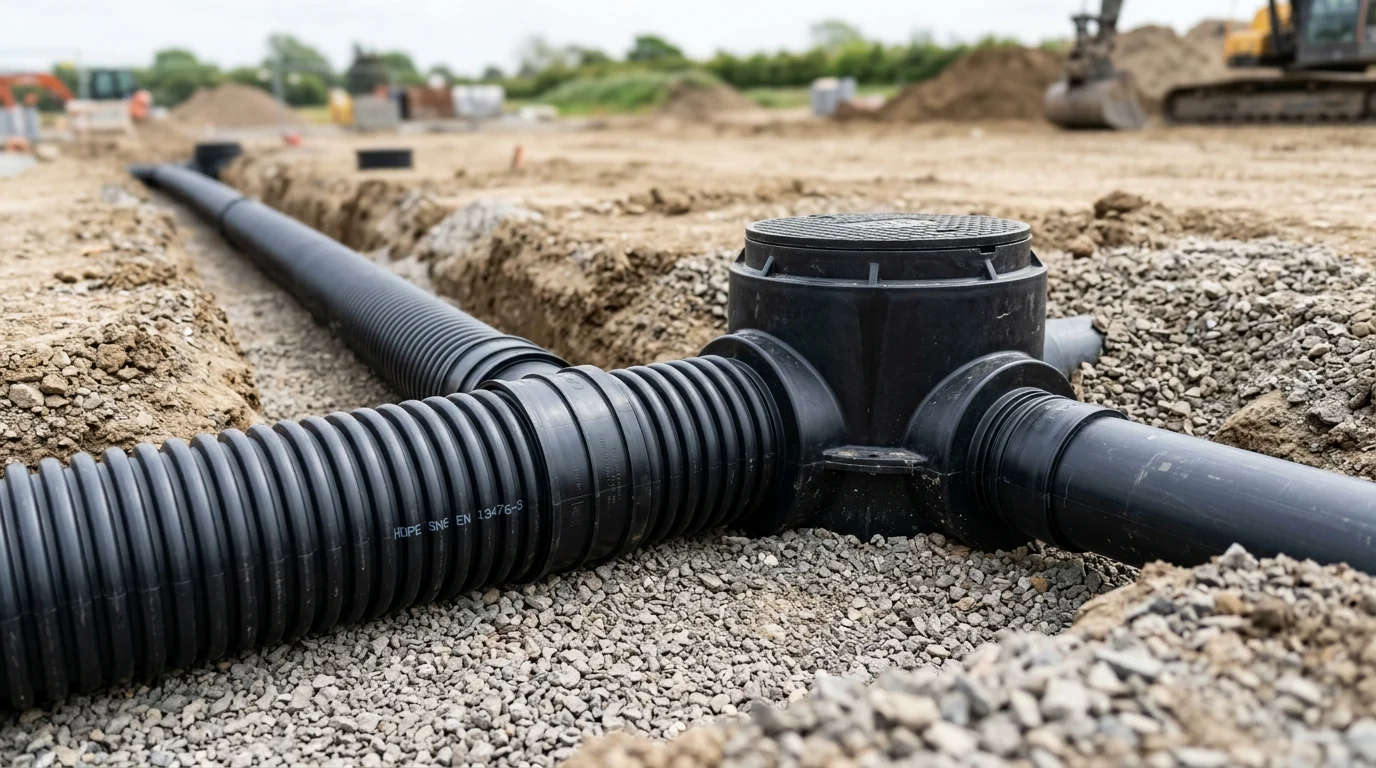
Municipal drainage design now has to balance tighter budgets, longer service-life expectations, and greater exposure to flooding, soil movement, and corrosive conditions. HDPE drainage systems have become a preferred choice because they address these pressures with a combination of flexibility, durability, hydraulic performance, and lower maintenance demands. This article explains the engineering and practical reasons behind that shift, including how HDPE performs differently from traditional rigid materials, why it can reduce lifecycle costs, and what makes it well suited to modern public infrastructure projects. With that context, the discussion can move into the specific advantages municipalities weigh when selecting drainage systems.
Why Municipalities Prefer HDPE Drainage Systems
Modern municipal infrastructure faces unprecedented pressure to deliver long-term performance under tightening budgetary constraints and increasingly severe weather events. In response to these demands, civil engineers and public works departments are systematically transitioning away from legacy materials in favor of High-Density Polyethylene (HDPE) drainage systems. This shift is driven by the material’s unique combination of structural integrity, hydraulic efficiency, and chemical inertness.
Unlike traditional rigid conduits, HDPE operates as a flexible system, relying on soil-structure interaction to distribute live and dead loads. This fundamental mechanical difference requires a paradigm shift in municipal design approaches, yet offers substantial dividends in both initial capital expenditure and long-term asset management.
Infrastructure resilience and lifecycle cost pressures
The primary catalyst for adopting HDPE in public works is the compounding pressure of lifecycle costs and infrastructure resilience. Traditional drainage materials frequently suffer from joint failure, chemical degradation, or structural cracking within 30 to 50 years of installation. In contrast, modern corrugated HDPE systems are engineered to provide a service life exceeding 100 years when specified and installed correctly.
This extended design life dramatically flattens the lifecycle cost curve for municipalities. By deferring replacement cycles and minimizing interim repair interventions, agencies can reallocate capital to other critical network expansions. Furthermore, HDPE’s inherent flexibility allows it to absorb ground movements, freeze-thaw cycles, and seismic activities that would otherwise fracture rigid infrastructure, thereby enhancing overall system resilience.
Common uses in stormwater and sewer networks
Municipal applications for HDPE span a broad spectrum of water management disciplines, predominantly focusing on gravity-flow stormwater and sanitary sewer networks. In stormwater management, corrugated dual-wall HDPE is frequently deployed for trunk lines, detention basin manifolds, and highway edge drains, typically in diameters ranging from 12 to 60 inches.
For sanitary sewer applications, where exfiltration and infiltration are strictly regulated, HDPE systems employing watertight, gasketed joints or thermal butt-fusion provide a monolithic, leak-free network. The material is also increasingly used in trenchless rehabilitation projects, where solid-wall HDPE is slip-lined into decaying legacy pipes, restoring hydraulic capacity and structural integrity without the disruption of open-cut excavation.
Technical Advantages of HDPE Drainage Systems
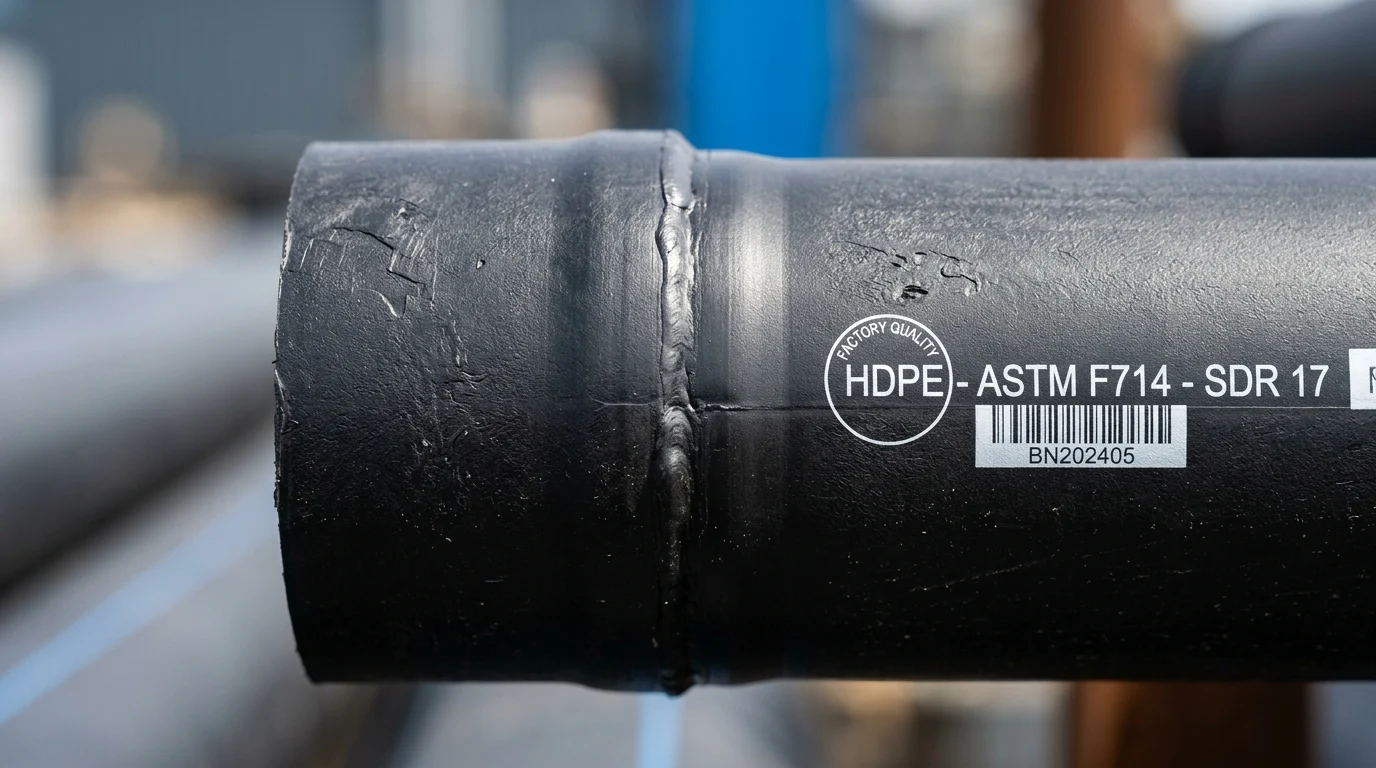
The technical superiority of HDPE drainage systems stems from advanced polymer science and highly engineered pipe profile geometries. By manipulating the molecular structure of the polyethylene resin and optimizing the corrugation design, manufacturers achieve a balance of flexibility, ring stiffness, and hydraulic efficiency that legacy materials struggle to replicate.
Key performance characteristics for municipal applications
For municipal applications, hydraulic capacity and durability are paramount. Dual-wall HDPE pipes feature a corrugated exterior for structural strength and a smooth interior lining that optimizes fluid dynamics. This smooth interior typically yields a Manning’s n-value of 0.010 to 0.012, significantly outperforming rougher materials and allowing engineers to specify smaller pipe diameters or shallower slopes while maintaining required flow rates.
Chemically, HDPE is remarkably inert, resisting degradation across a broad pH range of 1.5 to 14. This makes it immune to the hydrogen sulfide gas corrosion that frequently destroys concrete crowns in sanitary sewers, as well as the galvanic corrosion that compromises metal pipes in aggressive, highly conductive soils.
HDPE compared with concrete, PVC, and metal
When selecting drainage materials, municipal engineers must weigh the distinct properties of HDPE against Reinforced Concrete Pipe (RCP), Polyvinyl Chloride (PVC), and Corrugated Metal Pipe (CMP). Each material presents unique operational characteristics that influence project feasibility.
| Material | Typical Service Life | Weight per Foot (24-inch) | Chemical Resistance (pH range) | Joint Integrity |
|---|---|---|---|---|
| HDPE | 75 – 100+ years | ~10 lbs | 1.5 to 14.0 | Excellent (Watertight options) |
| RCP | 50 – 75 years | ~160 lbs | 4.0 to 9.0 | Moderate (Prone to settlement leaks) |
| PVC | 75 – 100 years | ~15 lbs | 1.0 to 14.0 | Excellent (Watertight) |
| CMP | 25 – 50 years | ~12 lbs | 5.0 to 9.0 | Low (Soil tight) |
While PVC offers similar chemical resistance and hydraulic performance, HDPE provides superior impact resistance, particularly in cold-weather handling. Compared to RCP, HDPE eliminates the need for heavy lifting equipment, though it requires more stringent backfill compaction to achieve its structural rating.
Specification factors engineers should evaluate
Engineers must evaluate several critical specification factors to ensure the selected HDPE product meets project demands. The primary metric is the resin’s cell classification, defined by ASTM D3350, which dictates the material’s density, melt index, flexural modulus, and slow crack growth resistance.
Additionally, pipe stiffness must be verified. For municipal storm drains, a minimum pipe stiffness of 46 psi (315 kPa) at 5% deflection is standard to withstand H-20 or HL-93 highway traffic loads when properly buried. Engineers must also specify the required joint performance level, distinguishing between soil-tight, silt-tight, and watertight (e.g., 10.8 psi laboratory test per ASTM D3212) connections based on the network’s environmental constraints.
Installation and Field Performance Considerations
The theoretical advantages of HDPE are only fully realized when coupled with rigorous installation practices. Because HDPE is a flexible conduit, the surrounding soil envelope plays a co-equal role in the system’s structural performance. Understanding the logistics, field execution, and potential risks during installation is essential for municipal contractors and inspectors.
How weight and lay length affect installation efficiency
One of the most significant operational benefits of HDPE is its low mass and extended lay length. A standard 20-foot section of 24-inch HDPE weighs approximately 200 pounds, allowing it to be maneuvered by small excavators or even by hand in restricted spaces. In contrast, an equivalent length of RCP would weigh over 3,200 pounds, necessitating heavy cranes and specialized rigging.
Furthermore, standard 20-foot lay lengths reduce the total number of joints in a pipeline by up to 60% compared to traditional 8-foot concrete segments. This reduction not only accelerates installation—lowering labor and equipment costs—but also minimizes the statistical probability of joint failure and subsequent infiltration.
Best practices for design and installation
Successful HDPE installation hinges on the precise execution of the soil-structure interaction model, typically governed by ASTM D2321. Trench widths must be wide enough to accommodate proper compaction equipment on either side of the pipe’s springline, yet narrow enough to benefit from the undisturbed native trench walls.
Bedding and haunching materials are the most critical components of the installation. Granular, non-cohesive soils (Class I or II materials) are highly recommended. These materials must be placed in controlled lifts and mechanically compacted to a minimum of 90% to 95% Standard Proctor density to prevent pipe deflection under subsequent backfill and live traffic loads.
Field risks and trade-offs to manage
Despite its advantages, field teams must manage specific trade-offs and risks associated with HDPE. The material’s low density makes it highly buoyant; in areas with high groundwater tables, improper anchoring or premature trench flooding before sufficient backfill is placed can result in pipe flotation, destroying the established grade.
Additionally, prolonged outdoor storage can expose the polymer to ultraviolet degradation. To mitigate this risk, municipal specifications should mandate the inclusion of 2% to 3% carbon black additive in the resin, which provides essential UV protection for up to two years of outdoor yard storage prior to installation.
Compliance, Procurement, and Quality Assurance
Public procurement mandates strict adherence to quality assurance and financial transparency. When sourcing HDPE drainage systems, municipalities must navigate a complex landscape of industry standards, rigorous supplier vetting, and volatile cost drivers to ensure taxpayer funds are used effectively and infrastructure safety is maintained.
Relevant standards, testing, and approvals
Municipal standards for HDPE are heavily regulated by national transportation and materials organizations. In the United States, AASHTO M294 is the definitive standard for corrugated HDPE pipe used in highway and municipal drainage, dictating material properties, dimensions, and structural performance.
For the pipes themselves, ASTM F2306 governs the manufacturing and testing of annular corrugated profile-wall polyethylene pipe. Compliance with these standards is non-negotiable for public works, and engineers must require certificates of compliance indicating that the delivered batches have passed rigorous laboratory testing for ring stiffness, impact resistance, and joint integrity.
How to assess supplier capability and traceability
Assessing supplier capability goes beyond reviewing product cut-sheets. Leading municipal procurement strategies require third-party verification of manufacturing facilities. Programs such as the National Transportation Product Evaluation Program (NTPEP) conduct unannounced audits of manufacturing plants to ensure continuous compliance with AASHTO standards.
Traceability is equally critical. Quality suppliers must provide lot-level traceability linking the finished pipe back to the specific batch of virgin or engineered recycled resin used. This traceability ensures that parameters like the Melt Flow Index and density remain tightly controlled, safeguarding against the inclusion of substandard regrind materials that could compromise the pipe’s slow crack growth resistance.
Cost drivers for public procurement
Understanding the cost drivers of HDPE procurement allows municipalities to budget accurately and optimize their purchasing strategies. While the installed cost of HDPE is generally lower than rigid alternatives, the material cost is subject to distinct market forces.
| Cost Driver | Impact Level | Typical Market Variance | Mitigation Strategy | |
|---|---|---|---|---|
| Petrochemical Resin Index | High | 10% – 25% annually | Index pricing contracts for long-term projects | |
| Freight / Logistics | High | $2.50 – $4.50 per mile | Source from regional manufacturing plants | |
| Minimum Order Quantity (MOQ) | Medium | 5,000+ feet thresholds | Consolidate municipal district purchases | |
| Joint Complexity (Watertight) | Low to Medium | 10% – 15% premium over soil-tight | Specify watertight only where geotechnically required |
Because large-diameter HDPE pipe essentially involves shipping air, freight costs can quickly consume material savings if the manufacturing plant is located too far from the job site. Consolidating orders to meet high MOQs and using regional suppliers are highly effective strategies for controlling public procurement costs.
How to Decide if HDPE Is the Right Fit
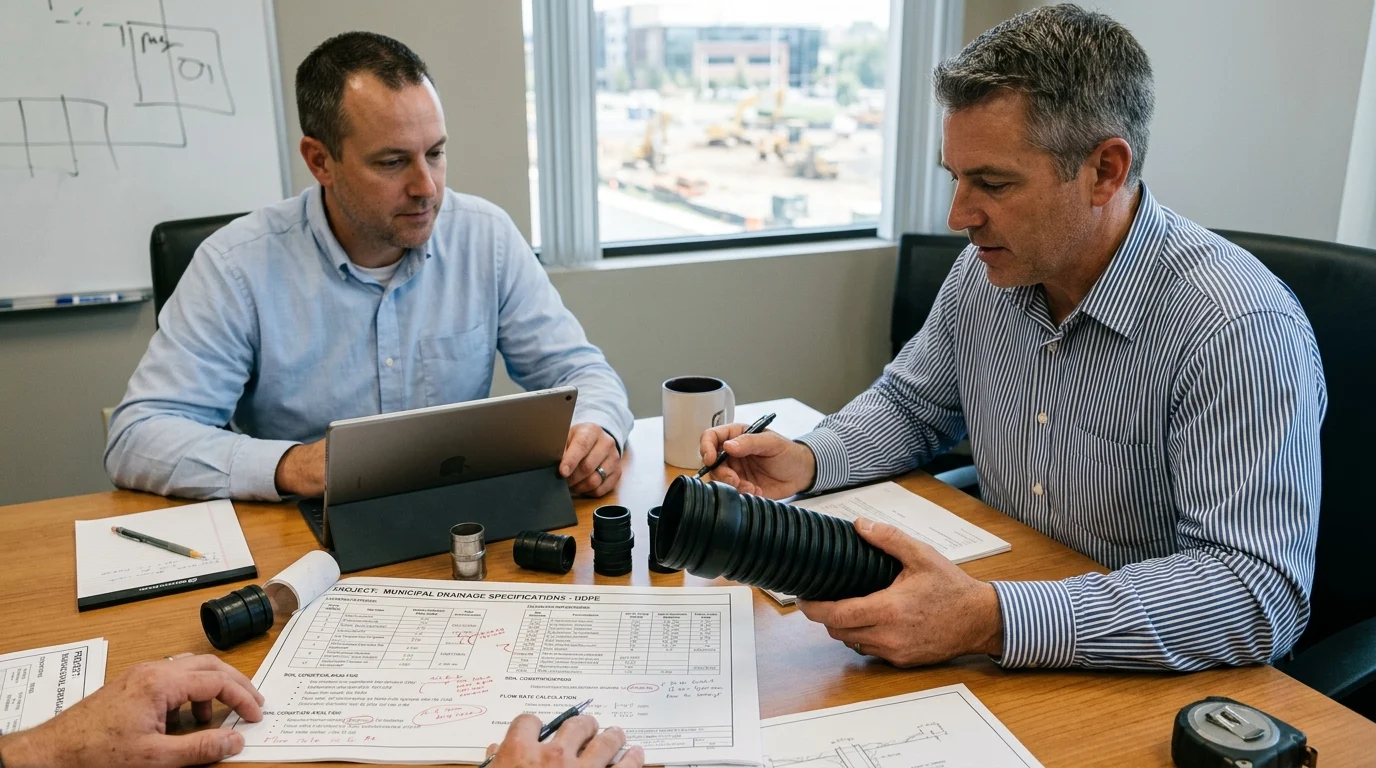
While HDPE offers compelling advantages, it is not a universal panacea for every subterranean civil engineering challenge. Selecting the optimal drainage material requires a rigorous, objective assessment of site-specific conditions, long-term financial models, and operational constraints.
Project conditions that favor HDPE
HDPE is particularly favored in specific, challenging project environments. In coastal regions or industrial zones characterized by aggressive soils with resistivity levels below 1,000 ohm-cm, HDPE’s total immunity to galvanic corrosion makes it the only viable long-term choice compared to metallic pipes.
Similarly, in active seismic zones or areas subject to severe freeze-thaw cycles, the material’s ductility allows it to yield and recover without catastrophic fracturing. HDPE is also the preferred solution for remote municipal projects or tight urban rights-of-way where mobilizing heavy lifting equipment for concrete pipe is either logistically impossible or cost-prohibitive.
A decision framework for municipal selection
To formalize the selection process, municipalities should adopt a Lifecycle Cost Analysis (LCCA) framework rather than relying solely on initial bid prices. This framework should calculate the Net Present Value (NPV) of the drainage system over a 75-year horizon, using a standard municipal discount rate of 3% to 5%.
The decision matrix must evaluate the initial material and installation costs, project the frequency and cost of maintenance interventions, and factor in the hydraulic capacity lifespan. When an LCCA demonstrates that the reduced installation labor, elimination of heavy equipment, and zero-corrosion profile of HDPE yield a lower 75-year NPV than rigid alternatives, the material becomes the clear, fiscally responsible choice for modern public works.
Key Takeaways
- The most important conclusions and rationale for HDPE Drainage Systems
- Specs, compliance, and risk checks worth validating before you commit
- Practical next steps and caveats readers can apply immediately
Frequently Asked Questions
Why are HDPE drainage systems popular in municipal projects?
They offer long service life, strong chemical resistance, and flexible performance under soil movement, helping cities reduce repair frequency and lifecycle costs.
How does HDPE compare with concrete or metal drainage pipes?
HDPE is lighter, more corrosion-resistant, and less prone to cracking or joint leakage. It is also easier to transport and install than concrete.
Where are HDPE drainage pipes commonly used?
They are widely used in stormwater lines, sewer networks, highway edge drains, detention systems, and trenchless rehabilitation projects.
What HDPE drainage products can Donsen supply?
Donsen offers HDPE piping solutions including same-floor drainage fittings, along with a broad range of plastic pipes, fittings, and valves for drainage applications.
How can buyers choose a reliable HDPE drainage supplier?
Check manufacturing experience, product range, export capability, and application support. Donsen has operated since 1996 and supplies piping systems to 100+ countries.