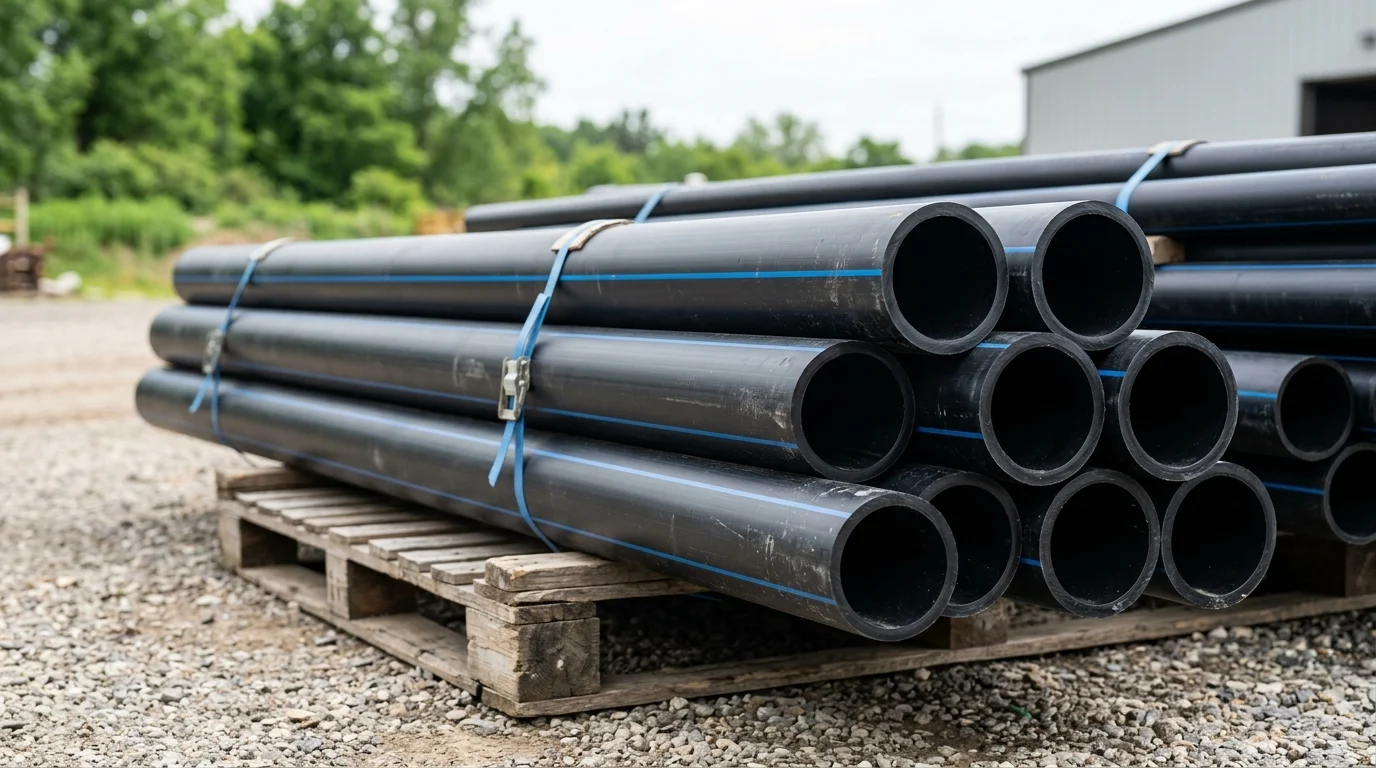
Cost advantages in irrigation systems
The primary driver for the adoption of HDPE in agricultural procurement is the substantial reduction in total lifecycle costs. While the initial per-meter cost of high-grade HDPE might sometimes parallel or slightly exceed that of standard PVC-U, the installation and maintenance phases reveal stark economic benefits. Because HDPE is highly flexible, it requires fewer fittings and directional joints. Installers can simply bend the pipe around obstacles, achieving up to a 30% to 40% reduction in labor and installation time.
Furthermore, the material’s durability virtually eliminates the need for frequent replacements. High-quality HDPE pipes boast a design life exceeding 50 years under standard operating temperatures (typically up to 20°C for cold water applications). When factoring in the reduced need for trenching machinery—since HDPE can often be surface-laid or installed via trenchless technology—the overall capital expenditure (CAPEX) for irrigation networks drops significantly.
Project requirements best suited to HDPE pipes
Agricultural irrigation projects present unique environmental challenges that dictate specific material requirements. HDPE pipes are exceptionally well-suited for topographies with uneven terrain, shifting soils, and high seismic activity. Their inherent flexibility allows them to absorb ground movement without fracturing, a critical failure point for rigid alternatives.
From a specification standpoint, large-scale pivot irrigation systems typically demand mainlines ranging from 110mm to 630mm in diameter, while lateral drip lines often utilize 16mm to 32mm PE tubing. Additionally, agricultural pipes are heavily exposed to ultraviolet (UV) radiation. Premium HDPE pipes are compounded with 2% to 2.5% carbon black, which acts as a robust UV stabilizer, preventing polymer degradation even when laid entirely above ground in high-sunlight regions for decades.
Technical benefits of HDPE pipes
Evaluating the technical specifications of HDPE pipes is essential for procurement teams to ensure compatibility with complex irrigation networks. The polymer matrix of high-density polyethylene provides a distinct set of mechanical and chemical properties that directly influence system performance, pressure handling, and fluid dynamics.
Pressure, flexibility, impact, and chemical resistance
HDPE pipes are manufactured in various pressure classes, typically ranging from PN4 (0.4 MPa) for low-pressure surface drainage up to PN16 (1.6 MPa) or higher for heavy-duty mainlines. A defining technical benefit is the material’s flexibility; HDPE can safely achieve a bending radius of 20 to 25 times its outside diameter (OD). This allows for long continuous runs with minimal jointing.
Impact resistance is another critical metric. Unlike rigid plastics that become brittle in cold weather, HDPE retains its high impact strength at sub-zero temperatures, often down to -40°C. Additionally, modern agriculture heavily relies on fertigation—injecting fertilizers and soil amendments directly into the water supply. HDPE offers superior chemical resistance to a broad spectrum of agricultural chemicals, acids, and alkalis, ensuring the pipe interior does not corrode or scale over time.
HDPE pipes vs other pipe materials
When comparing HDPE to other common piping materials, the operational metrics heavily favor polyethylene for outdoor agricultural use.
| Feature | HDPE / PE Pipes | PVC-U Pipes | Galvanized Steel |
|---|---|---|---|
| Flexibility | High (Bending radius up to 25x OD) | Low (Rigid, requires fittings for turns) | None (Rigid) |
| UV Resistance | Excellent (with 2%+ Carbon Black) | Moderate to Low (Prone to embrittlement) | Excellent |
| Corrosion Resistance | Excellent (Inert to most chemicals) | Excellent | Poor (Prone to rust over time) |
| Jointing Method | Butt fusion, electrofusion, compression | Solvent cement, rubber ring | Threaded, flanged, welded |
| Typical Lifespan | 50+ Years | 25-50 Years | 15-25 Years |
This comparative advantage highlights why EPC contractors increasingly specify HDPE for rural water transport. The smooth internal bore (Hazen-Williams C-factor of 150) ensures minimal friction loss, meaning smaller pumps and less energy are required to move water across vast distances compared to deteriorating metal pipes.
Fittings, joining methods, and valve compatibility
A robust piping system relies heavily on the integrity of its connections. For high-pressure mainlines, HDPE is typically joined using butt fusion or electrofusion, creating a monolithic system where the joints are as strong as, or stronger than, the pipe itself. This results in a zero-leak rate, crucial for conserving water in arid farming regions.
For secondary lines and laterals, mechanical connections like PP (Polypropylene) compression fittings are the industry standard. Top-tier manufacturers design these fittings for rapid, tool-free installation. Furthermore, complete irrigation systems require seamless integration with flow control mechanisms. HDPE networks easily adapt to plastic valve series, including PVC ball valves and butterfly valves, using specialized male/female adaptors, flanged connections, or threaded transitions to ensure full system interoperability.
How to evaluate HDPE pipe suppliers
For B2B importers and wholesale distributors, partnering with the right manufacturer is just as critical as selecting the right material. The global plastics market is highly fragmented, and supplier vetting requires a rigorous evaluation of production capabilities, commercial terms, and quality control frameworks.
Specifications, MOQ, product range, and packaging
Procurement teams must first align on standard commercial terms. Typical Minimum Order Quantities (MOQs) for HDPE pipes often start at 3,000 to 5,000 meters per size, or are bundled to fill a 1x20FT container to optimize production runs. Importers should audit the supplier’s product range to ensure they can provide a comprehensive matrix of Standard Dimension Ratios (SDRs) and Nominal Diameters (DN).
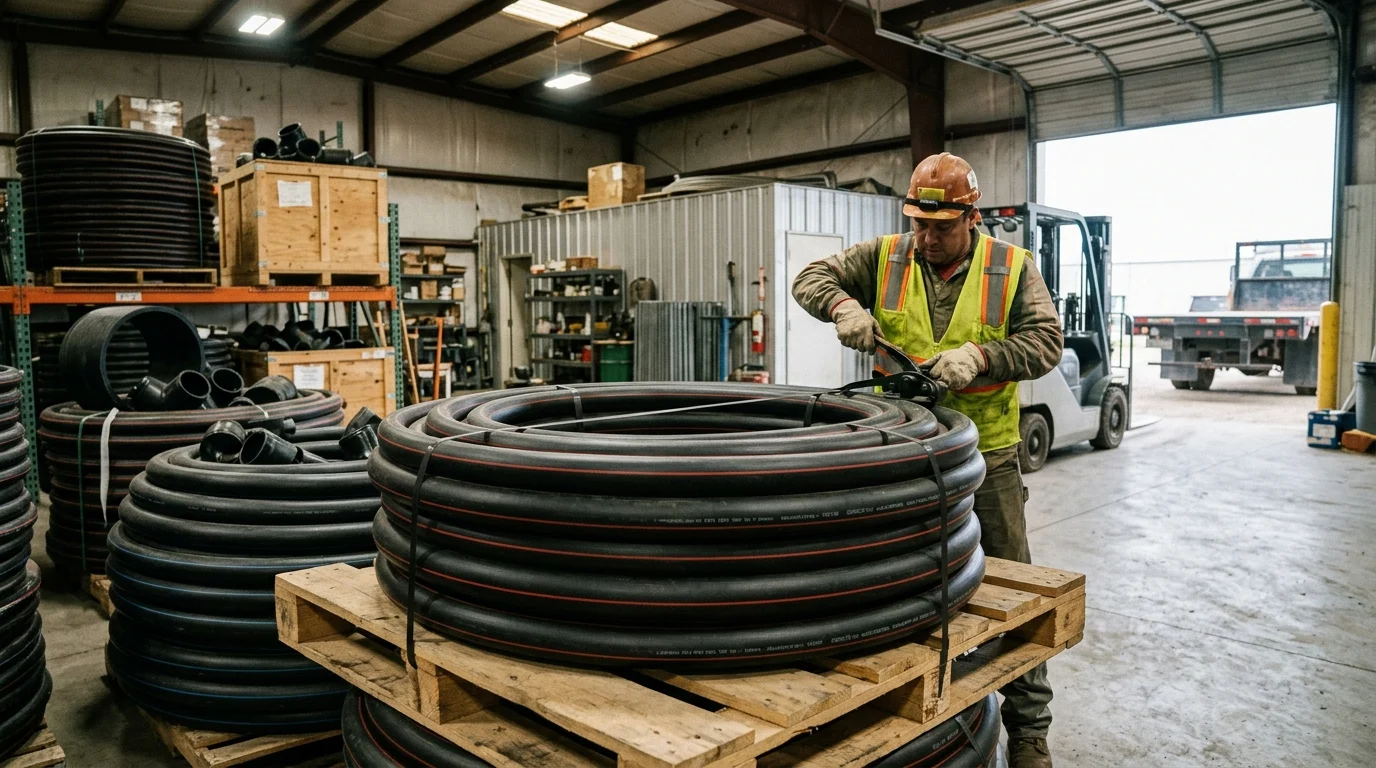
Packaging is a critical logistical factor. Smaller diameter PE pipes (16mm to 110mm) are generally supplied in coils of 50m, 100m, or 200m, tightly strapped to prevent unspooling during transit. Larger diameters (125mm and above) are supplied in straight lengths of 5.8m or 11.8m to fit standard shipping containers. Buyers must verify that the supplier utilizes heavy-duty strapping and UV-resistant wrapping for coiled products.
Factory capacity, export experience, and quality consistency
A supplier’s factory capacity directly dictates their ability to meet tight agricultural season deadlines. Buyers should look for manufacturers with over 20 years of industry experience and multiple production bases. A robust supplier typically operates 15 to 20+ advanced extrusion lines specifically dedicated to PE and HDPE production, ensuring they can output hundreds of tons of pipe monthly.
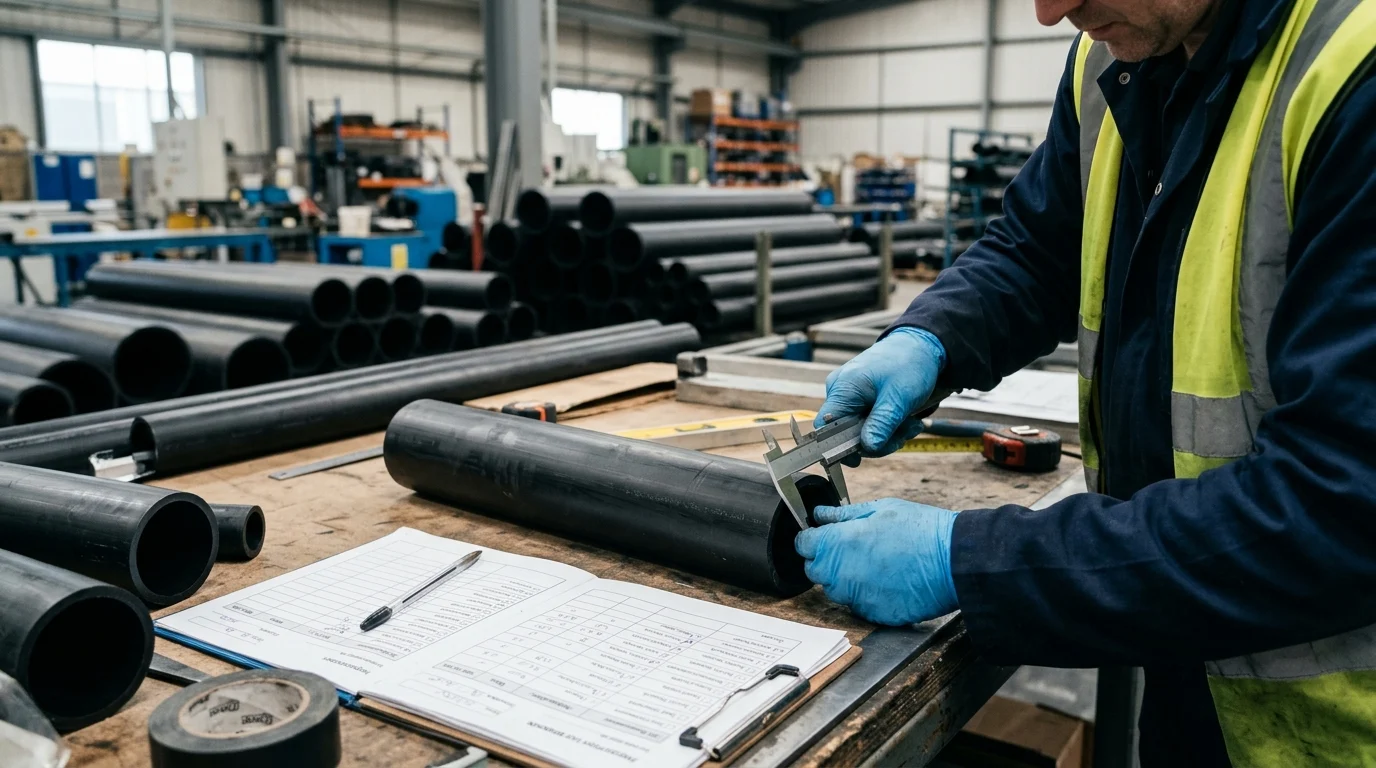
Export experience is equally vital. Manufacturers that routinely export to 50 to 100+ countries are generally more adept at handling complex customs documentation, localized testing standards, and volatile freight logistics. Quality consistency can be validated by requesting historical defect rates (which should be below 0.5%) and checking for in-house laboratory capabilities, such as hydrostatic pressure testing and melt flow index (MFI) analysis.
Benefits of full-system suppliers
Procuring pipes from one factory and fittings from another introduces significant risk of dimensional mismatch and tolerance stacking. Engaging a full-system supplier—one that manufactures the PE/HDPE pipes, the PP compression fittings, same-floor drainage components, and the corresponding plastic valves—mitigates this risk entirely.
Full-system suppliers offer unified warranties and guarantee that the tolerances between the pipe’s outer diameter and the fitting’s internal grip rings are perfectly calibrated. This consolidated sourcing strategy also simplifies the supply chain, reduces communication overhead, and allows buyers to consolidate multiple product categories into single container shipments, thereby improving inventory turnover and reducing administrative costs.
Compliance, logistics, and landed cost
International procurement of high-volume, low-density goods like plastic pipes requires strict attention to compliance and logistics. The landed cost—the total price of a product once it has arrived at the buyer’s door—is heavily influenced by how efficiently the product is packed and shipped, as well as the tariffs applied during import.
Standards, testing documents, and traceability
Compliance with international standards is non-negotiable for agricultural infrastructure. Buyers must ensure that the HDPE pipes conform to globally recognized standards such as ISO 4427 (Plastics piping systems for water supply) or DIN 8074/8075. Validating these standards requires requesting comprehensive testing documents, including Type Test Certificates and batch-specific Mill Test Reports (MTRs).
Traceability is another critical compliance factor. Quality suppliers will implement continuous inkjet or laser printing along the length of the pipe, detailing the manufacturer name, material grade (e.g., PE100), nominal outer diameter, SDR, pressure rating (PN), production date, and standard code. This traceability protects wholesalers against liability and simplifies warranty claims.
Palletization, coil lengths, and container loading
Because pipes are inherently volumetric, maximizing container space is the primary lever for reducing freight costs per meter. A standard 40HQ container offers approximately 68 cubic meters (CBM) of usable space. For straight lengths, suppliers must precisely cut pipes to 11.8 meters to utilize the 12-meter internal length of a 40HQ container.
For coiled pipes, advanced palletization and nesting strategies are employed. Suppliers often nest smaller coils (e.g., 32mm) inside the hollow centers of larger coils (e.g., 90mm).
| Pipe Diameter (OD) | Delivery Format | Typical Length | Est. Quantity per 40HQ Container |
|---|---|---|---|
| 32mm | Coil | 200m | 40,000 – 45,000 meters (nested) |
| 63mm | Coil | 100m | 12,000 – 15,000 meters |
| 110mm | Straight / Coil | 5.8m / 50m | 3,500 – 4,500 meters |
| 315mm | Straight | 11.8m | 450 – 550 meters |
Proper loading protocols, including the use of wooden dunnage and heavy-duty nylon straps, are essential to prevent the load from shifting and causing pipe deformation during rough ocean transit.
Cost comparison and supplier evaluation steps
To accurately evaluate suppliers, procurement managers must calculate the true landed cost. Freight typically accounts for 15% to 25% of the landed cost for plastic piping due to its high volume-to-weight ratio. The calculation must include the FOB factory price, ocean freight, marine insurance, import duties (which vary based on HS codes like 3917.21 for PE tubes), destination port charges, and final inland delivery.
A structured evaluation step involves requesting a detailed proforma invoice that outlines the exact CBM and gross weight of the proposed order. Buyers should compare quotes not just on a per-meter basis, but on a ‘per-container-yield’ basis. A supplier offering a slightly higher FOB price but possessing superior nesting capabilities may ultimately deliver a lower landed cost per meter.
Decision framework for buyers
Making the final sourcing decision requires aligning the technical and logistical realities of HDPE pipes with the specific business model of the purchasing entity. The strategic priorities for a regional distributor differ significantly from those of a project-specific contractor.
How wholesalers, EPC buyers, and importers should choose
Wholesalers and distributors must prioritize product breadth and inventory turnover. They should seek suppliers capable of providing a wide array of diameters (typically 16mm to 110mm for fast-moving agricultural retail) and a comprehensive catalog of adaptable fittings, such as PP-R, PVC, and PP compression lines. Fast lead times and low MOQs per SKU are critical for these buyers to maintain agile inventories.
Conversely, Engineering, Procurement, and Construction (EPC) buyers focus heavily on project specifications, strict PN ratings, and bulk straight-length delivery. EPCs require rigorous QA/QC documentation to satisfy government or corporate agricultural tenders. Importers, acting as middlemen, must hyper-focus on container optimization, landed cost margins, and customs compliance, often favoring suppliers with established export track records to over 100 countries to ensure frictionless cross-border trade.
Why long-term supplier partnerships matter
Regardless of the buyer profile, establishing a long-term partnership with
Key Takeaways
- Wholesale sourcing and supply-chain implications for HDPE pipes
- Specifications, compliance, and commercial terms buyers should validate
- Actionable recommendations for distributors and procurement teams
Frequently Asked Questions
Why are HDPE pipes preferred for agricultural irrigation projects?
They combine flexibility, long service life, UV resistance, and low maintenance, helping irrigation systems reduce leaks, labor, and replacement costs.
What pipe sizes are commonly used in farm irrigation systems?
Mainlines often use 110mm to 630mm HDPE pipe, while drip laterals typically use 16mm to 32mm PE tubing, depending on flow and pressure needs.
Can HDPE pipes handle fertilizers and agricultural chemicals?
Yes. HDPE resists many acids, alkalis, and fertigation chemicals, so the pipe interior stays corrosion-free and flow remains stable.
How does HDPE compare with PVC or steel for outdoor irrigation?
HDPE is more flexible than PVC and won’t rust like steel. It also performs well on uneven ground and in above-ground installations with proper UV stabilization.
Does Donsen supply HDPE and PE fittings for irrigation systems?
Yes. Donsen offers PE pipes, PP compression fittings, valves, and related plastic pipeline products for irrigation, water supply, and drainage projects.