Introduction
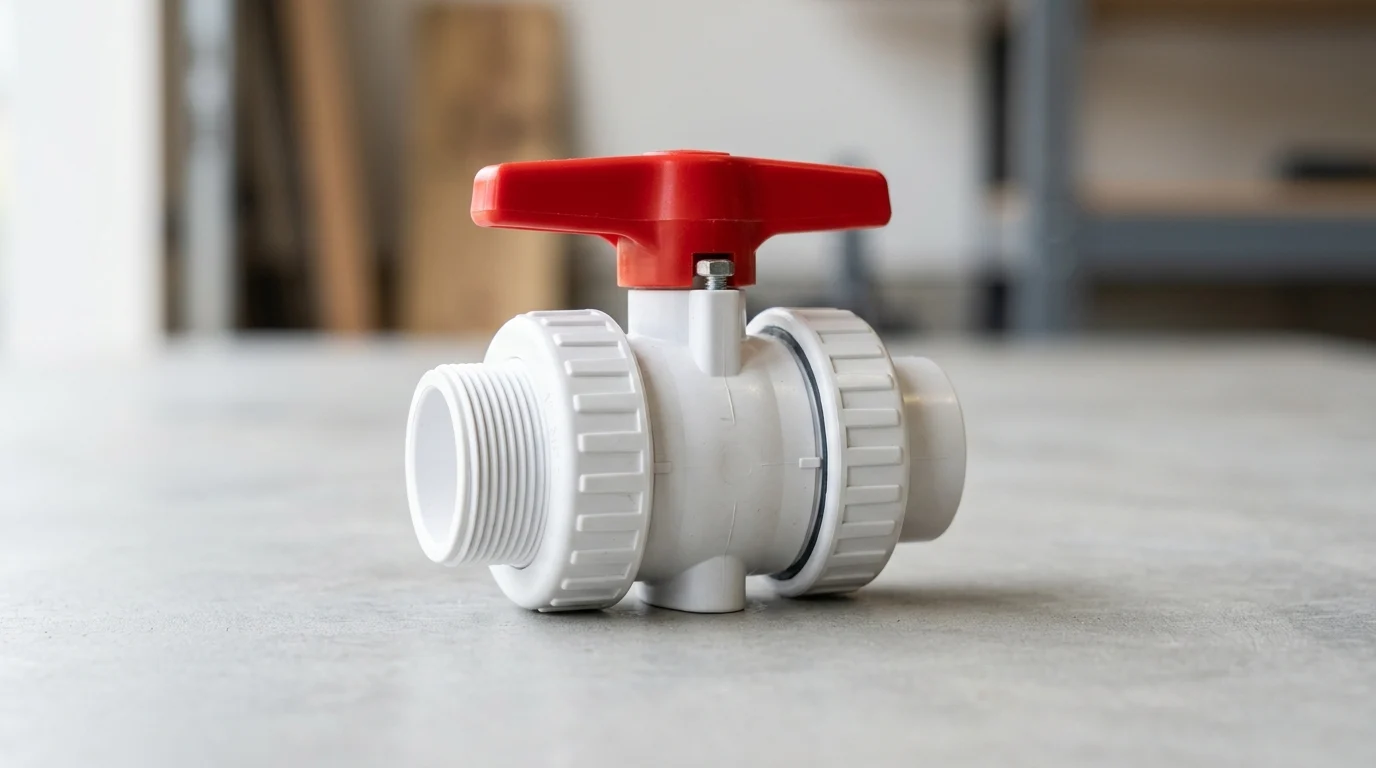
Pressure limits for a PVC ball valve are not a single fixed number; they depend on valve schedule, size, temperature, fluid type, and how the system operates. In many cases, standard PVC valves are rated around 150 PSI at 73°F, while some Schedule 80 models can be rated higher, but those figures change as conditions become less ideal. This article explains how maximum pressure is defined, how it differs from working and burst pressure, and which factors reduce safe operating capacity. By the end, readers will be able to interpret pressure ratings more accurately and judge whether a given PVC ball valve suits their application.
Why maximum pressure matters for a PVC ball valve
Specifying the correct maximum pressure for thermoplastic piping components is critical to maintaining overall system integrity. When engineers integrate a PVC ball valve into a fluid handling network, understanding its precise pressure limitations prevents catastrophic structural failures, costly unscheduled downtime, and potential environmental or safety hazards.
Maximum pressure in a thermoplastic environment is not a static, universally applicable value. Rather, it is a dynamic threshold heavily influenced by fluid characteristics, fluctuating environmental conditions, and mechanical stress profiles. Failure to accurately assess these intersecting variables can lead to premature structural fatigue within the polymer matrix, ultimately compromising the entire hydraulic circuit.
Pressure rating vs working and burst pressure
To evaluate component durability effectively, engineers must distinguish between nominal pressure ratings, maximum working pressure, and ultimate burst pressure. The nominal pressure rating represents the maximum allowable continuous pressure under ideal ambient conditions. For industrial thermoplastic valves, this baseline is generally standardized at 150 PSI (pounds per square inch) for water at 73°F (23°C), though certain Schedule 80 configurations may specify up to 235 PSI.
Working pressure refers to the actual operational stress the valve sustains during standard daily use, which should remain well below the nominal rating to account for systemic fluctuations. Conversely, burst pressure is the ultimate failure point where the structural integrity of the polyvinyl chloride yields to internal forces. For high-quality industrial valves, burst pressure is typically engineered to be three to four times the nominal working pressure—often exceeding 600 PSI under laboratory conditions—providing a critical safety margin against sudden hydraulic shocks.
Operating factors that reduce maximum pressure
Several operational dynamics actively reduce the effective maximum pressure of a thermoplastic valve in real-world deployments. The most significant degrading factor is thermal load. Polyvinyl chloride is highly temperature-sensitive; as the internal fluid or external ambient temperature rises above the 73°F baseline, the tensile strength of the polymer decreases proportionally, requiring immediate pressure derating.
Additionally, hydraulic shock, commonly recognized as water hammer, introduces transient pressure spikes that can easily exceed the valve’s maximum rating. A system operating at a steady 100 PSI can experience split-second surges of 300 PSI or more when a quarter-turn valve is closed too rapidly. Chemical compatibility also plays a critical role in pressure retention; highly concentrated corrosive fluids or incompatible solvents can degrade the polymer matrix over time, effectively lowering the maximum pressure threshold long before the valve reaches its expected mechanical lifespan.
Maximum pressure limits for PVC ball valves
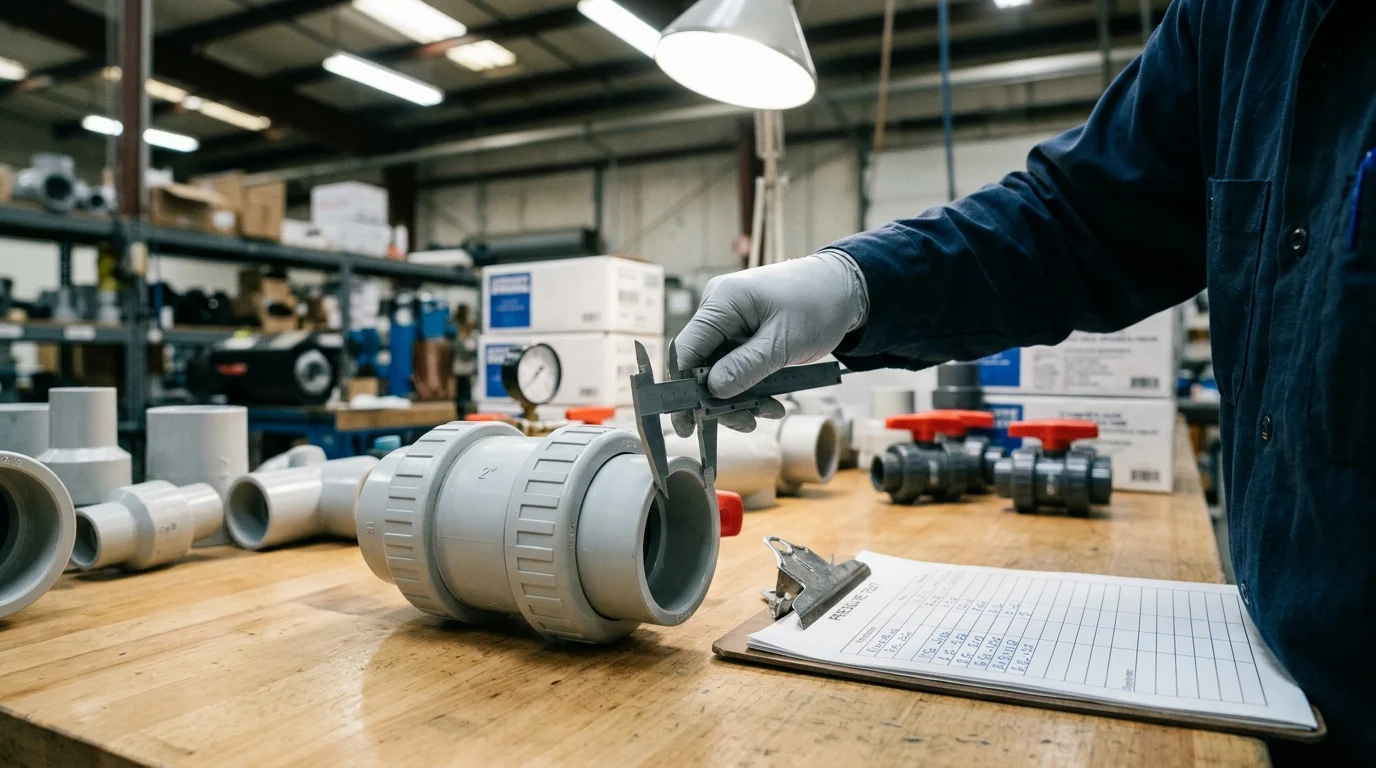
Thermoplastic valve capabilities vary significantly across different manufacturing specifications and architectural designs. While the baseline metric for a standard valve is often 150 PSI at ambient temperature, actual deployment limits depend heavily on the physical dimensions of the component, the internal geometry of the valve body, and the specific installation environment.
How size, material, temperature, and end connection affect pressure
Valve size inversely correlates with pressure capacity in many piping schedules. A compact 1/2-inch valve can comfortably sustain high pressures due to a smaller internal surface area exposed to hydraulic forces. In contrast, larger diameters, such as 4-inch or 6-inch valves, experience exponentially greater total force against the obturator (ball) and body walls, sometimes necessitating a lower maximum rating, such as 100 PSI or PN10, to maintain safety margins.
End connections further dictate these limits. Solvent-welded socket connections typically maintain the full pressure rating of the pipe system, as they create a homogenous bonded joint. However, threaded connections introduce stress concentrators at the thread roots, which often requires engineers to apply a 50% derating of the overall system pressure capacity. Similarly, flanged connections are universally capped at 150 PSI regardless of the underlying pipe schedule, strictly limiting the maximum pressure of the attached valve.
Pressure rating comparison table
The relationship between thermal load and pressure capacity is strictly linear after surpassing ambient baselines. Engineers must apply specific derating factors to determine the safe maximum pressure at elevated temperatures. The absolute maximum service temperature for standard PVC is 140°F (60°C), beyond which the material loses structural integrity and is no longer rated for pressure retention.
| Operating Temperature (°F) | Operating Temperature (°C) | Derating Factor | Max Pressure for 150 PSI Valve (PSI) |
|---|---|---|---|
| 73 | 23 | 1.00 | 150 |
| 90 | 32 | 0.75 | 112 |
| 110 | 43 | 0.51 | 76 |
| 130 | 54 | 0.30 | 45 |
| 140 | 60 | 0.22 | 33 |
By applying the derating factor to the nominal pressure, operators can ensure the valve remains within safe operational boundaries, preventing deformation or catastrophic bursting as system temperatures fluctuate.
How to verify a PVC ball valve pressure rating
Ensuring a valve will perform reliably under maximum pressure conditions requires rigorous validation before installation. Procurement specialists and design engineers must systematically verify that selected components adhere to recognized international standards and possess clear, traceable performance markings from the manufacturer.
Standards, test data, and marking requirements
Reputable manufacturers design and test valves according to stringent industrial frameworks, such as ASTM F1970, which governs the performance of PVC and CPVC valves, or ISO 16135 for industrial thermoplastic valves. These standards mandate rigorous hydrostatic testing protocols. To achieve certification, a valve must typically withstand a shell test at 1.5 times its maximum rated working pressure—held for a minimum of 60 to 180 seconds—without displaying any visible leakage or pressure drop.
Furthermore, proper marking is a mandatory compliance requirement under these standards. The valve body must permanently display critical operational data molded or stamped directly onto the exterior. This includes the manufacturer’s logo or trademark, the nominal size, the material designation (e.g., PVC-U), and the maximum pressure rating at ambient temperature, commonly marked as 150 PSI, PN10, or PN16. Missing or illegible markings indicate non-compliance and unverified pressure thresholds.
Selection steps for buyers and engineers
A systematic engineering approach is required to select a valve with
Key Takeaways
- The most important conclusions and rationale for PVC ball valve
- Specs, compliance, and risk checks worth validating before you commit
- Practical next steps and caveats readers can apply immediately
Frequently Asked Questions
What is the typical maximum pressure for a PVC ball valve?
A standard PVC ball valve is commonly rated at 150 PSI for water at 73°F (23°C). Some Schedule 80 models may reach 235 PSI, but always confirm the exact manufacturer rating.
Does temperature reduce the pressure rating of a PVC ball valve?
Yes. As temperature rises above 73°F (23°C), PVC strength drops and the valve must be derated. Standard PVC is generally not pressure-rated above 140°F (60°C).
Do larger PVC ball valves have lower pressure limits?
Usually yes. Smaller sizes often handle higher pressure, while larger valves may be limited to around 100 PSI or PN10 depending on design, wall thickness, and end connection.
How do threaded or flanged ends affect PVC ball valve pressure?
Threaded ends often need significant derating because threads create stress points. Flanged PVC connections are commonly capped at 150 PSI, even if the pipe schedule itself is higher.
Can water hammer exceed a PVC ball valve’s maximum pressure?
Yes. Fast valve closure can create short pressure spikes far above normal operating pressure. Use slow actuation, proper support, and surge control to protect the PVC ball valve.