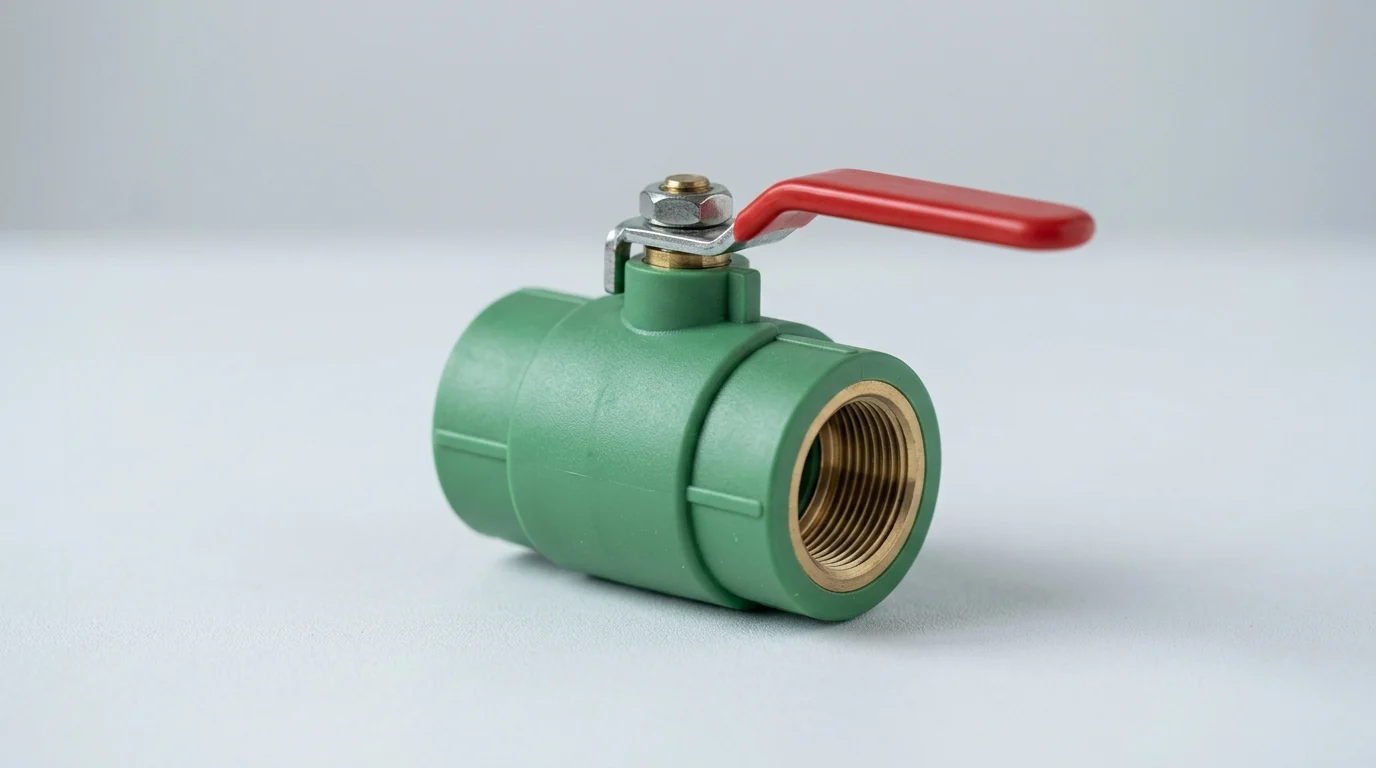
Choosing the right shutoff valve in a PPR piping system is not just a hardware decision—it affects flow efficiency, maintenance speed, sealing reliability, and long-term operating costs. PPR ball valves and gate valves can both stop or allow fluid movement, but they do it through very different mechanisms: one uses rapid quarter-turn rotation, while the other relies on slower linear gate travel. Those design differences influence pressure loss, durability, temperature suitability, and installation strategy. This article compares how each valve works, what materials and seals they use, and when one option is more practical than the other for modern plumbing networks.
PPR Ball Valve vs Gate Valve Basics
Fluid control architectures in modern residential, commercial, and industrial plumbing rely heavily on Polypropylene Random Copolymer (PPR) piping networks. Within these systems, the selection of isolation valves fundamentally dictates the hydraulic integrity and operational longevity of the network. The two most prominent configurations utilized are the ball valve and the gate valve. While both serve the primary function of halting or permitting fluid flow, their internal mechanics, sealing mechanisms, and material integrations differ significantly, making them suitable for distinct operational paradigms.
Operating Principles
The operational principle of a ball valve centers on a spherical closure unit featuring a central bore. When the valve is in the open position, the bore aligns with the pipeline, allowing unobstructed fluid transmission. Actuation requires a simple quarter-turn, or 90-degree rotation, of the handle to position the solid side of the sphere across the flow path, instantly halting flow. Conversely, a gate valve operates via a linear motion mechanism. A flat or wedge-shaped gate is lowered into the fluid path to block flow and raised to permit it. This mechanism necessitates a multi-turn operation, requiring several 360-degree rotations of a handwheel to fully transition between the open and closed states, which inherently slows the actuation time.
Materials and Sealing Design
Material composition and sealing architectures further differentiate these components. A high-quality PPR ball valve typically integrates a PPR exterior body with a machined brass or stainless steel internal sphere, flanked by Polytetrafluoroethylene (PTFE) seats. PTFE provides an exceptionally low friction coefficient of approximately 0.04, ensuring a tight, self-lubricating seal that resists degradation over thousands of cycles. Gate valves engineered for PPR systems generally consist of a brass body that is either fully encapsulated in a PPR shell or connected via threaded PPR adapter unions. The sealing in gate valves relies on metal-to-metal contact or the compression of EPDM rubber O-rings and graphite packing glands. These differing material strategies directly impact the valve's susceptibility to particulate abrasion and chemical wear over time.
Key Performance Differences
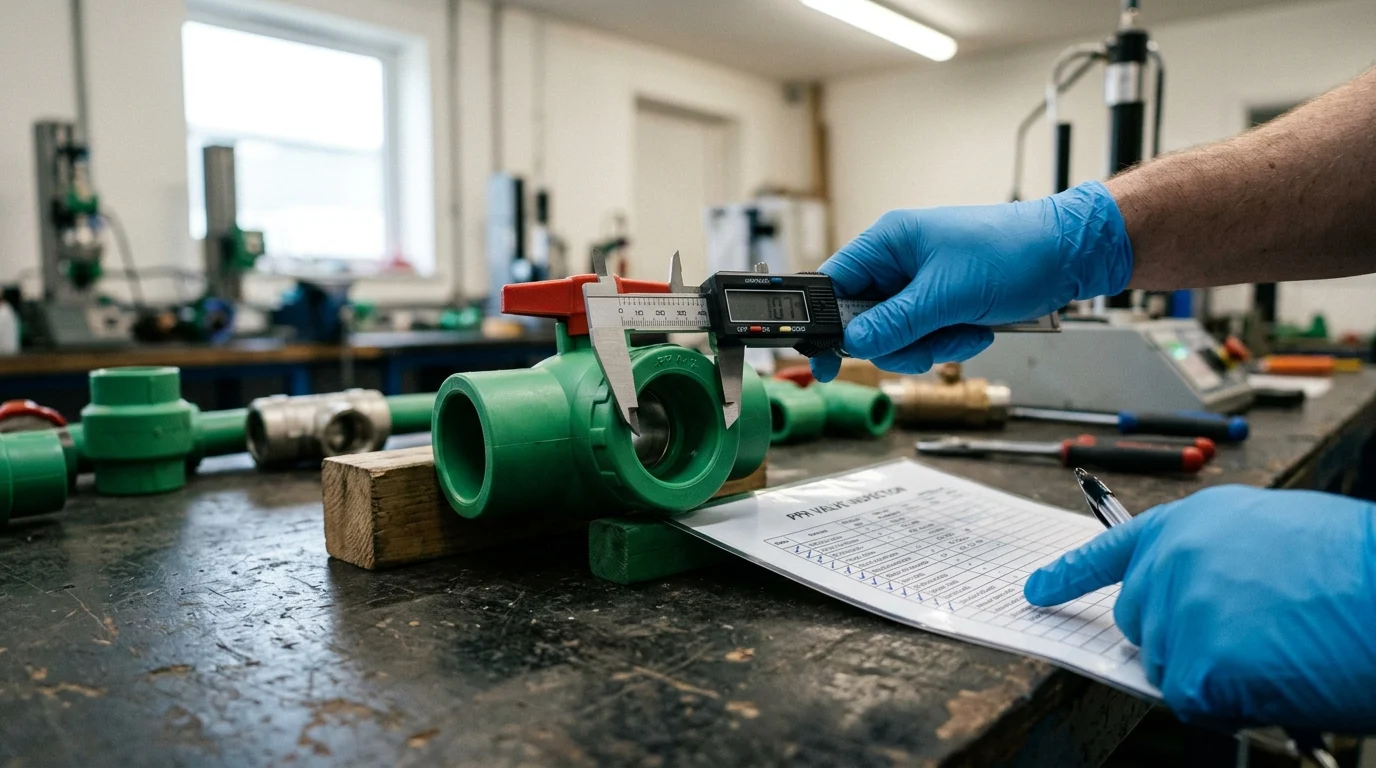
The mechanical divergence between these two valve types dictates their performance metrics in active fluid networks. Engineers and system designers must rigorously evaluate flow dynamics, thermal resistance, and pressure ratings to optimize system efficiency and prevent premature mechanical failure.
Pressure, Temperature, and Flow Loss
Both valve types are engineered to withstand the rigorous demands of modern plumbing systems, typically carrying pressure nominal (PN) ratings of PN20 or PN25, which translates to a maximum operating pressure of 2.5 MPa at 20°C. They are also designed to handle continuous fluid temperatures up to 70°C, with short-term peaks reaching 95°C. However, their flow characteristics differ. Ball valves offer a full-port design where the internal bore diameter matches the pipe's internal diameter, resulting in a negligible pressure drop and a high flow coefficient (Cv). Gate valves also provide a straight-through flow path, but internal recesses required for the gate track can induce minor turbulence. Furthermore, gate valves are highly susceptible to wire-drawing and seat erosion if utilized for throttling; they must remain strictly in fully open or fully closed positions.
Installation and Maintenance Needs
Installation methodologies and maintenance requirements present stark contrasts. PPR ball valves are typically installed using socket fusion welding at exactly 260°C. This process melts the valve's PPR spigot and the pipe, creating a single, homogeneous, leak-proof joint that eliminates the need for mechanical seals. Gate valves often require threaded brass transitions, necessitating PTFE tape or liquid sealants, which introduces potential micro-leakage points under high thermal cycling. From a maintenance perspective, the wiping action of a ball valve against its PTFE seats clears away suspended particulates. In contrast, the bottom recess of a gate valve is prone to accumulating sediment. In high-particulate water systems, this accumulation can prevent the gate from seating fully, increasing bypass leak probability by up to 15% over a five-year lifecycle.
| Feature | PPR Ball Valve | Gate Valve (PPR Union) |
|---|---|---|
| Actuation | Quarter-turn (90°) | Multi-turn (Linear) |
| Flow Control | On/Off (Rapid) | On/Off (Slow) |
| Installation | Thermal Fusion (260°C) | Threaded / Fusion Hybrid |
| Debris Resistance | High (Wiping action) | Low (Bottom track traps sediment) |
| Pressure Rating | Up to PN25 (2.5 MPa) | Up to PN25 (2.5 MPa) |
How to Choose the Right Valve
Specifying the correct valve architecture requires a holistic assessment of the application environment, regulatory constraints, and long-term operational expenditures. Procurement decisions must align with both the immediate hydraulic requirements and the projected lifecycle of the facility.
Selection Steps for Potable Water Systems
When selecting isolation valves for potable water distribution, actuation frequency is the primary determining factor. Ball valves are the superior choice for zones requiring frequent isolation, such as branch lines, equipment feeds, and residential shut-offs, due to their rapid actuation and resilient seals. Gate valves are better suited for main line isolation where operation is infrequent (e.g., annual maintenance shutdowns). The slow closing mechanism of a gate valve is highly advantageous in large-diameter pipelines, as it naturally mitigates the risk of water hammer—a hydraulic shock wave that can rupture pipes if flow is halted too rapidly. Additionally, system designers must verify that all wetted materials, particularly the brass alloys and elastomeric seals utilized in either valve type, comply with stringent lead-free mandates and potable water standards such as NSF/ANSI 61 or WRAS.
Lifecycle Cost, Compliance, and Supplier Quality
An analysis of total cost of ownership (TCO) reveals distinct financial trajectories. A premium PPR ball valve may present an initial procurement cost 10% to 15% higher than a standard threaded brass gate valve. However, labor costs for installation are substantially lower due to the speed of thermal fusion welding compared to threading mechanical joints. Furthermore, the zero-maintenance profile of the PTFE-seated ball valve drastically reduces long-term operational expenditures.
相关阅读:PPR ball valve
Key Takeaways
- Choose a PPR ball valve when fast isolation is important, because it opens or closes with a simple 90-degree handle turn.
- Use valve pressure ratings carefully, as common PPR ball and gate valves are typically PN20 or PN25 and may handle up to 2.5 MPa at 20°C.
- Select full-port PPR ball valves when minimizing pressure drop is a priority, because the bore can align closely with the pipe diameter.
- Consider sealing design before purchase, since PTFE seats in PPR ball valves provide low-friction sealing for repeated operation.
- Avoid using gate valves where frequent rapid operation is required, because their multi-turn mechanism is slower than a ball valve.
Frequently Asked Questions
What is a PPR ball valve used for?
A PPR ball valve is used to quickly isolate or restore water flow in PPR piping systems. Its quarter-turn handle makes it practical for residential, commercial, and industrial plumbing where fast shutoff and reliable sealing are important.
How does a PPR ball valve differ from a gate valve?
A PPR ball valve uses a rotating ball with a bore and opens or closes with a 90-degree turn. A gate valve uses a rising or lowering gate and usually needs several turns of a handwheel, making it slower to operate.
Which valve provides faster shutoff?
The PPR ball valve provides faster shutoff because it requires only a quarter turn. Gate valves need multiple rotations to move fully open or closed, so they are less convenient when rapid isolation is needed.
Do PPR ball valves reduce water pressure?
Full-port PPR ball valves create very little pressure loss because the bore can match the pipe’s internal diameter. Gate valves also allow straight flow, but their internal tracks may create slight turbulence.
What materials are commonly used inside a PPR ball valve?
A quality PPR ball valve often has a PPR outer body, a brass or stainless steel ball, and PTFE seats. PTFE helps create a low-friction, durable seal suitable for repeated operation.