Introduction
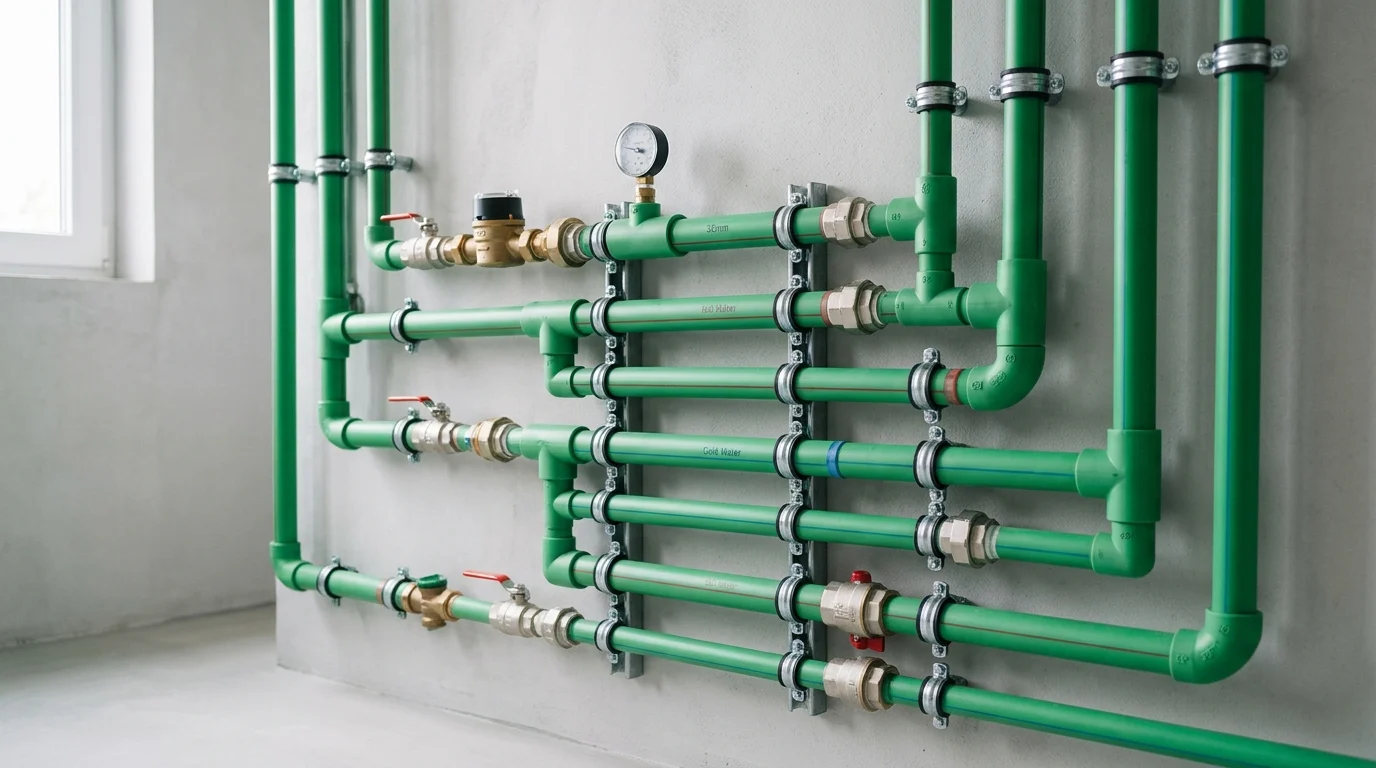
In modern plumbing, PPR pipe systems are valued for combining durability, clean water delivery, and efficient installation in one material solution. Used across residential, commercial, and industrial projects, they support hot and cold water distribution, heating networks, and other pressurized piping applications where corrosion resistance and long service life matter. Their smooth interior also helps maintain flow performance by reducing scaling and friction over time. This article explains where PPR systems are commonly used, which material properties make them suitable for demanding plumbing environments, and why they are often selected over traditional metal or PVC alternatives.
Why Choose a PPR Pipe System
Modern plumbing engineering continuously seeks materials that balance initial capital expenditure with long-term reliability. Polypropylene Random Copolymer, widely known as PPR, has emerged as a dominant thermoplastic material in global construction. The structural composition of PPR ensures high molecular stability, making it highly resistant to chemical degradation and mechanical stress.
Choosing the right piping infrastructure requires an evaluation of material properties under continuous physical demands. A standard PPR pipe offers a smooth internal surface, which minimizes friction loss and prevents scaling or bio-fouling, ultimately maintaining optimal flow rates throughout the building’s lifecycle.
Cost, Service Life, and Installation Efficiency
One of the most compelling reasons to specify PPR materials is the exceptional service life coupled with reduced installation overhead. When operated within standard design parameters, PPR networks are engineered to last 50 years or more, significantly reducing replacement cycles. Because the material is highly resistant to hard water and aggressive chemicals, facilities experience up to a 30% reduction in long-term maintenance costs.
Installation efficiency is primarily driven by the heat fusion welding process. Unlike traditional metal pipes that require threading or soldering, PPR components are joined using a specialized heating tool that melts the pipe exterior and fitting interior. This creates a homogeneous, leak-proof bond in a matter of seconds. For a standard 20mm pipe, the heating time is merely 5 to 7 seconds, allowing contractors to complete extensive networks rapidly while virtually eliminating joint failure rates.
Common Use Cases
PPR piping is exceptionally versatile and serves as the backbone for various fluid transport applications. In residential construction, it is the standard for both hot and cold potable water distribution due to its non-toxic nature. Commercial sectors, including hospitality and healthcare, utilize PPR to ensure hygienic water delivery without the risk of heavy metal leaching.
Industrial facilities also adopt these networks for transporting compressed air, liquid foods, and mildly aggressive chemicals. The material’s inherent acoustic insulation properties dampen the noise of water hammer and high-velocity fluid flow, operating at decibel levels significantly lower than metallic counterparts. This makes PPR highly desirable in high-density residential towers and quiet zones like hospital wards.
What Is a PPR Pipe System Used For
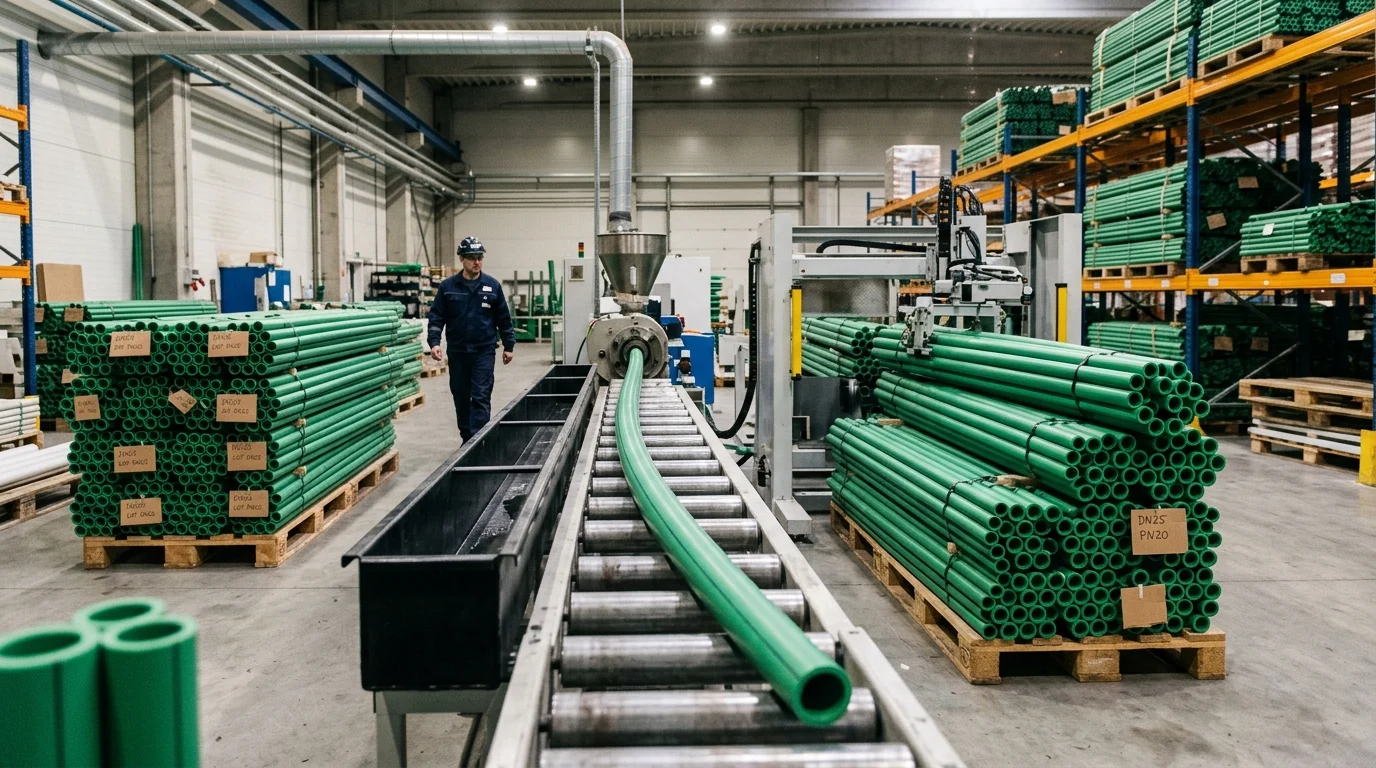
The application scope of thermoplastic piping has expanded vastly due to advancements in copolymer manufacturing. A well-designed polypropylene random pipe system is frequently deployed in demanding environments where thermal stability and fluid purity are non-negotiable.
Engineers and architects specify these networks based on strict operational thresholds, ensuring that the chosen pipe class aligns perfectly with the intended fluid dynamics and thermal loads.
Best Applications for Water Supply and Heating
In modern infrastructure, the primary application for PPR is the distribution of potable hot and cold water. Because PPR does not corrode or alter the taste and odor of water, it easily meets stringent international health standards. Beyond basic plumbing, PPR is extensively utilized in radiant floor heating systems and central radiator networks. The material’s low thermal conductivity (approximately 0.24 W/mK) ensures minimal heat loss as water travels from the boiler to the terminal units.
Additionally, HVAC systems rely on PPR for chilled water lines. The material’s resistance to condensation and internal freezing makes it an excellent alternative to insulated carbon steel, reducing both the overall weight of the piping network and the labor required for thermal wrapping.
Operating Limits and Temperature Range
Understanding the operating limits of PPR is critical for system longevity. Standard PPR pipes are designed to handle continuous operating temperatures of up to 70°C (158°F) for a 50-year lifespan. They can withstand short-term peak temperatures of up to 95°C (203°F) during system malfunctions or thermal disinfection cycles, though continuous operation at this peak will accelerate material fatigue.
Pressure ratings are equally vital. PPR pipes are manufactured in various pressure classes, typically ranging from PN10 (1.0 MPa) for cold water applications up to PN25 (2.5 MPa) for high-pressure hot water systems. Operating outside these matrices risks premature rupture or joint degradation.
| Pressure Class | Max Continuous Temp | Typical Application | Expected Lifespan (Years) |
|---|---|---|---|
| PN10 (1.0 MPa) | 20°C | Cold Water Supply | 50+ |
| PN16 (1.6 MPa) | 60°C | DHW / Mixed HVAC | 50 |
| PN20 (2.0 MPa) | 70°C | Central Hot Water | 50 |
| PN25 (2.5 MPa) | 70°C (Peaks to 95°C) | High-Pressure Heating | 50 |
How Does a PPR Pipe System Compare with PVC and
When designing a plumbing network, engineers frequently evaluate PPR against traditional polyvinyl chloride (PVC) and chlorinated polyvinyl chloride (CPVC). While all three are thermoplastic polymers, their molecular structures dictate entirely different performance profiles and installation methods.
Selecting between these materials requires a careful analysis of temperature demands, mechanical stress, and long-term lifecycle costs.
Performance, Durability, and Hygiene
Performance and durability vary significantly across these plastics. Standard PVC is strictly limited to cold water applications, generally failing or deforming at temperatures above 60°C (140°F). CPVC, treated with chlorine, can handle elevated temperatures up to 93°C (200°F). However, CPVC tends to become brittle over time, especially in environments with high UV exposure or aggressive water chemistry, leading to micro-cracking.
PPR outperforms both in terms of flexibility and impact resistance. Its copolymer structure absorbs physical shocks and water hammer effects far better than the rigid matrices of PVC and CPVC. Furthermore, from a hygiene perspective, PPR is entirely free of heavy metals and volatile organic compounds (VOCs). CPVC installations often rely on chemical solvents that can emit VOCs during the curing process, whereas PPR’s thermal fusion guarantees zero chemical leaching.
Installation, Cost, and Repair Trade-Offs
The most distinct trade-off between these systems lies in the installation methodology. PVC and CPVC utilize solvent cement (gluing) for joint creation. While this requires minimal tooling and allows for rapid assembly in tight spaces, the joints are inherently weaker than the pipe itself and require curing times ranging from 2 to 24 hours before the system can be pressurized.
Conversely, PPR uses polyfusion welding. A specialized heating tool melts the components at roughly 260°C, fusing them into a single continuous piece of plastic. The system can be fully pressurized the moment the joints cool down (typically within 10 to 15 minutes). While PPR requires a higher initial investment in welding tools and requires access clearance for the heating iron, the total elimination of leak points drastically lowers the 20-year repair and maintenance costs compared to glued CPVC networks.
| Feature | PPR | CPVC | PVC |
|---|---|---|---|
| Max Continuous Temp | 70°C (Peaks to 95°C) | 93°C | 60°C |
| Jointing Method | Heat Fusion (Welding) | Solvent Cement (Glue) | Solvent Cement (Glue) |
| Impact Resistance | High (Flexible) | Low (Brittle over time) | Moderate |
| Curing Time | 10-15 Minutes (Cooling) | 2-24 Hours | 2-24 Hours |
What Factors Should Guide PPR Pipe Selection and Installation
A successful plumbing project relies on rigorous material specification and precise execution. Specifying a complete PPR Pipe System requires strict adherence to engineering standards, ensuring that the components can withstand the hydraulic and thermal loads of the building.
Contractors and designers must collaborate to account for pressure variations, regulatory frameworks, and thermal expansion dynamics during the drafting phase.
Pressure Class and Pipe Sizing
Selecting the correct pressure class (Nominal Pressure or PN) is the foundational step in PPR specification. Engineers must calculate the maximum static and dynamic pressures the system will face. For standard residential cold water lines, PN10 or PN16 pipes are generally sufficient. However, for high-rise buildings where booster pumps generate significant head pressure, PN20 or PN25 pipes are mandatory, particularly for hot water risers.
Pipe sizing is equally critical to prevent velocity-induced noise and premature wear. PPR pipes are manufactured in standard outer diameters ranging from 20mm up to 160mm for commercial mains. Because PPR has a thicker wall dimension than copper or CPVC of the same outer diameter, designers must calculate flow rates based on the internal diameter to ensure adequate volumetric delivery without exceeding the recommended flow velocity of 1.5 to 2.0 meters per second.
Code Compliance and Certifications
Compliance with international standards ensures the safety and reliability of the piping network. High-quality PPR systems are manufactured in accordance with ISO 15874 (Plastics piping systems for hot and cold water installations) and DIN 8077/8078, which govern the dimensions and testing protocols for polypropylene pipes.
For potable water applications, the system must carry certifications demonstrating non-toxicity. Certifications such as NSF/ANSI 61 in North America or WRAS in the United Kingdom verify that the material does not leach harmful contaminants into the drinking water supply. Verifying these credentials during the procurement phase prevents costly compliance failures during municipal building inspections.
Specification and Installation Best Practices
Even the highest-grade PPR materials will fail if installation best practices are ignored. The most critical factor is temperature control during the fusion process. The welding tool must be strictly calibrated to 260°C (±5°C). Overheating degrades the polymer chain, while underheating results in weak, shallow bonds that will eventually rupture under pressure.
Another vital specification is managing thermal expansion. PPR has a relatively high coefficient of linear thermal expansion, typically around 0.15 mm/mK. In long, straight runs of hot water piping, this can result in several centimeters of expansion. Installers must incorporate expansion loops, directional changes, or utilize specialized fiberglass-reinforced PPR (PPR-CT or PPR-F) which reduces thermal expansion by up to 75% compared to standard homogeneous PPR pipes.
How to Decide If a PPR Pipe System Is Right
Determining the optimal material for a fluid transport network requires balancing immediate capital constraints against long-term operational goals. While PPR represents the gold standard for many modern applications, a thorough project assessment is necessary to confirm its viability.
Facility managers and engineering consultants must evaluate the specific environmental conditions, budget parameters, and lifecycle expectations of the asset before finalizing material procurement.
Project Fit, Budget, and Lifecycle Priorities
PPR systems are exceptionally well-suited for projects prioritizing longevity, water quality, and low maintenance. In institutional developments like hospitals, laboratories, and high-rise condominiums, the 50-year lifecycle of PPR provides an excellent return on investment. The upfront cost of PPR material and fusion labor is generally offset within the first decade through the total avoidance of pinhole leaks, corrosion remediation, and scale removal.
Budgetary considerations must encompass both material acquisition and labor velocity. While the raw cost of PPR may be slightly higher than standard PVC, the speed of heat fusion welding significantly reduces billable plumbing hours on large commercial sites. Furthermore, for eco-conscious projects aiming for LEED certification, PPR is a highly recyclable thermoplastic with a low carbon footprint during manufacturing, making it an ideal fit for sustainable building initiatives.
When Another Material May Be Better
Despite its versatility, there are specific scenarios where PPR is not the appropriate choice. If a project involves the transport of industrial steam or continuous fluid temperatures exceeding 95°C (203°F), PPR will experience rapid structural degradation. In these high-heat industrial applications, metallic systems such as carbon steel or stainless steel remain the mandatory standard.
Additionally, standard PPR is highly susceptible to ultraviolet (UV) degradation. If a project requires extensive outdoor piping exposed to direct sunlight, standard green or white PPR will become brittle and fail. Unless the budget allows for specialized UV-resistant black PPR or continuous external insulation cladding, materials with higher inherent UV resilience, such as galvanized steel or specialized outdoor PEX with UV shielding, may offer a more pragmatic and cost-effective solution.
Further reading:
Key Takeaways
- The most important conclusions and rationale for PPR Pipe System
- Specs, compliance, and risk checks worth validating before you commit
- Practical next steps and caveats readers can apply immediately
Frequently Asked Questions
What is a PPR pipe system mainly used for?
It is mainly used for hot and cold potable water, radiant floor heating, radiator lines, and some HVAC chilled-water systems in modern buildings.
Can PPR pipes be used for both hot and cold water?
Yes. Standard PPR systems handle cold water and continuous hot water up to about 70°C, with short-term peaks up to 95°C.
Why do contractors choose PPR over metal pipes?
PPR resists corrosion, scaling, and chemical attack, and heat-fusion joints create fast, leak-proof connections with lower maintenance needs.
How long does a PPR pipe system typically last?
When correctly sized and operated within temperature and pressure limits, a PPR system is typically designed for a service life of 50 years or more.
Where can I source PPR pipes and fittings for plumbing projects?
You can explore PPR pipe and fitting solutions from Donsen at donsen.com, including options for water supply, heating, and building plumbing systems.