Introduction
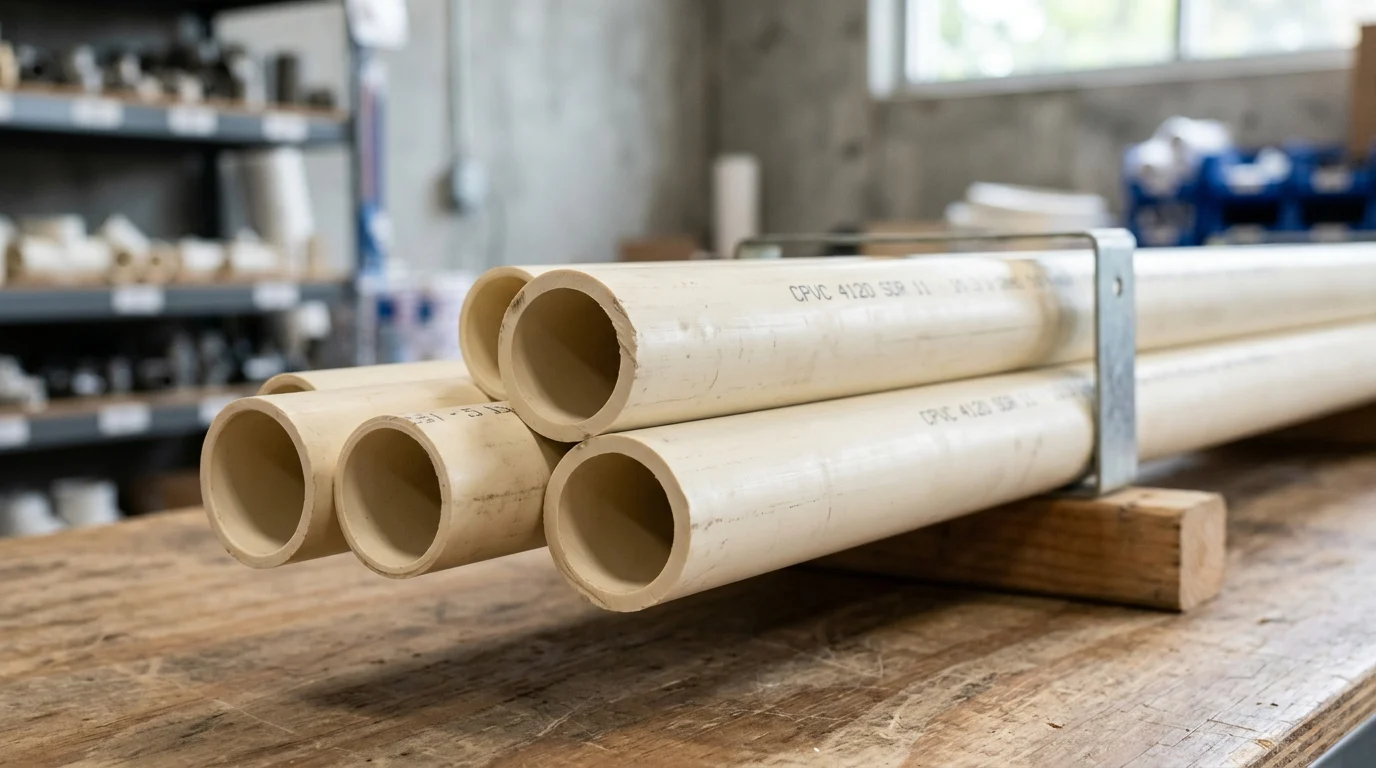
Choosing piping for hot water systems affects durability, water quality, installation cost, and long-term maintenance. CPVC stands out because it handles higher temperatures than standard PVC while resisting corrosion, scale buildup, and many common water-chemistry problems that damage metal pipes. Its light weight and straightforward joining methods can also simplify installation and reduce labor demands. This article explains the main advantages of CPVC pipes in hot water applications, including thermal performance, reliability, safety, and cost efficiency, so readers can better judge whether CPVC is the right fit for residential, commercial, or light industrial plumbing systems.
Why CPVC Pipes Matter in Hot Water Systems
Chlorinated Polyvinyl Chloride (CPVC) is a highly engineered thermoplastic produced by the chlorination of polyvinyl chloride resin. This chemical modification significantly increases the material’s glass transition temperature, enabling it to maintain structural integrity and pressure-bearing capabilities at elevated temperatures. In modern hydronic and potable water distribution networks, material specification dictates system longevity, safety, and operational efficiency.
Unlike standard PVC, which is typically limited to fluid temperatures of 140°F (60°C), CPVC is formulated to handle continuous working temperatures up to 200°F (93°C). This thermal resilience makes it a critical material for hot water systems where metallic piping may face degradation from aggressive water chemistry, and where alternative polymers might lack the necessary rigidity or pressure ratings.
Applications in Residential, Commercial, and Industrial Use
The versatility of CPVC allows it to span multiple sectors. In residential applications, it is predominantly utilized for potable hot and cold water distribution, offering a reliable, lead-free alternative to traditional metals. The material’s inherent resistance to biofilm formation ensures superior water quality from the municipal source to the tap.
In commercial and institutional environments, such as hotels, hospitals, and high-rise multifamily dwellings, CPVC is frequently specified for domestic water risers and distribution mains. Industrial applications leverage CPVC for process water systems and chemical handling, where fluids at elevated temperatures would aggressively corrode metallic systems. Its ability to maintain a continuous pressure rating of 100 psi at 180°F (82°C) makes it suitable for demanding, high-load operational environments.
Performance Requirements Before Specification
Before specifying CPVC for a hot water network, engineers must evaluate the system’s maximum operational parameters against established industry standards. The primary standard governing CPVC hot and cold water distribution systems is ASTM D2846, which dictates dimensional tolerances, burst pressure requirements, and sustained pressure testing for Standard Dimension Ratio (SDR) 11 piping.
Specifiers must calculate the required pressure derating factors if the system consistently operates near the upper thermal limits of the material. For instance, while Schedule 80 CPVC may boast a high pressure rating at 73°F (23°C), its operational pressure capacity drops by approximately 80% when operating at 200°F (93°C). Consequently, rigorous hydraulic modeling and adherence to manufacturer derating curves are mandatory before finalizing material schedules.
Technical Advantages of CPVC Pipes for Hot Water
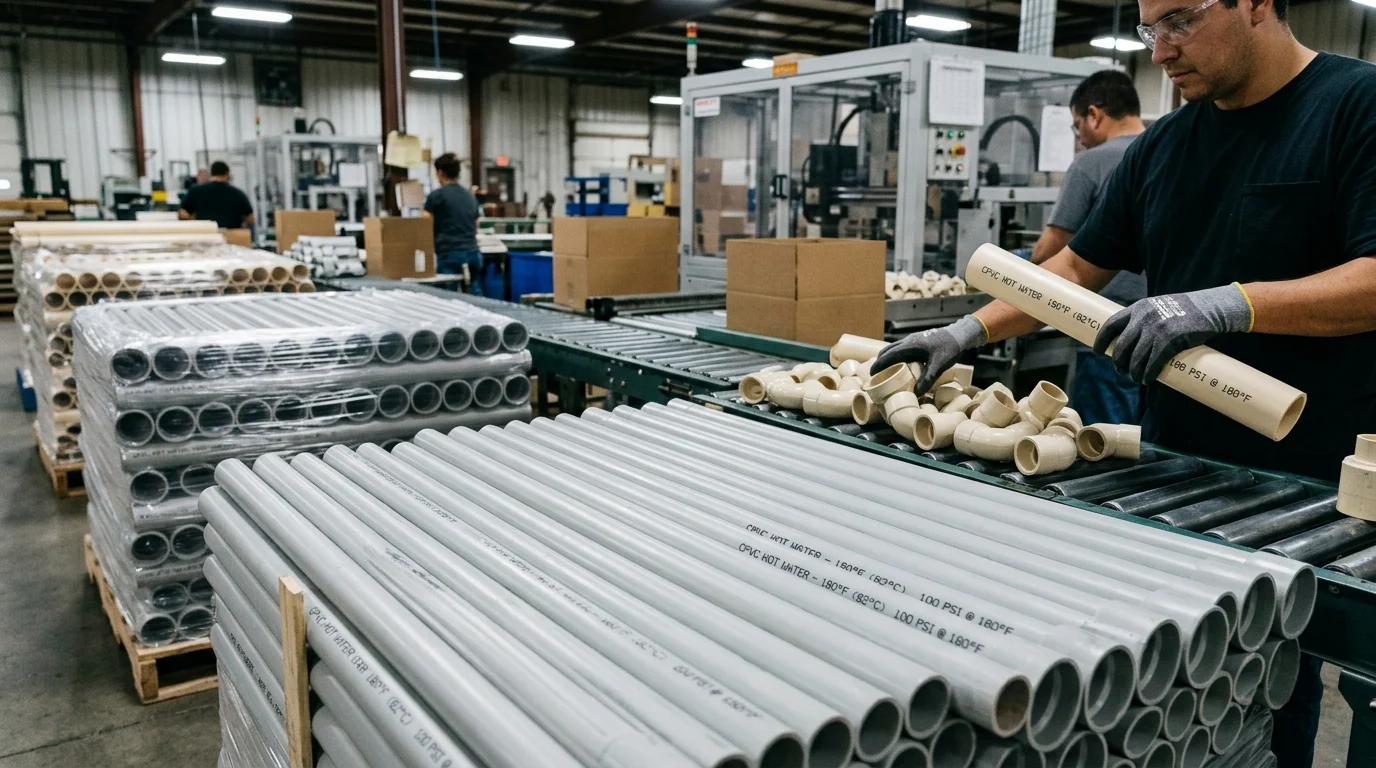
The fundamental chemistry of CPVC provides a unique thermomechanical profile that resolves many of the traditional challenges associated with hot water distribution. By integrating additional chlorine molecules onto the polymer backbone, the material achieves a robust defense against thermal degradation, chemical attack, and mechanical fatigue under continuous flow conditions.
Temperature, Pressure, and Thermal Performance
CPVC exhibits exceptional thermal stability for a thermoplastic. It maintains a continuous operational capacity at 200°F (93°C), with short-term excursion capabilities slightly above this threshold depending on the specific resin formulation. This high glass transition temperature prevents the pipe from softening or sagging under load, a common failure point in lesser polymers.
From a pressure perspective, SDR 11 CPVC is engineered to withstand 400 psi at 73°F (23°C) and 100 psi at 180°F (82°C). To accommodate these parameters safely, engineers must account for the material’s coefficient of linear thermal expansion, which is approximately 3.4 x 10^-5 in/in/°F. While higher than metals, this expansion is highly predictable and easily managed through engineered expansion loops and changes in direction.
Resistance to Corrosion, Scaling, and Chlorine
One of the most significant advantages of CPVC in hot water systems is its absolute immunity to galvanic corrosion and its high resistance to scaling. Metallic pipes, particularly copper and galvanized steel, are highly susceptible to internal pitting when exposed to aggressive, low-pH water or high levels of dissolved oxygen. CPVC eliminates this risk entirely, ensuring that the internal diameter remains unobstructed over the system’s lifespan.
Furthermore, CPVC is unaffected by the chlorine and chloramine disinfectants commonly used in municipal water treatment. While continuous exposure to hot, chlorinated water can cause oxidative degradation and premature embrittlement in certain polyolefins (such as early-generation polybutylene or unprotected PEX), CPVC’s heavily chlorinated structure renders it chemically inert to these disinfectants, preserving its structural integrity and burst strength.
Impact on Heat Loss, Noise, and Flow
The thermal conductivity of CPVC is remarkably low at 0.14 W/m·K, compared to copper’s massive 400 W/m·K. This inherent insulating property significantly reduces heat loss across the distribution network. Consequently, hot water systems utilizing CPVC require less supplemental insulation to meet energy codes, and the energy required to maintain domestic hot water supply temperatures is measurably reduced.
In addition to thermal efficiency, CPVC improves the acoustic environment of a building. Its lower acoustic impedance and inherent flexibility allow it to absorb the kinetic energy of flowing water, dampening the acoustic vibrations associated with water hammer. Fluid flow is further optimized by the exceptionally smooth internal surface of CPVC, which maintains a Hazen-Williams C-factor of 150 throughout its life, minimizing friction loss and reducing the energy load on circulation pumps.
CPVC vs. Copper, PPR, and PEX
Material selection for hot water systems often involves a comparative analysis between CPVC and competing materials such as copper, Polypropylene Random Copolymer (PPR), and Cross-linked Polyethylene (PEX). Each material presents a specific matrix of mechanical properties, installation methodologies, and lifecycle costs that must be aligned with project requirements.
Key Comparison Criteria
When comparing piping materials, engineers evaluate several critical criteria: maximum continuous operating temperature, pressure retention at elevated temperatures, chemical resistance to local water supplies, installation labor requirements, and overall material costs. Secondary criteria include the material’s susceptibility to biofilm accumulation, acoustic dampening properties, and the tooling required for robust joint fabrication.
The joining method is particularly critical. While copper requires open-flame soldering or expensive press fittings, and PPR demands specialized thermofusion welding equipment, CPVC utilizes a cold-welding solvent cement process. This chemical fusion creates a joint that is often stronger than the pipe itself, without the need for hot work permits or heavy mechanical tooling.
What to Include in a Comparison Table
To facilitate informed specification, engineers frequently utilize decision matrices. The following table highlights the primary technical distinctions between CPVC and its primary alternatives in hot water applications.
| Material | Max Continuous Temp | Thermal Conductivity | Primary Joining Method | Chlorine Resistance | Relative Labor Cost |
|---|---|---|---|---|---|
| CPVC | 200°F (93°C) | 0.14 W/m·K | Solvent Cement | Excellent | Low |
| Copper | 200°F+ (93°C+) | 400 W/m·K | Soldering / Press | Moderate (Pitting risk) | High |
| PEX | 200°F (93°C) | 0.40 W/m·K | Crimp / Expansion | Variable (Requires rating) | Low |
| PPR | 160°F-180°F (71-82°C) | 0.24 W/m·K | Heat Fusion | Good | Medium |
This comparative data underscores CPVC’s strong position in minimizing thermal loss and resisting aggressive water chemistries, while offering significant advantages in installation logistics compared to rigid metallic options.
Where CPVC Has Advantages and Limits
CPVC holds distinct advantages in commercial environments where water is heavily treated with chloramines, as it will not suffer from the oxidative degradation that can compromise certain PEX formulations. Additionally, its rigidity allows for longer hanger spacing compared to flexible PEX, reducing the total hardware count required for suspended commercial installations.
However, CPVC does have operational limits. It is highly susceptible to ultraviolet (UV) degradation, meaning it must be painted or shielded if installed outdoors. Furthermore, CPVC becomes increasingly brittle at sub-freezing temperatures, making it less suitable for extreme cold-weather installations where the pipe might be subjected to blunt impact before the building is fully enclosed and heated. Specifiers must account for these handling limitations during the construction phase.
Installation, Compliance, and Lifecycle Considerations
The theoretical advantages of CPVC are only fully realized through meticulous installation and adherence to established regulatory frameworks. The transition from material specification to an operational hot water system requires strict compliance with manufacturer guidelines and international plumbing codes to guarantee the projected lifecycle and maintain total cost of ownership benefits.
Best Practices for Installation
The integrity of a CPVC system relies heavily on the solvent cement welding process. Installers must adhere to ASTM F493 standards, ensuring pipes are cut square, properly deburred, and chamfered to prevent the solvent cement from being pushed down the pipe during insertion. The application of the correct primer and cement must be performed within specific ambient temperature windows.
Curing times are non-negotiable. Depending on the pipe diameter and ambient temperature, a system may require up to 24 hours of cure time before being subjected to a full hydrostatic pressure test at 100 psi. Furthermore, due to the thermal expansion rate of approximately 4 inches per 100 feet for every 100°F change in temperature, installers must integrate properly calculated expansion loops or offsets to prevent compressive and tensile stresses from fracturing the joints or fittings.
Codes, Standards, and Water Quality Factors
Compliance with health and safety standards is paramount for domestic hot water systems. CPVC must be certified to NSF/ANSI Standard 61 for health effects in drinking water system components, and NSF/ANSI 14 for plastic piping system components. These certifications ensure that the material does not leach harmful volatile organic compounds (VOCs) or heavy metals into the potable water supply, even at elevated temperatures.
Water quality factors also influence code compliance. In regions where municipal water exhibits high aggressive indices (e.g., low pH, high sulfates), plumbing codes often favor CPVC over copper due to its inert nature. Additionally, systems must comply with international standards such as ISO 15877, which specifies the requirements for chlorinated poly(vinyl chloride) piping systems intended for hot and cold water installations.
Maintenance, Service Life, and Total Cost
When engineered and installed correctly, CPVC hot water systems boast a design service life exceeding 50 years. Maintenance is exceptionally low, primarily because the material resists the internal scaling and tuberculation that typically constrict flow and necessitate chemical flushing or pipe replacement in metallic systems.
From a total cost perspective, CPVC offers substantial upfront savings. The material cost is generally lower than copper, but the primary economic advantage lies in labor reduction. The solvent cement joining method and lighter handling weight typically result in a 15% to 30% reduction in total installed cost compared to traditional soldered copper networks, driving strong return on investment for large-scale commercial developments.
When to Choose CPVC for Hot Water Systems
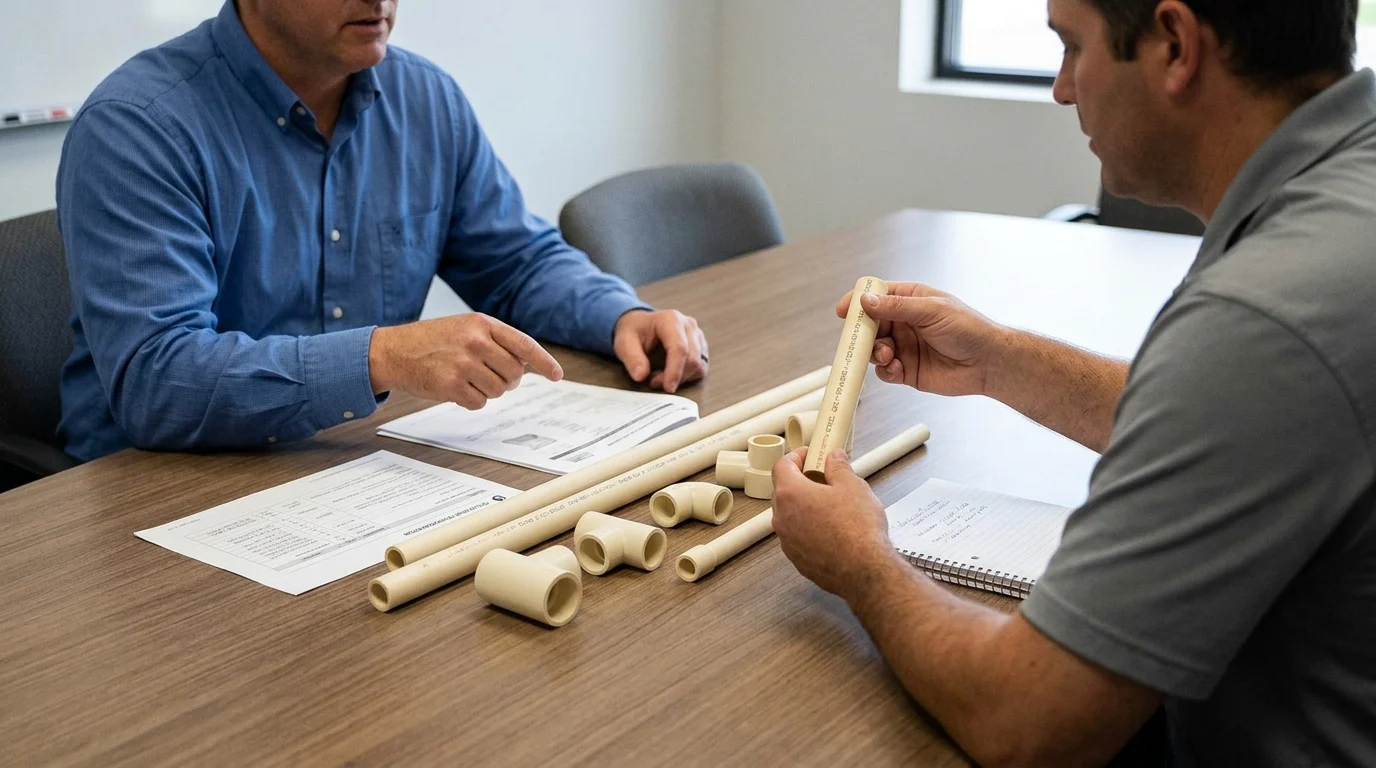
Determining whether CPVC is the optimal material for a specific hot water system requires a comprehensive evaluation of the project’s operational demands, environmental conditions, and long-term economic objectives. Specifiers must move beyond basic temperature and pressure ratings to evaluate the holistic performance of the supply chain and system components.
Decision Criteria for Specifiers
Specifiers should prioritize CPVC when the project involves aggressive water chemistries, high continuous operating temperatures up to 200°F (93°C), and a mandate for strict budget control. The decision matrix must factor in the building’s height and riser requirements; CPVC’s rigidity makes it superior to flexible plastics for vertical risers, requiring fewer supports and ensuring a cleaner, plumb installation.
Conversely, if the installation environment involves prolonged exposure to direct sunlight without the possibility of UV-protective coating, or if the construction schedule requires rough-ins during sub-zero ambient temperatures where impact damage is highly probable, specifiers may need to evaluate alternative materials or implement rigorous handling protocols to mitigate the risk of micro-fractures.
How to Evaluate Suppliers and System Components
Procuring high-quality CPVC components is critical, as inferior resins can lead to premature system failure under thermal stress. Engineers and procurement teams must rigorously evaluate suppliers based on manufacturing tolerances, quality assurance certifications, and the breadth of their system offerings.
| Evaluation Metric | Minimum Acceptable Threshold | Importance to System Integrity |
|---|---|---|
| Quality Certification | ISO 9001:2015 | Critical: Ensures consistent resin formulation. |
Key Takeaways
- The most important conclusions and rationale for CPVC Pipes
- Specs, compliance, and risk checks worth validating before you commit
- Practical next steps and caveats readers can apply immediately
Frequently Asked Questions
Why is CPVC preferred for hot water systems?
CPVC handles continuous hot water up to 200°F (93°C), resists corrosion and scaling, and maintains smooth internal flow longer than many metal pipes.
Can CPVC pipes handle chlorinated municipal hot water?
Yes. CPVC has strong resistance to chlorine and chloramine, making it a practical choice for potable hot water distribution in residential and commercial systems.
What should I check before specifying CPVC for hot water lines?
Confirm temperature, pressure, ASTM D2846 compliance, and pressure derating at higher temperatures. Also plan for thermal expansion in long runs.
Where can Donsen CPVC pipes and fittings be used?
Donsen CPVC solutions are suitable for residential hot and cold water supply, commercial buildings, and other applications needing reliable, corrosion-resistant piping.
What fittings are commonly used with CPVC pipes?
Typical options include couplings, elbows, tees, reducers, unions, and male or female adaptors to match standard threaded or plain-end connections.