Unpacking PPR and PVC Pipe Fittings A Head-to-Head Wholesale Analysis
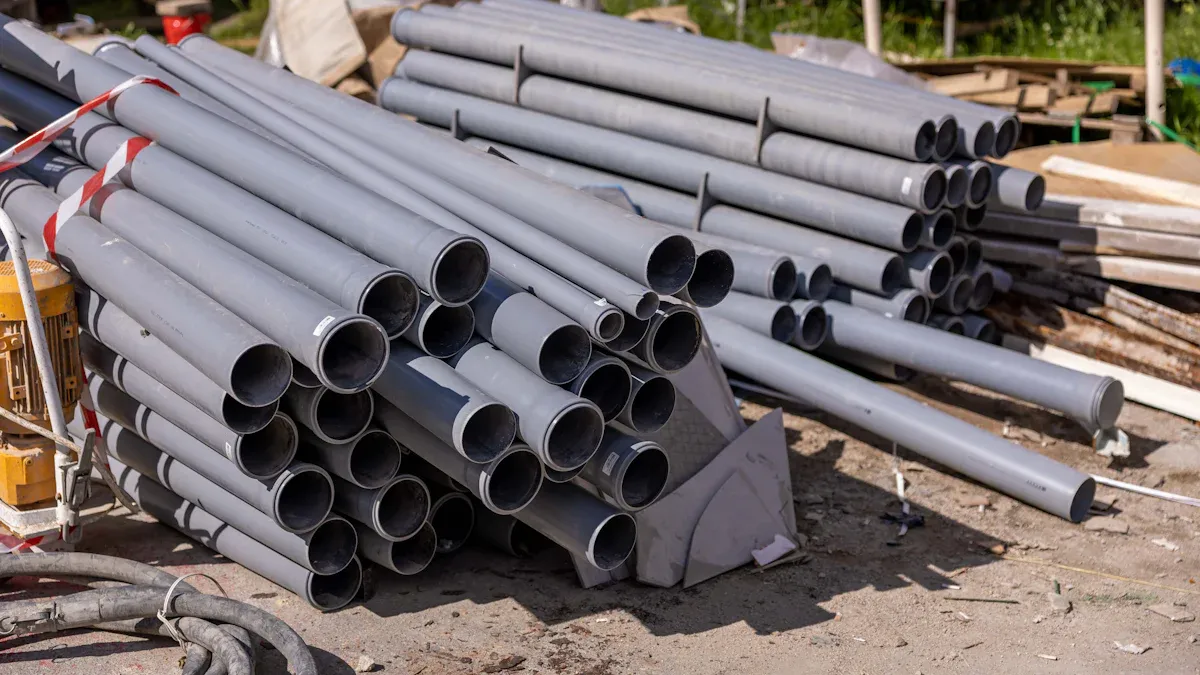
Understanding the critical distinctions between PPR and PVC Pipe Fittings is essential for PVC Pipe Fittings Wholesalers. This knowledge empowers businesses to make informed purchasing and stocking decisions. Wholesalers can then effectively meet diverse project requirements, including specialized needs like an Acid Resistant Pipe for industrial applications.
Key Takeaways
- PPR pipes work well for hot water. They handle high temperatures and last a long time.
- PVC pipes are cheaper. They are good for cold water and drainage systems.
- PPR pipes join with heat. This makes strong, leak-proof connections.
- PVC pipes join with glue. This creates a strong bond.
- Wholesalers should stock both. This meets different project needs.
Fundamental Differences in PPR and PVC Pipe Fittings
Material Composition of PPR and PVC Pipe Fittings
The fundamental distinction between these two piping materials lies in their chemical makeup. PPR pipe fittings are primarily composed of polypropylene (PP-R), a random copolymer polypropylene. This material is synthesized using a gas phase method, where PE molecules are randomly integrated into PP molecules. The chemical composition of PPR pipe fittings includes a combination of propylene and ethylene. In contrast, PVC pipe fittings are manufactured from polymerized vinyl chloride, which forms their backbone structure. Manufacturers compound PVC with a wide range of additives to modify its properties. These additives include fillers, stabilizers, lubricants, processing aids, plasticizers, UV stabilizers, impact modifiers (such as ABS, CPE, EVA, MBS), reinforcing agents, and flame retardants. Other polymers are also blended with PVC to enhance specific properties.
Key Characteristics of PPR Pipe Fittings
PPR pipe fittings exhibit excellent tensile properties. They withstand significant stress without breaking. The molecular structure of the polypropylene material contributes to this characteristic. Long polymer chains provide superior tensile strength and resistance to deformation or breakage, even under high loads. This inherent flexibility and strength make PPR suitable for various applications.
Key Characteristics of PVC Pipe Fittings
PVC pipe fittings offer a good balance of stiffness and impact resistance. Rigid PVC conduits have a solid, non-flexible structure, providing structural stability. They exhibit exceptional durability, impact resistance, and corrosion resistance. Conduits made of rigid PVC are tough, impact-resistant, and long-lasting due to superior physical properties. They maintain their shape and rigidity, safeguarding wiring where structural stability is crucial. Rigid PVC conduits are among the strongest and most durable materials, capable of resisting impact and serving longer in various environments.
In-Depth Look at PPR Pipe Fittings
Advantages of PPR Pipe Fittings for Wholesalers
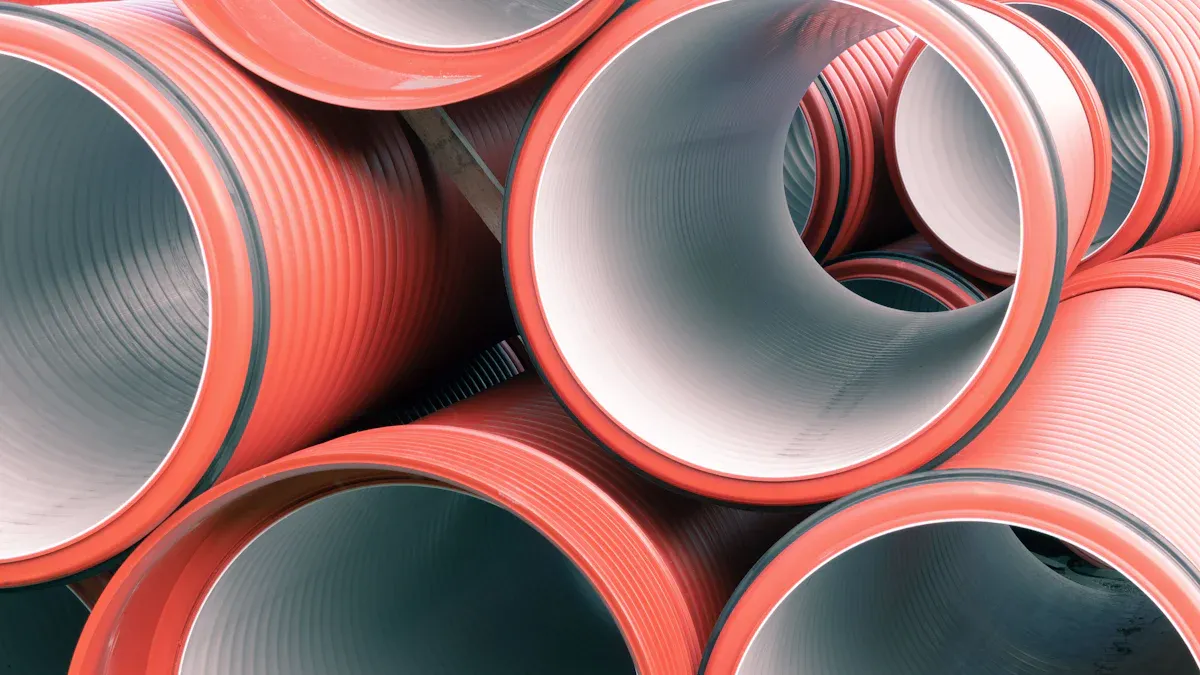
PPR pipe fittings offer significant benefits for wholesalers and their customers. They provide superior resistance to corrosion, scaling, and chemical attack. This ensures a long service life, often exceeding 50 years. PPR fittings are ideal for both hot and cold water supply systems. They maintain structural integrity under extreme conditions, handling high temperatures and pressures effectively. Their low thermal conductivity also makes them energy-efficient, minimizing heat loss in hot fluid transport. Furthermore, PPR pipe fittings are lightweight, simplifying handling and installation. This reduces labor costs for projects. They are also non-toxic, ensuring safe and clean drinking water, which is excellent for potable water systems.
Disadvantages of PPR Pipe Fittings
Despite their many advantages, PPR pipe fittings do have some limitations. Installation problems can arise from improper heat fusion during welding or incorrect sizing. These issues can lead to leaks and stress on connections. PPR fittings also have temperature-related concerns. Prolonged exposure to extremely high temperatures can cause softening and deformation. Freezing conditions without proper insulation can lead to burst fittings. Chemical compatibility is another consideration. Aggressive chemicals, such as highly chlorinated water or industrial effluents, can cause corrosion or degradation over time. Over time, PPR fittings can also show signs of aging, such as roughened inner surfaces or discoloration.
Common Applications for PPR Pipe Fittings
PPR pipe fittings find widespread use across various sectors due to their robust properties. In residential buildings, plumbers commonly use them for hot and cold water supply systems. They are also integral to underfloor heating systems, ensuring effective hot water circulation without deterioration from heat exposure. Commercial and industrial applications also benefit from PPR fittings. They are widely used in HVAC systems. Additionally, industries utilize PPR fittings for transporting water, air, or other fluids. Their ability to withstand high-pressure conditions and resist corrosion makes them suitable for demanding industrial settings.
In-Depth Look at PVC Pipe Fittings
Advantages of PVC Pipe Fittings for Wholesalers
PVC pipe fittings offer significant benefits for wholesalers and their customers. They provide a cost-effective solution without compromising essential performance. PVC is generally cheaper than metal alternatives, making it a popular choice for budget-conscious projects. Wholesalers find PVC pipes offer lower lifecycle costs and simplified installation, making them attractive for large-scale projects.
| Factor | PVC |
|---|---|
| Cost | Low |
| Installation | Easy (solvent welding, mechanical fittings) |
PVC fittings are also lightweight, which makes them easy to handle and install. This reduces labor costs for projects. Installers can easily cut and join PVC, allowing for customized plumbing projects. This versatility adapts to different plumbing systems, from residential to commercial. Wholesalers can consider buying fittings in bulk. Many suppliers offer discounts for larger quantities, allowing customers to save even more on their projects. Investing in reliable fittings saves money by minimizing frequent replacements.
Disadvantages of PVC Pipe Fittings
Despite their widespread use, PVC pipe fittings have certain limitations. They exhibit poor resistance to high temperatures. PVC softens and deforms when exposed to temperatures above 140°F (60°C). This makes them unsuitable for hot water applications. PVC also becomes brittle in cold temperatures, increasing the risk of cracking or breaking.
| Environmental Condition | Limitation/Drawback |
|---|---|
| High Temperatures | Softens, deforms, loses structural integrity |
| Low Temperatures | Becomes brittle, prone to cracking |
| UV Exposure | Degrades over time, loses strength |
| Chemical Exposure | Susceptible to degradation from certain solvents and chemicals |
Furthermore, PVC pipe fittings are susceptible to degradation from prolonged UV exposure. Sunlight causes the material to become brittle and lose strength over time. Certain chemicals and solvents can also degrade PVC, limiting its use in specific industrial applications.
Common Applications for PVC Pipe Fittings
PVC pipe fittings are widely used across various sectors, particularly in drainage and irrigation systems. They are a preferred choice for various plumbing system requirements. These include main drain lines, sewer systems, stormwater drainage, and ventilation. PVC fittings are used in settings ranging from single-family homes to high-rise buildings and commercial facilities.
- Main drain lines: These fittings are frequently used in residential, commercial, and industrial buildings. They construct main drain lines, ensuring smooth wastewater flow from fixtures to the main sewer or septic system.
- Sewer systems: In both municipal and residential sewer systems, PVC large-diameter fittings connect sewer pipes. They direct sewage to treatment facilities. Their durability and corrosion resistance make them a common choice.
- Stormwater drainage: Installers employ PVC fittings in stormwater drainage systems. They efficiently manage rainwater runoff, directing it away from structures and paved areas. This prevents flooding and water damage.
- Water mains: PVC pipes are utilized for water mains that supply cold water to buildings and homes. Their suitability for cold water applications makes them ideal.
Performance Comparison of PPR and PVC Pipe Fittings
Temperature and Pressure Resistance of PPR and PVC Pipe Fittings
PPR pipe fittings demonstrate superior performance in handling varying temperatures and pressures. Their design allows them to manage hot water applications effectively. Most standard PPR pipe fittings accommodate hot water temperatures up to approximately 95°C. For domestic water supply systems, a common pressure rating for PPR fittings ranges from 10 to 16 bars. Industrial applications can utilize higher pressure-rated fittings.
The pressure rating of PPR pipe fittings significantly depends on the fluid’s temperature. As temperature increases, the pressure rating decreases. For example, a PPR fitting rated for 10 bar at 20°C may only be rated for 6 bar at 60°C. Standards like DIN 8077/8078 and ISO 15874 define these ratings. The PN rating (Nominal Pressure) indicates the pressure capability of PPR fittings, expressed in bars (e.g., PN 10, PN 16, PN 20, PN 25). This rating represents the maximum allowable continuous operating pressure at a reference temperature of 20°C. A PN 20 fitting, for instance, withstands 20 bar at 20°C. However, PPR’s mechanical strength diminishes with rising temperatures. Consequently, the maximum allowable operating pressure also decreases. Manufacturers provide derating tables for various elevated temperatures. Ignoring this relationship can lead to system failure.
| Pressure Rating | Maximum Pressure (at 20°C) | Application Examples |
|---|---|---|
| PN10 (1.0 MPa) | 1.6 MPa (16 bar) | Cold water distribution, irrigation, low-pressure heating |
| PN16 (1.6 MPa) | 1.6 MPa (16 bar) | Domestic hot water, underfloor heating, standard plumbing |
| PN20 (2.0 MPa) | 2.0 MPa (20 bar) | Industrial hot water, high-rise buildings, compressed air |
| PN25 (2.5 MPa) | 2.5 MPa (25 bar) | Heavy-duty industrial, high-pressure systems, chemical processing |
At 20°C, PN20 pipes handle 2.0 MPa. At 80°C, the same pipe’s pressure rating drops to approximately 0.8 MPa.
In contrast, PVC pipe fittings exhibit poor resistance to high temperatures. Standard PVC pipe has a maximum continuous operating temperature of 140°F (60°C) for pressurized applications. Brief exposure up to 180°F is tolerable, but regular operation above 140°F causes pressure capacity reduction. Schedule 80 PVC has the same temperature limits as Schedule 40 (140°F/60°C maximum continuous operation). Its advantage lies in higher pressure ratings at any given temperature, not extended temperature limits. Above 80°C, even short exposure can cause structural failure in PVC.
| Temperature (°F) | Pressure Capacity Retention |
|---|---|
| 73 | 100% |
| 140 | 12% |
| Schedule | Temperature (°C) | Pressure (PSI) |
|---|---|---|
| 40 | 23 | 120–150 |
| 80 | 23 | 210–250 |
| 40 | 60 | 60 (if rated 150 PSI at 23°C) |

Installation Methods for PPR and PVC Pipe Fittings
Installers join PPR pipe fittings using a heat fusion welding process. This method creates a homogeneous, leak-proof connection. The process requires specific tools and careful execution.
- Gather Tools and Materials: Installers collect PPR pipes and fittings, a pipe cutter, a fusion welding machine, a pipe reamer, and a measuring tape. They ensure the welding machine is calibrated and in good working order. Protective gloves and eyewear are recommended.
- Measure and Cut Pipes: Installers accurately measure and mark the pipe length. They use a pipe cutter for precise cuts. They inspect pipe ends for smoothness and remove burrs with a pipe reamer.
- Prepare Pipes and Fittings: Installers clean the surfaces of pipes and fittings to remove dust or debris. This ensures they are free from contaminants for effective fusion. They align components properly.
- Fusion Welding Process: Installers place pipes and fittings into the fusion welding machine, setting the temperature according to manufacturer guidelines. Once the melting point is reached, they quickly join the components and hold them in place to cool and solidify.
- Inspect and Test Installation: After welding, installers inspect joints for imperfections. They allow components to cool completely before pressure testing. They slowly turn on the water supply and monitor for leaks. They address any issues before finalizing the system.
The welding machine must warm to 260℃. The thermostat bulb should be off, and welding tools must be clean. Installers cut the pipe perpendicularly with pipe scissors. They push the pipe and fitting towards the Special Welding Tool, designed to prevent operator errors. They connect pipes only with their fittings, following predetermined guidelines. Once material appears through the small hole of the Special Welding Tool, they remove the pipe and fitting. They immediately combine the pipe and fitting without twisting them. Installers adhere strictly to the guidelines provided in manufacturers’ catalogues and brochures. If the operating temperature is below 5℃, installers lengthen heating time by 50%. For stable pipes, they peel the alu-cover according to the welding depth. They ensure the welding machine is in good working condition before operation.
PVC pipe fittings are typically joined using solvent cement. This functions as a chemical weld rather than a traditional glue. Solvents in the cement break down the outer membrane of pipes and fittings, allowing them to combine chemically. CPVC resin within the adhesive then fills empty spaces. Stabilizers and fillers enhance the strength and durability of the weld, resulting in a single, fused plastic part. The product used to join PVC pipes is technically PVC solvent cement, not glue. It chemically softens the surfaces of the pipe and fitting, causing them to fuse and form a single, continuous material structure through solvent welding. This creates a bond often stronger than the pipe itself.
The drying times for CPVC solvent cement, which include both ‘set’ (when the joint can be handled) and ‘cure’ (when it is bonded enough for use), are influenced by several key factors:
- Pipe Size: Smaller pipes and fittings generally fuse faster than larger ones.
- Ambient Temperature: Optimal setting and curing occur between 60°F and 120°F. Temperatures below 40°F significantly increase curing times, potentially making bonding impractical or impossible for larger pipes. High temperatures (above 90°F) can cause the cement to thin or dry too quickly.
- Humidity: High humidity can prevent the solvent from evaporating, thereby increasing curing times by up to 50%.
- Test Pressures: Higher required test pressures necessitate longer curing times. For example, a 1 1/4” CPVC pipe at 100 PSI and under 40°F cures in 2 hours, but at 200 PSI, it takes 120 hours, and at 225 PSI, it requires 10 days.
‘Set time’ refers to the time needed for the joint to become tack-free and hold its shape. ‘Cure time’ is the full period required for the chemical bond to reach maximum strength and handle system pressure. Premature testing or pressurizing can weaken the bond or cause failure.
| Pipe Diameter | Pressure | 60° to 100°F | 40° to 60°F | 20° to 40°F | 0° to 20°F |
|---|---|---|---|---|---|
| ½” to 1¼” | Up to 180 psi | 15 min | 20 min | 30 min | Contact Oatey Technical Services |
| ½” to 1¼” | 180 psi + | 4 hours | 8 hours | 36 hours | Contact Oatey Technical Services |
| 1½” to 3″ | Up to 180 psi | 30 min | 45 min | 60 min | Contact Oatey Technical Services |
| 1½” to 3″ | 180 psi + | 8 hours | 16 hours | 3 days | Contact Oatey Technical Services |
| 4″ to 5″ | Up to 180 psi | 2 hours | 4 hours | 36 hours | Contact Oatey Technical Services |
| 4″ to 5″ | 180 psi + | 12 hours | 24 hours | 4 days | Contact Oatey Technical Services |
| 6″ to 8″ | Up to 180 psi | 8 hours | 16 hours | 3 days | Contact Oatey Technical Services |
| 6″ to 8″ | 180 psi + | 24 hours | 48 hours | 9 days | Contact Oatey Technical Services |
Factors that influence PVC solvent cement drying and curing times include:
- Type of Cement: Different cement types are formulated for various conditions and applications, impacting cure efficiency.
- Pipe Size: Larger pipe diameters generally require longer curing times.
- Ambient Temperature: Curing times are significantly affected by temperature, with lower temperatures extending the process.
- Humidity: High humidity can slow down the evaporation of solvents, increasing cure times.
- Test Pressures: Systems requiring higher test pressures need longer cure times to ensure bond integrity.
Durability and Lifespan of PPR and PVC Pipe Fittings
PPR pipe fittings are engineered for long-term durability. They have an average lifespan designed to last for decades under normal conditions, meeting established standards. European standards EN 15874 certify PPR pipes for a 50-year service life under proper conditions. Properly installed systems generally last for 40 years or more in residential applications, aligning with long-term durability standards. Under normal conditions, PPR pipes are designed to last for 50 to 100 years, making them a preferred choice for long-term plumbing. Studies indicate that with correct installation and use within recommended pressure and temperature limits, they can function for several decades without major repairs. For instance, PPR pipes in domestic hot and cold water systems typically have a lifespan of around 50 to 70 years. In industrial applications, while conditions are more demanding, the lifespan can still reach several decades or more with proper maintenance. This longevity is attributed to their good corrosion resistance, high temperature resistance, and pressure resistance. Under normal operating conditions, which include correct installation, water temperature and pressure within allowable ranges, and no external damage, PPR pipes can generally be used for five decades.
PVC pipe fittings also offer good durability for specific applications, particularly cold water and drainage systems. However, their lifespan can be significantly impacted by environmental factors. PVC becomes brittle in cold temperatures, increasing the risk of cracking or breaking. Prolonged UV exposure also degrades PVC, causing the material to become brittle and lose strength over time. Certain chemicals and solvents can degrade PVC, limiting its use in specific industrial applications. While PVC provides a cost-effective solution, these limitations mean its effective lifespan can be shorter than PPR in environments with temperature fluctuations, UV exposure, or chemical contact. Wholesalers must consider these factors when stocking PPR and PVC Pipe Fittings for diverse project needs.
Chemical Resistance of PPR and PVC Pipe Fittings
The chemical resistance of pipe fittings significantly influences their suitability for various applications. Different materials react uniquely to chemical exposure. This property determines the longevity and safety of a piping system, especially in industrial or specialized environments. Wholesalers must understand these differences to recommend the correct products for specific project requirements.
PPR pipe fittings demonstrate strong resistance to a wide array of chemicals. They effectively withstand exposure to acids, alkalis, and many organic solvents. This includes common substances like hydrochloric acid and sodium hydroxide solutions. PPR also resists various cleaning agents and chlorine, which are often present in water treatment systems. Furthermore, PPR pipes show excellent resistance to mineral content, such as calcium and magnesium salts, preventing scale buildup. This broad chemical inertness prevents pollutants from leaching into the water, ensuring the water remains free of contamination. PPR’s non-toxic material composition guarantees no harmful substances enter the water supply system. This characteristic helps meet strict drinking water standards. PPR also resists microbiological growth, further contributing to water purity.
In contrast, PVC pipe fittings offer good chemical resistance for many common substances but have specific limitations. PVC performs exceptionally well in applications involving water, wastewater, and many inorganic chemicals. It resists most acids, alkalis, salts, and paraffinic hydrocarbon solutions. This makes PVC a reliable choice for drainage, sewer, and irrigation systems where these substances are prevalent. However, PVC’s chemical resistance profile makes it less suitable for environments with certain organic solvents, aromatic hydrocarbons, or chlorinated hydrocarbons. These chemicals can degrade PVC over time, compromising the integrity of the piping system. For instance, acetone, benzene, and carbon tetrachloride can soften or dissolve PVC. Therefore, careful consideration of the specific chemicals present in an application is crucial when selecting PVC pipe fittings.
The choice between PPR and PVC Pipe Fittings often depends on the chemical environment. PPR offers a more versatile solution for aggressive chemical conditions and potable water systems due to its superior inertness. PVC provides a cost-effective and durable option for applications involving less aggressive chemicals, particularly in drainage and cold water distribution.
Cost Implications for Wholesalers: PPR vs. PVC Pipe Fittings
Initial Purchase Price of PPR and PVC Pipe Fittings
Wholesalers often consider the initial purchase price when stocking pipe fittings. PVC pipe fittings typically present a lower upfront cost compared to PPR pipe fittings. This makes PVC an attractive option for projects with tight budgets. The manufacturing process for PVC is generally less complex and uses more readily available raw materials, contributing to its lower price point. For wholesalers, stocking PVC can mean a lower initial investment in inventory. This allows them to offer competitive pricing to their customers. PPR, while offering advanced performance characteristics, usually comes with a higher per-unit cost. This reflects its specialized material composition and manufacturing requirements. Wholesalers must balance this higher initial cost against the long-term benefits PPR offers.
Long-Term Cost of Ownership for PPR and PVC Pipe Fittings
The long-term cost of ownership extends beyond the initial purchase price. It includes maintenance, repair, and replacement cycles. PPR pipe fittings generally offer a more cost-effective solution over their lifespan. The lifespan of PPR fittings depends on their quality, installation accuracy, water quality (mineral and chemical content, hardness), and temperature exposure. High-quality fittings installed correctly tend to last longer. Hard water and high temperatures can accelerate degradation. Regular inspection is crucial. Annual inspections help identify signs of wear such as cracks, leaks, discoloration, or deformation, especially at connection points. Early detection prevents minor issues from escalating into major repairs. Developing a tailored maintenance schedule based on fitting age, local water quality, and past system issues is crucial. Utilizing a monitoring system helps track activities, ensure compliance, and identify failure patterns. This proactive approach prevents leaks, reduces overall maintenance costs, and extends the system’s lifespan. This contributes to a safer and more efficient environment.
In contrast, PVC pipe fittings, while cheaper initially, can incur higher long-term costs. PVC fittings are more brittle. They are prone to cracking in cold or shifting conditions. This potentially requires replacement or repair after 25 to 40 years, especially in harsh environments. Maintenance costs can be significant due to leakage at joints. This occurs particularly under pressure changes or temperature fluctuations. The weakening of solvent joints over time also necessitates periodic inspection or repair. While initially cheaper, PVC systems may incur higher long-term costs through replacements, leaks, and compliance issues. This leads to higher total expenditure compared to alternatives like HDPE in 30- to 50-year cost models. Wholesalers should educate their clients on these long-term implications.
Installation Labor and Material Costs for PPR and PVC Pipe Fittings
Installation costs significantly impact the overall project budget. These costs include both labor and additional materials. PPR pipes are known for being easier and faster to install compared to metal pipes. This typically leads to reduced labor fees. PPR pipe installation labor costs are generally 15-25% lower than CPVC. This is due to quicker jointing methods and the potential for prefabrication. While specialized welding equipment for PPR requires an initial investment, it proves cost-effective for larger projects. The heat fusion method for PPR creates strong, leak-proof joints. This reduces the need for extensive post-installation checks and potential rework.
PVC pipe fittings use solvent cement for joining. This method is also relatively quick and straightforward. It requires less specialized equipment than PPR’s heat fusion. This can translate to lower initial tool costs for installers. However, the curing times for solvent cement, influenced by pipe size, temperature, and humidity, can sometimes extend project timelines. This potentially increases labor hours if not managed efficiently. The material cost for solvent cement and primers also adds to the overall installation expense. When considering PPR and PVC Pipe Fittings, wholesalers must weigh the initial material cost against the efficiency and long-term reliability of the installation process.
Strategic Applications for PPR and PVC Pipe Fittings
When to Recommend PPR Pipe Fittings
Wholesalers should recommend PPR pipe fittings for specific project types and environmental conditions. PPR pipes are optimal for systems involving temperatures up to 180°F (82°C), making them suitable for both hot and cold water applications. They are also ideal for plumbing systems where metal fittings would suffer from rust due to moisture or accumulate mineral deposits from hard water. This ensures a safer water supply and maintains system efficiency. PPR fittings are a smart choice for modern construction projects aiming for certifications like LEED, due to their recyclability, long lifespan, and low energy consumption. They are also suitable for plumbing systems carrying potable water, as they are made from non-toxic materials free from harmful chemicals. Their lightweight nature makes them appealing for large-scale construction projects where transportation efficiency, reduced fuel consumption, and lower carbon emissions are key concerns.
When to Recommend PVC Pipe Fittings
PVC pipe fittings are an optimal choice for homeowners looking to replace old metal fittings that have begun to rust or degrade, particularly in older homes. Their resistance to corrosion, cost-effectiveness, and ease of installation make them a superior alternative. PVC valves are optimal where chemical compatibility with PVC piping systems is required, especially in corrosive conditions that would damage metal alternatives. In electrical installations, PVC fittings are optimal for protecting and organizing electrical wiring, preventing damage from environmental factors. PVC is highly resistant to corrosion and chemical damage, ensuring a long lifespan. PVC systems require minimal upkeep, making them ideal for various applications. PVC offers a more budget-friendly solution without compromising quality. The lightweight nature and straightforward assembly process make PVC pipe fittings user-friendly for installation.
Industry-Specific Use Cases for PPR and PVC Pipe Fittings
PPR pipe fittings are ideal for residential plumbing, specifically for hot and cold water supply lines, due to their resistance to temperature fluctuations and ability to ensure clean water delivery. Commercial buildings like hotels, offices, and hospitals use them because they require low maintenance and can handle high water volumes. Factories and processing plants choose PPR for transporting non-aggressive liquids due to their chemical resistance. Agricultural irrigation systems, including drip irrigation and water distribution, benefit from PPR’s durability in outdoor environments. HVAC systems also find PPR optimal due to its thermal insulation properties. PVC pipe fittings are invaluable in numerous applications, offering flexibility, durability, and cost savings, suitable for home renovation, agricultural irrigation, or industrial projects.
Market Trends and Wholesaler Insights for PPR and PVC Pipe Fittings
Current Demand and Popularity of PPR and PVC Pipe Fittings
The market for pipe fittings shows dynamic regional trends. North America leads the PPR market. This is due to strong infrastructure and significant investments. Europe maintains a substantial market share. Stringent quality standards and research drive this. Asia-Pacific emerges as the fastest-growing region. Rapid industrialization and government innovation programs fuel this growth. China, India, Japan, and South Korea are key players. Latin America and the Middle East & Africa show gradual progression. Improving economic conditions and urbanization present untapped potential.
PVC pipe fittings also exhibit strong regional demand.
| Region | PVC Pipe Fitting Trends |
|---|---|
| North America | - Dominant Market: Largest market share from residential, commercial, and industrial construction. – Infrastructure Development: Investments in water and wastewater infrastructure drive demand. – Technological Advancements: Adoption of advanced PVC materials improves durability. – Regulatory Support: Favorable regulations boost market growth. |
| Europe | - Mature Market: Stable growth from aging infrastructure replacement and renovations. – Sustainability Focus: Demand for eco-friendly and recyclable PVC fittings increases. – Strict Regulations: Adherence to stringent quality and environmental standards. – Innovation: Focus on energy efficiency and reduced environmental impact. |
| Asia Pacific | - Fastest-Growing Market: Rapid urbanization, industrialization, and infrastructure development, especially in China, India, and Southeast Asia. – Government Initiatives: Supportive policies and investments in smart cities and water management. – Affordability: Cost-effectiveness makes PVC a preferred choice. – Manufacturing Hub: Many manufacturers contribute to competitive pricing. |
| Latin America | - Emerging Market: Growing construction and public infrastructure investments. – Economic Development: Improving conditions increase spending on housing and utilities. – Water Management: Focus on enhancing water supply and sanitation. – International Investments: Foreign investments support infrastructure projects. |
| Middle East & Africa | - Infrastructure Boom: Large-scale construction projects, especially in GCC countries, drive demand. – Water Scarcity: Investments in water treatment and distribution networks are significant. – Oil & Gas Sector: Demand from the oil and gas industry for various applications. – Diversification Efforts: Economic diversification leads to development in other sectors needing pipe fittings. |
Future Outlook and Innovations in PPR and PVC Pipe Fittings
The future of PPR pipe fittings looks promising with ongoing innovations. Manufacturers develop advanced fusion and welding techniques. These ensure leak-proof connections and enhance reliability. Smart PPR fittings integrate sensors. These monitor water pressure, temperature, and detect leaks in real-time. They communicate with smart home systems. This provides plumbing health insights. Innovations also focus on eco-friendly enhancements. These improve production and material environmental impact. New PPR fittings are designed for enhanced durability and resistance. They withstand extreme conditions like higher pressures, temperatures, and aggressive chemicals. Modular PPR fittings allow quick assembly or modification. This reduces labor costs. Flexible PPR fittings address challenging installations in tight spaces. Cross-linked PPR fittings combine PPR with aluminum. This enhances strength and resistance for hot water systems. Automation in PPR fitting production makes processes faster and more efficient.
Optimizing Stocking Strategies for PPR and PVC Pipe Fittings
Wholesalers must optimize stocking strategies. They should consider regional demand and future innovations. Stocking a diverse range of PPR fittings addresses various project needs. This includes standard, smart, and modular options. For PVC, wholesalers should prioritize common sizes and types. They should also include eco-friendly options for regions with sustainability focuses. Monitoring market trends helps adjust inventory levels. This ensures availability for fast-growing regions like Asia-Pacific. Understanding specific industry use cases also guides stocking decisions. This prevents overstocking less popular items.
Wholesalers must consider temperature, pressure, and chemical resistance when stocking pipe fittings. They should also evaluate initial and long-term costs. Strategic inventory optimization for PPR and PVC Pipe Fittings involves balancing stock based on market trends and specific project demands. This approach ensures wholesalers effectively meet diverse customer needs.