Unlock the Best PVC Pipes and Fittings Manufacturer for You

A leading PVC Pipes and Fittings Manufacturer in 2026 demonstrates an unwavering commitment to advanced material science. This manufacturer also prioritizes sustainable practices and integrates digital solutions throughout its operations. They focus on customer-centric innovation, ensuring superior product performance. This approach delivers long-term value for every project.
Key Takeaways
- Leading PVC pipe makers use new materials. These materials make pipes stronger and last longer. They also use smart technology for better monitoring.
- Top manufacturers care about the environment. They recycle materials and save energy. They follow rules to make products safe and green.
- Modern manufacturers use digital tools. These tools make factories smarter. They also make sure products get to customers easily.
- Good manufacturers test their products a lot. They follow many rules for quality. This makes sure pipes are safe and work well.
- The best manufacturers help their customers. They offer expert advice. They also provide good service after you buy their products.
Advanced Material Science and Innovation for the Leading PVC Pipes and Fittings Manufacturer
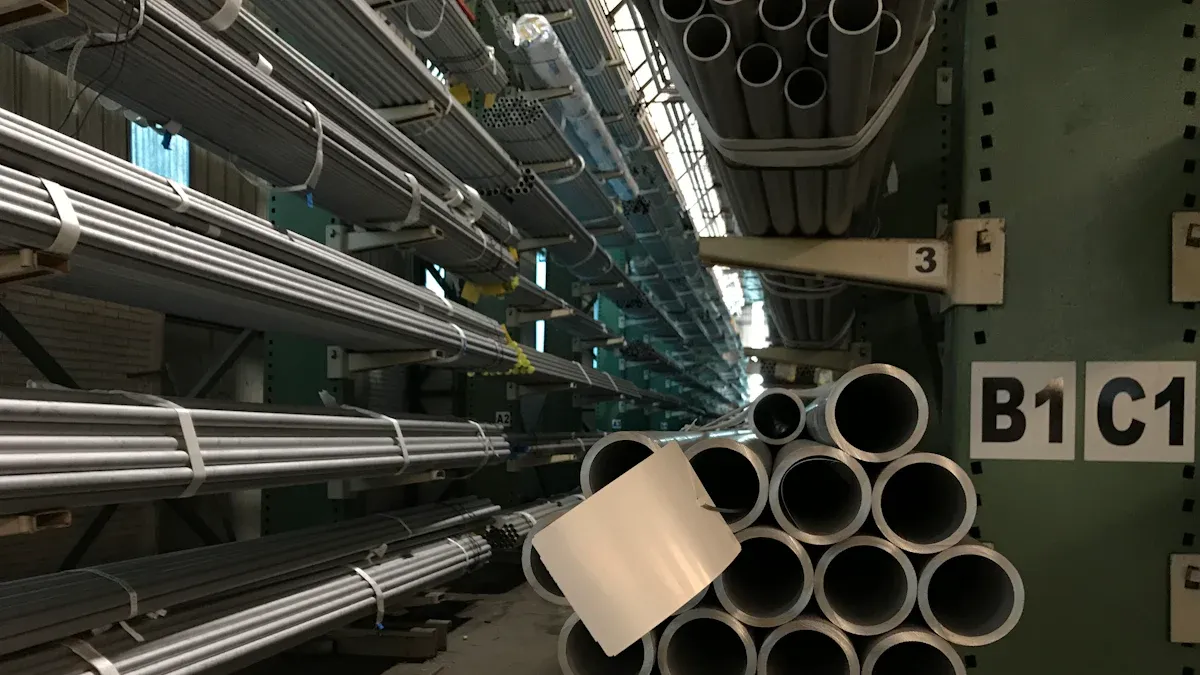
Next-Generation PVC Compounds
Leading manufacturers constantly push the boundaries of material science. They develop next-generation PVC compounds with superior properties. High molecular weight plasticizers are crucial for these advancements. These plasticizers feature larger molecular sizes, which limits their movement within the polymer. This ensures long-term flexibility without residue buildup. They also offer better thermal stability, enduring heat without significant evaporation. This makes them suitable for high-temperature environments. Such compounds maintain long-term mechanical integrity, preserving strength, flexibility, and impact resistance for many years. Furthermore, many modern formulations are non-phthalate or bio-based, reducing their environmental footprint. Incorporating nanomaterials like graphitic carbon nitride (g-C3N4) nanosheets into PVC/PVP polymer nanocomposites significantly improves optical absorbance. This enhances the optical energy gaps and refractive index, making these nanocomposites suitable for optoelectronic fiber sensor applications. Nanomaterials, including graphene, carbon nanotubes, and metal nanoparticles, enhance mechanical, electrical, thermal, and optical characteristics. They offer a high surface area-to-volume ratio and quantum effects, leading to unique properties.
Smart Pipe Technology Integration
Modern PVC pipes integrate smart technology for enhanced monitoring and data collection. Artificial Intelligence (AI) and the Internet of Things (IoT) create smart leak detection systems. IoT sensors continuously monitor water flow, pressure, and temperature. AI programs analyze this data to identify unusual patterns indicating leaks. Various sensors, such as hydrophones, geophones, and accelerometers, detect and locate leaks. V-type ultrasonic air-coupled transducers offer a non-attached monitoring system, efficiently recognizing leaks up to 0.4 mm in diameter with high accuracy. Indirect leak detection involves monitoring changes in pressure and temperature. MEMS-based wireless sensor networks with accelerometers measure flow-induced vibration to evaluate water pressure changes. These smart systems offer significant advantages for infrastructure management. They provide early leak detection and prevention, sending alerts and automatically shutting off water to prevent damage. Real-time water usage monitoring helps identify inefficiencies and optimize water consumption. Water quality monitoring analyzes pH levels, temperature, and contaminants, ensuring safe water. Remote access and control allow management of plumbing systems from anywhere. This technology reduces maintenance costs and improves operational efficiency for businesses and municipalities.
Specialized Fittings for Diverse Applications
A top PVC Pipes and Fittings Manufacturer offers specialized fittings for various demanding applications. PVC is a strong and rigid plastic with high tensile strength and elasticity. It resists most acids, bases, salts, aliphatic solutions, oxidants, and halogens. Schedule 80 PVC fittings are thicker and stronger than Schedule 40, handling higher pressure applications. They are ideal for industries requiring durable, high-strength piping solutions. These fittings do not rust or corrode, making them suitable for chemical processing, water treatment, and industrial fluid transport. Innovative fitting designs also simplify installation and improve joint integrity. Reducing tees, sanitary tees, and slip couplings streamline connections and reduce potential leak points. Compression couplings use rubber gaskets and mechanical fasteners for removable joints, accommodating thermal expansion. PVC unions create removable connections for system maintenance without cutting pipes. A non-welded ring-type pipe joint system simplifies installation significantly. This system connects pipes using a metal ring sealed within a housing by O-rings, effectively preventing leaks. It maintains the pipe’s structural integrity and reduces assembly time and maintenance costs.
Sustainability and Environmental Responsibility of a Top PVC Pipes and Fittings Manufacturer
Circular Economy Practices
A leading PVC Pipes and Fittings Manufacturer actively embraces circular economy principles. This involves designing products for recyclability and implementing advanced recycling technologies. For instance, the Vinyl Institute (VI) supports Plastic Back’s pilot project. This project uses a novel chemical recycling technology to enhance PVC recycling rates. This process safely dechlorinates and depolymerizes PVC, producing high-quality oil-based feedstocks. Other initiatives like VinylPlus® Med focus on collecting and recycling PVC medical waste. The VinylPlus® PharmPack program demonstrates the recyclability of pharmaceutical blister packaging. Projects like RecoChlor recover chlorine from difficult-to-recycle PVC waste. Eco-design initiatives also play a crucial role. EPPA led the development of a standard for designing PVC-based profiles for construction products to prioritize recyclability. TEPPFA also contributed to design-for-recycling guidelines for thermoplastic pipes and fittings. These efforts ensure materials remain in use for as long as possible.
Energy-Efficient Production
Top manufacturers prioritize energy-efficient production methods. They implement technologies that reduce energy consumption significantly. For example, some facilities utilize waste heat to warm demineralized water for chlorine production. They also import waste steam from nearby companies. Increasing the use of recycled PVC in final products also contributes to energy savings. Optimized extruder designs, such as twin-screw extruders, rely less on heavy cooling and more on motor shear for heating. This leads to lower specific energy consumption. Air cooling for cylinders and closed internal screw cooling are preferred over fluid-based systems. These methods reduce maintenance and energy usage. Advanced control systems enable reproducible and energy-efficient operations. These innovations allow more energy to be used for melt material preparation, increasing throughput.
Eco-Friendly Certifications and Compliance
A responsible PVC Pipes and Fittings Manufacturer adheres to stringent eco-friendly certifications and compliance standards. In the European Union, regulations like REACH restrict hazardous substances such as phthalates in PVC. The RoHS directive limits PVC components in electronics and building materials. Stricter waste management laws also increase the complexity of PVC disposal. Green building certifications like LEED and BREEAM favor PVC-free products with low VOC emissions and better recyclability. Industry-specific standards, particularly in automotive and healthcare, often move away from PVC due to concerns about leaching chemicals or recycling challenges. In North America, U.S. EPA and EU’s REACH regulations drive innovation towards non-toxic, eco-friendly additives. These regulations push for greener alternatives to traditional additives. For example, calcium-zinc stabilizers replace lead-based stabilizers in PVC pipes.
Digital Transformation and Operational Excellence for a Modern PVC Pipes and Fittings Manufacturer
Industry 4.0 Manufacturing
Modern PVC Pipes and Fittings Manufacturers embrace Industry 4.0 to revolutionize their operations. They integrate technologies like the Internet of Things (IoT), Artificial Intelligence (AI), and Cloud Computing. These advancements create smart factories. Automation and robotics streamline production processes. Smart extruders, equipped with sensors, provide real-time monitoring and enable predictive maintenance. This proactive approach prevents breakdowns and ensures continuous operation. Advanced analytics and machine learning boost efficiency by up to 20%. Predictive maintenance increases Overall Equipment Effectiveness (OEE) by approximately 12%. Modern Manufacturing Execution Systems (MES) enhance line efficiency monitoring. This improves productivity, quality, and reduces costs. Real-time production dashboards offer improved visibility into operations. Shopfloor production pacing boards enable real-time scheduling. Failure reasons dashboards help identify and address production issues swiftly.
Supply Chain Resilience and Transparency
Leading manufacturers prioritize a resilient and transparent supply chain. They strengthen their supply chain by diversifying supply sources. This strategy mitigates risks associated with raw material availability and logistics. Manufacturers also invest in eco-friendly production methods. They develop comprehensive supply chain resilience plans. These plans address potential disruptions effectively. Exploring regional manufacturing partnerships further enhances supply chain stability. Digital supply chain management tools improve procurement transparency and agility. These tools help navigate volatile raw material prices and supply chain disruptions. Integrated digital platforms facilitate strategic supplier collaborations. They also provide greater transparency in pricing dynamics.
Digital Customer Experience
A modern PVC Pipes and Fittings Manufacturer offers an exceptional digital customer experience. They provide eProcurement services that simplify the ordering process. These services reduce errors and enhance efficiency through seamless technology integrations. Customizable solutions save time and cost for customers. Third-party portal integration and eCatalogs streamline ordering. PunchOut catalogs offer automatically updated product information, individual pricing, and real-time availability. Quotes and purchase orders integrate directly with ERP or purchasing software. Direct system-to-system integration automates procurement, virtually eliminating human error and paper waste. Mobile applications also enhance customer experience. A Pipe and Fitting App provides essential data for dimensions and materials. It enables precise calculations for pipe strength and hanger specifications. The Pipe Trades Pro App simplifies complex pipe calculations for plumbers. The ARPlan 3D App uses augmented reality to provide accurate measurements and visualize project outcomes.
Quality Assurance and Compliance Standards for a Leading PVC Pipes and Fittings Manufacturer

Rigorous Testing and Certification
A leading PVC Pipes and Fittings Manufacturer implements rigorous testing protocols. These tests ensure product quality and performance. For example, ASTM D 2444 outlines procedures for determining the impact resistance of thermoplastic pipes and fittings. This test uses a falling weight to strike a specimen. It assesses the product’s ability to withstand impacts during handling, transportation, and installation. Manufacturers use this standard to ensure product consistency. Other critical ASTM standards include:
- ASTM F2261-06(2023): This standard tests the pressure rating for Schedule 40 and 80 socket-type PVC pipe fittings.
- ASTM D2122-22: This method determines the dimensions of thermoplastic pipe and fittings.
- ASTM F1057-21(2025): This practice estimates the quality of extruded PVC pipe using the heat reversion technique.
- ASTM F610/F610M-21: This practice evaluates the quality of molded PVC plastic pipe fittings by the heat reversion technique.
- ASTM D2152-23: This test assesses the adequacy of fusion in extruded PVC pipe and molded fittings through acetone immersion.
These comprehensive tests guarantee products meet high performance and durability standards.
Global and Local Regulatory Adherence
Top manufacturers adhere to a wide array of global and local regulatory standards. This ensures their products are safe and suitable for various markets. Key international standards include ISO 1452 for water supply piping systems and ISO 4427 for similar contexts. ASTM standards like D1785 for PVC water distribution and D2466 for fittings specify dimensions and material requirements. Regional standards also play a vital role. In Europe, EN standards cover threaded steel tubes and fittings (EN 10255) and thermoplastic pipe fittings for water supply (EN 12201). Germany uses DIN standards. The UK requires WRAS Approvals for public water supply systems.
Certifications like NSF/ANSI 61 ensure products are safe for potable water use. This certification confirms no harmful substances leach into drinking water. The UPC (Uniform Plumbing Code) sets standards for plumbing systems in the United States. CE Marking is mandatory for products in the European Economic Area. It indicates compliance with EU directives. These diverse certifications and approvals demonstrate a manufacturer’s commitment to safety and quality across different regions.
Traceability and Product Lifecycle Management
Effective traceability and product lifecycle management are crucial for a leading manufacturer. They track products from raw material sourcing through manufacturing, distribution, and end-of-life. This system assigns unique identifiers to each batch of pipes and fittings. These identifiers allow manufacturers to monitor material origins, production dates, and quality control checkpoints. If an issue arises, they can quickly identify affected products. This ensures rapid response and minimizes potential risks. This comprehensive tracking system also supports sustainability efforts. It helps manage recycling and disposal processes. This commitment to traceability ensures accountability and maintains high product integrity throughout the entire lifecycle.
Customer-Centric Approach and Support from Your PVC Pipes and Fittings Manufacturer
Technical Expertise and Consultation
A leading PVC pipes and fittings manufacturer offers strong technical expertise and consultation. They provide tailored solutions for specific industrial needs. This includes custom extrusions, such as flexible profiles and co-extruded options. The manufacturer ensures precision and reliability through a comprehensive quality system. This system includes critical in-process checks and thorough run documentation. They meet OEM specifications with precision, offering co-extrusion options for added functionality. Their commitment to high-quality outputs is essential for critical applications. Dedicated quality plans and value-added services back this commitment.
Responsive After-Sales Service
Top manufacturers provide responsive after-sales service. They understand that support extends beyond the initial purchase. This includes quick responses to inquiries and efficient problem resolution. They offer technical assistance for installation and maintenance. This ensures customers can use their products effectively. A strong after-sales team builds trust and ensures customer satisfaction.
Collaborative Partnerships
Manufacturers build strong collaborative partnerships with their clients. These long-term relationships ensure a steady flow of high-quality raw materials. This is crucial for maintaining product quality and brand reputation. Partnerships also provide supply chain security. They help companies navigate global shortages and price fluctuations. Collaborative innovation is another key benefit. Manufacturers gain insights into emerging trends and customer preferences. This leads to the creation of advanced products, including sustainable alternatives. Such innovation enhances competitiveness and responsiveness to market demands. Manufacturers also benefit from preferential pricing and discounts. Clients receive better service and customized solutions. This leads to more efficient operations and increased customer loyalty. Partnerships offer a buffer against market uncertainties. They provide a predictable and stable environment. Companies share risks when entering new markets or adopting new technologies. This makes businesses more resilient to market fluctuations. Trust, open communication, and reliability form the foundation of these partnerships.
Selecting a leading PVC Pipes and Fittings Manufacturer in 2026 means prioritizing innovation. Manufacturers must demonstrate leadership in advanced material science, sustainability, and digital integration. They also need stringent quality control and exceptional customer support. These companies deliver the most reliable, efficient, and future-proof solutions for various projects. Choosing such a PVC Pipes and Fittings Manufacturer ensures long-term success.
FAQ
What defines a leading PVC pipes and fittings manufacturer in 2026?
A leading manufacturer excels in advanced material science. They prioritize sustainable practices and integrate digital solutions. They also focus on customer-centric innovation. This ensures superior product performance and long-term value.
How do manufacturers ensure the quality and durability of their PVC products?
Manufacturers implement rigorous testing protocols. These include impact resistance and pressure rating tests. They adhere to global and local regulatory standards. Traceability systems also track products from raw materials to end-of-life.
What sustainable practices do top PVC pipe manufacturers adopt?
Top manufacturers embrace circular economy practices. They design products for recyclability. They also use energy-efficient production methods. Furthermore, they comply with eco-friendly certifications and regulations.
How do smart technologies enhance PVC piping systems?
Smart technologies integrate AI and IoT sensors. These systems enable leak detection and real-time monitoring. They also track water usage and quality. This reduces maintenance costs and improves operational efficiency.