Top 8 Quality Inspection Methods for Plastic Pipe Fittings Before Shipment
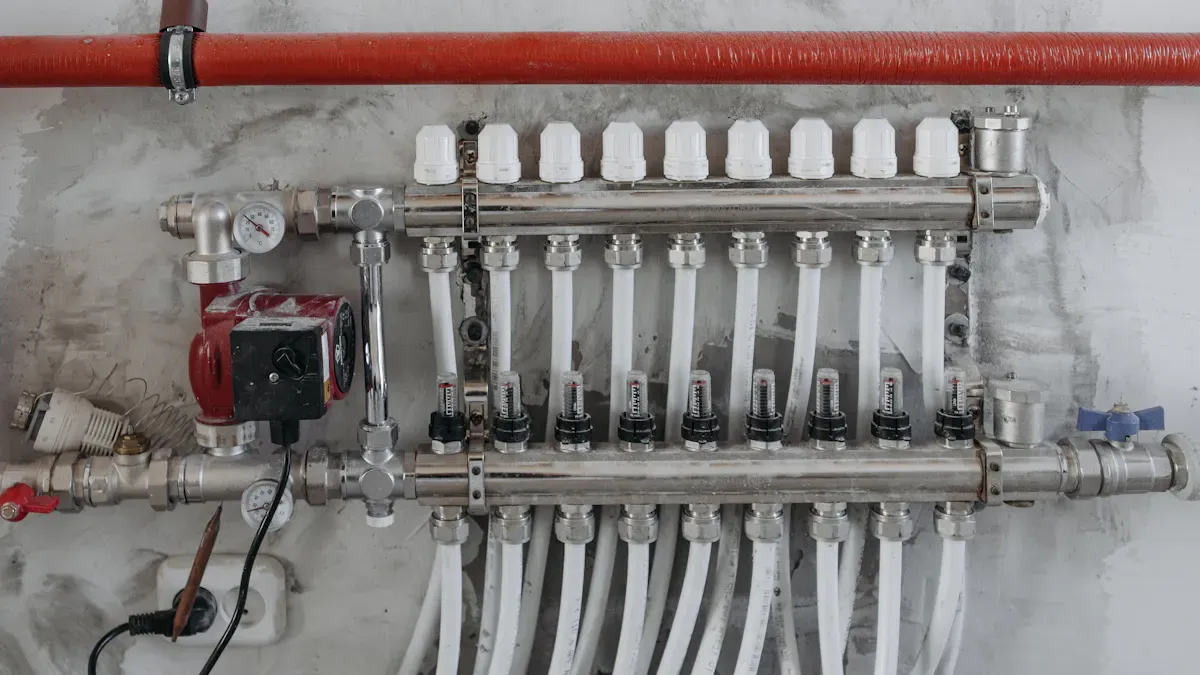
Quality inspection for plastic pipe fittings is crucial. It ensures adherence to applicable standards, including fitting dimensional tolerance testing and PPR fitting pressure test, which directly impacts product reliability and compliance rates. Effective inspection methods, such as injection molding part visual inspection standard and valve leak test, safeguard against defects, enhancing the manufacturer’s reputation for reliability. Additionally, these measures help avoid legal repercussions, reinforcing customer trust in the products. Are there internationally recognized fitting inspection standards?
Key Takeaways
- Visual inspection is the first step in quality control. It helps identify surface defects early, preventing defective products from reaching customers.
- Dimensional inspection ensures that plastic pipe fittings meet specified measurements. Accurate dimensions prevent installation issues and enhance customer confidence.
- Material testing evaluates the durability of fittings. Implementing rigorous tests helps manufacturers ensure compliance with industry standards and enhances product reliability.
Visual Inspection of Plastic Pipe Fittings

Visual inspection serves as the first line of defense in quality control for plastic pipe fittings. This method allows inspectors to identify surface defects that could compromise the integrity of the fittings. During this inspection, they examine the fittings for various common visual defects, including:
- Warpage: Distortion or bending due to uneven cooling.
- Splay Marks: Surface blemishes caused by moisture or volatile substances.
- Gate Vestige: Residual marks left at the gate location after removal.
- Flow Lines: Visible lines caused by variations in the flow of molten plastic.
- Ejector Pin Marks: Indentations from the ejection process.
- Sink Marks: Depressions caused by uneven cooling.
- Air Traps: Trapped air pockets within the fittings.
- Contamination: Foreign particles embedded in the plastic.
- Poor Assembly Fitment: Inaccurate mating of components.
- Dimensional Variations: Deviations from specified dimensions.
- Short Shots: Insufficient material filling in the mold cavities.
- Voids or Air Bubbles: Air trapped within the material.
- Material Degradation: Deterioration of the plastic.
Inspectors utilize visual aids, such as magnifying glasses or cameras, to enhance their ability to detect these defects. By identifying issues early, manufacturers can prevent defective products from reaching customers, thereby maintaining their reputation for quality.
Dimensional Inspection of Plastic Pipe Fittings
Dimensional inspection plays a vital role in ensuring the quality of plastic pipe fittings. This method verifies that each fitting meets the specified dimensions and tolerances outlined in design specifications. Accurate measurements prevent issues during installation and ensure compatibility with other components.
Inspectors typically use various tools for dimensional inspection, including:
- Calipers: For measuring external and internal dimensions.
- Micrometers: To obtain precise thickness measurements.
- Gauges: For checking specific features like diameters and angles.
During the inspection, inspectors focus on critical dimensions such as length, width, and wall thickness. They compare these measurements against established tolerances. Any deviations can lead to improper fitment, which may result in leaks or system failures.
Tip: Regular calibration of measurement tools is essential. This practice ensures accuracy and reliability in inspection results.
Dimensional inspection not only enhances product quality but also boosts customer confidence. By confirming that plastic pipe fittings adhere to required specifications, manufacturers can reduce the risk of returns and complaints. Ultimately, this method serves as a cornerstone of quality assurance in the production process.
Material Testing for Plastic Pipe Fittings
Material testing is essential for ensuring the durability and performance of plastic pipe fittings. This process evaluates the physical and chemical properties of the materials used in production. Various testing methods help manufacturers assess the quality and reliability of their products.
The following table outlines some commonly used material testing methods for plastic pipe fittings:
| Test Method | Purpose/Description | Importance in Quality Control |
|---|---|---|
| Creep Internal Pressure | Simulates long-term internal pressure to estimate lifespan and durability | Assesses long-term performance under pressure |
| Airless Pressure Test | Measures precise water pressure resistance without air interference | Ensures accurate pressure resistance evaluation |
| Hydrostatic Burst Testing | Determines maximum pressure the pipe or fitting can withstand before failure | Validates design limits and safety margins |
| Long-term Pressure Test | Evaluates sustained pressure resistance over extended periods | Confirms reliability and compliance with standards |
One widely recognized standard for assessing impact resistance is ASTM D2444. This test involves dropping a weighted tup from a specified height onto the fitting. The tup weight ranges from 6 to 30 lbs, and the drop height varies between 2 to 10 feet. This method simulates impact forces, helping manufacturers determine the material’s ability to withstand sudden impacts. Such testing is crucial for maintaining quality control in production.
By implementing these material testing methods, manufacturers can ensure that their plastic pipe fittings meet industry standards and perform reliably in various applications.
Pressure Testing for Plastic Pipe Fittings
Pressure testing is a critical method for ensuring the integrity of plastic pipe fittings. This process evaluates how well the fittings can withstand internal pressure without leaking or failing. Manufacturers typically conduct pressure tests to confirm that their products meet safety and performance standards.
During pressure testing, inspectors apply a specific pressure to the fittings and monitor for any signs of failure. Common methods include:
- Hydrostatic Testing: This method uses water to apply pressure, allowing for a safe and effective evaluation of the fittings’ strength.
- Pneumatic Testing: This method uses air or gas to test the fittings. It is less common due to safety concerns but can be useful in certain applications.
Industry-accepted pressure thresholds for plastic pipe fittings during pressure testing vary based on material type. For instance, the Hydrostatic Design Basis (HDB) for CPVC materials typically falls between 960 and 1200 psi, categorized as 1000 psi. High-strength Corzan materials have an HDB of 1250 psi, with Long-Term Hydrostatic Strength (LTHS) values ranging from 1200 to 1530 psi. A safety factor of 2 is applied to the HDB to determine the Hydrostatic Design Stress (HDS), ensuring that the pipe can withstand pressures beyond its design limit.
By conducting thorough pressure tests, manufacturers can identify potential weaknesses in their plastic pipe fittings. This proactive approach helps prevent failures in the field, ensuring reliability and compliance with industry standards.
Hydrostatic Testing of Plastic Pipe Fittings
Hydrostatic testing is a vital method for assessing the strength and reliability of plastic pipe fittings. This testing evaluates how well the fittings can withstand internal pressure without leaking or failing. Manufacturers conduct hydrostatic tests to ensure compliance with industry standards and to validate product integrity.
Common hydrostatic test methods include:
- Creep Internal Pressure Tests: These tests simulate long-term performance under pressure, helping manufacturers understand how the fittings will behave over time.
- Airless Pressure Tests: This method measures water pressure resistance accurately, eliminating air interference that could skew results.
- Burst Testing: This test determines the maximum pressure tolerance of the fittings, ensuring they can handle extreme conditions.
Regulatory bodies outline specific procedures for hydrostatic testing. For instance, ASTM D2837-25 describes how to obtain the hydrostatic design basis for thermoplastic pipe materials. ASTM F2164-21 covers field leak testing for polyethylene and crosslinked polyethylene pressure piping systems. Additionally, ASTM F2261-06(2023) provides methods for pressure rating PVC plastic pipe fittings. These standards are crucial for ensuring long-term performance and compliance with safety regulations.
By implementing hydrostatic testing, manufacturers can identify potential weaknesses in their plastic pipe fittings. This proactive approach enhances product reliability and helps prevent failures in the field, ultimately safeguarding both the manufacturer’s reputation and customer trust.
Impact Testing for Plastic Pipe Fittings
Impact testing evaluates the ability of plastic pipe fittings to withstand sudden forces without breaking. This testing is crucial for ensuring the durability and reliability of fittings in real-world applications. Manufacturers conduct impact tests to simulate conditions that may occur during installation or operation.
One reliable tool for conducting impact testing is the NG-ImpactFall Falling Weight Impact Tester. This equipment meets industry standards such as ISO 3127, ISO 4422, and ASTM D2444. Its versatility makes it suitable for various industries, including plumbing, construction, and automotive.
During impact testing, inspectors drop a weighted object from a predetermined height onto the fitting. The results indicate how well the fitting can absorb shock and resist damage. Key factors assessed during this process include:
- Energy Absorption: The amount of energy the fitting can absorb before failure.
- Fracture Resistance: The fitting’s ability to resist cracking or breaking under stress.
- Deformation: The extent to which the fitting deforms without failing.
By implementing impact testing, manufacturers can identify weaknesses in their plastic pipe fittings. This proactive approach enhances product reliability and helps prevent failures in the field. Ultimately, impact testing serves as a critical component of quality assurance, ensuring that fittings perform effectively under challenging conditions.
Chemical Resistance Testing of Plastic Pipe Fittings
Chemical resistance testing is essential for evaluating how plastic pipe fittings withstand exposure to various chemicals. This testing ensures that the fittings maintain their integrity and performance in real-world applications. Manufacturers conduct these tests to prevent failures that could lead to leaks or system breakdowns.
Several standards guide chemical resistance testing for plastic pipe fittings. The following table outlines key protocols:
| Standard | Scope Description |
|---|---|
| ISO 4433-1 | Thermoplastics Pipes – Resistance to liquid chemicals – Classification, Part 1: Immersion test method |
| ISO 4433-2 | Thermoplastics Pipes – Resistance to liquid chemicals – Classification, Part 2: Polyolefin pipes |
| ISO 4433-3 | Thermoplastics Pipes – Resistance to liquid chemicals – Classification, Part 3: UPVC, Hi-PVC, CPVC |
| ISO 4433-4 | Thermoplastics Pipes – Resistance to liquid chemicals – Classification, Part 4: PVDF pipes |
Additionally, ASTM D3681-23 specifies a standard test method for assessing the chemical resistance of fiberglass pipe under deflected conditions. This protocol is relevant for plastic pipe fittings that involve reinforced materials.
During chemical resistance testing, manufacturers immerse samples in specific chemicals for a defined period. They then evaluate changes in physical properties, such as strength and flexibility. This process helps ensure that the fittings can endure harsh environments without degrading.
By implementing rigorous chemical resistance testing, manufacturers can enhance the reliability of plastic pipe fittings. This proactive approach safeguards against potential failures, ensuring compliance with industry standards and customer satisfaction.
Certification and Compliance Checks for Plastic Pipe Fittings
Certification and compliance checks are essential for ensuring that plastic pipe fittings meet industry standards. These checks validate the quality and safety of products, which is crucial for manufacturers aiming to compete in the global market. Compliance with international trade regulations helps prevent safety risks and regulatory penalties.
Several key certifications are critical for plastic pipe fittings. The following table outlines these certifications and their purposes:
| Certification | Purpose |
|---|---|
| NSF | Ensures safety for potable water systems |
| ASTM | Sets standards for material quality and performance |
| ISO 9001 | Ensures high-quality management systems in manufacturing |
| CE Marking | Indicates compliance with EU regulations |
| CSA | Ensures compliance with Canadian plumbing standards |
| UPC | Indicates compliance with North American plumbing codes |
| LEED | Supports sustainable construction practices |
| Recyclability | Validates recyclability of materials used in fittings |
Proper marking of HDPE pipes is vital for compliance with industry standards. Manufacturers should maintain certification reports and seek third-party validation for quality assurance. Non-compliance can lead to significant safety risks and regulatory penalties. By prioritizing these checks, manufacturers can enhance their credibility and ensure that their plastic pipe fittings perform reliably in various applications.
Quality inspection methods for plastic pipe fittings are vital for ensuring product reliability and compliance with industry standards. Implementing comprehensive inspection processes can significantly enhance the integrity of fittings before shipment.
Key Benefits of Quality Inspection:
- Cost Reduction: Companies can reduce operational costs by up to 30%.
- Efficiency Improvement: Enhanced production speeds accompany cost reductions.
- Quality Control Enhancement: Advanced inspection minimizes defective products.
Manufacturers should prioritize these methods to safeguard their reputation and ensure customer satisfaction.
FAQ
What are the key benefits of quality inspection for plastic pipe fittings?
Quality inspection enhances product reliability, reduces defects, and ensures compliance with industry standards, ultimately boosting customer satisfaction.
How often should manufacturers conduct quality inspections?
Manufacturers should conduct quality inspections at every production stage to ensure consistent quality and compliance with specifications.
What standards guide the testing of plastic pipe fittings?
Standards such as ASTM, ISO, and NSF provide guidelines for testing and certifying the quality of plastic pipe fittings.