Top 7 Benefits of Using PPR Fittings in Modern Water Supply Systems
PPR fittings offer a variety of advantages for contemporary water supply systems. Their increasing popularity can be attributed to several factors, such as their non-toxic pipe fitting properties and their effectiveness in both hot and cold water applications. Government initiatives, including India’s Jal Jeevan Mission, are boosting the demand for PPR pipe fittings, underscoring their significance in infrastructure development.
Key Takeaways
- PPR fittings offer exceptional durability, lasting over 50 years, making them a reliable choice for water supply systems.
- These fittings are corrosion-resistant, ensuring long-term integrity and maintaining water quality without rust or scaling.
- PPR fittings simplify installation with minimal tools and skills required, leading to faster project completion and reduced labor costs.
Durability of PPR Fittings
PPR fittings demonstrate exceptional durability, making them a reliable choice for modern water supply systems. These fittings can last for decades, significantly outpacing the lifespan of traditional materials. The average lifespan of PPR fittings is categorized as long-term durability, while PVC fittings typically last 20 to 30 years, copper fittings range from 40 to 70 years, and steel fittings last around 30 years.
| Material | Average Lifespan |
|---|---|
| PPR | Long-term durability |
| PVC | 20 to 30 years |
| Copper | 40 to 70 years |
| Steel | 30 years |
Laboratory tests further validate the durability of PPR fittings. For instance, thermal aging tests simulate long-term exposure to high temperatures, ensuring that the material maintains its strength and stability. Burst pressure testing measures the maximum pressure tolerance before failure, establishing the ultimate strength and safety of PPR fittings. Additionally, chemical resistance testing exposes the fittings to various chemicals, confirming their longevity even in harsh environments.
In real-world applications, PPR fittings have proven their worth. For example, in a developing country, these fittings upgraded aging water supply infrastructure, improving access and quality for rural communities. Similarly, in an agricultural region facing water scarcity, PPR fittings enhanced irrigation efficiency, leading to better water distribution and reduced wastage.
Overall, the durability of PPR fittings makes them an excellent investment for any water supply system.
Corrosion Resistance of PPR Fittings
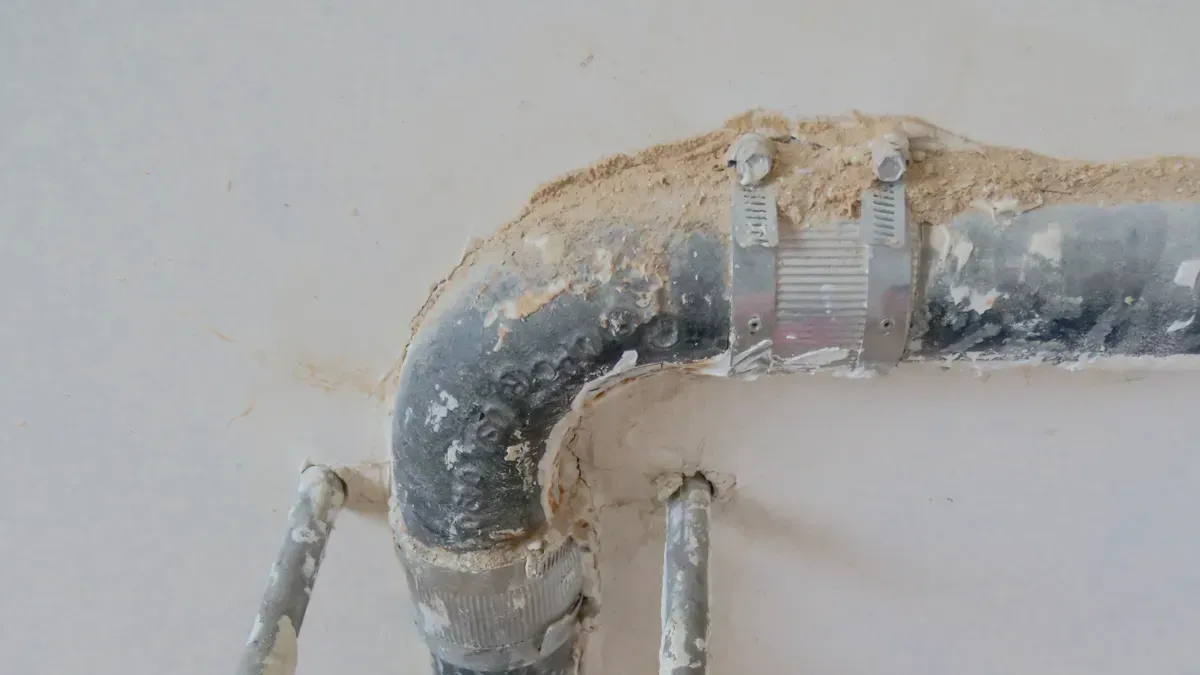
PPR fittings excel in corrosion resistance, making them a superior choice for modern water supply systems. Unlike metal fittings, PPR fittings are made from a non-metallic polymer that does not engage in electrochemical reactions. This unique property prevents rust, scaling, and pitting, ensuring long-term integrity and water quality.
Corrosion in water supply systems often arises from metal components, especially in environments with acidic or mineral-rich water. Such conditions lead to rust, which can weaken pipes and fittings, reduce flow capacity, and contaminate the water. PPR fittings effectively mitigate these risks by remaining immune to rust and electrolytic corrosion. They also resist scale buildup and remain unaffected by prolonged exposure to moisture and various chemicals.
The following table illustrates the lifespan of PPR fittings compared to copper and galvanized steel fittings under different water conditions:
| Water Condition | Copper Fitting Life | Galvanized Steel Fitting Life | PPR Fitting Life |
|---|---|---|---|
| pH 5.0-6.5 | 2-5 years | 3-7 years | 30-50 years |
| High chloride (>500 ppm) | 3-7 years | 3-7 years | 30-50 years |
| High oxygen content | 5-10 years | 5-10 years | 30-50 years |
PPR fittings demonstrate excellent corrosion resistance, making them ideal for transporting fluids with extreme pH levels. Their chemical inertness ensures a long service life and consistent internal diameter, further enhancing their reliability in water supply systems.
Cost-Effectiveness of PPR Fittings
PPR fittings offer significant cost savings for water supply systems. Their long service life and minimal maintenance requirements contribute to lower overall expenses. Here are some key factors that highlight the cost-effectiveness of PPR fittings:
- PPR fittings require minimal maintenance, which lowers ongoing operational costs.
- Unlike metal piping systems, PPR fittings do not need regular anti-corrosion treatments or inspections.
- Their durability ensures they withstand environmental factors, chemicals, and UV radiation, minimizing the need for replacements.
The initial investment in PPR fittings may be comparable to other materials. However, the long-term savings become evident over time. For instance, traditional metal fittings often corrode and require frequent replacements, leading to higher costs. In contrast, PPR fittings maintain their integrity and performance, resulting in fewer disruptions and repairs.
Additionally, the lightweight nature of PPR fittings simplifies transportation and installation. This feature reduces labor costs and installation time, further enhancing their cost-effectiveness.
Lightweight and Easy Handling of PPR Fittings
PPR fittings stand out for their lightweight design, which significantly enhances their handling and installation. This characteristic offers several advantages for professionals in the plumbing industry:
- Easy Maneuverability: The lightweight nature of PPR fittings allows for easier movement in tight spaces, making them ideal for various installation scenarios.
- Cost Savings: Transporting PPR fittings does not require heavy machinery. This reduces both time and labor costs during installation.
- Efficient Installation: The heat fusion welding method used for PPR fittings results in quicker installation times. This technique ensures strong, leak-proof joints, further enhancing efficiency.
Plumbing professionals often emphasize the importance of proper installation techniques. They recommend performing a trial dry-fit of PPR fittings before heat fusion. This practice helps identify alignment issues and ensures proper orientation. Additionally, keeping pipes and fittings clean is crucial for achieving optimal results.
The lightweight design of PPR fittings also facilitates easy transportation to remote locations. This practicality makes them suitable for various projects, from residential installations to large-scale infrastructure developments. Although PPR fittings may have a higher initial purchase price, their long-term savings on installation costs make them a wise investment.
Simple Installation Process of PPR Fittings
The installation process for PPR fittings is straightforward and efficient. This simplicity stems from the minimal tools and skills required, making it accessible for many professionals. Unlike traditional welding methods, which demand specialized equipment and extensive training, PPR fittings can be installed with basic tools.
Here are some key features that highlight the ease of installation for PPR fittings compared to traditional welding:
| Feature | PPR Fittings | Traditional Welding |
|---|---|---|
| Tools Required | Minimal tools | Specialized welding equipment |
| Skill Level | Low (no extensive training needed) | High (requires specialized skills) |
| Installation Speed | Rapid installation | Slower due to multiple steps |
| Labor Costs | Reduced due to simplified process | Higher due to skilled labor needed |
| Safety | Enhanced (no open flames) | Riskier (involves high heat) |
| Immediate Pressure Testing | Possible after assembly | Not possible until cooling |
The heat fusion method used for PPR fittings allows for quick and secure connections. This technique creates strong, leak-proof joints without the need for adhesives or additional materials. As a result, professionals can complete installations faster, reducing labor costs and project timelines.
Moreover, the absence of open flames during installation enhances safety. This factor makes PPR fittings a preferred choice in various environments, including residential and commercial settings.
Overall, the simple installation process of PPR fittings contributes to their growing popularity in modern water supply systems.
Thermal Insulation Properties of PPR Fittings
PPR fittings exhibit excellent thermal insulation properties, making them ideal for both hot and cold water supply systems. Their low thermal conductivity helps retain heat in hot water lines. This characteristic minimizes heat loss, reducing the need for external insulation. As a result, systems using PPR fittings operate more efficiently, leading to lower energy consumption and reduced utility costs.
The following table outlines the recommended temperature ranges for PPR fittings in various applications:
| Specification | Value |
|---|---|
| Maximum Operating Temperature | 95°C (203°F) |
| Common Pressure Ratings | PN10, PN16, PN20, PN25 |
| Pressure at 20°C (PN20) | 20 bar (290 psi) |
| Pressure at 70°C | ~50% of nominal value |
These specifications highlight the versatility of PPR fittings in different temperature conditions. Their ability to withstand high temperatures without compromising performance makes them suitable for a wide range of applications.
Environmental Friendliness of PPR Fittings
PPR fittings offer significant environmental benefits compared to traditional piping materials. Their thermoplastic nature allows easy melting and reforming, which supports efficient recycling. Unlike many other piping materials, PPR can be processed into granules and reused, reducing landfill waste and promoting a circular economy.
| Feature | PPR Materials | Other Piping Materials |
|---|---|---|
| Thermoplastic Nature | Can be melted and reformed easily | Varies, often less recyclable |
| Recycling Process | Efficiently processed into granules | More complex recycling process |
| Post-Consumer Recycling | Suitable and reduces landfill waste | Limited recycling options |
Environmental assessments show that PPR fittings have a lower lifecycle impact than metals like copper or steel. The production of PPR fittings consumes less energy and emits fewer greenhouse gases. Their long service life and minimal maintenance reduce resource use and waste generation over time. Additionally, PPR fittings contribute to water conservation by providing leak-proof connections that prevent water loss.
| Aspect | Description |
|---|---|
| Eco-Friendly Material | Made from polypropylene, requiring less energy and producing fewer emissions than metals |
| Low Lifecycle Environmental Impact | Long-lasting with minimal maintenance, reducing waste and resource consumption |
| Recyclability | 100% recyclable, supporting circular economy and landfill reduction |
| Energy Efficiency in Manufacturing | Requires less energy than metal alternatives, lowering carbon footprint |
| Contribution to Water Conservation | Leak-proof design ensures efficient water delivery and reduces waste |
Manufacturers of PPR fittings comply with local and international environmental regulations. These rules cover emissions, wastewater management, and chemical use. Companies continuously monitor and improve their environmental performance. Moreover, PPR fittings help projects earn certifications such as LEED, BREEAM, and WELL. These certifications reward energy efficiency, water conservation, and safe material selection.
Using PPR fittings supports sustainable building practices and reduces environmental impact throughout the water supply system’s lifecycle.
PPR fittings provide numerous benefits that make them an excellent choice for modern water supply systems. Their durability ensures a service life of at least 50 years, while their resistance to corrosion leads to minimal maintenance costs. Additionally, the ease of installation through heat fusion enhances reliability and efficiency.
Key benefits include:
- Exceptional durability
- Significant cost savings
- Simplified installation process
These advantages position PPR fittings as a leading option in the plumbing industry.
FAQ
What are PPR fittings made of?
PPR fittings consist of polypropylene, a durable thermoplastic known for its resistance to corrosion and high temperatures.
How long do PPR fittings last?
PPR fittings typically last over 50 years, making them a reliable choice for long-term water supply systems.
Can PPR fittings be recycled?
Yes, PPR fittings are 100% recyclable, supporting sustainable practices and reducing environmental impact.