Introduction
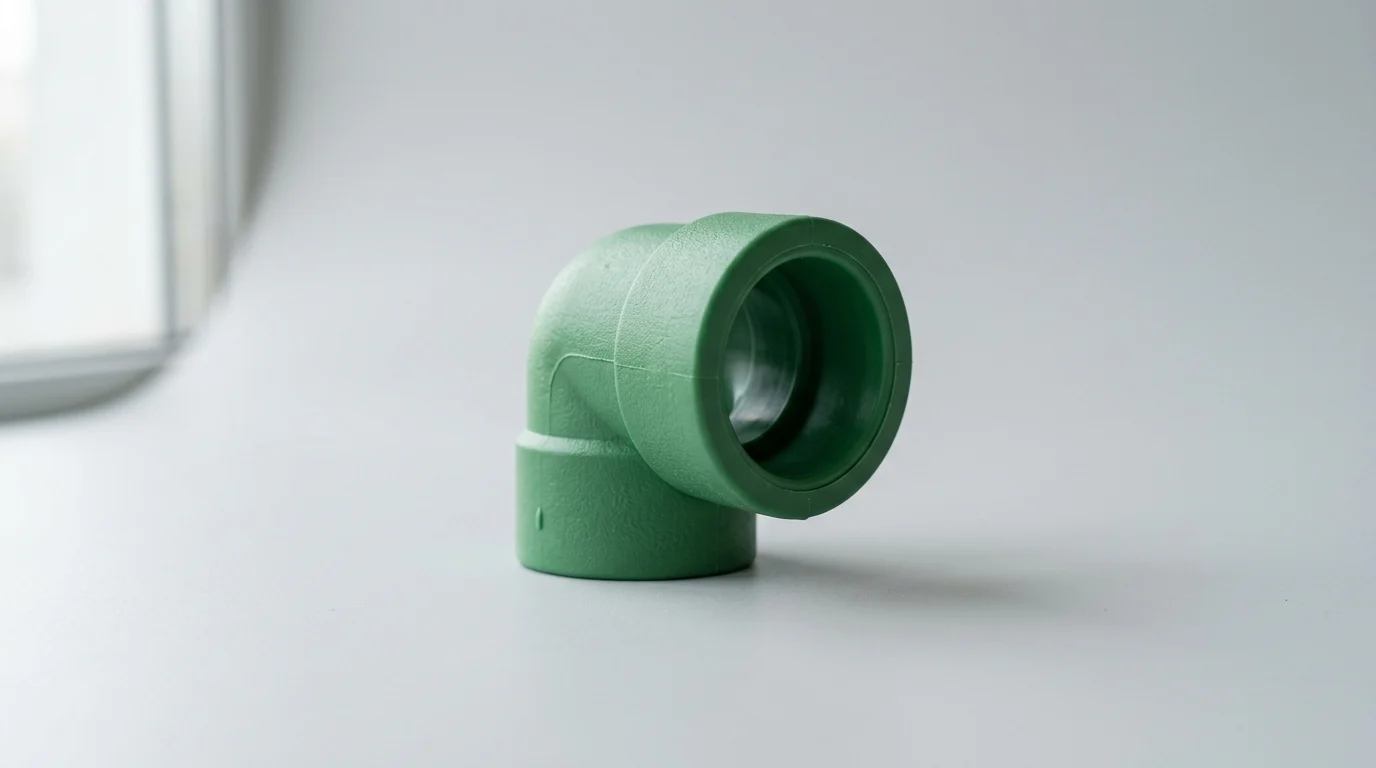
PP-R pipe fittings have become a practical standard in modern construction because they combine reliable joint integrity, corrosion resistance, and long service life in one system. From domestic water lines to HVAC and industrial fluid transport, their range of use extends well beyond basic plumbing. This article outlines seven key applications of PP-R pipe fittings in construction projects and explains why each matters for performance, maintenance, and cost control. By the end, readers will have a clearer view of where PP-R fits best and how it supports more efficient, durable building infrastructure.
Why PP-R Pipe Fittings Are a Strategic Choice
Polypropylene Random Copolymer (PP-R) pipe fittings have fundamentally restructured the fluid transport landscape in commercial and residential construction. As engineering tolerances tighten and sustainability mandates become stricter, traditional mechanical joining methods are increasingly viewed as liabilities. PP-R offers a monolithic, fully integrated piping system that leverages thermofusion to create joints that are structurally identical to the pipe itself.
The strategic adoption of PP-R pipe fittings is not merely a material substitution; it represents a shift toward lifecycle-focused engineering. By eliminating the corrosion, scaling, and joint degradation associated with metallic systems, engineers can design plumbing networks with predictable long-term hydraulic performance.
Market drivers increasing PP-R demand
The trajectory of the global piping market demonstrates a clear pivot toward advanced thermoplastics. Market analyses consistently project the PP-R segment to expand at a Compound Annual Growth Rate (CAGR) of 6% to 7.5% through the next decade. This growth is heavily driven by rapid urbanization and the stringent requirements of modern green building certifications, such as LEED and BREEAM.
Furthermore, the escalating costs of raw metals have forced contractors to seek materials that decouple project budgets from volatile commodity markets. The inherent chemical resistance of PP-R also makes it highly attractive in regions struggling with aggressive water chemistries, where legacy copper or galvanized steel systems experience accelerated pitting and failure.
How to position PP-R value in the introduction
When introducing PP-R pipe fittings to project stakeholders, the value proposition must center on Total Cost of Ownership (TCO) and risk mitigation. While the initial material cost may be comparable to or slightly higher than standard PVC, the operational longevity fundamentally alters the financial modeling. A properly installed PP-R system boasts an operational lifespan exceeding 50 years at continuous operating parameters of 70°C and 10 bar pressure.
Additionally, heat fusion welding eliminates the need for solder, fluxes, or chemical solvents, creating a joint that reduces leak probability by up to 95% compared to threaded or mechanically crimped alternatives. Positioning this near-zero failure rate during the design phase effectively addresses the primary concerns of facility managers and insurance underwriters.
Technical Characteristics of PP-R Pipe Fitting Systems
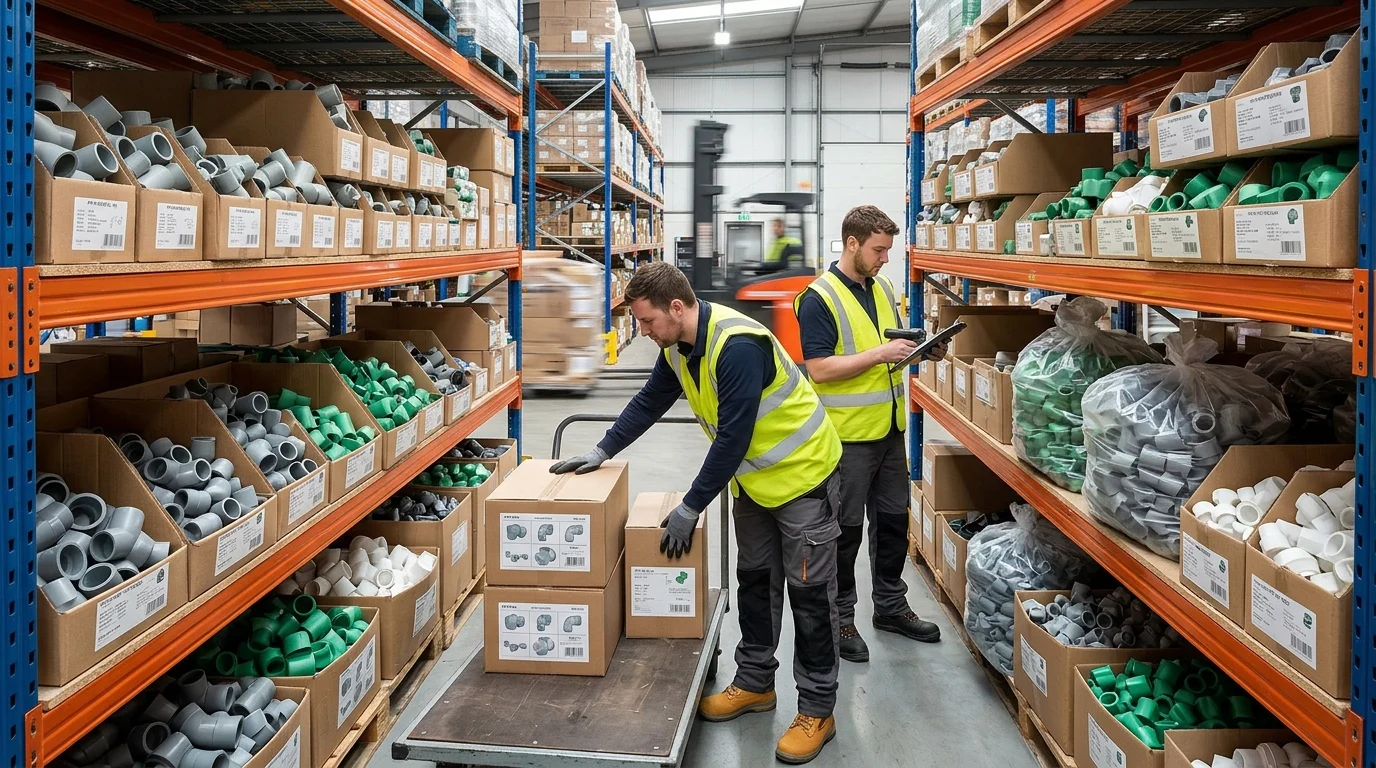
The performance efficacy of PP-R pipe fittings is rooted directly in their molecular architecture. Polypropylene random copolymer is synthesized through the random addition of ethylene into the polypropylene chain. This specific copolymerization process yields a thermoplastic that balances rigidity with exceptional impact strength, particularly at elevated temperatures.
Understanding these technical characteristics is essential for specifying engineers who must match piping material properties to the exacting hydraulic and thermal demands of complex building systems.
PP-R material properties and system basics
At a fundamental level, PP-R is characterized by its exceptionally low thermal conductivity, measuring approximately 0.24 W/mK. This property significantly reduces the rate of heat transfer, meaning less external insulation is required to maintain fluid temperatures compared to metallic systems. Additionally, the material exhibits a low density of roughly 0.89 to 0.91 g/cm³, facilitating easier handling and reducing the structural load on building supports.
The chemical inertness of PP-R ensures that the fittings do not react with dissolved ions in the water supply, preventing the galvanic corrosion that plagues multi-metal systems. The internal surface roughness is an incredibly low 0.007 mm, which nearly eliminates friction losses, resists biofilm accumulation, and prevents the scaling that typically chokes flow rates over decades of use.
Key comparison points versus alternative piping materials
Evaluating PP-R against alternative piping materials requires a strict comparative analysis of thermal, mechanical, and installation metrics. While copper offers high temperature tolerance, its susceptibility to fluctuating water pH and high thermal loss makes it less efficient for long runs. Cross-linked polyethylene (PEX) is highly flexible but relies heavily on mechanical fittings, introducing potential points of failure and flow restriction.
| Material | Thermal Conductivity (W/mK) | Primary Joint Method | Max Continuous Temp (°C) | Expected Lifespan (Years) |
|---|---|---|---|---|
| PP-R | 0.24 | Heat Fusion | 70 – 95 | 50+ |
| Copper | 386.0 | Soldered / Pressed | 110 | 50 |
| PEX | 0.38 | Mechanical Crimp / Expansion | 90 | 50 |
| CPVC | 0.14 | Solvent Cement | 93 | 40 – 50 |
As demonstrated, PP-R provides a distinct advantage through its heat fusion joint methodology, transforming the entire network into a single continuous plastic structure without the flow restrictions inherent to insert-style PEX fittings.
Top Applications of PP-R Pipe Fittings
The versatility of polypropylene random copolymer has driven its adoption across a wide spectrum of construction environments. While commonly associated with basic plumbing, advanced engineering has expanded its utility. The top seven applications of PP-R pipe fittings now encompass potable water delivery, chilled water cooling networks, radiant heating arrays, industrial fluid transport, compressed air distribution, agricultural irrigation, and rainwater harvesting systems.
Among these seven critical applications, domestic water and HVAC systems represent the most significant volume of installations, leveraging the material’s unique thermal and hygienic properties to maximize building efficiency.
Domestic hot and cold water systems
In domestic hot and cold water systems (Applications 1 and 7), the paramount concern is maintaining absolute water purity. PP-R pipe fittings are completely non-toxic and frequently carry stringent certifications such as NSF/ANSI 61 for drinking water components. Because the material does not leach heavy metals or volatile organic compounds (VOCs), it preserves the organoleptic properties—taste and odor—of the water supply.
System pressures are easily managed by selecting the appropriate wall thickness. Cold water distribution typically utilizes PN10 (Nominal Pressure 10 bar) fittings, while hot water lines rely on thicker PN20 fittings to handle the combined stress of elevated temperatures and standard municipal pressures. The seamless fusion joints prevent the micro-leaks that lead to catastrophic mold and structural water damage in residential and commercial high-rises.
HVAC and heating applications
For HVAC and heating applications (Applications 2, 3, and 4), managing thermal energy transfer is the primary objective. In chilled water lines, the low thermal conductivity of PP-R drastically reduces the risk of surface condensation, mitigating the need for excessive vapor barriers. Conversely, in radiant heating and central boiler applications, the material minimizes heat loss during transit from the mechanical room to the terminal units.
PP-R pipe fittings can operate safely in environments ranging from -20°C (when utilizing appropriate glycol antifreeze mixtures) up to 95°C for short duration peak loads. This thermal resilience also extends to industrial fluid transport and compressed air lines (Applications 5 and 6), where the pipe’s resistance to compressor oils and industrial chemicals ensures a rupture-free lifecycle under continuous cyclic loading.
How to Evaluate PP-R Pipe Fittings for Projects
Integrating PP-R pipe fittings into a commercial or industrial project requires rigorous evaluation protocols. Engineers cannot simply substitute plastic for metal on a one-to-one basis; the distinct expansion coefficients, pressure ratings, and installation techniques of PP-R demand specific design adaptations.
A successful deployment relies on aligning the core specifications with the operational environment, implementing strict quality control during installation, and ensuring absolute compliance with regional building codes.
Core specification and performance factors
The core specification of PP-R fittings is dictated by the Standard Dimension Ratio (SDR) and the Nominal Pressure (PN) rating. The SDR is the ratio of the pipe’s outer diameter to its wall thickness; a lower SDR indicates a thicker wall and higher pressure capacity. For example, a high-pressure hot water riser will typically require an SDR 6 or SDR 7.4 fitting (roughly equivalent to PN 20), ensuring structural integrity at 70°C.
Conversely, a standard cold water distribution manifold may only require SDR 11 (PN 10) fittings. Specifiers must also account for linear thermal expansion, which is approximately 0.15 mm/mK for standard PP-R. Long straight runs require carefully engineered expansion loops or the use of composite PP-R fittings reinforced with fiberglass or aluminum to reduce the expansion coefficient by up to 75%.
Steps to reduce installation and failure risk
The primary risk of failure in a PP-R system stems from improper heat fusion rather than material degradation. To eliminate installation risks, contractors must strictly adhere to time and temperature parameters. The standard welding temperature for PP-R is exactly 260°C (±5°C). Deviating from this threshold results in either weak cold welds or overheated, restricted internal diameters.
Heating times are strictly governed by the fitting diameter. A 20mm fitting requires a precise 5-second heating time, whereas a heavy-duty 63mm fitting demands 24 seconds of heat application before joining. Implementing mandatory daily test welds and utilizing automated fusion machines with digital temperature readouts can reduce installation-related defect rates to near zero.
Codes, certifications, and regional compliance
Global adoption of PP-R pipe fittings is regulated by a strict framework of international and regional standards. At the international level, ISO 15874 dictates the general requirements for plastics piping systems for hot and cold water installations. In Europe, the German DIN 8077 and DIN 8078 standards remain the benchmark for dimensions and testing protocols.
In North America, the material must conform to ASTM F2389, which governs pressure-rated polypropylene piping systems, alongside CSA B137.11 in Canada. Ensuring that the specified fittings carry third-party validation from organizations like ICC-ES, NSF, or DVGW is non-negotiable for passing municipal inspections and securing occupancy permits.
Decision Framework for Choosing the Right PP-R Pipe Fitting
Selecting the optimal PP-R pipe fitting manufacturer requires a structured decision-making framework that looks beyond the initial per-unit price. Procurement teams must balance the technical fit of the system against total project economics, vendor reliability, and supply chain transparency.
A holistic evaluation ensures that the chosen fittings will not only meet the engineering specifications but will arrive on schedule and perform flawlessly over their multi-decade design life.
Balancing application fit and total cost
Balancing application fit with total cost involves calculating both material acquisition and labor efficiencies. While the raw material costs for PP-R are generally 20% to 30% lower than commercial-grade copper, contractors must factor in the upfront capital expenditure for specialized thermal fusion equipment. However, the speed of the fusion process yields significant labor savings.
Industry data indicates that the break-even point on labor and tooling versus traditional soldered or threaded systems is typically achieved on commercial projects exceeding 500 linear meters of piping. Furthermore, the total cost model must account for the elimination of future maintenance costs, as PP-R systems do not require the routine chemical flushing or joint resealing associated with legacy materials.
Vendor and sourcing evaluation criteria
Evaluating vendors for PP-R pipe fittings is critical to maintaining project timelines and quality standards. Procurement managers should utilize a standardized matrix to assess potential manufacturing partners, focusing on quality assurance, production flexibility, and logistical capabilities.
| Evaluation Criteria | Minimum Acceptable Threshold | Optimal Vendor Standard |
|---|---|---|
| Quality Certification | ISO 9001 | ISO 9001, ISO 14001, Full Batch Traceability |
| Minimum Order Qty (MOQ) | 10,000 pieces per SKU | Flexible / Project-based (e.g., 2,000 pieces) |
| Supply Lead Time | 6 – 8 weeks | 2 – 4 weeks (Supported by regional warehousing) |
| Manufacturing Defect Rate | < 1.0% | < 0.1% (Six Sigma operational levels) |
| Raw Material Source | Standard commercial resin | 100% Virgin Borealis or Hyosung granules |
Ultimately, partnering with a vendor that utilizes premium virgin resins and maintains strict dimensional tolerances will safeguard the integrity of the entire piping network. Selecting a manufacturer that aligns with these optimal standards ensures seamless installation, regulatory compliance, and maximum operational longevity.
Key Takeaways
- The most important conclusions and rationale for PP-R pipe fitting
- Specs, compliance, and risk checks worth validating before you commit
- Practical next steps and caveats readers can apply immediately
Frequently Asked Questions
What construction systems are PP-R pipe fittings best suited for?
They are widely used for hot and cold water supply, floor heating, irrigation, and some drainage support lines in residential and commercial buildings.
Why are PP-R pipe fittings preferred over metal piping in many projects?
PP-R resists corrosion, scaling, and aggressive water chemistry, helping maintain flow and reduce leak risk over long service periods.
How are PP-R pipe fittings joined on site?
They are typically connected by heat fusion, which creates a uniform joint without solder, solvents, or threaded sealing materials.
Can Donsen supply different PP-R fitting types for construction projects?
Yes. Donsen offers couplings, elbows, tees, unions, reducers, plugs, and male or female adaptors, including stainless steel and copper transition options.
How long can a properly installed PP-R piping system last?
A correctly designed and installed PP-R system can exceed 50 years under continuous operating conditions around 70°C and 10 bar.