Introduction
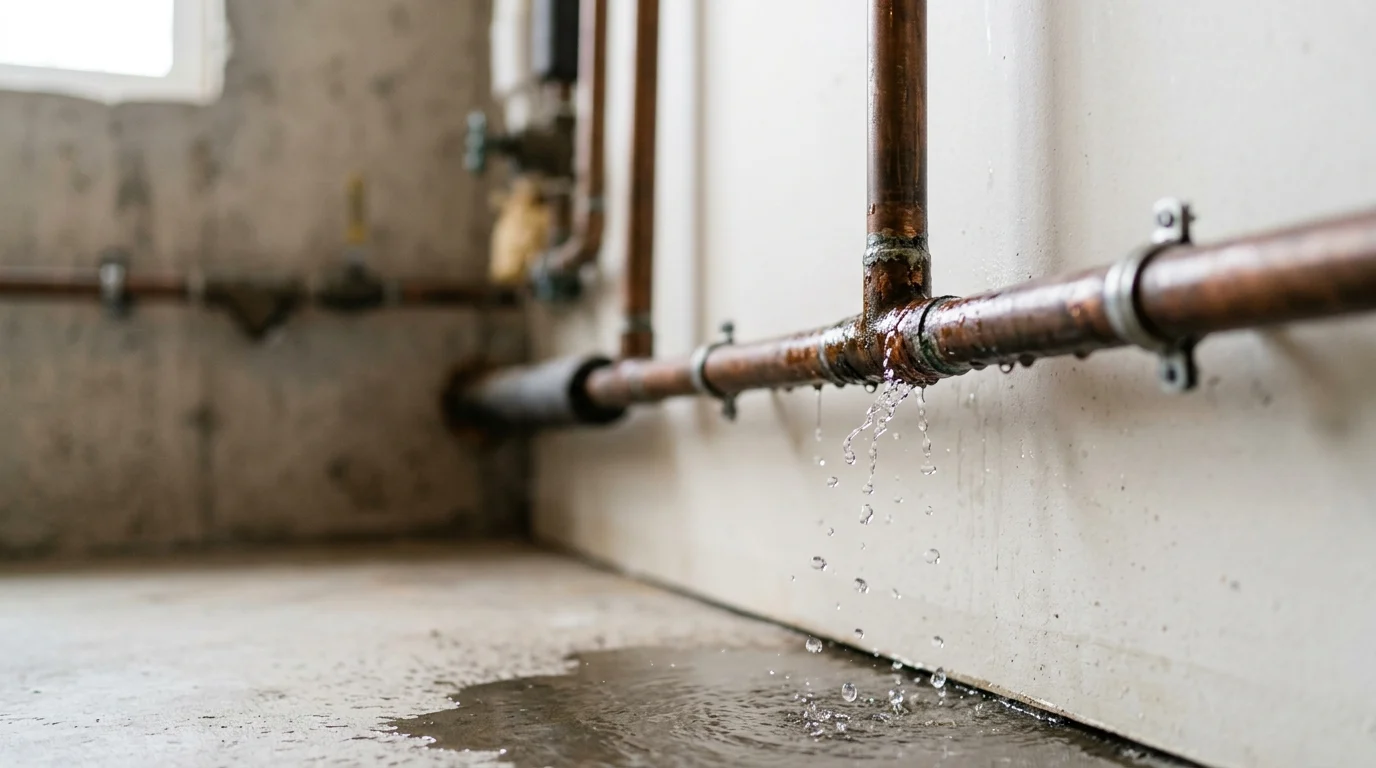
Even small pipe leaks can trigger costly downtime, product loss, and safety issues, especially in commercial and industrial systems. In many cases, the root problem is not just damaged pipe but poor fitting selection, improper installation, or operating conditions that push connections beyond their limits. This article explains five common causes of pipe leaks, from pressure stress to corrosion and vibration, and shows how proper fittings help prevent each one. By understanding where leaks start and how connection design affects system reliability, readers can make better maintenance, replacement, and specification decisions before minor seepage becomes a major failure.
Why Pipe Leaks Are a High-Cost Risk in Commercial Systems
Pipe leaks represent a critical vulnerability in commercial and industrial fluid systems. Beyond the immediate loss of media, compromised piping networks introduce systemic risks that cascade through a facility’s operational framework.
Addressing these vulnerabilities requires a thorough understanding of the mechanical thresholds and environmental stressors that dictate fluid system integrity. Reactive maintenance is no longer sufficient; modern facilities must engineer leak prevention directly into their piping architecture.
Effects on downtime, maintenance cost, and safety
Unplanned downtime resulting from catastrophic pipe leaks carries a severe financial penalty. In continuous process industries, production halts can cost between $100,000 and $300,000 per hour, rapidly eclipsing the cost of the faulty components themselves.
Furthermore, fluid containment failures pose severe safety hazards. The unintended release of toxic, flammable, or high-temperature media directly increases the likelihood of OSHA-recordable incidents and exposes facilities to stringent EPA fines for hazardous material discharge. The cumulative cost of a single major leak—encompassing lost yield, remediation, and regulatory penalties—often justifies substantial investments in high-reliability fittings.
Operating conditions that increase leak risk
Operational extremes dictate the likelihood of system failure. Commercial systems conveying supercritical fluids or high-pressure hydraulics frequently operate at thresholds exceeding 10,000 psi. At these pressures, even microscopic imperfections in a joint can propagate into catastrophic blowouts.
When extreme pressure is combined with severe temperature fluctuations—ranging from cryogenic levels of -196°C in LNG applications to high-heat steam systems above 400°C—the mechanical stress on pipe joints multiplies. These extreme operating conditions significantly elevate the risk of structural fatigue, elastomer degradation, and eventual seal failure.
Common Causes of Pipe Leaks
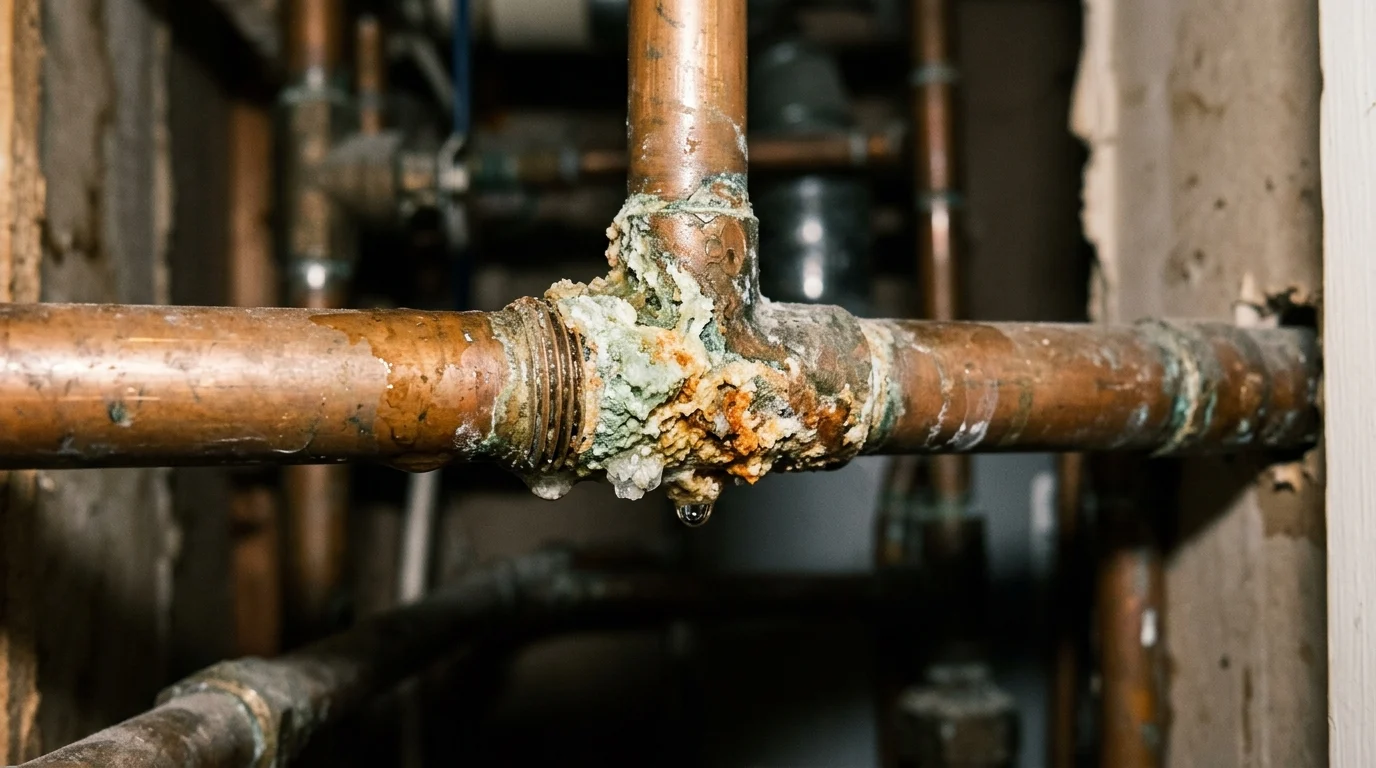
Identifying the root origins of fluid system failures requires an examination of mechanical, chemical, and operational dynamics. Most leaks do not occur spontaneously; they result from compounding variables that degrade system integrity over time.
Incorrect fitting selection and material incompatibility
Material incompatibility remains a primary driver of joint failure. Selecting improper elastomers for O-rings, such as deploying EPDM in a hydrocarbon fluid line, can cause a volume swell exceeding 30%. This chemical degradation leads to extrusion, loss of elasticity, and rapid seal failure.
Similarly, joining dissimilar metals without proper dielectric isolation accelerates galvanic corrosion. If a highly anodic material is coupled directly with a cathodic one in the presence of an electrolyte, the anodic fitting can be stripped of its structural integrity within months of commissioning, creating a high-risk leak path.
Pressure surges, vibration, and thermal expansion
Dynamic forces exert continuous, often unmeasured stress on piping architecture. Water hammer—a sudden momentum change in fluid flow caused by rapid valve closure—can generate pressure transients that spike 2 to 3 times above the system’s maximum allowable working pressure (MAWP), instantly fracturing brittle joints.
Additionally, thermal expansion must be accommodated in the system design. For instance, carbon steel pipe expands approximately 0.08 inches per 100 feet for every 10°F increase in temperature. Failure to integrate expansion loops or specify flexible joints inevitably results in sheared fittings and compromised seals.
Corrosion, installation error, and low-quality fittings
Environmental degradation and human error frequently compromise otherwise well-engineered systems. Localized pitting corrosion can penetrate a standard 0.065-inch pipe wall in highly aggressive chloride environments if an inadequate alloy is specified.
On the installation front, improper torque application is a leading cause of failure. Over-torquing threaded connections causes thread galling and permanent deformation, while under-torquing leaves microscopic leak paths. Furthermore, sourcing low-quality fittings from unverified manufacturers introduces dangerous dimensional variances, with defect rates sometimes exceeding 3%—a stark contrast to the <0.1% defect rate expected from top-tier, ISO-certified producers.
Fitting Specifications and Joint Designs That Prevent Leaks
Preventing fluid loss necessitates matching the joint design to the precise mechanical and chemical demands of the application. The specification process must evaluate the structural limits of each fitting type against the system’s operational parameters.
Comparing threaded, compression, press, and flanged joints
The choice of connection methodology dictates the system’s baseline reliability. Selecting the appropriate joint requires balancing pressure capacity against mechanical stressors.
| Joint Type | Typical Max Pressure (psi) | Vibration Resistance | Ideal Application |
|---|---|---|---|
| Threaded (NPT) | Up to 10,000 (size dependent) | Low to Moderate | Static, low-risk utility lines |
| Double-Ferrule Compression | Up to 15,000 | Excellent | High-vibration instrumentation |
| Press Fittings | 200 to 300 | Moderate | Commercial water and HVAC |
| Flanged | 150 to 2,500 (Class dependent) | High | Large bore industrial piping |
Selecting a threaded connection for a high-vibration environment is a frequent misstep that leads to backing off and leakage. Conversely, compression or flanged joints offer superior resistance to mechanical fatigue and thermal cycling.
Material, pressure, temperature, and media compatibility
Specification must account for the degradation of material strength under extreme conditions. For example, 316 stainless steel retains only about 74% of its allowable working pressure when temperatures reach 1,000°F (537°C).
Engineers must apply rigorous derating factors to fitting specifications to ensure the chosen alloy and wall thickness can safely contain the media. Furthermore, the media’s chemical composition must be cross-referenced with compatibility charts to prevent stress corrosion cracking (SCC) or embrittlement of the fitting material.
How to evaluate sealing reliability and lifecycle cost
Evaluating sealing reliability requires looking beyond the initial purchase price to the Total Cost of Ownership (TCO). High-performance fittings may carry a higher upfront cost, but their lifecycle economics often justify the investment.
While advanced press fittings or proprietary double-ferrule designs may carry a 20% to 30% premium in upfront material costs, they frequently reduce installation labor time by up to 60%. Over a 20-year operational lifecycle, the drastic reduction in maintenance interventions and mitigated leak risks renders these premium fittings significantly more cost-effective than standard alternatives.
Installation, Inspection, and Compliance Practices
Even the highest-grade fittings will fail if installation protocols and maintenance schedules are ignored. Rigorous adherence to industry standards and proactive inspection regimens are critical for long-term leak prevention.
Proper installation, torque control, and alignment checks
Mechanical integrity relies heavily on precise assembly techniques. For threaded NPT fittings, industry best practices typically require 2 to 3 turns past finger-tight using a high-quality PTFE tape and a compatible thread sealant to ensure void-free engagement.
In flanged connections, technicians must utilize calibrated torque wrenches and follow a strict star-pattern tightening sequence. This ensures uniform gasket compression, preventing the uneven stress distribution that inevitably leads to micro-leaks and flange face damage.
Codes, standards, and documentation requirements
Compliance with international engineering codes provides a reliable framework for safety and system longevity. Piping systems must frequently adhere to ASME B31.3 for process piping, which dictates rigorous material verification and testing procedures.
Post-installation, systems are typically subjected to hydrostatic testing at 1.5 times the design pressure to verify joint integrity prior to commissioning. Comprehensive documentation, including Material Test Reports (MTRs) and welder qualification records, is mandatory for regulatory compliance, traceability, and audit readiness.
Maintenance intervals, inspection methods, and failure indicator
s
Transitioning from reactive to predictive maintenance is the most effective way to minimize catastrophic failures. Inspection intervals should be dictated by fluid toxicity, system pressure, and historical wear rates.
Advanced non-destructive testing (NDT), such as ultrasonic thickness gauging, can identify internal erosion before a breach occurs. For critical gas systems, acoustic emission testing or helium leak detection can identify micro-leaks as small as 1×10^-4 standard cubic centimeters per second (std cc/sec). Detecting vulnerabilities at this microscopic level allows operators to address failing joints long before they manifest as visible, hazardous leaks.
How Buyers and Specifiers Should Choose Fittings
Procurement professionals and system specifiers act as the first line of defense against fluid system failures. Strategic sourcing requires a rigorous evaluation of supplier capabilities alongside a risk-based approach to fitting selection.
Supplier selection and quality criteria
Vetting suppliers ensures that the components entering a facility meet stringent metallurgical and dimensional tolerances. Sourcing from unverified vendors introduces unacceptable variability into the fluid system.
| Evaluation Criteria | Minimum Acceptable Benchmark | Impact on System Integrity |
|---|---|---|
| Quality Certification | ISO 9001:2015 | Ensures consistent manufacturing processes. |
| Material Traceability | 100% MTR Availability | Prevents counterfeit or substandard alloys. |
| Production Defect Rate | < 0.1% (1000 PPM) | Minimizes out-of-box failures and dimensional mismatch. |
| Pressure Testing | Batch sample burst testing | Verifies theoretical pressure ratings in real-world scenarios. |
Partnering with manufacturers who provide comprehensive engineering support, metallurgical transparency, and stringent quality control is essential for mitigating risks in high-stakes commercial applications.
Matching fitting strategy to application risk
Component specification must align directly with the application’s specific risk profile. A one-size-fits-all procurement strategy inevitably leads to either dangerous under-specification or wasteful over-engineering.
Low-risk utility water systems operating at 50 psi can safely utilize standard threaded or press-fit connections. Conversely, a highly toxic chemical line operating at 3,000 psi demands fully welded joints or high-performance, double-ferrule compression fittings to eliminate potential leak paths entirely. By categorizing fluid systems by risk, buyers can optimize their procurement spend—directing premium investments toward critical nodes while utilizing highly cost-effective solutions for benign applications.
Key Takeaways
- The most important conclusions and rationale for Pipe Leaks
- Specs, compliance, and risk checks worth validating before you commit
- Practical next steps and caveats readers can apply immediately
Frequently Asked Questions
What is the most common cause of pipe leaks?
Incorrect fitting selection is a leading cause. Match pipe and fitting materials to the fluid, pressure, and temperature to avoid seal damage, cracking, or joint failure.
How can proper fittings help prevent water hammer leaks?
Use fittings rated for surge pressure and pair them with slow-closing valves or hammer arrestors. This reduces sudden pressure spikes that can crack joints or loosen connections.
Which Donsen fittings are suitable for leak-resistant water supply systems?
Donsen PP-R fittings, quick-push fittings, and plastic valves are practical options for water supply lines. Choose the series that matches your pipe material and operating conditions.
Why do leaks happen after installation even with new pipes?
Installation errors often cause early leaks. Avoid over-tightening threaded joints, misalignment, and poor sealing; follow the fitting’s torque and assembly instructions exactly.
How do I choose the right fitting material to reduce leak risk?
Select PP-R, PVC, CPVC, PE, or PE-RT based on fluid type, temperature, and application. For example, use CPVC for higher-temperature water and PE or PP compression fittings for irrigation lines.