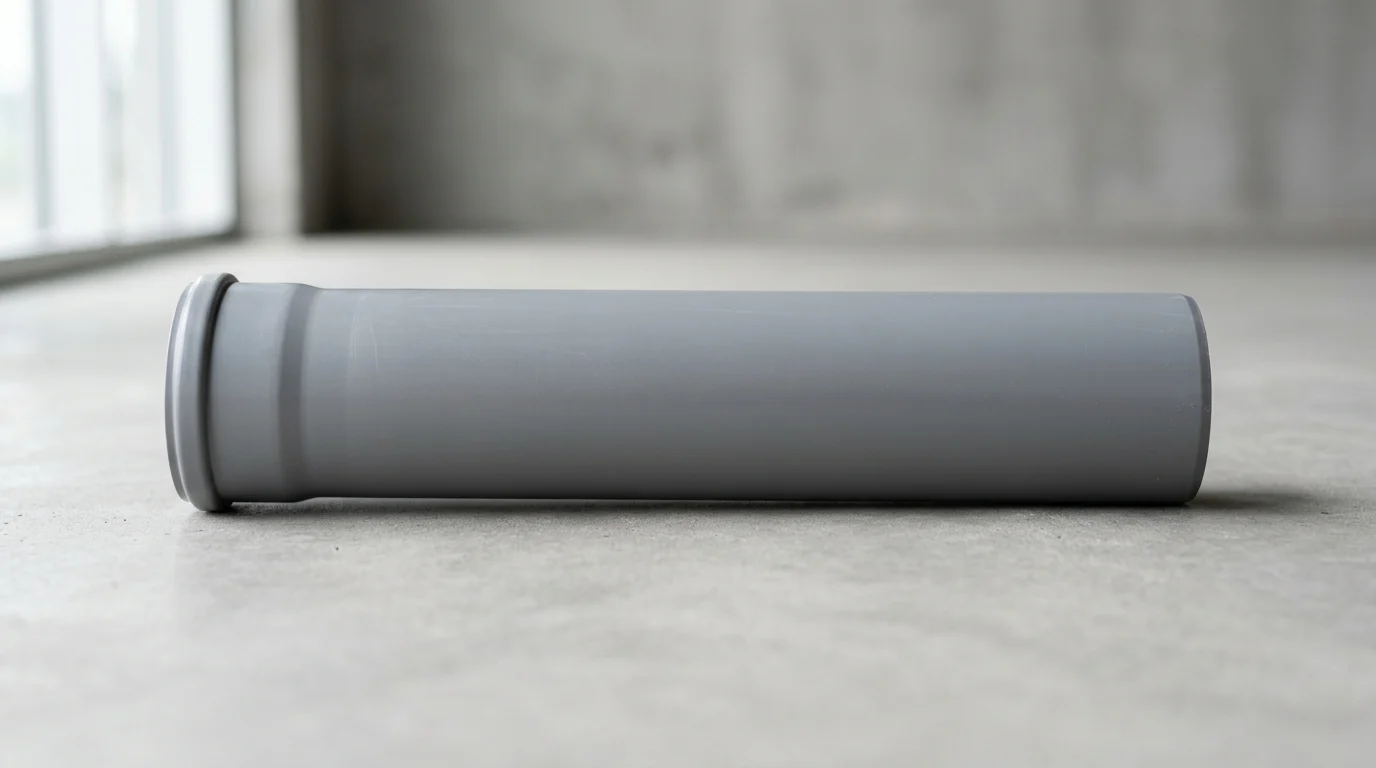
Why UV Stabilizers Matter for Outdoor PVC Pipe Procurement
Procurement teams sourcing plastic piping systems for infrastructure, agricultural, and commercial construction projects frequently encounter the challenge of environmental degradation. Standard PVC pipe, while highly durable in buried or indoor applications, remains highly susceptible to ultraviolet radiation. Specifying UV-stabilized formulations is a critical risk mitigation strategy for any project requiring above-ground installation and long-term structural integrity.
How UV Exposure Affects Service Life and Appearance
When standard polyvinyl chloride is exposed to direct sunlight, the ultraviolet spectrum triggers a process known as photodegradation. The UV energy breaks the polymer chains—a phenomenon called chain scission—which fundamentally alters the material’s mechanical properties at the molecular level.
Within 12 to 24 months of unprotected outdoor exposure, standard PVC pipe can lose up to 50% of its impact resistance. Macroscopically, this degradation manifests as surface chalking, severe discoloration (typically yellowing or browning), and micro-cracking. These micro-cracks act as stress concentrators, drastically increasing the likelihood of catastrophic pipeline failure under hydrostatic pressure.
Why Buyers Should Evaluate UV-Stabilized PVC Pipe
B2B buyers must evaluate UV-stabilized PVC pipe through the lens of Total Cost of Ownership (TCO). While standard PVC pipe offers a lower initial capital expenditure, the labor, equipment, and operational downtime required to replace a brittle, ruptured pipe network often costs three to five times the value of the original material.
Implementing UV-stabilized piping extends the reliable outdoor service life from a mere 2 to 3 years to well over 15 to 20 years. For wholesale distributors and engineering contractors, standardizing on UV-protected products for outdoor SKUs significantly reduces warranty claims, lowers maintenance overhead, and enhances brand reputation for long-term reliability in harsh climates.
Technical Specifications to Compare Before Buying
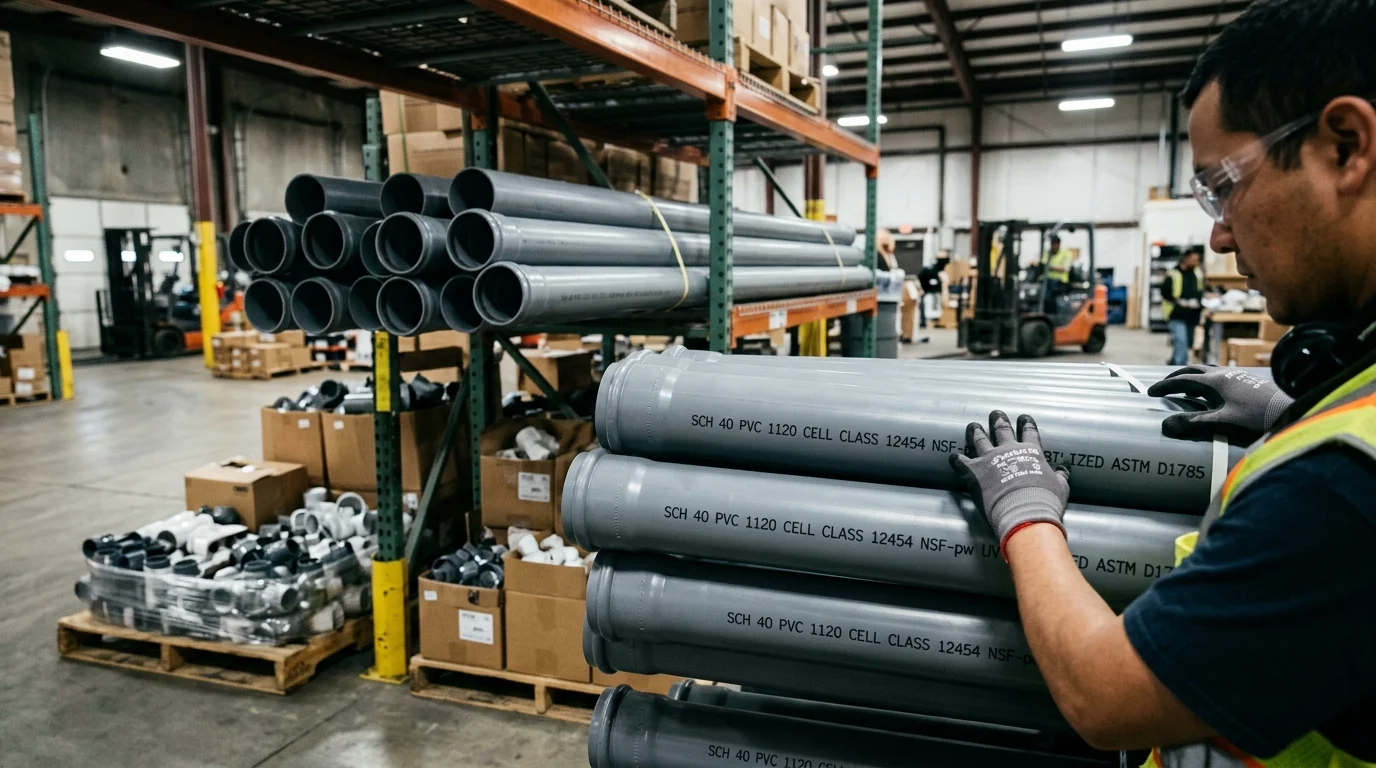
Validating the technical specifications of UV-stabilized PVC pipe is essential to ensure the procured products will withstand the specific environmental demands of the deployment region. Buyers should look beyond generic marketing claims of “UV resistance” and request exact formulation data and mechanical performance thresholds from their manufacturing partners.
UV Stabilizer Systems and Formulation Indicators
Manufacturers utilize specialized chemical additives to impart UV resistance, with the most common being Titanium Dioxide (TiO2) and Carbon Black. TiO2 acts as a physical barrier, reflecting and absorbing UV rays before they can penetrate the polymer matrix. High-quality outdoor white PVC typically requires a TiO2 concentration of 2% to 5% by weight. Carbon black provides excellent UV absorption for dark-colored pipes, while Hindered Amine Light Stabilizers (HALS) are utilized in premium blends to scavenge free radicals.
| Stabilizer System | Typical Concentration (by weight) | Primary Mechanism | Relative Cost Premium |
|---|---|---|---|
| Titanium Dioxide (TiO2) | 2.0% – 5.0% | Reflects/absorbs UV radiation | Moderate |
| Carbon Black | 2.0% – 3.0% | Absorbs UV energy | Low |
| HALS (Hindered Amines) | 0.2% – 1.0% | Scavenges free radicals | High |
Wall Thickness, Pressure Rating, and Application Fit
The physical dimensions of the pipe interact directly with its UV performance. Wall thickness, commonly denoted by Schedule (e.g., Schedule 40 versus Schedule 80) or Standard Dimension Ratio (SDR), plays a crucial role in longevity. Thicker walls inherently provide more sacrificial material before structural integrity is compromised by surface degradation.
Furthermore, buyers must account for pressure derating. While UV stabilizers protect against solar radiation, they do not increase the pipe’s heat tolerance. Continuous exposure to outdoor ambient temperatures and direct solar heating can raise the internal temperature of the pipe, requiring a strict pressure derating factor. For instance, a PVC pipe rated for 200 PSI at 73°F (23°C) must be derated to approximately 22% of its maximum working pressure if operating at sustained temperatures of 140°F (60°C).
Product Definitions and Use Boundaries
It is vital for procurement engineers to define the strict use boundaries of UV-stabilized PVC pipe. These products are engineered to resist photodegradation but are not a substitute for high-temperature plastics. If an outdoor application involves both high UV exposure and fluid temperatures consistently exceeding 140°F (60°C), procurement teams should pivot to UV-stabilized Chlorinated Polyvinyl Chloride (CPVC) or cross-linked polyethylene (PEX) systems.
How to Source UV-Stabilized PVC Pipe from Suppliers
Securing a reliable supply chain for UV-stabilized PVC pipe requires rigorous supplier evaluation. Sourcing directly from established manufacturing hubs offers substantial cost advantages, provided the chosen factory possesses the requisite technical expertise, compounding capabilities, and robust quality control frameworks.
Supplier Qualifications and Factory Capabilities
A competent manufacturer must demonstrate advanced extrusion capabilities alongside precise material compounding. Because the effectiveness of TiO2 or Carbon Black depends heavily on uniform dispersion within the PVC matrix, buyers should prioritize suppliers equipped with automated, in-house compounding facilities rather than those relying entirely on pre-mixed third-party resins.
Evaluating a supplier’s operational history is equally critical. Manufacturers with 20+ years of industry experience and multiple production bases are generally more capable of maintaining the strict formulation tolerances required for export-grade UV-stabilized piping. Buyers should mandate ISO 9001 certifications and assess the extrusion technology utilized; high-end twin-screw extruders yield vastly superior additive dispersion.
MOQ, Sample Policy, and Private Labeling Options
Minimum Order Quantities (MOQs) for custom UV formulations are typically higher than for standard indoor PVC due to the necessity of purging and calibrating extrusion lines for specialized masterbatches. Buyers should anticipate MOQs ranging from 5,000 to 10,000 meters, roughly equating to one 20-foot container per production run.
Sample policies should involve requesting accelerated weathering test samples rather than just standard production cut-offs. Additionally, B2B buyers should negotiate private labeling (OEM) options early in the sourcing process. Laser printing is highly preferred over ink stamping for outdoor pipes, as standard ink will quickly fade under UV exposure, leading to a loss of product traceability.
Audit Steps, Document Checks, and Pre-Shipment Control
Comprehensive pre-shipment control is non-negotiable for specialized polymer products. Procurement teams should mandate independent third-party inspections (such as SGS or Intertek) prior to container loading. Key document checks must include batch formulation records confirming the agreed-upon percentage of UV stabilizers.
Quality control audits should verify that the factory’s defect rate consistently remains below the industry standard threshold of 1.5%. Inspectors should specifically look for uniform coloration, accurate wall thickness using ultrasonic gauges, and the absence of extrusion die lines or surface pitting, as these imperfections can artificially accelerate UV degradation in the field.
Compliance, Packaging, and Logistics Factors
The logistics of importing and distributing UV-stabilized PVC pipe involve navigating international compliance standards, optimizing freight costs, and structuring inventory to maximize channel profitability. Efficient handling of these factors directly impacts the bottom line of distributors and wholesale importers.
Certifications, Weathering Standards, and Market Requirements
Compliance with recognized weathering standards is the primary differentiator between premium outdoor PVC and substandard alternatives. Buyers must ensure the product passes rigorous standardized testing, such as ASTM D4329 for fluorescent UV exposure or ISO 4422 for unplasticized PVC pipes.
A credible supplier will provide certified test reports demonstrating that the pipe has successfully withstood 1,000 to 2,000 hours in a QUV accelerated weathering tester without a significant drop in tensile strength or impact resistance. Meeting these market requirements is critical for passing municipal building codes and securing large-scale agricultural or public infrastructure tenders.
Packaging, Container Loading, and Storage Conditions
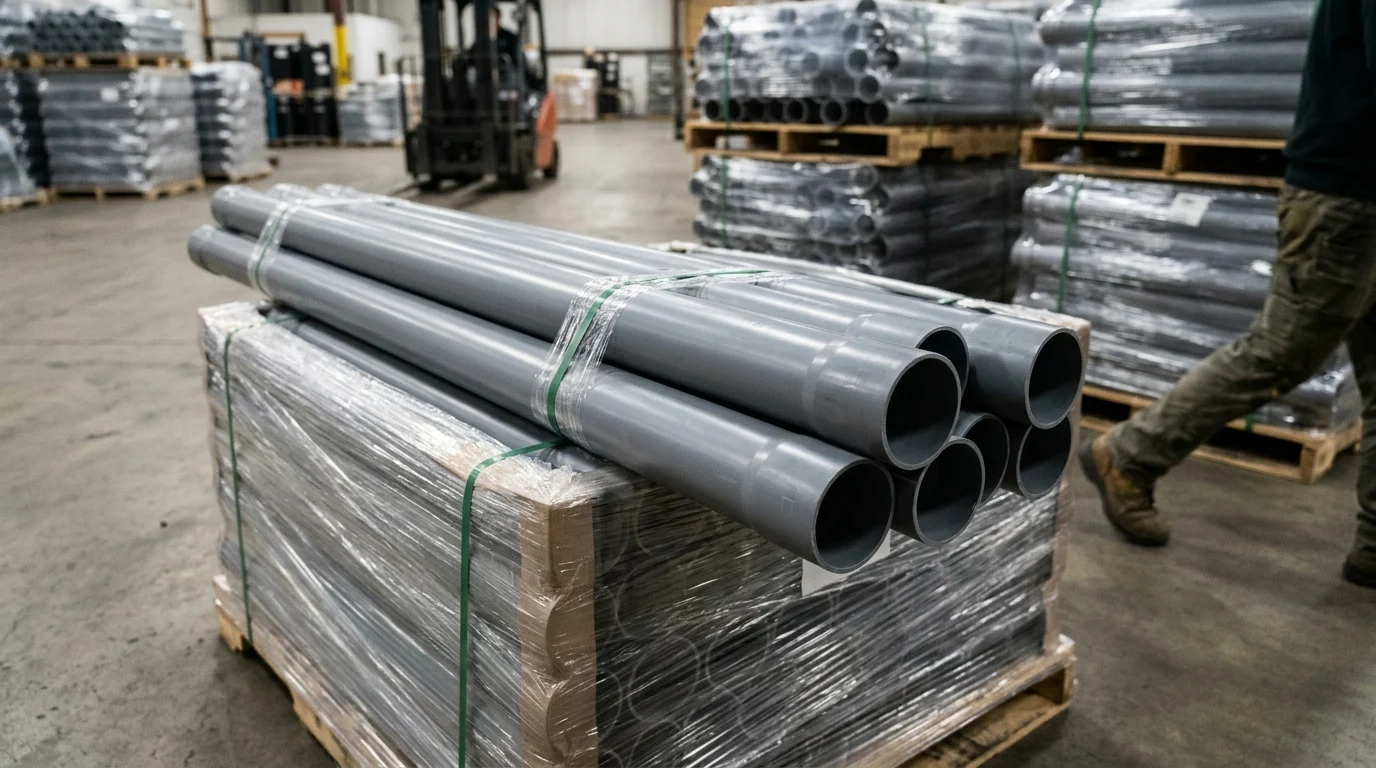
Proper packaging and container loading are essential to prevent deformation and surface damage during maritime transit. Pipes should be bundled using non-abrasive strapping and wrapped in UV-blocking PE film if they are expected to sit in outdoor port yards or distribution centers for extended periods.
| Container Type | Standard Pipe Length | Max Loading Volume | Estimated Weight Capacity |
|---|---|---|---|
| 20ft GP | 5.8 meters | 28 – 30 CBM | Up to 18 Metric Tons |
| 40ft HQ | 11.8 meters | 68 – 72 CBM | Up to 26 Metric Tons |
To maximize freight efficiency and lower the landed cost per meter, buyers should coordinate with suppliers to telescope smaller diameter pipes inside larger ones. This strategy is highly effective provided the supplier uses protective end caps and internal padding to prevent scratching the inner walls.
Margin, Channel Strategy, and Inventory Planning
From a channel strategy perspective, UV-stabilized PVC pipe typically commands a 15% to 25% price premium over standard PVC. However, this premium allows distributors to capture higher gross margins. Importers should position these products as premium, problem-solving SKUs tailored for contractors operating in high-sunlight regions.
Inventory planning requires careful forecasting. Because UV-stabilized pipes are often project-specific rather than everyday commodities, distributors should maintain a 3 to 6-month rolling inventory. This buffer accommodates the seasonality of outdoor construction and agricultural installation cycles while factoring in standard ocean freight lead times of 30 to 45 days.
How Buyers Should Decide When UV-Stabilized PVC Pipe Is Needed
Making the final procurement decision requires balancing upfront capital expenditure against long-term operational performance. While not every fluid handling project demands UV-stabilized PVC pipe, for applications exposed to the elements, this specialized investment is critical to maintaining the structural integrity of the entire system.
Project Profiles That Justify the Upgrade
Specific project profiles heavily justify the upgrade to UV-stabilized formulations. Above-ground agricultural irrigation networks, wastewater treatment facility piping, rooftop HVAC drain lines, and telecommunication conduits attached to bridge exteriors are prime examples where unprotected PVC will fail rapidly.
Geographic location also dictates necessity. Projects located in high UV index zones—such as the Middle East, Australia, or the southern United States—require pipes with maximum UV protection (e.g., >4% TiO2 formulation). In these harsh environments, standard PVC will become critically brittle within a single summer season, making stabilization an absolute technical requirement rather than an optional architectural upgrade.
Decision Framework for Cost and Performance
Procurement teams should utilize a strict decision framework comparing Capex (Capital Expenditure) and Opex (Operational Expenditure). If the pipeline is to be buried entirely below ground with no exposed risers, standard PVC remains the most cost-effective choice.
However, if more than 10% of the pipe network is exposed to indirect or direct sunlight, the 15% to 25% cost premium for UV stabilization is immediately justified by the massive reduction in future maintenance OPEX. By systematically evaluating formulation specs, supplier capabilities, and total lifecycle costs, B2B buyers can confidently source PVC piping systems that deliver decades of reliable outdoor performance.
Key Takeaways
- Wholesale sourcing and supply-chain implications for PVC Pipe
- Specifications, compliance, and commercial terms buyers should validate
- Actionable recommendations for distributors and procurement teams
Frequently Asked Questions
Why should outdoor PVC pipe include UV stabilizers?
UV stabilizers reduce sunlight damage, helping prevent chalking, discoloration, brittleness, and cracking. For above-ground water supply, irrigation, or drainage projects, they help extend service life and reduce replacement costs.
How long can UV-stabilized PVC pipe last outdoors?
Depending on formulation, climate, wall thickness, and installation conditions, UV-stabilized PVC pipe can often support 15–20 years of outdoor service, compared with only a few years for unprotected PVC.
What UV stabilizers are commonly used in PVC pipe?
Common options include titanium dioxide for white PVC, carbon black for dark-colored pipe, and HALS additives for premium protection. Buyers should request formulation details and performance test data from suppliers.
Does UV-stabilized PVC pipe handle high temperatures better?
No. UV stabilizers protect against sunlight, not heat. If fluid or surface temperatures are consistently high, consider CPVC, PE, or other application-specific piping solutions.
Can Donsen supply PVC products for outdoor applications?
Donsen manufactures PVC, CPVC, PE, PP-R pipes, fittings, and plastic valves for water supply, irrigation, drainage, and related projects, supporting buyers with product selection and export supply experience.