PVC Fittings Standards (ASTM, DIN, ISO) Compliance Guide for US & EU Importers
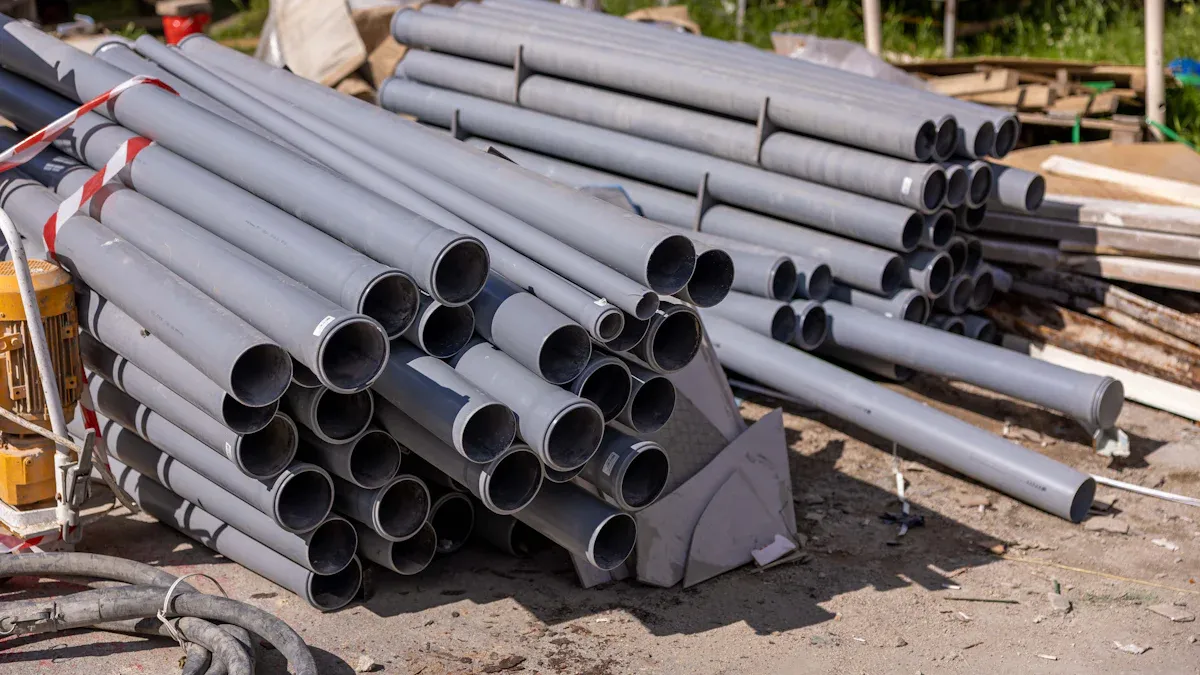
PVC fittings standards play a vital role for importers, ensuring product quality and safety. Understanding ASTM, DIN, and ISO and EN standards for PVC fittings is crucial as they dictate compliance requirements that affect market access. Non-compliance can lead to legal issues, financial penalties, and damage to a company’s reputation. Importers must navigate these regulations effectively to ensure their products meet international standards, including NSF certification for potable pipelines. This knowledge not only aids in fulfilling product labeling requirements for export but also helps maintain customer trust in the marketplace, especially when considering CE vs local plumbing compliance. Additionally, a comprehensive Pipe Certification Guide can assist importers in understanding the necessary certifications to ensure compliance.
Key Takeaways
- Understand ASTM, DIN, and ISO standards to ensure your PVC fittings meet quality and safety requirements.
- Conduct thorough product testing and maintain accurate documentation to prove compliance with standards.
- Implement a strong quality control system to ensure consistent product quality throughout the manufacturing process.
- Stay updated on changes to standards and provide ongoing training for staff to maintain compliance.
- Communicate your compliance status to customers to build trust and enhance your business reputation.
Understanding ASTM Standards
Overview of ASTM
The American Society for Testing and Materials (ASTM) is a globally recognized organization that develops and publishes voluntary consensus technical standards. These standards cover a wide range of materials, products, systems, and services, including PVC fittings. ASTM standards ensure that products meet specific performance criteria, enhancing safety and reliability in various applications. For importers, understanding these standards is essential for ensuring that their products comply with industry expectations and regulatory requirements.
Key ASTM Standards for PVC Fittings
Several ASTM standards specifically address PVC fittings, providing guidelines for their design, manufacturing, and performance. The following table summarizes some of the key ASTM standards relevant to PVC fittings:
| ASTM Standard | Description |
|---|---|
| ASTM D1784 – 20 | Standard Classification System and Basis for Specification for Rigid Poly(Vinyl Chloride) (PVC) Compounds and Chlorinated Poly(Vinyl Chloride) (CPVC) Compounds |
| ASTM D2665 | Standard Specification for Poly(Vinyl Chloride) (PVC) Plastic Drain, Waste, and Vent Pipe and Fittings |
| ASTM F512 – 12 | Standard Specification for Smooth-Wall Poly(Vinyl Chloride) (PVC) Conduit and Fittings for Underground Installation |
| ASTM D1785 – 21 | Standard Specification for Poly(Vinyl Chloride) (PVC) Plastic Pipe, Schedules 40, 80, and 120 |
These standards outline critical technical requirements that ensure the quality and performance of PVC fittings. For instance, ASTM D2665 specifies minimum stiffness values for different pipe diameters, ensuring structural integrity. Additionally, impact resistance is tested according to ASTM D2444, which requires that 9 out of 10 specimens pass without cracking. Individual fittings must withstand a minimum force of 750 lbf/ft (11 kN/m) as per ASTM D2665. Furthermore, standard fittings like elbows and tees must conform to ASTM D3311 for dimensions, while threaded fittings must meet ASTM F1498 specifications for sealing and strength.
Compliance Requirements for Importers
Importers of PVC fittings must adhere to ASTM standards to ensure compliance with U.S. regulations. This compliance involves several key steps:
- Product Testing: Importers should conduct rigorous testing of their products to verify that they meet the relevant ASTM standards.
- Documentation: Maintaining accurate documentation of compliance testing and certification is crucial. This documentation serves as proof of adherence to standards and can be requested by regulatory bodies.
- Quality Control: Implementing a robust quality control system helps ensure that all products consistently meet ASTM standards throughout the manufacturing process.
- Continuous Education: Importers should stay informed about updates to ASTM standards and any changes in compliance requirements. Regular training for staff involved in product development and quality assurance can facilitate this.
By following these compliance requirements, importers can mitigate risks associated with non-compliance, such as legal penalties and damage to their reputation.
Exploring DIN Standards
Overview of DIN
The Deutsches Institut für Normung (DIN) is the German Institute for Standardization. It develops standards that ensure quality, safety, and efficiency in various industries, including the production of PVC fittings. DIN standards are crucial for manufacturers and importers operating in European markets. They focus on precise dimensions and material composition, which helps maintain product consistency and reliability.
Key DIN Standards for PVC Fittings
Several DIN standards specifically address PVC fittings. These standards provide guidelines for design, manufacturing, and performance. Here are some key DIN standards relevant to PVC fittings:
| DIN Standard | Description |
|---|---|
| DIN 8061 | Standard Specification for Rigid Poly(Vinyl Chloride) (PVC) Pipes |
| DIN 8062 | Standard Specification for Rigid Poly(Vinyl Chloride) (PVC) Fittings |
| DIN EN 1452 | Standard Specification for Plastics Piping Systems for Water Supply |
| DIN EN 13244 | Standard Specification for PVC Drainage and Sewerage Pipes |
These standards emphasize the importance of dimensional accuracy and material quality. Importers must understand that DIN standards differ from ASTM standards in scope and application. For instance, DIN standards utilize metric measurements, while ASTM standards cater to North American markets with imperial measurements. Additionally, the testing methods and certification bodies vary significantly between the two standards.
Compliance Requirements for Importers
Importers of PVC fittings must comply with DIN standards to access European markets. Key compliance steps include:
- Product Testing: Conduct thorough testing to ensure products meet DIN specifications.
- Documentation: Maintain detailed records of compliance testing and certifications. This documentation serves as proof of adherence to standards.
- Quality Control: Implement a quality control system to ensure consistent compliance throughout the manufacturing process.
- Training: Provide ongoing training for staff to stay updated on any changes to DIN standards.
By following these compliance requirements, importers can effectively navigate the complexities of the European market and ensure their products meet the necessary standards.
Navigating ISO Standards
Overview of ISO
The International Organization for Standardization (ISO) develops and publishes international standards that ensure quality, safety, and efficiency across various industries. ISO standards for PVC fittings play a crucial role in establishing uniformity in product specifications and testing methods. Compliance with these standards is essential for importers seeking to access global markets, particularly in Europe and beyond.
Key ISO Standards for PVC Fittings
Several ISO standards are critical for PVC fittings used in water supply and drainage systems. The following table summarizes these key standards:
| ISO Standard | Description |
|---|---|
| ISO 1452 | Specifies requirements for UPVC piping systems for water supply. |
| ISO 9001 | A general quality management certification applicable across industries. |
| ISO 4422 | Pertains to UPVC pipes and fittings used in buried water mains and services. |
These standards ensure that PVC fittings meet specific performance criteria, enhancing their reliability and safety in various applications.
Compliance Requirements for Importers
Importers must adhere to ISO standards to ensure their PVC fittings meet international expectations. Key compliance steps include:
- Product Testing: Conduct rigorous testing to verify that products meet ISO specifications. This includes pressure tests to measure burst strength and material testing to confirm chemical composition.
- Documentation: Maintain comprehensive records of compliance testing and certifications. Valid certification documents include test reports from accredited labs and material test certificates.
- Quality Control: Implement a robust quality control system to ensure consistent compliance throughout the manufacturing process.
- Training: Provide ongoing training for staff to stay updated on any changes to ISO standards.
The following table outlines the main testing and certification requirements for importers under ISO standards for PVC fittings:
| Test Type | Description |
|---|---|
| Pressure Tests | Measure burst strength and sustained pressure resistance to ensure fittings withstand real-world conditions. |
| Material Testing | Verifies chemical composition and physical properties, ensuring quality and compliance with standards. |
| Common Certification Tests | Includes Hydrostatic Strength, Thermal Cycling, Melt Flow Rate, Tensile Strength, and Chemical Resistance, each with specific parameters and pass criteria. |
| Valid Certification Docs | Includes test reports from accredited labs, original certificates, material test certificates, and manufacturer’s declaration of conformity. |
By following these compliance requirements, importers can effectively navigate the complexities of ISO standards and ensure their PVC fittings meet the necessary criteria for global markets.
Comparative Analysis of PVC Fittings Standards
Similarities Between ASTM, DIN, and ISO
ASTM, DIN, and ISO standards share several commonalities that enhance the quality and safety of PVC fittings. These similarities include:
- Focus on Performance: All three standards emphasize performance criteria, ensuring that PVC fittings can withstand various pressures and environmental conditions.
- Material Specifications: Each standard outlines specific material properties that PVC fittings must meet, ensuring durability and reliability.
- Testing Protocols: They establish rigorous testing protocols to verify compliance with performance and safety requirements.
The following table summarizes the common technical specifications shared by these standards:
| Standard | Common Specifications | Examples |
|---|---|---|
| ASTM | Pressure ratings, dimensional requirements, material properties | ASTM D2466, ASTM D2467 |
| DIN | Pressure classifications, socket dimensions, material requirements | DIN 8063 |
| ISO | Pipe dimensions, fittings, assembly guidance | BS EN ISO 1452 |
Differences Between ASTM, DIN, and ISO
Despite their similarities, ASTM, DIN, and ISO standards exhibit notable differences. These distinctions often arise from regional practices and regulatory requirements. Key differences include:
- Measurement Systems: ASTM primarily uses imperial units, while DIN and ISO utilize metric measurements. This difference can affect product design and manufacturing processes.
- Testing Methodologies: The testing methodologies vary across the standards. For instance, ASTM standards may have different specimen geometries compared to DIN and ISO standards. The following table highlights these differences:
| Aspect | DIN Standards | ASTM Standards | ISO Standards |
|---|---|---|---|
| Specimen Geometry | Specifies geometry for testing to ensure comparability across labs. | Varies | Varies |
| Control Modes | Defines control modes for testing procedures. | Varies | Varies |
| Reporting Rules | Establishes rules for reporting results to maintain consistency. | Varies | Varies |
| Scope and Terminology | Clearly defines scope and terminology for material testing. | Varies | Varies |
| Conditioning | Outlines conditioning requirements for specimens before testing. | Varies | Varies |
| Speed/Strain Rate | Specifies testing speeds or strain rates to ensure uniformity. | Varies | Varies |
Understanding these similarities and differences helps importers navigate the complexities of compliance with PVC fittings standards effectively.
Importance of Compliance with PVC Fittings Standards

Legal Requirements for Importers
Compliance with PVC fittings standards is not merely a best practice; it is often a legal requirement. Importers must adhere to these standards to avoid potential legal repercussions. Regulatory bodies enforce strict guidelines to ensure that products meet safety and performance criteria. Non-compliance can result in fines, product recalls, and even legal action. Importers should prioritize understanding the specific regulations that apply to their products in both the U.S. and European markets.
Importers must ensure that their products comply with all relevant regulations to avoid legal issues and protect their business interests.
Building Customer Confidence
Adhering to PVC fittings standards significantly enhances customer confidence. When consumers know that products meet recognized safety and performance criteria, they are more likely to trust those products. Compliance with safety standards ensures that PVC pipes meet specific quality benchmarks, which protects consumers and promotes reliability.
- Certified products provide assurance about safety and performance, enhancing customer trust.
- Educating consumers on the importance of these standards promotes informed decision-making.
Certifications such as NSF, CE, and WRAS indicate that products meet high safety and performance standards. These certifications help build customer trust and protect businesses by ensuring product reliability. Importers should actively communicate their compliance status to customers, reinforcing their commitment to quality.
Ensuring Interoperability
Ensuring interoperability is another critical aspect of compliance with PVC fittings standards. Importers must evaluate existing materials for compatibility, especially when connecting PVC to metal pipes. Proper matching of pressure ratings and sizes is essential for maintaining consistent flow rates.
- Evaluating existing materials is essential for compatibility.
- Matching pressure ratings and sizes ensures proper fit and consistent flow rates.
- Considering the type of joints used in plumbing helps prevent leaks and ensures reliability.
Standardization ensures consistent dimensions and performance across all PVC pipe and fitting products, improving compatibility and reducing installation errors.
| Risk Type | Description |
|---|---|
| Misalignment | Mismatched sizes can lead to misalignment, stress on joints, and potential leaks under pressure. |
| Over-Pressurization | Never exceed the rated limits, as over-pressurization can cause catastrophic joint failure. |
| Compliance Issues | Using non-certified flanges in regulated systems can lead to compliance issues and safety hazards. |
| Connector Compatibility | Mismatched connectors can lead to misalignment, stress fractures, and premature failure. |
By adhering to recognized standards, importers can ensure that their products are compatible with existing plumbing systems, thereby enhancing reliability and customer satisfaction.
Gaining Competitive Advantages
Compliance with PVC fittings standards offers significant competitive advantages for importers in both the US and EU markets. By adhering to these standards, companies can enhance their market position and build a strong reputation. Here are several ways compliance can lead to competitive benefits:
- Ensures Product Quality: Compliance with established standards guarantees that products meet rigorous quality benchmarks. This assurance can lead to fewer returns and complaints, ultimately saving costs and enhancing profitability.
- Enhances Customer Trust: When customers recognize that a company adheres to recognized standards, they are more likely to trust the products. This trust translates into increased sales and customer loyalty, which are vital for long-term success.
- Meets Regulatory Requirements: Many markets increasingly focus on sustainability and safety. Compliance with PVC fittings standards ensures that products meet these regulatory requirements, allowing companies to avoid legal issues and penalties.
- Differentiates Through Innovation: Companies that prioritize compliance often invest in research and development. This investment can lead to innovative products that stand out in the marketplace. By offering unique solutions, businesses can capture a larger share of the market.
Importers must recognize the key standards for PVC fittings, including ASTM, DIN, and ISO. Compliance with these standards is crucial for ensuring product quality and safety. It helps avoid legal issues and builds customer trust.
To prioritize adherence to standards, importers should focus on several strategies. Understanding and meeting diverse hygienic standards is essential. Developing robust testing protocols ensures product safety and regulatory adherence. Staying updated with evolving regulations is vital in a dynamic market. By implementing these practices, importers can navigate the complexities of PVC fittings standards effectively.
FAQ
What are ASTM, DIN, and ISO standards?
ASTM, DIN, and ISO are organizations that develop standards for materials, including PVC fittings. They ensure product quality, safety, and performance across different markets.
Why is compliance important for importers?
Compliance with these standards helps importers avoid legal issues, enhances product quality, and builds customer trust. It also ensures access to international markets.
How can importers ensure compliance?
Importers can ensure compliance by conducting rigorous product testing, maintaining accurate documentation, implementing quality control systems, and providing staff training on standards.
What certifications should importers seek?
Importers should seek certifications such as NSF for the U.S. market and CE for the European market. These certifications demonstrate adherence to safety and performance standards.
How do standards affect product design?
Standards dictate specific dimensions, material properties, and performance criteria. Adhering to these guidelines ensures that products are reliable and compatible with existing systems.