PVC Cross Fittings Explained Your Guide to 4-Way Pipe Connectors

PVC cross fittings are specialized 4-way pipe connectors. They enable the connection of four pipe sections at a central junction. These fittings are essential for creating complex plumbing configurations. PVC cross fittings allow for efficient distribution and collection within a piping network. Their design ensures a secure and reliable connection for various applications.
Key Takeaways
- PVC cross fittings connect four pipes. They help split or combine fluid flow in many directions.
- PVC material is strong and does not rust. It is good for long-lasting plumbing.
- These fittings are useful for watering systems and drainage. They also work for building projects.
- Choose the right fitting by checking its pressure and temperature limits. Make sure it fits your pipes.
- Install fittings correctly with primer and cement. This makes sure they last a long time.
Understanding PVC Cross Fittings
What Defines a 4-Way Pipe Connector?
A 4-way pipe connector, often recognized by its distinctive plus sign (+) shape, connects four pipe sections at a central junction. Each outlet typically sits at a 90-degree angle from the others. This configuration allows for the splitting or combining of fluid flows in multiple directions within a piping system. Manufacturers design these connectors with thick walls and strong materials to handle various pressures effectively. Each outlet often features threaded ends, ensuring a secure and leak-preventing installation. This design provides precise control over the movement of water, gas, or steam. Ultimately, a 4-way connector manages flow in all directions, creates strong, equal-sized connections, and prevents leaks in complex pipe systems. They offer both flexibility and strength, making them common in applications like lawn sprinkler setups or intricate piping networks.
Why PVC for Cross Fittings?
Polyvinyl Chloride, or PVC, offers significant advantages as a material for cross fittings. Its inherent durability and resistance to corrosion make it an excellent choice for long-term plumbing solutions. PVC does not rust, pit, or scale, ensuring consistent flow rates over time. This material also provides cost-effectiveness, both in terms of initial purchase and ease of installation. Workers can quickly and efficiently join PVC components using solvent cement, creating strong, leak-proof bonds. Furthermore, reputable manufacturers often produce PVC fittings from high-quality raw materials, adhering to stringent standards. Many PVC products, for example, carry certifications from organizations like NSF, CE, and WRAS, confirming their suitability for potable water and other critical applications. This commitment to quality ensures the reliability and safety of PVC components in diverse environments.
Common Types of PVC Cross Fittings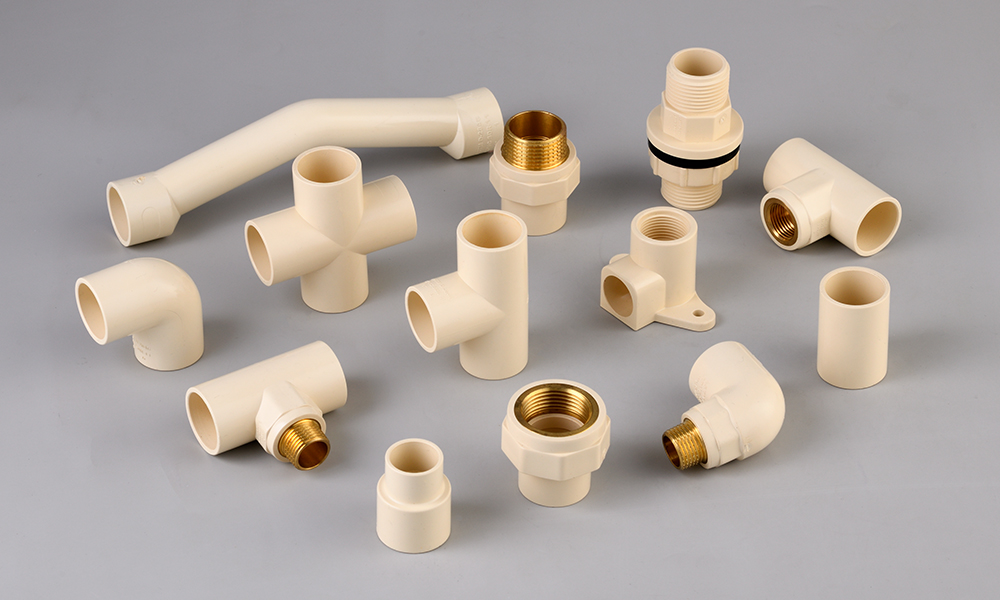
PVC cross fittings come in various standard dimensions and configurations to suit different project needs. They primarily function as four-way intersections. Schedule 40 PVC Crosses are a common type, designed to join four sections of pipe at 90-degree angles. These fittings facilitate fluid distribution in multiple directions. They are available in sizes ranging from ½ inch up to 4 inches and handle moderate temperature and pressure applications. These fittings feature a standard wall thickness and meet ASTM D standards. Many also hold NSF ratings for potable water. The most common configuration is Slip x Slip x Slip x Slip, which allows for solvent welding to create secure, leak-free connections.
Unlike tees, which typically have one inlet and two outlets, PVC crosses feature one inlet and three outlets. This design makes them particularly suitable for complex plumbing systems requiring multiple line connections and water flow division. Both standard and reducing crosses are available. Standard crosses connect equal-sized pipes, while reducing crosses allow branching into smaller lines, such as 3-inch x 2-inch or 4-inch x 2-inch sizes for transitioning from main to secondary lines. These PVC cross fittings are also widely used in constructing PVC pipe frameworks, where their four slip connections enhance structural integrity and allow for versatile fluid routing.
| Attribute | Value |
|---|---|
| Material | PVC |
| Size | 1/2”-4” |
| Standard | SCH40 |
| Color | Grey, White, Black |
| Working Pressure | PN10, 10Bar, 1.0Mpa |
| Temperature | Max 60°C / 140°F |
| Connection | Socket or Thread |
| Certificate | NSF, UPC |
Applications of PVC Cross Fittings
PVC Cross Fittings in Irrigation Systems
PVC cross fittings are ideal for complex irrigation systems. They effectively split fluid flow into four directions. Cross tee fittings are crucial in these systems. They act as the connection point between sprinkler lines or drip irrigation tubes and the main water supply. This function allows for precise control over the hydration of various agricultural areas. Farmers use these fittings to distribute water efficiently across large fields. Gardeners also employ them for intricate garden layouts. The fittings ensure each plant receives adequate water.
PVC Cross Fittings for Drainage Solutions
PVC cross fittings are effectively used in drainage solutions. They connect four pipe sections, directing fluid flow within the pipeline. These fittings are specifically designed for non-pressurized underground sewer and drainage applications. They connect four lengths of 4-inch sewer and drain (S&D) pipe. These fittings feature four connection points for pipe and select drainage products. Examples include channel drain outlets, Flo-Well® Dry Well Systems, drainage grates, and pop-up emitters. They add an intersection to the pipeline, connecting four pipes of the same type and diameter. Made of polyvinyl chloride (PVC) for Hub X Hub X Hub X Hub connections, these fittings are suitable for non-pressurized underground sewer and drainage applications. They have a maximum working pressure of 5 psi. This design adds a cross intersection from select drainage products to 4-inch S&D pipe.
PVC Cross Fittings in Industrial and DIY Projects
PVC cross fittings find extensive use in various industrial and DIY projects. In industrial settings, they are common in water applications and chemical applications. They also appear in light industrial applications, plumbing projects, and irrigation projects. Structural projects, such as residential and commercial systems, also utilize these versatile fittings. For DIY enthusiasts, PVC cross fittings open up many creative possibilities. People create a romantic walkway by connecting PVC pipe fittings and cross fittings. They then add lights with zip ties. Another popular project involves building easy, convenient book storage. This project uses PVC pipes, crosses, elbows, and caps to form an industrial-styled standing shelf. These examples highlight the adaptability of PVC Cross Fittings in both practical and creative endeavors.
Selecting the Right PVC Cross Fittings
Key Factors for Choosing PVC Cross Fittings
Selecting the correct PVC cross fittings for a project requires careful consideration of several critical factors. First, identify the necessary pressure rating for the application, such as Schedule 40 or Schedule 80. Temperature tolerance is also crucial; ensure the fitting withstands the fluid’s temperature, especially for hot water systems where CPVC is often preferred over standard PVC. Verify chemical resistance to ensure compatibility with any chemicals in the application fluid. Compliance with international standards like ASTM D2466/D2467, NSF/ANSI 14/61, or ISO standards is essential. For plumbing, NSF/ANSI 14 and 61 certifications are often required. Consider the fitting’s ability to withstand sudden forces, known as impact resistance, and assess its durability under continuous pressure, or long-term hydrostatic strength (LTHS). High-quality PVC pipe couplings adapt to varying temperatures, humidity, and chemical media, maintaining stable performance in diverse environments.
Sizing and Compatibility for PVC Cross Fittings
PVC cross fittings, like all PVC pipe and fittings, adhere to a nominal sizing system. This means components labeled with the same size are designed to be compatible. For instance, a 1-inch fitting connects to a 1-inch pipe. The outer diameter (OD) of a PVC pipe is larger than its nominal size, and a PVC fitting of the same nominal size will have an even greater OD. The crucial aspect for compatibility is the nominal size. PVC cross fittings typically feature four slip connections (S x S x S x S) that converge at 90-degree angles, forming a ‘plus’ shape. These fittings are commonly employed in constructing frameworks from PVC pipe, where they contribute significantly to structural integrity. When connecting different components, the nominal pipe size (NPS) must always match. For example, a 1-inch slip fitting connects only to a 1-inch pipe. When connecting PVC to another material like copper or steel, adapters are typically used to ensure compatibility, but the NPS should still match. Pressure-rated fittings (e.g., Schedule 40, Schedule 80) are designed for applications where fluid is under pressure, while non-pressure fittings (e.g., DWV) are for gravity-fed systems. These types are not always interchangeable due to differences in wall thickness and pressure ratings.
Pressure and Temperature Ratings for PVC Cross Fittings
Understanding pressure and temperature ratings is vital for the longevity and safety of any piping system. The pressure rating indicates the maximum internal pressure a fitting can safely withstand. For example, Schedule 40 fittings handle moderate pressures, while Schedule 80 fittings are suitable for higher-pressure applications. Temperature ratings specify the maximum temperature the material can endure without degradation. Standard PVC performs well in cold to moderate temperatures, but extreme cold can make it brittle. For hot water systems, CPVC offers superior temperature resistance. PVC provides excellent corrosion, UV, and chemical resistance, ensuring a long service life. Manufacturers often provide material test reports (MTRs) for critical applications, verifying material quality and performance against industry benchmarks. Always match the fitting’s pressure and temperature capabilities to the specific demands of the application to ensure reliable operation.
Installing and Maintaining PVC Cross Fittings
Best Practices for Installing PVC Cross Fittings
Proper installation ensures the reliability and longevity of any PVC piping system. Installers must begin by making clean, square cuts on all pipe ends. They then dry-fit all components to confirm proper alignment before applying any adhesives. For a guaranteed seal on a slip fitting, both PVC primer and PVC cement are required. The primer softens the inside of the fitting, preparing it for bonding, while the cement ensures the two pieces remain securely joined. Installers apply primer to both the pipe end and the inside of the fitting, followed by a generous, even coat of cement. They quickly insert the pipe into the fitting with a quarter-turn twist to distribute the cement evenly. Holding the joint firmly for several seconds prevents the pipe from pushing out. Poor fusion and manufacturing defects can lead to premature failure, especially in larger PVC parts. These issues often arise from suboptimal processing conditions where insufficient shear and heat prevent proper melting and fusion of PVC particulates. An example is a large pipe that cracked before service due to internal residual stresses and poor fusion.
Ensuring Longevity of PVC Cross Fittings
Maintaining PVC cross fittings properly extends their service life and prevents costly repairs. Regularly inspect systems for signs of leakage, wear, or joint weakness, especially at connections, to catch issues early. Keep fittings clean by removing debris or buildup. For outdoor installations, use UV-resistant coatings or insulation if unavoidable to protect against UV degradation. Promptly repair small cracks with specialized PVC adhesive. Replace severely damaged sections. Drain the system entirely before conducting repairs. Consider incorporating union fittings for easy disassembly and repair if future maintenance is anticipated. Periodically flush the piping system to prevent clogs and reduce stress on fittings. For large networks, document installation dates, maintenance, cleaning, repairs, and replacements to track and resolve recurring issues.
PVC cross fittings are indispensable components for versatile pipe connections. They enable complex configurations and efficient fluid distribution. Proper selection and meticulous installation are crucial; these steps ensure the integrity and longevity of any piping system. Their remarkable adaptability makes them vital across diverse applications, from irrigation networks to industrial projects. These fittings consistently deliver reliable performance when correctly chosen and installed.
FAQ
What is a PVC cross fitting primarily used for?
A PVC cross fitting connects four pipe sections at a central junction. It allows for the splitting or combining of fluid flows in multiple directions. This makes it ideal for complex plumbing, irrigation, and structural frameworks.
Can PVC cross fittings be used for hot water applications?
Standard PVC cross fittings are not recommended for hot water. They perform best in cold to moderate temperatures. For systems requiring hot water, CPVC fittings offer superior temperature resistance and are a more suitable choice.
How do I ensure a secure connection when installing PVC cross fittings?
To ensure a secure connection, first, make clean, square cuts on pipe ends. Then, dry-fit all components. Apply PVC primer to both the pipe and the fitting. Follow with PVC cement, inserting the pipe with a quarter-turn twist. Hold the joint firmly for several seconds.
What is the difference between Schedule 40 and Schedule 80 PVC cross fittings?
Schedule 40 PVC cross fittings are designed for moderate pressure applications. Schedule 80 fittings have thicker walls. They can withstand higher pressures. Always select the appropriate schedule based on your system’s specific pressure demands.
Are PVC cross fittings suitable for outdoor use?
Yes, PVC cross fittings are suitable for outdoor use. They offer excellent resistance to corrosion and UV degradation. For prolonged exposure to direct sunlight, consider using UV-resistant coatings or insulation to enhance their longevity.
See Also
Effortless Air Fryer Sausage Patties: Simple Recipes And Expert Advice
Essential Air Fryer Pan Accessories To Enhance Your Cooking Experience
Simple Guide To Crafting Delicious Air Fryer Rice Balls At Home
Quick Air Fryer Method For Trader Joe’s Coconut Shrimp Perfection
Achieve Perfect Frozen Corn Dogs In Your Air Fryer: Top Tips