Introduction
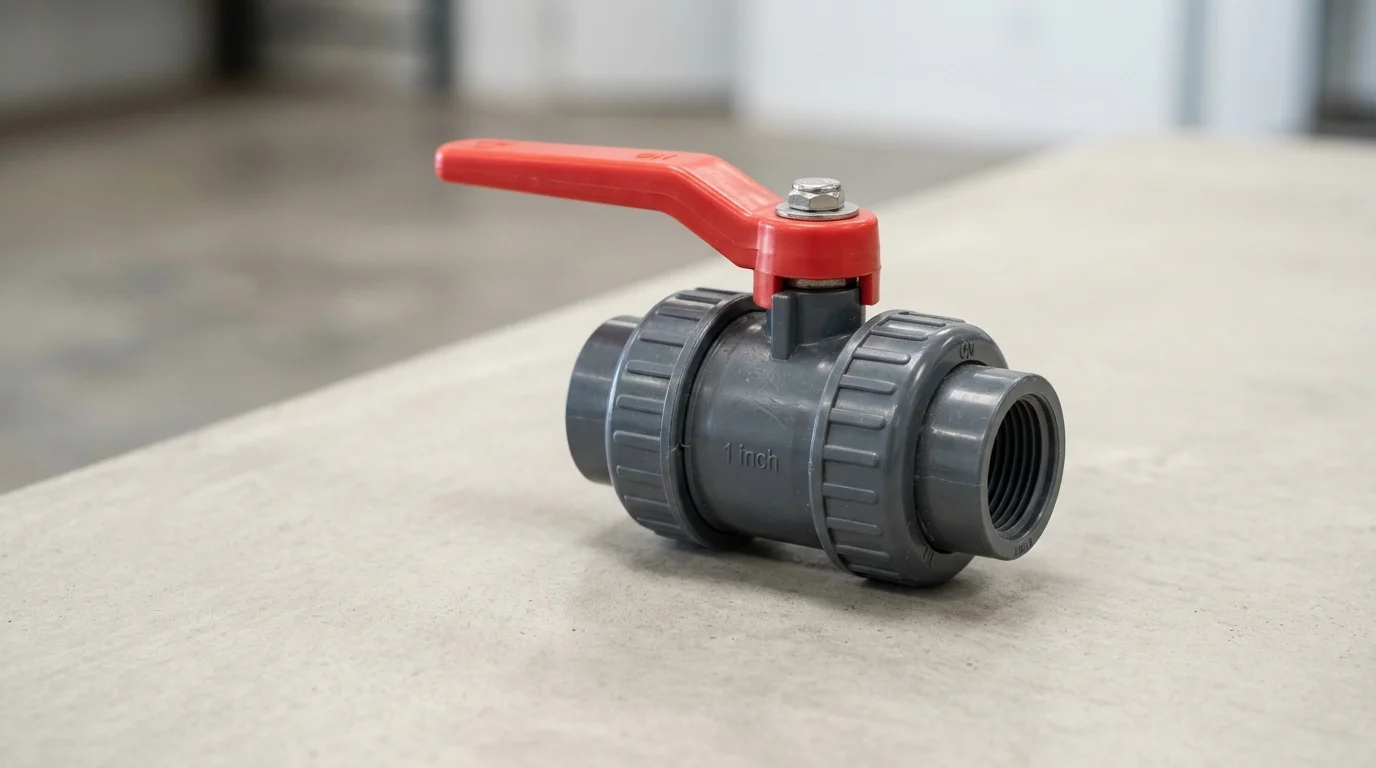
Choosing a PVC ball valve for water and chemical lines involves more than matching pipe size and pressure class. The right valve depends on media compatibility, temperature range, operating pressure, sealing materials, and connection type, all of which affect leakage risk, service life, and maintenance demands. This guide explains the key selection factors engineers and buyers should review before specifying a valve, with attention to where standard PVC performs well and where service conditions may require closer scrutiny. By the end, readers will be better prepared to compare valve options, avoid common specification errors, and select a design that fits both process requirements and long-term reliability.
Why PVC ball valve selection matters
Specifying the correct PVC ball valve for industrial water and chemical lines is a foundational engineering decision that directly impacts system longevity, safety, and overall process efficiency. While polyvinyl chloride (PVC) is universally recognized for its corrosion resistance and favorable strength-to-weight ratio, treating all PVC valves as interchangeable commodities introduces severe operational risks. Industrial fluid handling systems demand precise alignment between valve architecture and the operating environment.
Engineers and procurement specialists must evaluate a complex matrix of variables, ranging from fluid dynamics and chemical concentrations to mechanical stress and thermal fluctuations. A rigorously selected PVC ball valve ensures leak-free performance, minimizes pressure drops, and maintains structural integrity under continuous load, thereby safeguarding both the infrastructure and the personnel operating it.
Service conditions, media compatibility, and downtime risk
The primary determinants of valve longevity are the service conditions and the specific media it regulates. Standard unplasticized PVC (PVC-U) offers exceptional resistance to a broad spectrum of inorganic chemicals, including most acids, bases, and salts. However, its performance degrades rapidly when exposed to certain organic solvents, aromatics, or esters, which can cause the polymer matrix to swell or dissolve. Accurate media compatibility profiling is non-negotiable.
Failing to match the valve components to the service conditions drastically increases the risk of catastrophic failure and unscheduled downtime. In continuous chemical processing or municipal water treatment facilities, downtime costs can easily exceed $10,000 to $25,000 per hour. Even a minor seal degradation can lead to fugitive emissions, requiring immediate system shutdowns, environmental remediation, and replacement procedures that halt production lines entirely.
Commercial and operational cost impact
The commercial implications of PVC ball valve selection extend far beyond the initial procurement invoice. While basic utility-grade valves may present an attractive upfront capital expenditure (CAPEX), their operational expenditure (OPEX) profile in demanding industrial applications often renders them cost-prohibitive over time. Inferior valves are prone to stem leaks, handle breakage, and seat wear, driving up maintenance labor and replacement frequency.
Lifecycle cost analysis reveals that selecting an improperly specified valve to save 15% to 20% on initial unit costs can inflate the total cost of ownership by over 300% across a standard 5-year operational cycle. Conversely, investing in industrial-grade valves with robust stem designs, precision-machined spheres, and high-quality elastomers minimizes maintenance interventions, lowers inventory carrying costs for spare parts, and optimizes long-term commercial returns.
Key PVC ball valve specifications to evaluate
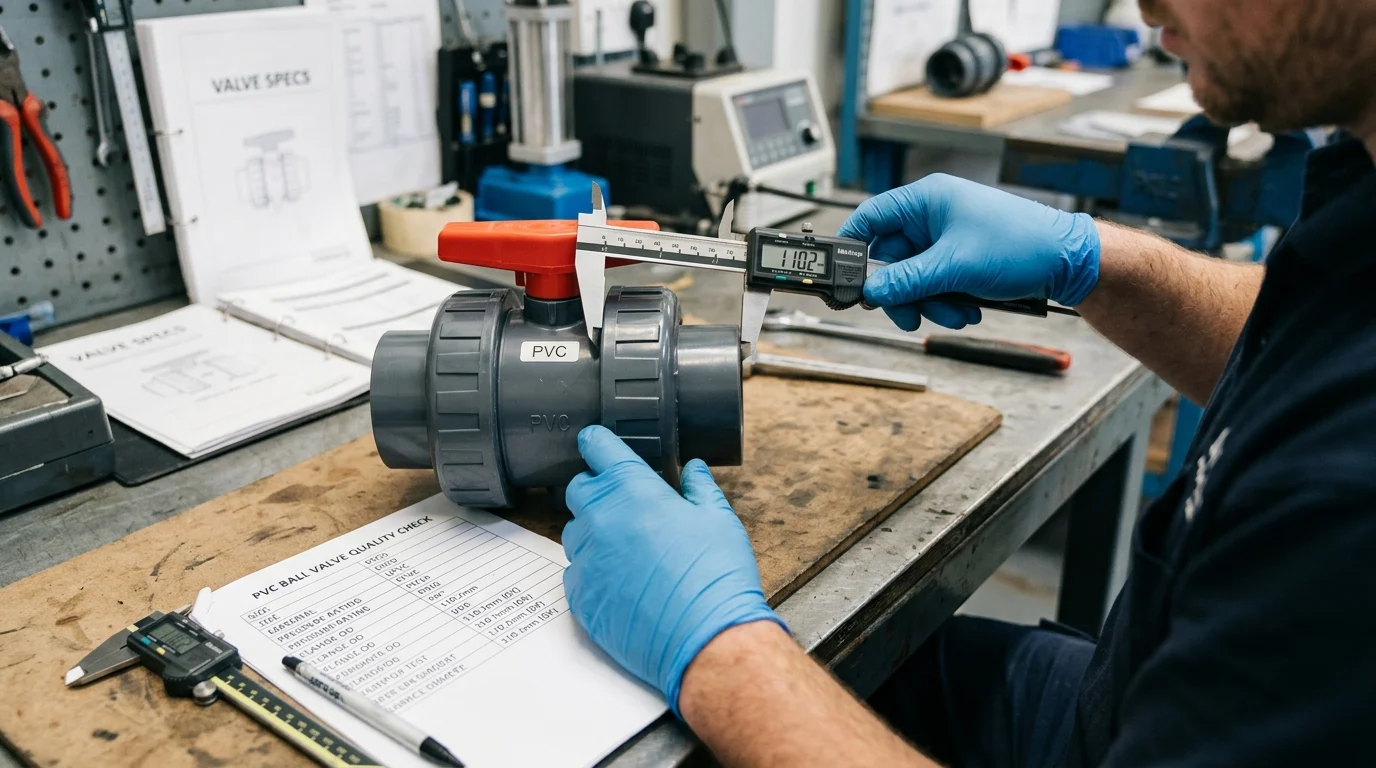
Evaluating the technical specifications of a PVC ball valve requires a granular approach to mechanical and material properties. Plant engineers must scrutinize pressure ratings, thermal limitations, and component-level materials to ensure the valve will perform reliably under the specific hydraulic demands of the piping network.
Pressure rating, temperature range, and valve size
Industrial PVC ball valves are typically rated for a maximum internal pressure of 150 PSI (PN10 or PN16 equivalents depending on regional standards) at an ambient temperature of 73°F (23°C). However, this pressure rating is not static; it is inversely proportional to temperature. As the media temperature rises toward the material’s thermal limit, the pressure-bearing capacity of the valve decreases significantly. Engineers must apply strict derating factors; for instance, a valve rated for 150 PSI at 73°F may only safely handle 40 PSI at 120°F (49°C).
Valve sizing is equally critical for maintaining optimal fluid velocity and minimizing pressure drop (Cv value). Standard PVC ball valves range from 1/2-inch to 4-inch diameters for typical process lines, with larger 6-inch variants available for high-volume mainlines. Undersized valves induce cavitation and excessive wear on the ball and seats, while oversized valves reduce flow control accuracy and unnecessarily increase the system’s physical footprint and weight.
PVC grade, seals, seats, and end connections
The internal components of the valve dictate its chemical compatibility and actuation lifespan. The valve body must be molded from high-density PVC-U to prevent micro-porosity. For the internal seals (O-rings), the two dominant elastomers are EPDM (Ethylene Propylene Diene Monomer) and FPM/FKM (Fluorocarbon). Seats are almost universally manufactured from PTFE (Teflon) due to its extremely low coefficient of friction and broad chemical inertia.
| Component | Material Option | Primary Industrial Application | Standard Max Pressure |
|---|---|---|---|
| O-Ring Seals | EPDM | Potable water, dilute acids, alkalis | 150 PSI @ 73°F |
| O-Ring Seals | FPM / FKM | Halogens, strong acids, hydrocarbons | 150 PSI @ 73°F |
| Valve Seats | PTFE (Teflon) | Universal standard for low-friction sealing | 150 PSI @ 73°F |
End connections must also match the existing infrastructure. Options include threaded (NPT or BSPT) for smaller lines requiring future disassembly, socket weld (solvent cement) for permanent, high-pressure leak-proof joints, and flanged connections for larger diameters or systems requiring frequent modular changes.
When to choose a true union PVC ball valve
A true union PVC ball valve is distinguished by its double-block design, featuring threaded union nuts on both the upstream and downstream ends of the valve body. This architecture is considered mandatory for most critical industrial applications. When maintenance, cleaning, or replacement is required, the true union design allows the central valve body to be completely removed from the pipeline without cutting the pipe or dismantling adjacent infrastructure.
Choosing a true union valve dramatically reduces maintenance labor. A standard valve replacement that might take two hours of pipe cutting, re-gluing, and curing can be reduced to a 5-minute component swap with a true union valve. Furthermore, the dual-blocking nature ensures that the pipeline remains sealed and pressurized on the upstream side while the downstream section is serviced, minimizing fluid loss and system disruption.
PVC vs CPVC and PP ball valves
While standard PVC remains the dominant thermoplastic for general fluid handling, aggressive process environments often necessitate a transition to higher-performance polymers like CPVC (Chlorinated Polyvinyl Chloride) or PP (Polypropylene). Understanding the precise boundaries of each material’s capabilities is essential for optimizing both safety and procurement budgets.
Chemical resistance, thermal limits, and mechanical tradeoffs
The primary limitation of standard PVC is its thermal threshold, which caps out at approximately 140°F (60°C). When fluid temperatures exceed this limit, the material softens, compromising pressure retention and structural geometry. CPVC addresses this by undergoing a post-chlorination process, elevating its maximum operating temperature to 200°F (93°C) while maintaining excellent resistance to corrosive chemicals, particularly hot acids and bases.
Polypropylene (PP), conversely, offers a different matrix of chemical resistance. While its thermal limit sits at roughly 180°F (82°C), PP provides superior resistance to organic solvents, caustics, and ultra-pure water applications where PVC or CPVC might leach trace contaminants. Mechanically, PP is lighter and exhibits higher impact resistance at lower temperatures, but it generally features lower tensile strength compared to rigid PVC-U, requiring more frequent pipe supports to prevent sagging.
Using a comparison table for lifecycle value
To navigate the tradeoffs between thermal limits, chemical resistance, and procurement costs, engineers rely on comparative matrices. Standard PVC is highly cost-effective, but over-specifying CPVC for a low-temperature water line wastes capital, just as under-specifying PVC for a 160°F chemical line guarantees premature failure.
| Valve Material | Max Operating Temp | Primary Chemical Focus | Relative Cost Multiplier |
|---|---|---|---|
| PVC-U | 140°F (60°C) | Water treatment, weak acids, general fluids | 1.0x (Baseline) |
| PP (Polypropylene) | 180°F (82°C) | Solvents, high-purity media, caustics | 1.8x – 2.2x |
| CPVC | 200°F (93°C) | Hot corrosive liquids, industrial acids | 2.5x – 3.0x |
Using this lifecycle value framework, facility managers can allocate budgets efficiently, reserving the 3.0x cost multiplier of CPVC strictly for the high-temperature nodes of the process stream while utilizing standard PVC for the bulk of the ambient fluid transport network.
Compliance, quality, and sourcing checks
Sourcing industrial-grade PVC ball valves requires rigorous vetting of the manufacturer’s compliance frameworks, quality assurance protocols, and supply chain logistics. In a globalized manufacturing environment, the variance in production quality between top-tier thermoplastic foundries and low-end suppliers is vast, making stringent sourcing checks imperative.
Required standards, certifications, and traceability
Industrial valves must adhere to established international standards to guarantee dimensional accuracy, material safety, and pressure integrity. For potable water applications, certification to NSF/ANSI 61 and NSF/ANSI 372 (lead-free) is legally required in many jurisdictions. Dimensional and testing standards such as ASTM D2466/D2467 for socket fittings, or ISO 727 and DIN 8063, ensure that a valve sourced from one continent will seamlessly integrate with pipes extruded in another.
Traceability is equally critical. Premium manufacturers utilize lot-controlled resins and imprint permanent heat codes or batch numbers directly onto the valve body. In the event of a system failure, this traceability allows plant engineers and the manufacturer to isolate the exact production run, review the associated resin certificates, and determine if the failure was due to an isolated material defect or a broader systemic issue.
Manufacturer quality systems and testing practices
A manufacturer’s internal quality management system (QMS), typically anchored by ISO 9001 certification, dictates the reliability of the finished product. Expert buyers must look beyond the certificate and inquire about specific in-line testing practices. High-quality PVC ball valve manufacturers perform 100% pneumatic testing on their assembly lines, typically pressurizing the assembled valves to 80-100 PSI underwater to check for shell and seat leakage before packaging.
Furthermore, rigorous destructive testing—such as burst pressure testing, accelerated thermal cycling, and torque resistance testing—should be conducted on statistical samples from every batch. A world-class thermoplastic valve manufacturer will maintain a defect rate well below 500 Parts Per Million (PPM), ensuring that out-of-box failures are virtually eliminated for the end-user.
Logistics, lead time, packaging, and supply channel factors
Logistics and supply channel dynamics heavily influence total procurement costs and project timelines. For large-scale industrial projects or OEM integrations, buyers must negotiate Minimum Order Quantities (MOQs), which typically range from 500 to 1,000 units for custom-branded or non-standard configurations. Standard off-the-shelf sizes generally have lower MOQs but depend heavily on regional warehouse availability.
Lead times for bulk factory orders generally span 30 to 45 days, exclusive of ocean freight, which can add an additional 4 to 6 weeks. Packaging protocols are another vital check; rigid PVC valves are susceptible to micro-fractures if subjected to high-impact drops during transit. Suppliers must utilize heavy-duty corrugated cartons and standardized palletization with shrink-wrapping and edge protectors to ensure the structural integrity of the valves upon arrival.
Final PVC ball valve selection process
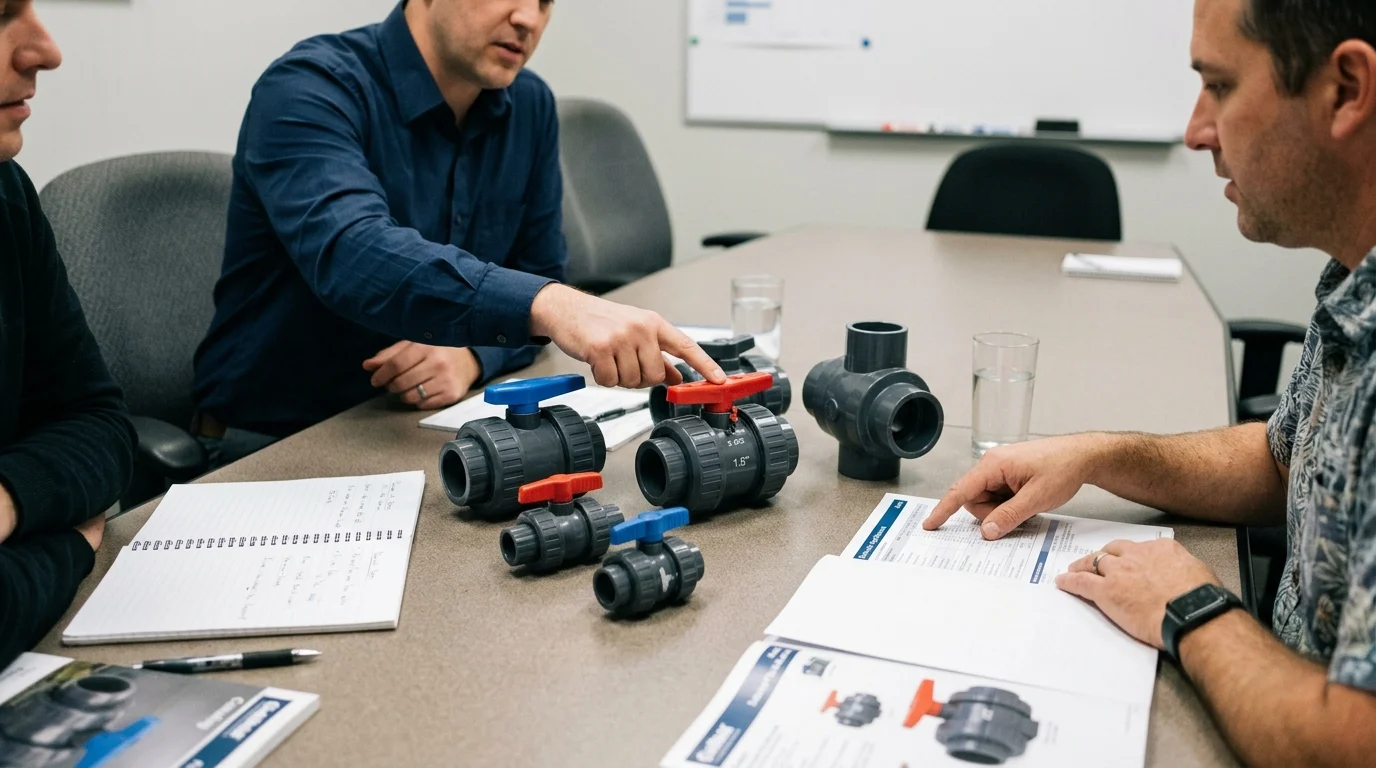
Finalizing the selection of a PVC ball valve demands a methodical synthesis of all operational, material, and commercial data. By following a structured workflow, procurement and engineering teams can eliminate guesswork and ensure the chosen valve aligns perfectly with the lifecycle expectations of the facility.
Step-by-step selection workflow
The selection workflow must proceed in a strict sequence to avoid overlooking critical failure points. Step one involves defining the hydraulic parameters: calculate the maximum system pressure, the operating temperature range, and the required flow rate (GPM) to determine the baseline valve size and pressure rating. Step two is the chemical compatibility audit, where the specific media, its concentration, and its temperature are cross-referenced against material charts to select the appropriate O-ring (EPDM or FPM) and body material.
Step three requires specifying the end connections based on the existing piping material and maintenance philosophy (e.g., true union socket weld for permanent but maintainable installations). Finally, step four evaluates actuation requirements. If the valve is to be automated either immediately or in the future, it must be specified with an integrally molded ISO 5211 mounting pad, which allows for the direct installation of pneumatic or electric actuators without the need for custom bracketing.
Decision criteria for choosing the best option
The ultimate decision criteria rest on balancing initial capital outlay against the projected operational lifespan.
Key Takeaways
- The most important conclusions and rationale for PVC ball valve
- Specs, compliance, and risk checks worth validating before you commit
- Practical next steps and caveats readers can apply immediately
Frequently Asked Questions
How do I choose the right PVC ball valve for water lines?
Match valve size to pipe size, confirm pressure and temperature limits, and use EPDM seals for general water service. For reliable supply, Donsen offers PVC valve series for water systems and irrigation.
When is a PVC ball valve unsuitable for chemical lines?
Avoid standard PVC-U valves with organic solvents, aromatics, and esters unless compatibility is verified. Check the exact chemical, concentration, and temperature before ordering.
Which seal material is better for a PVC ball valve?
EPDM suits most water, irrigation, and mild chemical service. FKM/FPM is better for many oils and stronger chemicals, but always confirm compatibility with the specific media.
Why does temperature matter when selecting a PVC ball valve?
PVC valve pressure capacity drops as temperature rises. A valve rated at 73°F may handle much less pressure at higher temperatures, so apply derating before selection.
What end connection should I choose for a PVC ball valve?
Use the connection that matches your piping system and maintenance needs: socket for solvent-weld PVC lines, threaded for removable joints, and union types for easier replacement and servicing.