Introduction
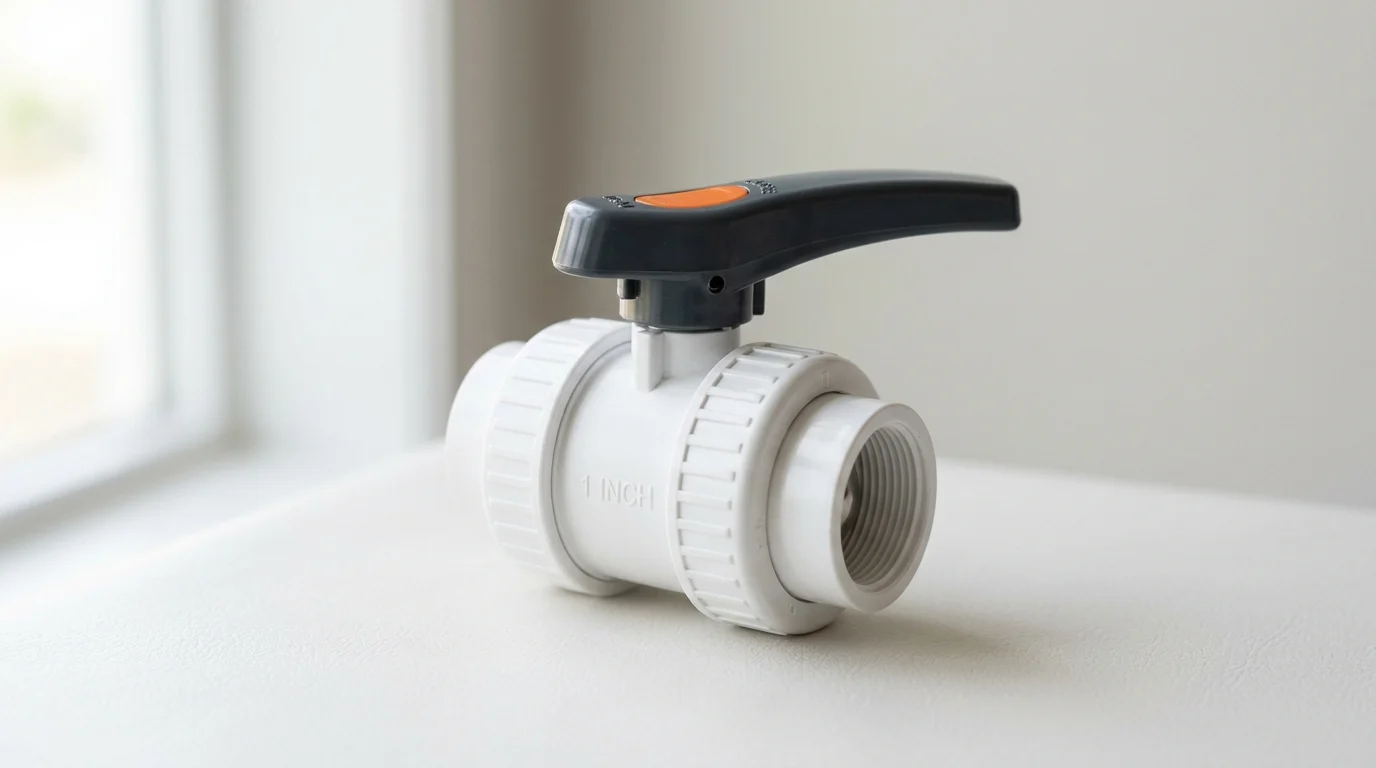
Choosing a PVC ball valve for water or chemical service involves more than matching pipe size and pressure rating. Media compatibility, temperature, concentration, operating cycles, and connection type all affect service life, shutoff reliability, and safety. A valve that performs well in a basic water line may degrade quickly in a corrosive or temperature-sensitive process. This guide explains the key selection factors, from PVC material limits and seal choices to flow demands and installation conditions, so you can compare options with greater confidence and avoid common specification mistakes before they become leakage, maintenance, or downtime problems.
Why PVC ball valve selection matters
Polyvinyl chloride (PVC) ball valves represent a cornerstone component in modern fluid handling, offering an exceptional balance of corrosion resistance, structural integrity, and economic efficiency. While frequently specified as a default solution for non-metallic piping systems, the industrial application of these valves requires rigorous engineering oversight. A misapplied thermoplastic valve can lead to catastrophic system failures, hazardous chemical leaks, and severe operational downtime.
Selecting the optimal valve demands a comprehensive understanding of fluid dynamics, polymer science, and mechanical engineering. Engineers must move beyond standard catalog specifications to evaluate how these valves interact with complex, dynamic environments over extended operational lifespans. Proper specification directly mitigates risk, ensuring that the chosen valve architecture can withstand the specific stresses of the target application while delivering predictable, repeatable shutoff performance.
Media compatibility and operating conditions
The interaction between the process media and the valve materials dictates the baseline viability of any PVC valve installation. PVC-U (unplasticized PVC) is inherently resistant to a broad spectrum of acids, alkalis, and salt solutions, making it a staple in aggressive fluid handling. However, its performance is highly contingent on the specific gravity, concentration, and state of the media.
Operating conditions encompass more than just static fluid properties. Engineers must account for dynamic variables such as fluid velocity, which typically should not exceed 5 to 8 feet per second (1.5 to 2.4 meters per second) in PVC systems to prevent excessive wear and hydraulic shock. Furthermore, the presence of suspended solids or crystalline particulates requires specialized seat designs to prevent scoring of the ball and subsequent loss of sealing integrity.
Lifecycle cost and reliability
While PVC ball valves generally present a lower initial capital expenditure compared to their metallic counterparts—often costing 40% to 60% less than equivalent 316 stainless steel valves—initial procurement cost is a poor indicator of total lifecycle value. A comprehensive Total Cost of Ownership (TCO) analysis must incorporate installation labor, anticipated maintenance intervals, and the financial risk of unplanned downtime.
Reliability in industrial environments hinges on the structural robustness of the valve stem and the precision of the machined or molded components. Valves engineered with blow-out proof stems and dual O-ring seals significantly extend the Mean Time Between Failures (MTBF). Specifying a technically inferior valve to save marginal upfront costs frequently results in premature degradation, erasing initial savings through repeated replacement cycles and labor overhead.
Typical water and chemical applications
In the water treatment sector, PVC ball valves are ubiquitous across reverse osmosis (RO) skids, desalination pre-treatment, and municipal wastewater processing. Their immunity to galvanic corrosion and scaling makes them ideal for handling aggressive brines and chlorinated water streams where metallic valves would rapidly degrade.
Chemical processing applications leverage PVC valves for dosing and transferring industrial reagents. Typical deployments include the handling of sodium hypochlorite, sulfuric acid (at concentrations below 70%), and various coagulants like polyaluminum chloride (PAC). In these applications, the non-reactive nature of the PVC body ensures that the process media remains uncontaminated by metallic leaching, preserving strict chemical purity standards.
Key PVC ball valve specifications to evaluate
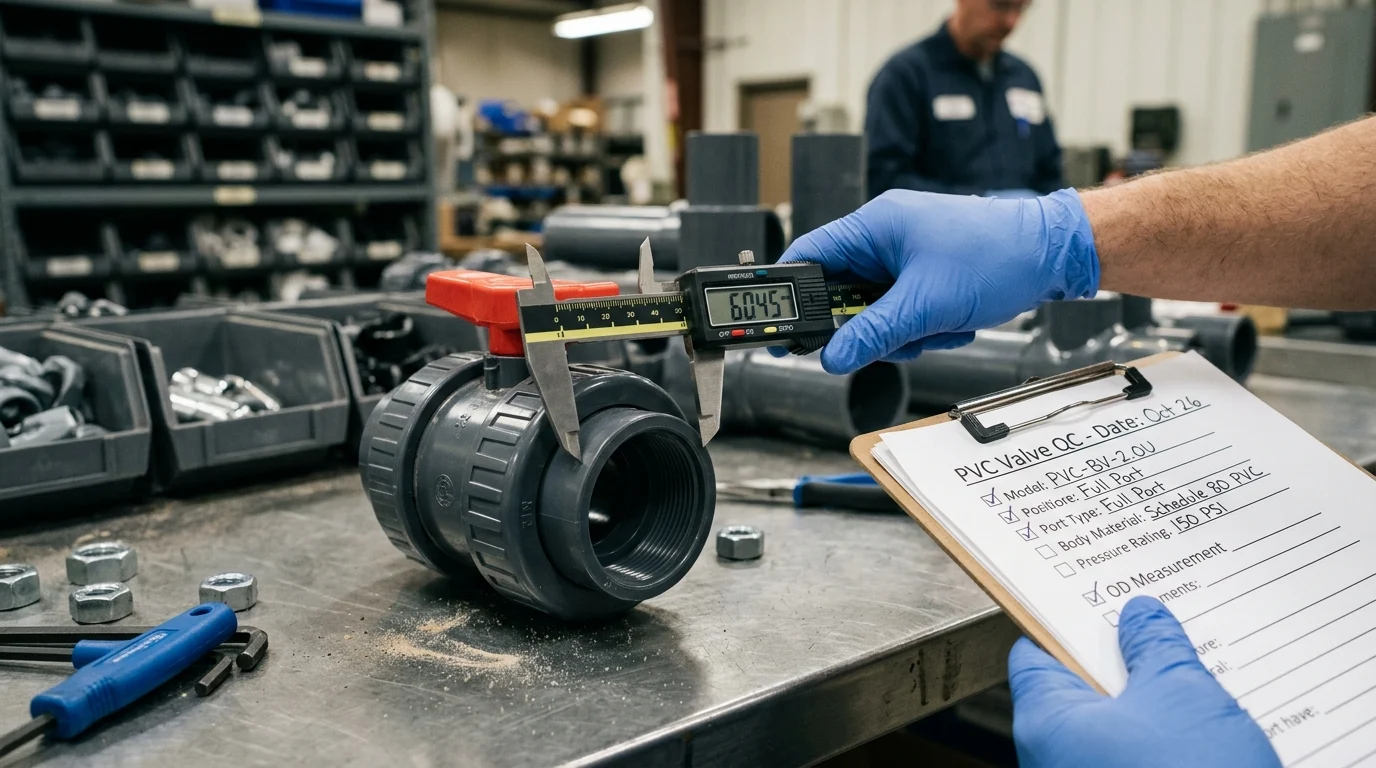
Specifying a PVC ball valve requires an exact alignment between the component’s mechanical ratings and the system’s operational demands. Relying solely on nominal pipe size (NPS) is insufficient for industrial applications. A rigorous evaluation of material composition, thermodynamic limits, and physical architecture is required to ensure long-term mechanical stability and compliance with process safety standards.
Body and seal material options
The foundational decision in valve specification involves selecting the appropriate body polymer and corresponding elastomeric seals. Standard PVC-U provides excellent general-purpose chemical resistance, but systems subjected to higher temperatures may necessitate CPVC (chlorinated polyvinyl chloride). The internal sealing mechanism is equally critical, relying on specialized elastomers for the O-rings and low-friction polymers for the valve seats.
When evaluating seal options, engineers must match the elastomer to the specific chemical profile of the process fluid. An incorrect seal specification will lead to rapid swelling, embrittlement, or dissolution of the O-rings, resulting in immediate bypass or external leakage.
| Seal/Seat Material | Primary Characteristic | Typical Media Compatibility | Maximum Continuous Temp Limit |
|---|---|---|---|
| EPDM (O-ring) | Excellent resistance to polar solvents and alkalis | Potable water, dilute acids, ketones | 150°F (65°C) |
| FKM / Viton (O-ring) | Superior resistance to halogens, oils, and hydrocarbons | Sodium hypochlorite, fuels, strong acids | 400°F (204°C) |
| PTFE / Teflon (Seat) | Near-universal chemical inertness and low friction | Highly aggressive solvents, high-purity media | 500°F (260°C) |
Note: While elastomeric seals may withstand elevated temperatures, the thermal limitations of the PVC or CPVC valve body will always act as the governing constraint for the entire assembly.
Pressure, temperature, and flow limits
Thermoplastic valves are subject to strict thermodynamic boundaries. A standard Schedule 80 PVC ball valve is typically rated for a maximum internal pressure of 150 PSI (10.3 bar) at a baseline ambient temperature of 73°F (23°C). However, as the temperature of the process media increases, the structural tensile strength of the PVC decreases exponentially, requiring mandatory pressure derating.
Flow characteristics are quantified by the valve’s Flow Coefficient (Cv), which measures the volume of water (in US gallons per minute) that will flow through the valve with a 1 PSI pressure drop. Selecting a valve with an optimized full-port design ensures a high Cv value, minimizing frictional pressure losses and reducing the energy burden on system pumps.
True union vs standard valve designs
The physical architecture of the valve dictates its installation method and long-term serviceability. True union (or double union) ball valves feature threaded carrier nuts on both the upstream and downstream ends. This design allows the central valve body to be completely removed from the piping system for maintenance, seat replacement, or cleaning without requiring the operator to cut the surrounding pipe.
Conversely, standard compact or single-piece ball valves are permanently solvent-welded or threaded into the pipeline. While these compact variants occupy a smaller physical footprint and represent a lower initial cost, they offer zero inline serviceability. In continuous-process environments where maintenance speed is critical, the true union design is universally preferred despite a cost premium of 20% to 40% over compact alternatives.
Performance factors in water and chemical service
In demanding water and chemical services, static specifications must translate into dynamic operational reliability. A valve’s performance is continuously tested by chemical aggression, mechanical cycling fatigue, and maintenance accessibility. Understanding how a PVC ball valve behaves under these active stresses separates adequate installations from highly optimized, fail-safe systems.
Chemical resistance and purity requirements
Chemical resistance in dynamic applications is complicated by factors such as outgassing and permeation. For instance, when handling sodium hypochlorite (bleach), the fluid naturally outgasses, creating trapped vapor pockets that can cause vapor lock or localized pressure spikes within the valve cavity. Vented ball designs are often required to provide a continuous bleed path for these accumulated gases.
In high-purity water applications, such as semiconductor ultrapure water (UPW) or pharmaceutical manufacturing, the valve must not only resist the media but also protect it from contamination. Valves destined for these environments must be assembled in cleanrooms, free from standard silicone lubricants, and must demonstrate Total Organic Carbon (TOC) leaching rates below 10 parts per billion (ppb) to maintain strict purity standards.
Cycling frequency and shutoff reliability
The mechanical lifespan of a valve is directly tied to its cycling frequency. Automated systems utilizing pneumatic or electric actuators subject the valve stem and seats to rapid, repeated torsional stress. Premium industrial PVC ball valves are engineered to endure upwards of 100,000 to 250,000 continuous cycles before requiring seat replacement or tension adjustment.
Shutoff reliability is classified by leakage rates, with high-performance PVC valves expected to achieve ANSI Class VI bubble-tight shutoff. When automating these valves, engineers must apply a torque safety factor of 1.3 to 1.5. This 30% to 50% margin accounts for the ‘breakaway torque’ required to unseat a valve that has remained in a static position for extended periods, preventing actuator stalling and ensuring reliable operation during critical shut-down sequences.
Maintenance access and service life
Service life is maximized when maintenance protocols align with the valve’s design capabilities. Thermoplastics exhibit a phenomenon known as creep, where materials slowly deform under continuous mechanical stress. Regular maintenance programs must include the periodic retightening of true union carrier nuts to compensate for minor dimensional changes and maintain optimal O-ring compression.
The thermal degradation of PVC requires strict adherence to derating curves. Failing to adjust operating pressures for elevated temperatures is the leading cause of catastrophic body rupture in thermoplastic piping systems.
| Operating Temperature | PVC Pressure Derating Factor | Max Pressure (based on 150 PSI nominal) |
|---|---|---|
| 73°F (23°C) | 1.00 | 150 PSI (10.3 bar) |
| 90°F (32°C) | 0.75 | 112 PSI (7.7 bar) |
| 110°F (43°C) | 0.50 | 75 PSI (5.1 bar) |
| 130°F (54°C) | 0.30 | 45 PSI (3.1 bar) |
| 140°F (60°C) | 0.22 | 33 PSI (2.2 bar) |
Operating PVC valves above 140°F (60°C) is strictly prohibited in pressure applications, necessitating a transition to CPVC or metallic alternatives.
Compliance, quality, and supplier evaluation
Procuring industrial-grade PVC ball valves requires rigorous vetting of the supply chain. The global market is saturated with low-cost, commercial-grade variants that masquerade as industrial solutions. Establishing strict compliance requirements, evaluating manufacturer quality management systems, and assessing logistical capabilities are essential steps in mitigating procurement risk and ensuring consistent plant operations.
Standards, certifications, and traceability
Regulatory compliance serves as the primary filter for valve selection. For municipal drinking water and potable applications, the valve must carry NSF/ANSI 61 and NSF/ANSI 372 certifications, guaranteeing the absence of lead and harmful extractables. Structural dimensions and material testing should adhere to ASTM D2466 or D2467 standards, ensuring compatibility with standard Schedule 40 and Schedule 80 piping.
Traceability is non-negotiable in critical chemical applications. Tier 1 manufacturers provide comprehensive material test reports (MTRs) and lot traceability codes molded directly into the valve body. This documentation ensures that in the event of a field failure, the exact batch of polymer resin and the corresponding production parameters can be audited and isolated.
Manufacturer quality systems and lead times
A supplier’s Quality Management System (QMS), typically verified through ISO 9001:2015 certification, dictates the consistency of the finished product. Elite manufacturers implement 100% pneumatic or hydrostatic pressure testing on their assembly lines, ensuring zero-leakage compliance before the product is packaged. This rigorous testing yields defect rates well below 500 Parts Per Million (PPM), or a 0.05% failure rate.
Lead times and production capacity are equally critical for large-scale projects or urgent plant turnarounds. Standard configurations typically require 4 to 8 weeks of lead time, while custom elastomer builds or automated assemblies may extend to 10 to 12 weeks. Furthermore, factory Minimum Order Quantities (MOQs) generally range from 500 to 2,000 units depending on the nominal pipe size, necessitating accurate demand forecasting by procurement teams.
Practical steps for supplier assessment
Conducting a practical supplier assessment involves moving beyond marketing brochures to evaluate actual production capabilities. Procurement engineers should request Production Part Approval Process (PPAP) documentation or equivalent quality control records. Auditing the manufacturer’s injection molding machinery tolerances and their procedures for handling regrind (recycled plastic) is critical, as excessive use of regrind severely compromises the valve’s pressure rating.
Additionally, assessing the supplier’s technical support infrastructure is vital. A competent manufacturer should provide detailed torque curves, flow coefficient charts, and chemical compatibility matrices specifically tested against their proprietary polymer blends, rather than relying on generic industry data.
How to make the final selection
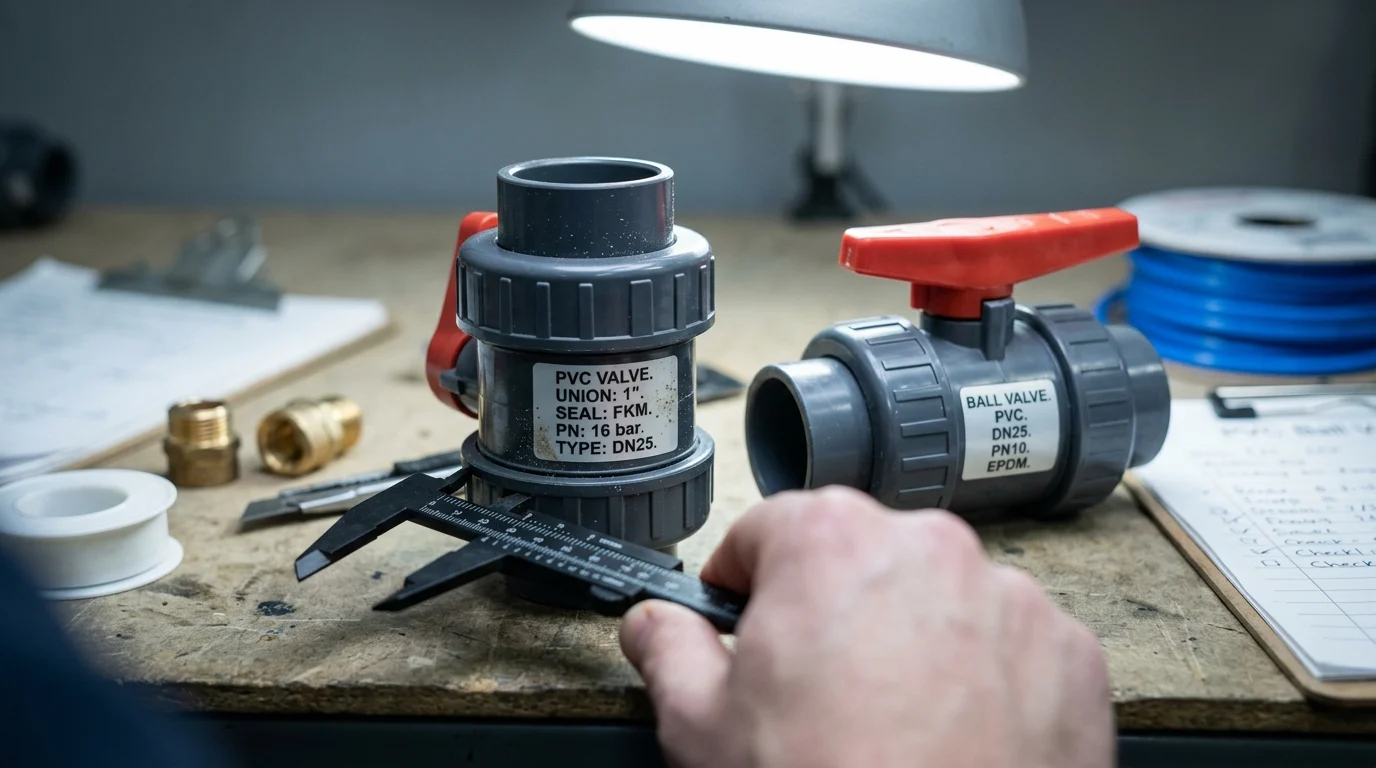
Finalizing the selection of a PVC ball valve requires synthesizing environmental data, mechanical specifications, and commercial realities into a cohesive procurement strategy. This process ensures that the chosen product not only survives the immediate process conditions but also aligns with the facility’s long-term operational and financial objectives.
A step-by-step selection process
Engineers universally rely on the STAMP
Key Takeaways
- The most important conclusions and rationale for PVC ball valve
- Specs, compliance, and risk checks worth validating before you commit
- Practical next steps and caveats readers can apply immediately
Frequently Asked Questions
When should I choose a PVC ball valve instead of a metal valve?
Choose PVC for water, brine, chlorinated water, acids, alkalis, and salt solutions where corrosion resistance and lower cost matter. Avoid it for high-temperature or solvent-heavy service.
What operating limits are most important for PVC ball valves?
Check media compatibility, temperature, pressure, and flow velocity. In PVC systems, fluid velocity is typically best kept around 1.5–2.4 m/s to reduce wear and hydraulic shock.
Which seal material is best for a PVC ball valve?
Match the seal to the chemical. EPDM suits many water and alkaline applications, while other chemicals may require different elastomers. Wrong seal choice often causes swelling, leakage, or early failure.
Are PVC ball valves suitable for chemical dosing systems?
Yes, they are commonly used for dosing sodium hypochlorite, PAC, and some sulfuric acid services. Always confirm concentration, temperature, and seal compatibility before final selection.
Can Donsen supply PVC ball valves for water and irrigation projects?
Yes. Donsen manufactures PVC valve series and plastic piping systems for water supply, irrigation, drainage, and related applications, with export support for residential, commercial, and project buyers.