PVC Ball Valve – How They Work?
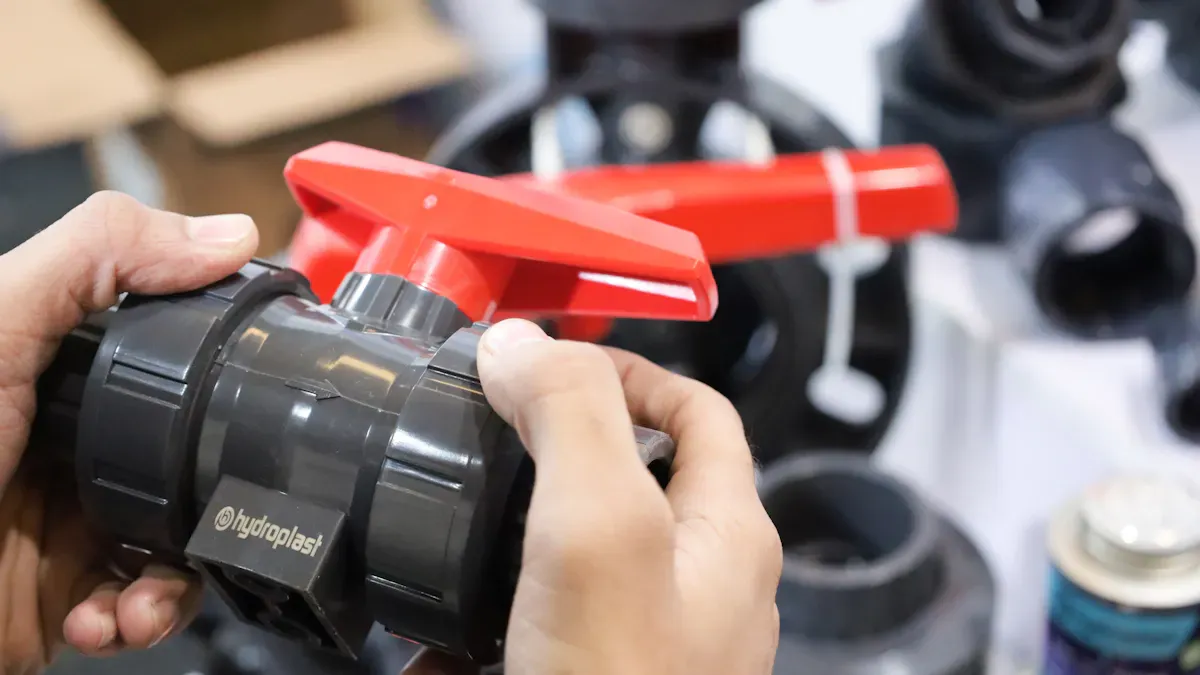
PVC ball valves play a crucial role in controlling the flow of liquids and gases within piping systems. These valves utilize a spherical disc that rotates to either open or close the flow path. This mechanism allows for efficient regulation, making PVC ball valves a preferred choice in various applications.
Key Takeaways
- PVC ball valves provide precise flow control, enhancing efficiency in liquid and gas systems.
- Regular inspections and maintenance extend the lifespan of PVC ball valves, ensuring reliable operation.
- Understanding the components and operating principles of PVC ball valves helps users make informed choices for their applications.
Components of PVC Ball Valve
Understanding the components of a PVC ball valve is essential for grasping how it functions effectively in various applications. Each part plays a crucial role in ensuring the valve operates smoothly and reliably.
Body
The body of a PVC ball valve serves as the main structure that houses all internal components. Typically constructed from U-PVC or C-PVC, the body is lightweight and resistant to corrosion. These materials provide good mechanical strength, making the valve suitable for a wide range of applications. The table below outlines the properties and impact of different types of PVC used in the body construction:
| Type of PVC | Properties | Impact on Durability |
|---|---|---|
| U-PVC | Rigid, lightweight | Commonly used, good mechanical strength |
| C-PVC | Higher chlorine content | Better heat resistance, suitable for higher temperatures |
Ball
The ball is the heart of the PVC ball valve, controlling the flow of liquids or gases. Its design significantly affects flow efficiency and sealing performance. A floating ball design allows for rotation within the valve body, enabling the valve to open or close effectively. When aligned with the pipeline, the ball permits unrestricted flow, enhancing overall efficiency. Key features of the ball include:
- The ball presses against the downstream seat, creating a tight seal that prevents leakage.
- Full-port ball valves feature an oversized ball that minimizes pressure drop, maximizing flow efficiency.
- Reduced-port valves have smaller balls that restrict flow, which can affect overall efficiency.
Stem
The stem connects the handle to the ball, facilitating the opening and closing action of the valve. It is designed to withstand significant torque while maintaining a secure connection. The stem often features O-rings made from EPDM rubber, which prevent leakage around the valve stem. This design ensures that the valve remains leak-tight during operation.
Handle
The handle of a PVC ball valve is ergonomically designed for ease of use. It typically requires just a quarter turn to open or close the valve, making operation quick and efficient. Key ergonomic features include:
- Handles made from UV-resistant plastics enhance grip and durability.
- Visual indicators on the handle show the valve’s position (open/close), aiding in accurate operation.
- Some designs incorporate locking mechanisms to prevent accidental operation, enhancing safety.
Seals
Seals are critical for preventing leaks in PVC ball valves. They create a leak-proof interface between the ball and the valve body. Common seal types include:
| Seal Type | Material | Contribution to Leak Prevention |
|---|---|---|
| O-rings | EPDM rubber | Prevents leakage around the valve stem |
| Valve Seats | PTFE, EPDM rubber, Viton | Forms a leak-proof interface between the ball and valve body |
O-rings around the valve stem prevent water from leaking out around the handle, while larger ring-shaped seats create a seal around the ball when the valve is closed. The materials used for seals, such as EPDM rubber and PTFE, are chosen for their resilience and chemical resistance, ensuring long-lasting performance.
Operating Principle of PVC Ball Valve

Flow Control Mechanism
The flow control mechanism in a PVC ball valve relies on the spherical ball inside the valve body. When the ball’s hollow center aligns with the pipeline, fluid flows freely through the valve. Rotating the ball 90 degrees blocks the flow path, stopping fluid movement instantly. This simple yet effective design allows precise control over liquid or gas flow.
A key factor in flow control is the valve’s flow coefficient, or Cv. Cv measures the valve’s capacity to pass fluid, indicating how many gallons per minute (GPM) flow through the valve at a 1 psi pressure drop. Higher Cv values mean the valve allows more fluid to pass with less resistance, improving system efficiency.
The table below shows typical Cv values for standard PVC ball valves of various sizes:
| Valve Size (Inches) | Approximate Cv Value | Estimated Max Water Flow (GPM)* |
|---|---|---|
| 1″ | 60 | ~120 GPM |
| 2″ | 125 | ~250 GPM |
| 3″ | 280 | ~560 GPM |
| 4″ | 450 | ~900 GPM |
*Estimated flow at a moderate 5 psi pressure drop. Actual flow depends on system pressure and fluid.
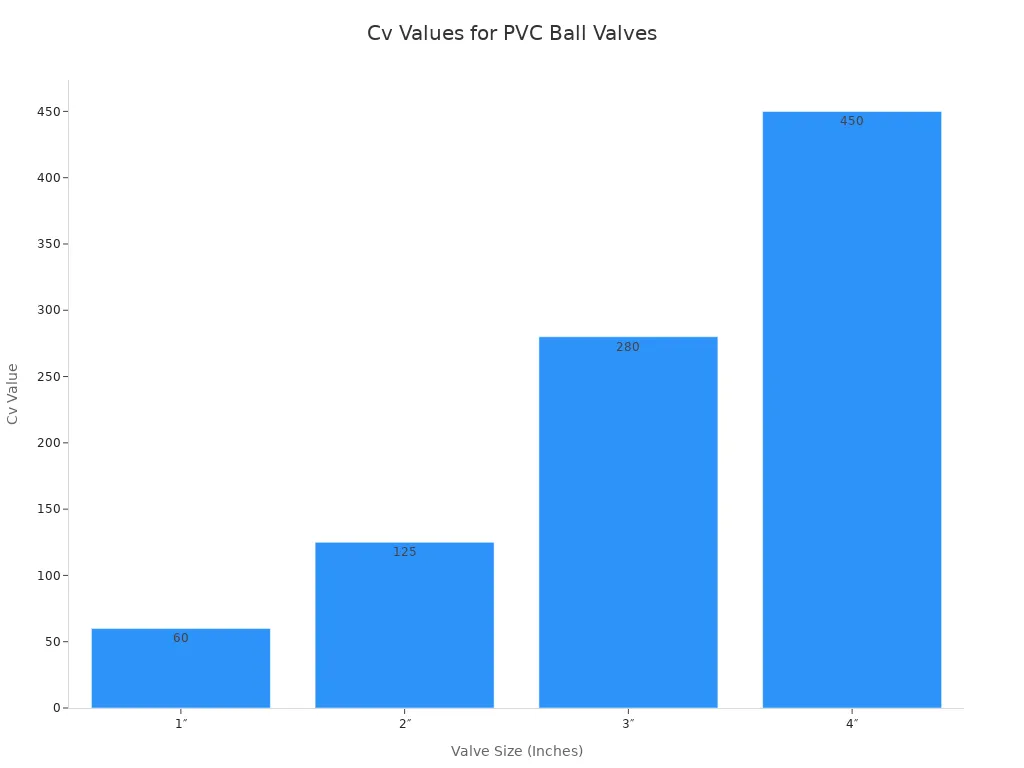
Selecting a valve with the correct Cv ensures accurate flow control and prevents problems such as cavitation or vibration. Engineers match the valve size and Cv to system requirements to maintain desired flow rates and optimize performance.
Opening and Closing Action
The PVC ball valve opens and closes by rotating the ball inside the valve body. The handle connects to the stem, which turns the ball 90 degrees to switch between open and closed positions. This quarter-turn action allows quick and reliable operation.
Several factors influence the torque required to operate the valve:
- Larger valve sizes increase torque due to greater surface area and friction.
- Higher system pressure raises the force on the ball, demanding more torque.
- Temperature changes affect material friction and flexibility, altering torque needs.
- Seal materials vary in friction coefficients, impacting the effort needed.
- Valve design improvements can reduce friction and lower torque requirements.
When torque exceeds manual capabilities, operators often use pneumatic actuators or other automated devices. Automation ensures consistent, efficient valve operation, especially in large or high-pressure systems where manual control proves difficult.
Pressure and Temperature Considerations
PVC ball valves perform best under moderate pressure and temperature conditions. Compared to metal ball valves, PVC valves have lower pressure ratings and limited temperature tolerance. The table below summarizes these differences:
| Valve Type | Pressure Rating | Temperature Tolerance |
|---|---|---|
| PVC | Lower | Limited |
| Metal | Higher | Higher |
PVC valves suit applications involving water, chemicals, and other fluids at ambient or moderately elevated temperatures. They resist corrosion and chemical attack but cannot withstand the extreme pressures or temperatures that metal valves handle. Metal valves find use in demanding industrial environments requiring durability under harsh conditions.
Note: Selecting the right valve material depends on the system’s pressure, temperature, and fluid type. Using a PVC ball valve outside its rated limits risks premature failure or leakage.
Understanding these operating principles helps engineers and technicians choose the appropriate valve for their systems, ensuring safety, efficiency, and longevity.
Advantages of PVC Ball Valve
Benefits Over Other Valves
PVC ball valves offer several advantages compared to other valve types, especially in terms of cost and ease of installation. They generally have lower initial and installation costs due to their lightweight design and simpler assembly. The table below compares PVC ball valves with brass ball valves on key factors:
| Valve Type | Initial Cost | Installation Cost | Maintenance Cost | Durability |
|---|---|---|---|---|
| PVC Ball Valves | Lower | Lower (easier to install) | Higher (frequent replacements) | Lower durability |
| Brass Ball Valves | Higher | Higher (more careful installation) | Lower (less frequent maintenance) | Higher durability |
While PVC valves require more frequent maintenance and have lower durability, their affordability and ease of use make them attractive for many applications.
Common Limitations
PVC ball valves face significant limitations in high-pressure and high-temperature environments. As temperature rises, the maximum pressure rating drops sharply, as shown below for a 150 PSI PVC valve:
| Water Temperature | Max Pressure (for a 150 PSI PVC Valve) |
|---|---|
| 73°F (23°C) | 150 PSI |
| 100°F (38°C) | 93 PSI |
| 120°F (49°C) | 60 PSI |
| 140°F (60°C) | 33 PSI |
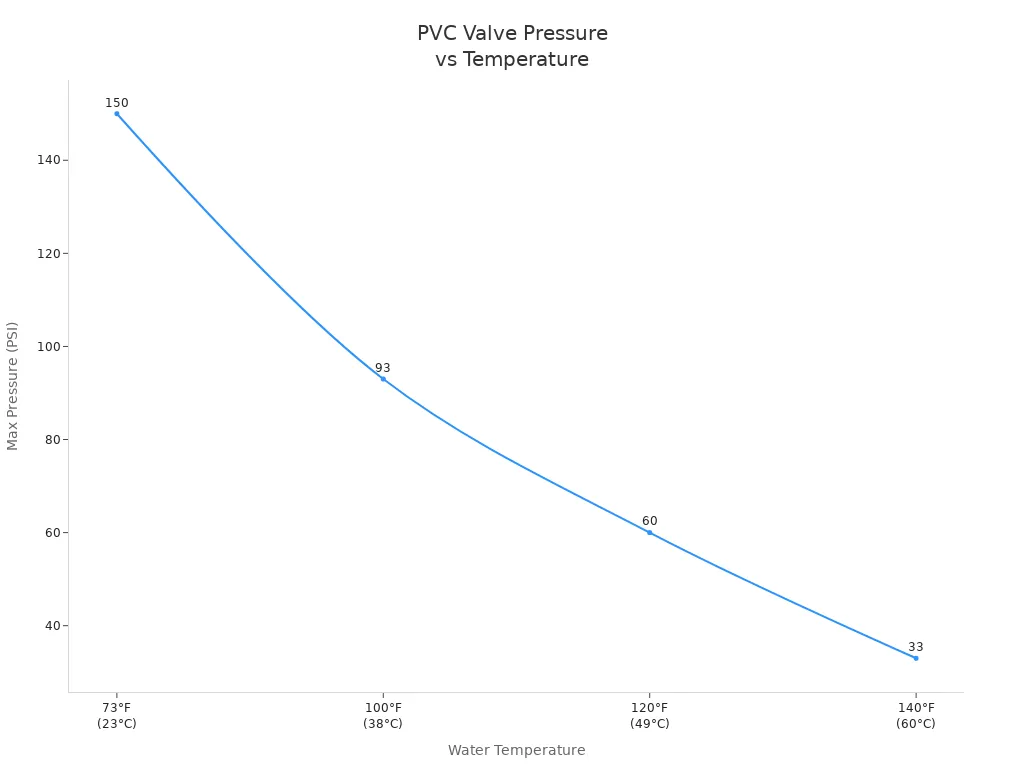
The PVC material softens and deforms above 140°F (60°C), reducing valve integrity. PVC valves also cannot safely handle compressed air or gas because they may shatter violently, creating dangerous projectiles. Safety regulations explicitly prohibit PVC in compressed air systems due to explosion risks. Additionally, exposure to certain solvents can degrade PVC chemically, limiting its use in some industrial environments.
Ideal Applications
PVC ball valves perform best in systems with moderate pressure and temperature. They excel in:
- Water supply systems
- Irrigation setups
- Chemical processing where compatible fluids are used
- Industrial operations requiring reliable on/off control
Their corrosion resistance and ease of installation make them suitable for many liquid flow control tasks. However, users must consider material compatibility, pressure ratings, and maintenance needs when selecting these valves.
Maintenance Tips for PVC Ball Valve
Regular Inspection
Regular inspections of PVC ball valves help identify potential issues before they escalate. Technicians should look for key signs of wear or damage, including:
| Sign of Wear or Damage | Description | Common Causes or Indicators | Example Scenario |
|---|---|---|---|
| Leaks Around the Valve | Fluid escaping from stem or connection points | Stem packing wear, loose fittings, cracked valve body | Water pooling under sink valve or drips around handle when closed |
| Stiff or Difficult Handle | Handle requires extra force or feels sticky | Corrosion, mineral buildup, worn or misaligned internal parts | Outdoor hose valve handle grinding or sticking halfway through turn |
| Unusual Noises When Operating | Squeaking, rattling, or grinding sounds during handle operation | Loose internal parts, debris trapped inside | Rattling sound when opening kitchen faucet valve |
| Visible Damage or Corrosion | Cracks, dents, corrosion spots, or broken handle | Cracked plastic from freezing, verdigris on brass, rust on metal, broken handle from overtightening | Cracked valve body leaking or loose handle preventing reliable operation |
| Reduced Flow or Pressure | Noticeable drop in water pressure despite valve being fully open | Sediment blocking ball bore, pitted or scratched ball or seat | Low water pressure in shower or faucet even when valve is open |
Cleaning Procedures
Cleaning PVC ball valves is essential for optimal performance. Follow these steps for effective maintenance:
- Wipe the exterior of the valve using mild soap and water to remove surface dirt.
- Periodically flush clean water through the valve to clear out any internal build-up.
- Regular cleaning prevents sediment and debris accumulation, extending the valve’s lifespan.
Safe cleaning agents include:
| Cleaning Agent Type | Description | Compatibility with PVC Ball Valves |
|---|---|---|
| Water and Mild Detergents | Gentle option for light dirt; mix with warm water and mild soap. | Safe and effective |
| Solvent-Based Cleaners | Effective for grease and oil; avoid harsh solvents like acetone. | Use compatible solvents only |
| Acid-Based Cleaners | Dissolves mineral deposits; use vinegar for light scale removal. | Use with caution |
| Alkaline Cleaners | Effective for organic contaminants; less corrosive than acids. | Generally safe |
Replacement Guidelines
When components wear out, timely replacement is crucial. Follow these steps for replacing worn or damaged parts:
- Shut off the water supply and relieve any pressure in the system.
- Remove the valve from the pipeline.
- Disassemble the valve and carefully take out the old O-rings and seals.
- Replace them with new, compatible components, ensuring a snug fit.
- Reassemble the valve and reinstall it in the pipeline.
By adhering to these maintenance tips, users can ensure their PVC ball valves operate efficiently and have a longer service life.
PVC ball valves stand out for their efficiency, durability, and ease of maintenance. Key benefits include:
- Precise Flow Control: They enhance operational efficiency through accurate fluid regulation.
- Leak-Proof Design: Their secure seals minimize leakage risks, crucial for preventing contamination.
- Corrosion Resistance: Unlike metal valves, PVC remains functional in harsh conditions.
Understanding these components allows users to make informed decisions, ultimately enhancing system reliability and reducing maintenance costs.
FAQ
What is the lifespan of a PVC ball valve?
PVC ball valves typically last 10 to 20 years, depending on usage and environmental conditions.
Can PVC ball valves be used for gas applications?
No, PVC ball valves should not be used for gas applications due to safety risks and material limitations.
How do I know if my PVC ball valve needs replacement?
Signs include leaks, difficulty operating the handle, or visible damage. Regular inspections help identify these issues early.