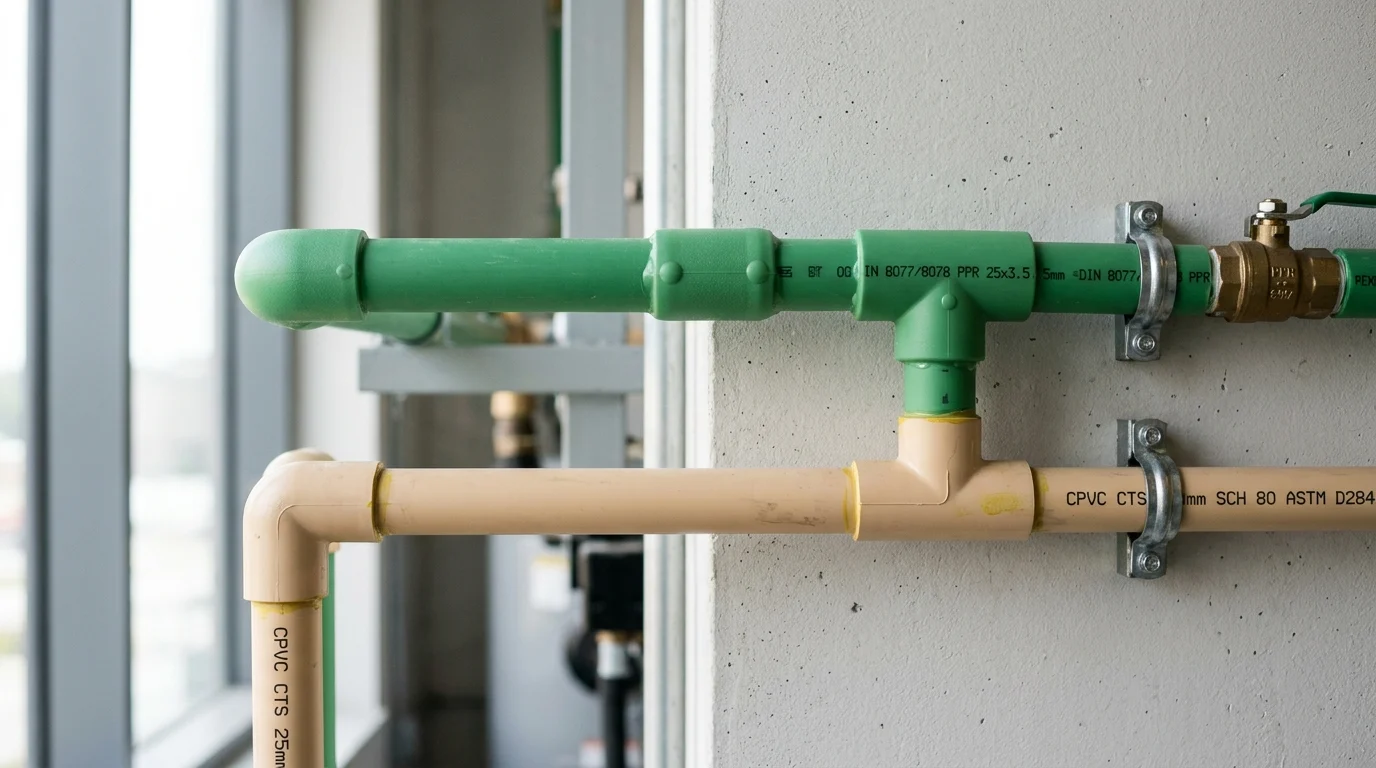
Why PPR vs. CPVC Matters for Industrial Procurement
For industrial procurement professionals, specifying the correct thermoplastic piping system is a critical capital expenditure decision. The debate between Polypropylene Random Copolymer (PPR) and Chlorinated Polyvinyl Chloride (CPVC) goes beyond basic material preferences; it directly impacts long-term operational expenditure (OpEx), system safety, and compliance in high-pressure environments. A miscalculation in material specification can lead to catastrophic system failures, resulting in downtime costs that frequently exceed $50,000 per hour in continuous processing plants.
Duty Conditions That Drive Material Selection
High-pressure industrial applications subject piping networks to extreme mechanical and thermal stresses. Consequently, material selection is primarily driven by maximum operating temperatures and sustained pressure ratings. Industrial duty conditions often require handling fluids at temperatures up to 95°C (203°F) under continuous pressures of 1.0 to 2.5 MPa (145 to 362 psi).
Furthermore, procurement teams must evaluate the chemical composition of the transported media. While water distribution is common, industrial setups frequently transport aggressive acidic or alkaline solutions, compressed air, and abrasive slurries. These harsh conditions require a material with a proven 50-year design life under specific duty profiles.
Buyer Profiles That Need a PPR vs. CPVC Review
A thorough PPR vs. CPVC review is essential for several distinct buyer profiles. Engineering, Procurement, and Construction (EPC) contractors handling large-scale industrial facility builds require predictable material costs and reliable supply chains for orders exceeding 20,000 meters of pipe. Wholesale distributors and importers must stock materials that meet the diverse, localized demands of industrial installers while optimizing their warehousing footprints.
Facility managers and maintenance directors also rely on this comparative analysis when retrofitting aging metal pipelines. These buyers typically evaluate Total Cost of Ownership (TCO). They weigh the initial procurement cost—where CPVC and PPR often fluctuate within a 15% to 30% price differential depending on global resin market indices—against installation labor and long-term maintenance requirements.
PPR vs. CPVC Performance Comparison
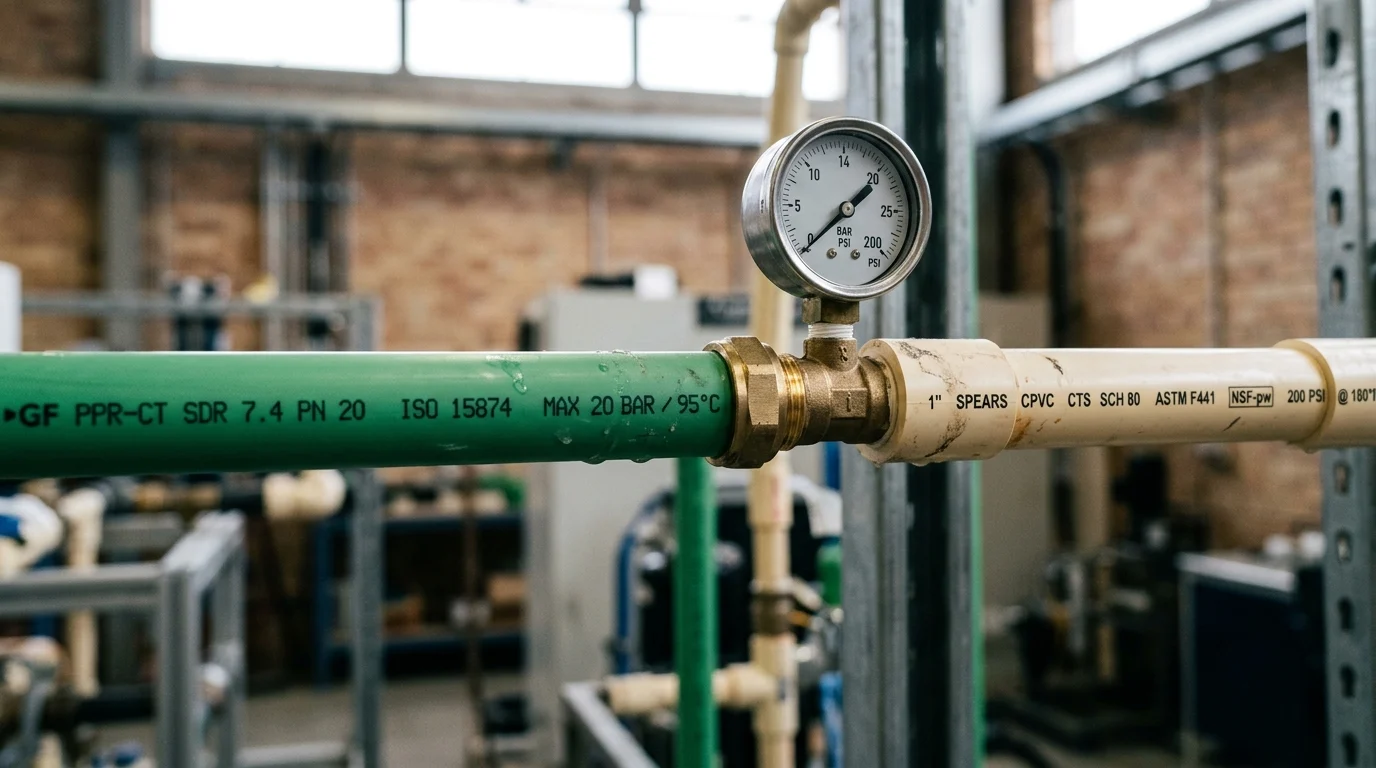
Comparing PPR and CPVC requires a rigorous examination of their mechanical limitations and behavioral characteristics under industrial stress. Both materials offer significant advantages over traditional metallic piping, such as immunity to galvanic corrosion and reduced weight. However, their distinct molecular structures yield entirely different performance envelopes.
Pressure, Temperature, and Chemical Resistance
CPVC is highly regarded for its exceptional temperature and pressure-handling capabilities, safely operating at temperatures up to 93°C (200°F) while maintaining structural rigidity. In high-pressure scenarios, CPVC Schedule 80 pipes are frequently specified due to their robust pressure-bearing capacity, although this capacity derates as temperature increases. PPR, categorized by Standard Dimension Ratios (SDR) and Nominal Pressure (PN) ratings like PN20 or PN25, can also handle temperatures up to 95°C (203°F). However, PPR typically requires thicker pipe walls (lower SDR) to match the pressure ratings of CPVC at elevated temperatures.
Chemical resistance is another critical differentiator. CPVC excels in handling strong acids, bases, and salts, making it a staple in the chemical processing industry. PPR offers excellent resistance to a broad spectrum of chemicals but is particularly favored for highly pure applications, such as deionized water systems. This is because PPR does not leach contaminants and relies on homogeneous heat-fusion joints rather than solvent cements.
Key Technical Specifications for Buyers
When evaluating technical specifications, buyers must scrutinize thermal conductivity and expansion coefficients. PPR has a thermal conductivity of approximately 0.24 W/mK, providing inherent insulation that reduces the need for external lagging in hot water systems. CPVC has an even lower thermal conductivity of roughly 0.14 W/mK.
Conversely, thermal expansion must be managed through expansion loops or compensators. PPR has a relatively high coefficient of linear thermal expansion (approx. 0.15 mm/m°C) compared to CPVC (approx. 0.06 mm/m°C). Furthermore, installation methodologies dictate labor costs. PPR utilizes socket fusion or butt welding, creating a monolithic system that eliminates leak paths but requires specialized heating tools and a reliable power source. CPVC relies on solvent welding, which is faster and requires no electricity. However, this method introduces volatile organic compounds (VOCs) and demands precise curing times ranging from 2 to 24 hours, depending on pipe diameter and ambient temperature.
Comparison Table for Procurement Evaluation
To streamline procurement evaluation, the following table contrasts the baseline performance metrics of PPR and CPVC for industrial applications.
| Specification / Metric | PPR (Polypropylene Random Copolymer) | CPVC (Chlorinated Polyvinyl Chloride) |
|---|---|---|
| Max Operating Temperature | Up to 95°C (203°F) | Up to 93°C (200°F) |
| Jointing Method | Heat Fusion (Socket/Butt/Electro) | Solvent Cement / Threaded |
| Thermal Conductivity | ~0.24 W/mK | ~0.14 W/mK |
| Thermal Expansion | High (~0.15 mm/m°C) | Moderate (~0.06 mm/m°C) |
| Chemical Resistance | Excellent for pure water, weak acids | Superior for strong acids, halogens |
| Fire Resistance | Combustible (Standard grades) | Self-extinguishing (LOI ~60) |
Sourcing, Manufacturing, and Quality Control
The reliability of high-pressure industrial piping networks is inextricably linked to the manufacturer’s sourcing protocols and quality control infrastructure. For B2B importers, vetting the upstream supply chain is just as crucial as evaluating the final product.
Raw Material Grades and Dimensional Consistency
The performance of both PPR and CPVC is heavily dependent on the quality of the raw resin. Premium PPR pipes require Type 3 random copolymer polypropylene to ensure long-term hydrostatic strength. Similarly, CPVC performance hinges on the chlorination level of the PVC resin, typically pushed to 63–69% chlorine content to achieve high-temperature resilience. Manufacturers utilizing substandard, recycled, or highly filled resins will produce pipes with compromised impact resistance and pressure tolerances.
Dimensional consistency during extrusion is non-negotiable for high-pressure systems. Wall thickness variations must be tightly controlled within a ±0.1mm tolerance. Inconsistent wall thickness in PPR can lead to weak fusion joints, while in CPVC, it can result in inadequate solvent cement engagement. Both scenarios can lead to catastrophic blowouts under pressures exceeding 1.0 MPa.
Supplier Evaluation, MOQ, and Tooling Availability
Evaluating a supplier involves analyzing their production capacity, tooling availability, and Minimum Order Quantities (MOQs). Established manufacturers typically require MOQs of 5,000 to 10,000 meters per pipe dimension, or a standard 1x20ft Full Container Load (FCL) for mixed orders. This ensures production efficiency while meeting the volume demands of wholesale distributors.
Tooling availability for fittings is a critical bottleneck. A comprehensive industrial piping system requires hundreds of fitting molds—including elbows, reducers, flanges, and valves. Developing a new custom injection mold can cost between $2,000 and $8,000 and add 30 to 45 days to the lead time. Procurement teams must partner with suppliers who possess an extensive existing catalog of high-pressure molds (e.g., PN25 PPR fittings or Schedule 80 CPVC fittings) to avoid tooling delays and supplementary CapEx.
Compliance, Packaging, and Logistics Risks
The international trade of industrial piping materials introduces substantial compliance and logistical variables. Procurement teams must navigate a complex landscape of international standards and mitigate physical risks during transit to ensure the material arrives ready for installation.
Certifications, Test Records, and Market Standards
Market acceptance depends entirely on verifiable compliance with international standards. For CPVC, buyers typically demand adherence to ASTM F441 for Schedule 40 and 80 pipes, alongside NSF/ANSI 14 and 61 certifications for potable water safety if applicable. PPR procurement strictly follows DIN 8077/8078 or ISO 15874 standards, which dictate dimensions, tolerances, and performance under stress.
Suppliers must provide comprehensive test records, particularly the 1,000-hour and 8,760-hour hydrostatic pressure tests at elevated temperatures (e.g., 95°C). Failure to provide batch-specific Certificates of Analysis (CoA) or independent third-party testing reports significantly elevates the risk profile for EPC contractors. This oversight can potentially lead to rejected shipments at the port of entry or a failure to secure local building permits.
Packaging, Labeling, Palletization, and Container Loading
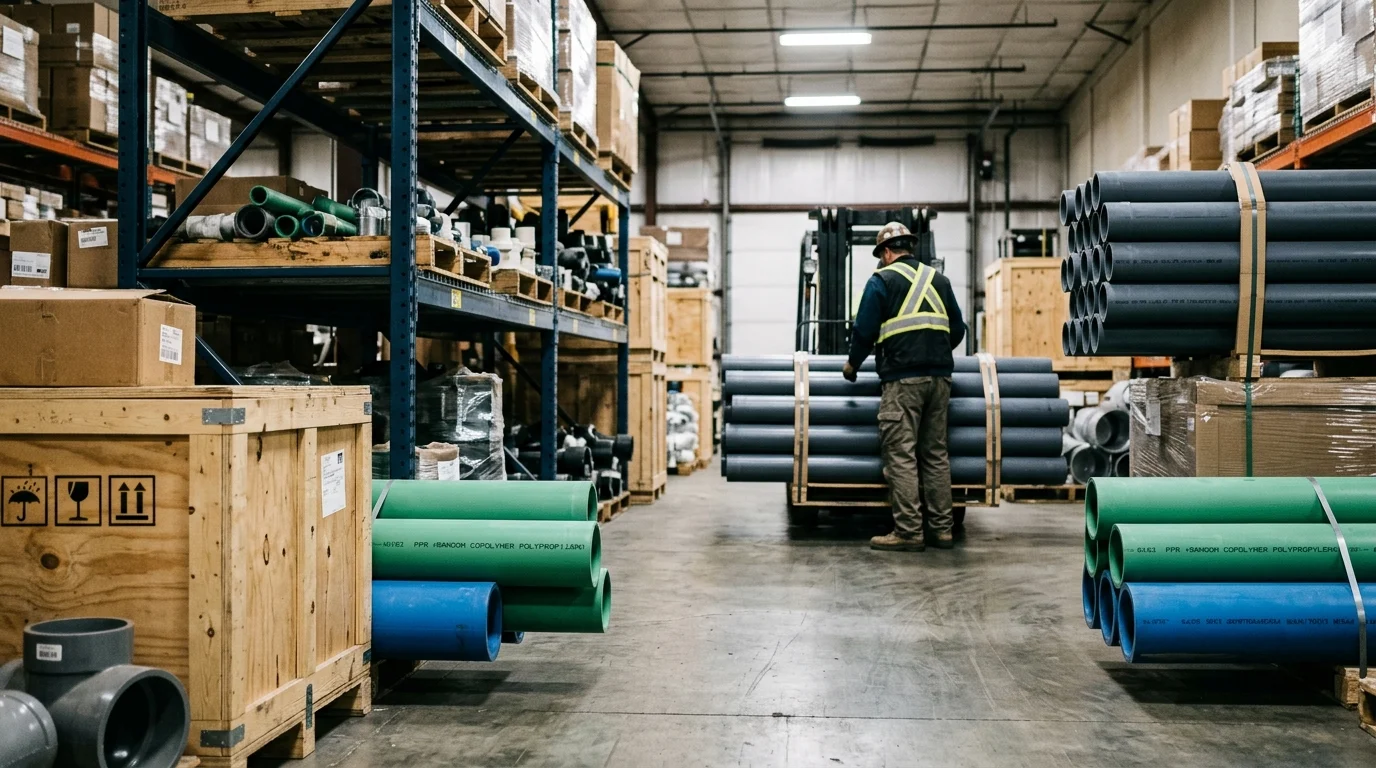
The physical logistics of shipping thermoplastic pipes require meticulous planning to prevent deformation and UV degradation. Pipes are typically extruded in standard lengths of 4 meters or 5.8 meters to optimize container space. The 5.8-meter lengths perfectly fit standard 20-foot General Purpose (GP) containers, while 11.8-meter lengths are used for 40-foot High Cube (HC) containers.
Improper palletization or container loading can result in significant product loss. CPVC is inherently more brittle than PPR, especially at lower temperatures, making it susceptible to impact damage during rough maritime transit. PPR, while more impact-resistant, is highly vulnerable to UV degradation if exposed to direct sunlight for extended periods. Consequently, premium suppliers utilize heavy-duty, UV-resistant PE bagging and employ structural dunnage to maintain a target transit defect rate of less than 0.5%.
Best Choice for High-Pressure Industrial Applications
Determining the optimal material for a high-pressure industrial application requires synthesizing technical performance, installation logistics, and total procurement costs. Neither PPR nor CPVC is universally superior; their commercial viability is highly application-specific.
When PPR Is the Better Commercial Choice
PPR emerges as the superior commercial choice in applications demanding absolute leak-proof integrity over a 50-year lifespan, particularly in systems subject to high vibration or mechanical shock. The homogeneous heat-fusion process essentially turns the entire piping network into a single, continuous piece of plastic, eliminating the joint-failure risks associated with glues or threads.
Economically, PPR is highly advantageous for large-scale industrial water distribution, compressed air systems, and food-grade fluid transport. While the initial CapEx for fusion welding equipment is higher, the long-term OpEx is significantly lower. This is due to zero maintenance at the joints and the absence of solvent cement curing times, which accelerates project commissioning.
When CPVC Is the Better Commercial Choice
CPVC is the definitive choice for harsh chemical processing environments and applications governed by strict fire safety codes. Because CPVC has a Limiting Oxygen Index (LOI) of 60, it will not sustain combustion in standard atmospheric conditions. This makes it legally mandatory in certain high-risk industrial zones where standard plastics are prohibited.
Commercially, CPVC is preferred for retrofitting existing metal pipelines in constrained spaces where deploying bulky heat-fusion tools is impractical. The solvent welding process allows for rapid assembly by standard pipefitters without specialized electrical equipment. Despite a potentially higher raw material cost per meter compared to standard PPR, the reduced labor hours and superior resistance to corrosive chemicals—such as sulfuric acid or sodium hypochlorite—justify the investment.
Procurement Decision Framework
To finalize the procurement strategy, buyers should utilize a structured decision framework based on project-specific constraints.
| Procurement Criterion | Favor PPR | Favor CPVC |
|---|---|---|
| Installation Environment | Open spaces, new builds | Confined spaces, retrofits |
| Primary Fluid Media | Hot/cold water, compressed air | Aggressive chemicals, acids |
| Fire Safety Requirements | Standard industrial codes | Strict flame/smoke regulations (LOI 60) |
| Labor & Equipment | Access to power and fusion tools | Manual labor, solvent cement |
| Vibration & Shock | High (Highly resilient joints) | Low (Rigid, brittle under shock) |
By carefully mapping these criteria against the project’s operational pressures, target lifespans, and available CapEx, procurement teams can confidently select the thermoplastic system that delivers maximum reliability and ROI.
Key Takeaways
- Wholesale sourcing and supply-chain implications for PPR vs. CPVC
- Specifications, compliance, and commercial terms buyers should validate
- Actionable recommendations for distributors and procurement teams
Frequently Asked Questions
Which pipe is better for high-pressure hot water systems, PPR or CPVC?
Both can work, but CPVC often maintains rigidity at high temperatures, while PPR needs the correct PN rating, such as PN20 or PN25. For hot water with long service life, verify pressure derating and project temperature before selection.
When should industrial buyers choose CPVC over PPR?
Choose CPVC when the system handles strong acids, bases, salts, or needs high chemical resistance with rigid pipe performance. It is common in chemical processing and industrial fluid transfer.
When is PPR a practical choice for industrial piping?
PPR is practical for hot and cold water, purified water, and systems needing clean heat-fusion joints without solvent cement. It is also valued for corrosion resistance and long service life.
How do PPR and CPVC installation methods differ?
PPR uses heat fusion to create a homogeneous joint and needs welding tools. CPVC uses solvent cement, which is fast but requires proper ventilation and curing time before pressure testing.
Can Donsen supply fittings for PPR and CPVC projects?
Yes. Donsen manufactures PP-R, PVC, CPVC, PE pipes and fittings, plastic valves, adaptors, couplings, elbows, tees, reducers, and related solutions for industrial, commercial, and water supply projects.