PPR Elbows Compared 45-Degree vs 90-Degree for Efficient Water Systems

The global PPR pipe market shows substantial growth, with installations surpassing 1.8 million tons in 2024. Over 52% of new residential pipeline systems now incorporate PPR, emphasizing its vital role in contemporary plumbing. PPR Pipe elbows are fundamental components in these systems, effectively guiding water flow. Engineers differentiate between 45° Elbows and 90° Elbows based on their specific turning angles. This selection significantly influences water flow efficiency and the overall performance of the system. Considering other components, such as PPR push fittings, also helps ensure optimal pressure and extended durability within a water distribution network.
Key Takeaways
- PPR elbows change water flow direction. They are important for plumbing systems.
- A 90-degree elbow makes a sharp turn. It is good for small spaces. It can cause more pressure loss.
- A 45-degree elbow makes a gentle turn. It helps water flow smoothly. It reduces pressure loss.
- Choose the right elbow based on space and how water needs to flow. This helps your water system work well.
- Proper installation is key. Use correct heating and alignment. This prevents leaks and makes the system last longer.
90-Degree PPR Pipe Elbows
Definition and Characteristics
A 90-degree PPR pipe elbow is a plumbing fitting. It changes the direction of a pipeline by a precise 90-degree angle. Manufacturers produce these elbows from 100% Beta PP-RCT material. This material is a highly crystalline form of PPR. It offers enhanced performance, including superior chlorine resistance and a higher pressure rating at elevated temperatures compared to standard PPR. These fittings adhere to strict manufacturing standards like ASTM F2389 and CSA B137.11. The production process involves selecting high-quality PPR resin, extruding it into shape, and then cooling and sizing it. Each fitting undergoes rigorous quality control. This ensures dimensional accuracy and material integrity. PPR pipe elbows are lightweight, with a density of 0.90g/cm3 at 20°C. They offer excellent chemical stability, resisting various acids, alkalis, and solvents. They also boast good heat resistance, handling temperatures up to 95°C instantaneously and 75°C long-term. Their non-polar nature provides corrosion resistance, preventing rust and chemical effects.
Common Applications
90-degree PPR pipe elbows find extensive use across various sectors. In residential plumbing, they are crucial for redirecting water flow in tight spaces. This includes under sinks or behind walls. They are ideal for domestic potable water supply and bathroom lines. Medium sizes (40–63 mm) are common in commercial buildings, office spaces, and apartment complexes. Large sizes (75–110 mm) serve industrial plants, hospitals, hotels, and municipal distribution systems. These elbows are also vital in HVAC systems, including boilers, radiators, and air conditioning units. Their resistance to high temperatures and temperature fluctuations makes them suitable for these applications. NIRON piping systems, which incorporate these elbows, are used for hot and cold potable water, hydronic heating, and chilled water circulation in large multi-family residential buildings, hotels, and even cruise liners. Industrial settings also use them for conveying compressed air and various chemical substances.
Advantages and Limitations
90-degree PPR pipe elbows offer numerous advantages. Their lightweight nature simplifies handling and installation, even in complex systems. The heat fusion technique creates strong, watertight connections. This ensures system integrity. These elbows resist corrosion, scaling, and chemical reactions. This contributes to a long service life, often exceeding 50 years, backed by a 30-year warranty. Their smooth inner surface reduces frictional resistance. This mitigates the effects of high-velocity water flow and lessens turbulence. This also reduces the likelihood of water hammer and energy loss. The low thermal conductivity of polypropylene leads to considerable energy savings. It also reduces insulation costs. The material’s noise absorption and elasticity soften noise and vibrations from water flow. This results in a low-noise installation. They also resist extreme temperatures, abrasion, and UV radiation, making them suitable for outdoor applications. Their durability reduces the need for frequent repairs and lowers maintenance costs. They are hygienic, non-toxic, and recyclable.
45-Degree PPR Pipe Elbows
Definition and Characteristics
A 45-degree PPR pipe elbow is a plumbing component. It changes the direction of a pipeline by a 45-degree angle. Manufacturers produce these elbows from high-quality PPR material. This material ensures durability and resistance to various environmental factors. The design allows for a gentler turn in the piping system. This contrasts with the sharper turn of a 90-degree elbow. These fittings maintain the same excellent chemical stability and heat resistance as other PPR components. They are lightweight and easy to handle during installation.
Common Applications
Installers use 45-degree PPR pipe elbows in systems requiring a less abrupt change in direction. They are common in long pipeline runs. These elbows help maintain consistent flow rates. They are suitable for both residential and commercial water supply systems. Engineers often specify them in large-scale irrigation projects. They also appear in industrial applications where fluid dynamics are critical. Their use helps optimize the overall efficiency of the water distribution network.
Advantages and Limitations
45-degree PPR pipe elbows offer significant benefits for fluid transport. They provide a smoother flow compared to 90-degree elbows. This design minimizes turbulence within the system. This results in a lower pressure drop. For example, the resistance coefficient for a 45-degree elbow varies by approximately ±10 percent. This is a smaller variation than the ±20 percent seen in 90-degree elbows in pipes larger than 2 inches.
Consider the flow characteristics:
| Elbow Type | Flow Characteristics |
|---|---|
| 45 Degree Elbow | Smoother flow with reduced turbulence and lower pressure drop |
| 90 Degree Elbow | Increased turbulence and higher pressure loss |
These elbows significantly reduce pressure loss. This enhances system efficiency. By mitigating friction and pressure loss, these elbows contribute to energy conservation. This is especially true in pumping systems. The smoother flow also reduces the risk of water hammer. This extends the lifespan of the entire PPR pipe system.
Direct Comparison of PPR Pipe Elbows

Flow Efficiency and Pressure Drop
The choice between 45-degree and 90-degree PPR pipe elbows significantly impacts a water system’s flow efficiency and pressure drop. A 90-degree bend in a PPR pipe creates greater resistance to fluid flow compared to a 45-degree bend. This increased resistance occurs because the fluid loses kinetic energy when making a sharp turn, consequently reducing the flow rate. Engineers observe that 90-degree elbows introduce more turbulence into the water stream. This turbulence leads to a higher pressure drop across the fitting. Conversely, 45-degree elbows facilitate a smoother transition for the water. They minimize turbulence and reduce the overall pressure loss within the system. This smoother flow translates directly into better hydraulic performance and can lead to energy savings, especially in systems requiring pumps to maintain pressure.
Space Requirements and Layout
The physical dimensions and turning radius of each elbow type dictate their suitability for different installation layouts. A 90-degree elbow provides a compact solution for making sharp, perpendicular turns. Installers often use them in confined spaces, such as behind walls, under sinks, or within equipment enclosures, where space is at a premium. They allow for efficient routing of pipes in tight corners. In contrast, a 45-degree elbow requires more linear space to achieve its gentler change in direction. This makes them ideal for situations where a gradual turn is preferable or possible. Designers often incorporate 45-degree elbows in long pipeline runs or in areas with ample space. They help optimize the overall system layout by reducing the number of sharp turns, which can improve aesthetics and accessibility for maintenance.
Cost and Material Considerations
Both 45-degree and 90-degree PPR pipe elbows utilize the same high-quality PPR material. This ensures consistent durability, chemical resistance, and longevity across both types. The manufacturing processes for both elbows are also similar, involving injection molding of the PPR resin. Therefore, the material cost per fitting does not vary significantly between the two angles for a given pipe diameter. However, the overall cost consideration extends beyond the individual fitting price. Systems designed with more 45-degree elbows might incur slightly higher initial material costs if they require more fittings to achieve the desired direction change. Conversely, the long-term operational costs can be lower for systems predominantly using 45-degree elbows due to their superior flow efficiency and reduced pressure drop, which can lead to lower energy consumption for pumping.
Suitability for System Pressures
Both 45-degree and 90-degree PPR pipe elbows demonstrate inherent strength and reliability under various system pressures. Manufacturers produce these fittings from high-quality polypropylene random copolymer (PPR), a material known for its robust pressure resistance. This material allows both elbow types to withstand the typical operating pressures found in residential, commercial, and industrial water supply systems. However, the specific angle of the elbow influences how the system handles and maintains pressure.
A 90-degree elbow forces water to make an abrupt turn. This sharp change in direction creates higher localized stress on the inner wall of the fitting. It also generates more turbulence within the fluid. This turbulence contributes to a greater pressure drop across the elbow. In systems operating at very high pressures or those requiring precise pressure maintenance, multiple 90-degree bends can cumulatively reduce the overall system pressure more significantly. Engineers must account for this pressure loss during system design to ensure adequate pressure at all outlets.
Conversely, a 45-degree elbow facilitates a gentler change in water flow direction. This smoother transition minimizes turbulence and reduces the localized stress on the fitting. Consequently, a 45-degree elbow causes a lower pressure drop compared to its 90-degree counterpart. For systems where maintaining consistent pressure is critical, or in long pipeline runs, using 45-degree elbows can help preserve system pressure more effectively. This design choice can lead to more efficient pump operation and better overall hydraulic performance.
Ultimately, the suitability of each elbow type for system pressures depends on the specific application and design requirements. Both elbows offer excellent pressure ratings due to the durable PPR material. However, designers select 45-degree elbows for applications prioritizing minimal pressure loss and smooth flow, especially in high-volume or high-pressure scenarios. They choose 90-degree elbows when space constraints dictate a compact turn, accepting the slightly higher pressure drop.
Choosing the Right PPR Pipe Elbow
Factors for Selection
Selecting the appropriate PPR pipe elbow requires careful consideration of several key factors. First, evaluate the available installation space. Tight areas often necessitate 90-degree elbows for compact turns. Conversely, larger spaces allow for 45-degree elbows, which promote smoother flow. Second, assess the desired flow efficiency and pressure requirements of the water system. Systems prioritizing minimal pressure loss and optimal flow benefit from 45-degree elbows. Third, consider the overall system layout and future maintenance needs. A well-planned layout using the correct elbows enhances system performance and simplifies any future work.
Avoiding Common Mistakes
Designers often make common mistakes when choosing PPR pipe elbows. One frequent error involves underestimating the impact of pressure drop. Using too many 90-degree elbows in a long run can significantly reduce system pressure and efficiency. Another mistake is forcing a 90-degree elbow into a situation where a gentler 45-degree turn would be more effective for flow dynamics. Installers should also avoid neglecting the long-term performance implications. Choosing an elbow solely based on initial cost without considering its effect on energy consumption or system longevity can lead to higher operational expenses.
Donsen’s Quality Assurance
Donsen ensures the reliability and performance of its PPR pipe elbows through a rigorous quality assurance process. The company utilizes high-quality imported raw materials for its PPR pipes and fittings. These products meet or exceed the targets set by international standards such as DIN8077/8088 and ISO15874. Donsen implements stringent quality control measures throughout production. This includes:
- Three inspections of raw materials.
- Three inspections during online production.
- Three inspections of finished products.
Donsen also uses in-house testing facilities to test products at different processing stages. All products undergo strict inspection before shipment. Furthermore, Donsen ensures product quality traceability by printing the DONSEN typeface and production date information directly on the body of the product. This commitment guarantees customers receive durable and high-performing fittings for their water systems.
Installation Best Practices for PPR Pipe Elbows
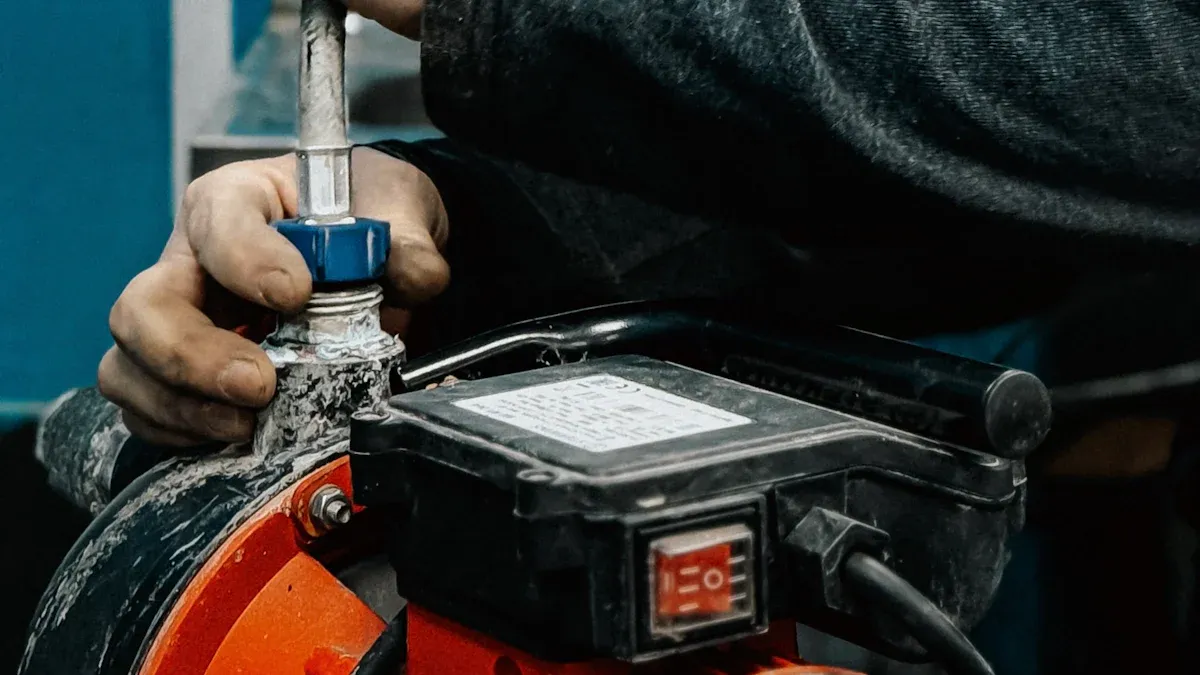
Proper Fusion Techniques
Correct fusion techniques are crucial for creating strong, leak-free PPR pipe elbow connections. Installers must set the fusion tool to 260°C to 280°C. The industry standard for PPR pipe fusion is 260°C ± 5°C, as per ISO 15874 and ASTM F2389. Adhering to specific heating times based on pipe diameter ensures optimal joint integrity.
| Pipe Diameter (mm) | Minimum Heating Time (seconds) |
|---|---|
| 16 | 5 |
| 20 | 5 |
| 25 | 7 |
| 32 | 8 |
| 40 | 12 |

These precise heating times allow the material to reach the correct melting point for a secure bond.
Ensuring Correct Alignment
Proper alignment prevents future issues like leaks and inefficient system operation. Poor pipe cutting and misalignment often lead to weak connections. Installers must use a sharp pipe cutter for clean, straight cuts. They should smooth edges with a deburring tool. This ensures proper insertion and strengthens the joint. Misaligned pipes cause internal stress and water turbulence. This leads to premature wear or leaks. Installers must ensure perfect alignment before and during fusion. They can use alignment tools or support brackets to maintain straight lines. Preventing pipe expansion or contraction due to temperature changes also helps. Installers should use expansion joints in areas with significant temperature changes. They must insulate pipes to prevent excessive movement.
Post-Installation Checks
After installing PPR pipe elbows, thorough checks confirm system integrity.
- After fusion welding, visually inspect joints for gaps or imperfections.
- Allow installed fittings and pipes to cool completely before applying pressure.
- Perform a pressure test to check for leaks and verify joint integrity.
- Slowly turn on the water supply and monitor the system for any signs of leakage.
- If issues are detected, recheck the installation and address problems before finalizing the system.
Pre-test preparation includes a 24-hour curing period and a visual inspection of all connections. The system must be completely filled and air bled. Clean water is the preferred test medium. For cold water systems, the test pressure is 1.5 times the working pressure. For hot water systems, it is 2.0 times the working pressure at 20°C. Safety protocols, such as pressure relief valves, are mandatory during testing.
Choosing the correct PPR pipe elbow is vital for any water system. This decision directly impacts the system’s longevity and efficiency. A 45-degree elbow ensures smoother flow and reduces pressure drop. A 90-degree elbow provides compact turns in tight spaces. Prioritizing quality in all PPR fittings guarantees reliable and durable installations. Donsen’s commitment to high standards ensures optimal system performance.
FAQ
What is the primary difference between 45-degree and 90-degree PPR elbows?
A 45-degree elbow creates a gentler turn, minimizing turbulence and pressure drop. A 90-degree elbow makes a sharp, perpendicular turn. This is ideal for compact spaces but causes more resistance to water flow.
How does elbow choice impact water flow efficiency?
Choosing 45-degree elbows improves flow efficiency. They reduce turbulence and pressure loss within the system. 90-degree elbows create more turbulence, leading to a higher pressure drop and less efficient flow.
When should installers use a 90-degree PPR elbow?
Installers use 90-degree elbows in confined spaces. They are perfect for tight corners or when a direct perpendicular change in direction is necessary. This allows for compact pipe routing in limited areas.
Why is proper fusion technique important for PPR elbow installation?
Proper fusion creates strong, leak-free connections. Correct heating times and alignment ensure the PPR material melts and bonds securely. This prevents leaks and ensures the system’s long-term integrity. Installers must follow these steps:
- Set the fusion tool to the correct temperature.
- Adhere to specific heating times.
- Ensure perfect alignment during fusion.
See Also
Top 5 Essential Industrial Air Fryers for High-Volume Kitchens
Simple Guide: Air Frying Frozen Brussels Sprouts in Five Easy Steps
Air Fryer Versus Oven: Unveiling the Superior Cooking Method