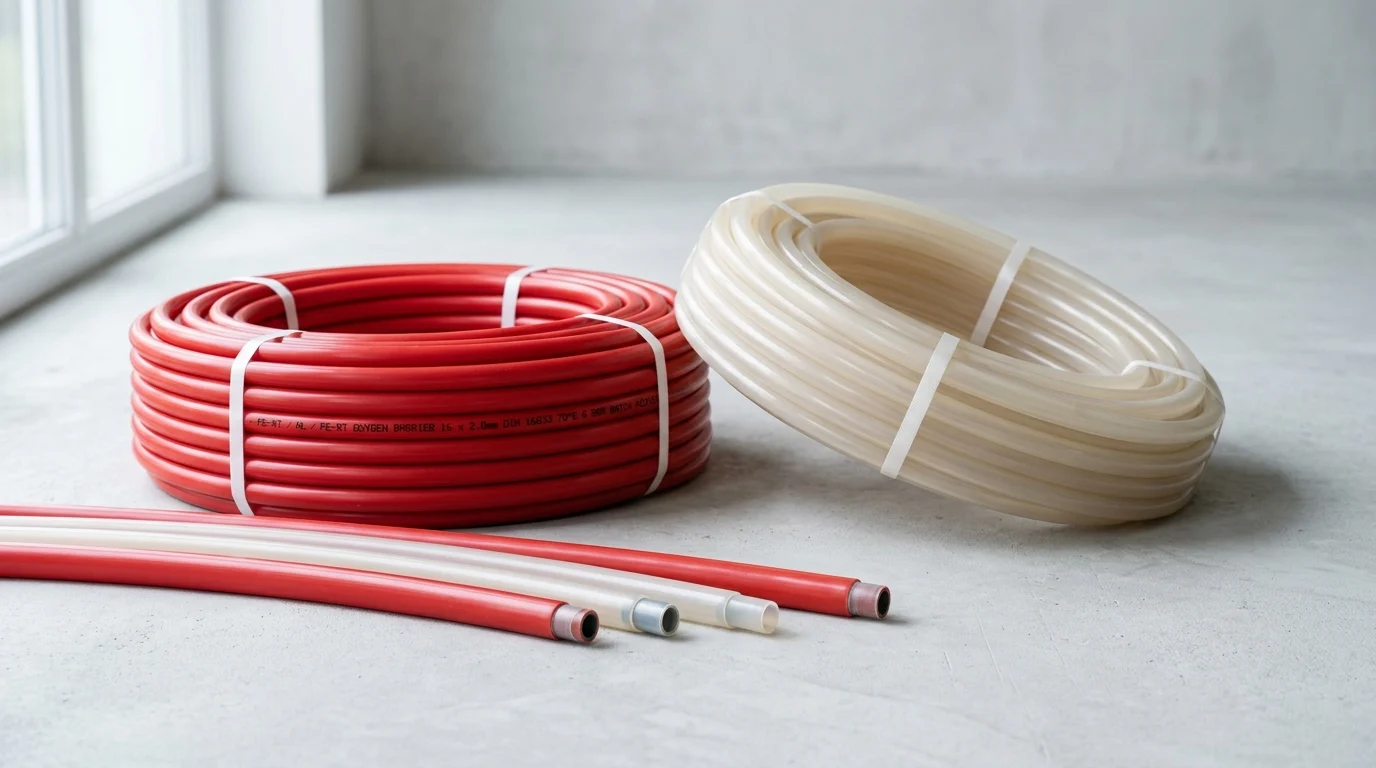
Why PE-RT Pipes Are Gaining Global Demand
Polyethylene of Raised Temperature resistance (PE-RT) has fundamentally disrupted the global hydronic heating and plumbing supply chain. As wholesale buyers and procurement teams seek to balance performance, sustainability, and cost-efficiency, PE-RT pipes have emerged as a dominant alternative to traditional cross-linked polyethylene (PEX) and metallic piping.
Market data indicates that the global plastic pipe market is expanding steadily, with PE-RT adoption accelerating at an estimated compound annual growth rate (CAGR) of over 6% in the floor heating sector. This surge is largely driven by the material’s unique molecular architecture, which provides excellent long-term hydrostatic strength at elevated temperatures without requiring chemical cross-linking.
Regulatory and energy-efficiency drivers
The transition toward low-temperature hydronic radiant heating systems is a primary catalyst for PE-RT’s global expansion. Modern building codes, particularly the European Energy Performance of Buildings Directive (EPBD) and similar North American energy mandates, heavily incentivize energy-efficient HVAC designs. Heat pumps and condensing boilers operate most efficiently at lower flow temperatures, typically between 35°C and 45°C, rather than the 70°C+ required by traditional radiator systems.
Because PE-RT Type II is engineered to handle continuous operating temperatures of up to 70°C and peak temperatures of 90°C at pressures of 6 bar, it perfectly aligns with the parameters of modern low-temperature systems. Furthermore, regulatory pushes for green building materials favor PE-RT because it is 100% recyclable, helping developers achieve LEED and BREEAM certifications.
Growth in hydronic heating and plumbing demand
The booming demand for underfloor heating (UFH) in both residential and commercial real estate has directly increased the volume of PE-RT procurement. UFH systems require thousands of meters of flexible pipe capable of being coiled tightly without kinking. PE-RT delivers high flexibility, making installation significantly faster for contractors compared to rigid piping systems like PP-R or CPVC.
Beyond radiant heating, PE-RT is increasingly specified for potable hot and cold water distribution, snow melting systems, and radiator connections. This multi-application versatility allows distributors to streamline their inventory, stocking a single pipe material that serves multiple plumbing and heating verticals.
Why distributors and importers favor PE-RT
For B2B distributors and importers, the financial metrics of PE-RT are highly attractive. Because PE-RT does not require the complex and energy-intensive cross-linking process used to manufacture PEX, production costs are inherently lower. This typically translates to a 10% to 20% cost advantage at the wholesale procurement level.
Additionally, the absence of cross-linking means PE-RT pipes can be thermally fused. This allows installers to use standard heat-fusion welding techniques to create monolithic joints, reducing reliance on expensive mechanical brass fittings. Distributors favor this because it lowers the overall system cost for their contractor clients, driving higher volume sales and improving market penetration.
Technical and Commercial Advantages of PE-RT Pipes
Evaluating PE-RT pipes requires a deep understanding of their mechanical properties and how they stack up against legacy materials. Procurement teams must analyze specifications rigorously to ensure the products meet regional compliance standards and long-term performance expectations.
Modern PE-RT resins are typically categorized into Type I and Type II. While Type I is sufficient for low-temperature underfloor heating, Type II offers enhanced hydrostatic strength at higher temperatures, making it suitable for broader sanitary applications.
Key specifications for procurement teams
When sourcing PE-RT pipes, procurement teams must verify several critical specifications. Standard dimensions for underfloor heating typically range from 16×2.0mm to 20×2.0mm. A crucial requirement for closed-loop hydronic systems is the presence of an EVOH (Ethylene Vinyl Alcohol) oxygen barrier layer. This barrier prevents oxygen permeation, which would otherwise cause corrosion in metallic system components like boilers and pumps.
Key technical data points include a thermal conductivity of approximately 0.4 W/m·K, which ensures efficient heat transfer through the floor screed. Pressure ratings typically range from PN6 to PN10, depending on the wall thickness and standard dimension ratio (SDR). Buyers should demand technical data sheets confirming a minimum bend radius of 5 times the pipe’s outside diameter (5xD) to ensure installation flexibility.
PE-RT vs PEX, PP-R, and multilayer pipes
While PEX has historically dominated the radiant heating market, PE-RT offers distinct advantages. PEX requires chemical cross-linking (silane, peroxide, or electron beam), which makes it non-recyclable and impossible to heat-fuse. PE-RT, conversely, is fully recyclable and supports thermal fusion, offering a greener, more versatile installation process.
Compared to PP-R (Polypropylene Random Copolymer), which is rigid and primarily used for straight-run potable water networks, PE-RT is highly flexible, making it the superior choice for coiled underfloor loops. Multilayer composite pipes (PEX-AL-PEX or PE-RT-AL-PE-RT) offer excellent shape retention and oxygen barriers but come at a higher cost per meter; standard 3-layer or 5-layer EVOH PE-RT remains the most cost-effective solution for large-scale floor heating.
Performance and cost comparison factors
To clearly illustrate the commercial and technical positioning of PE-RT, the following matrix compares it against its primary alternatives in the plastic piping market.
| Feature / Material | PE-RT (Type II) | PEX-a | PP-R | Multilayer (PE-RT/AL/PE-RT) |
|---|---|---|---|---|
| Max Operating Temp | 70°C (peak 90°C) | 90°C (peak 95°C) | 70°C (peak 95°C) | 90°C (peak 95°C) |
| Flexibility / Coiling | Excellent | Excellent | Poor (Rigid) | Moderate (Retains shape) |
| Thermal Fusion | Yes | No | Yes | No (requires mech fittings) |
| Recyclability | 100% Recyclable | Non-recyclable | 100% Recyclable | Difficult (mixed materials) |
| Relative Cost Index | $$ | $$$ | $$ | $$$$ |
This comparison highlights why procurement managers often select PE-RT for large-volume heating projects: it hits the sweet spot between the flexibility of PEX and the thermal fusion capabilities of PP-R, all at a highly competitive price point.
How to Source PE-RT Pipes from Global Suppliers
Sourcing PE-RT pipes internationally requires a strategic approach to supplier selection. The global manufacturing hub for plastic piping—particularly regions like Ningbo, China—offers access to suppliers with decades of extrusion experience.
Importers must differentiate between trading companies and genuine manufacturers. Direct manufacturers with extensive production bases and over 20 years of export experience offer better pricing control, quality assurance, and customization capabilities.
Core supplier evaluation criteria
A robust supplier evaluation begins with assessing production capacity and raw material sourcing. High-quality PE-RT pipes depend on premium resins from petrochemical leaders like Dow, LG Chem, or SK. Buyers should request bills of materials (BOM) to verify resin origin.
Furthermore, evaluate the manufacturer’s extrusion technology. Producing 3-layer or 5-layer EVOH PE-RT pipes requires advanced co-extrusion lines. A capable supplier should have automated line control systems that continuously monitor pipe diameter and wall thickness, ensuring tolerances are maintained to within 0.1mm. Production capacity should also be verified; leading suppliers can output upwards of 50,000 to 100,000 meters daily to support large wholesale orders.
MOQ, private label, packaging, and pallet options
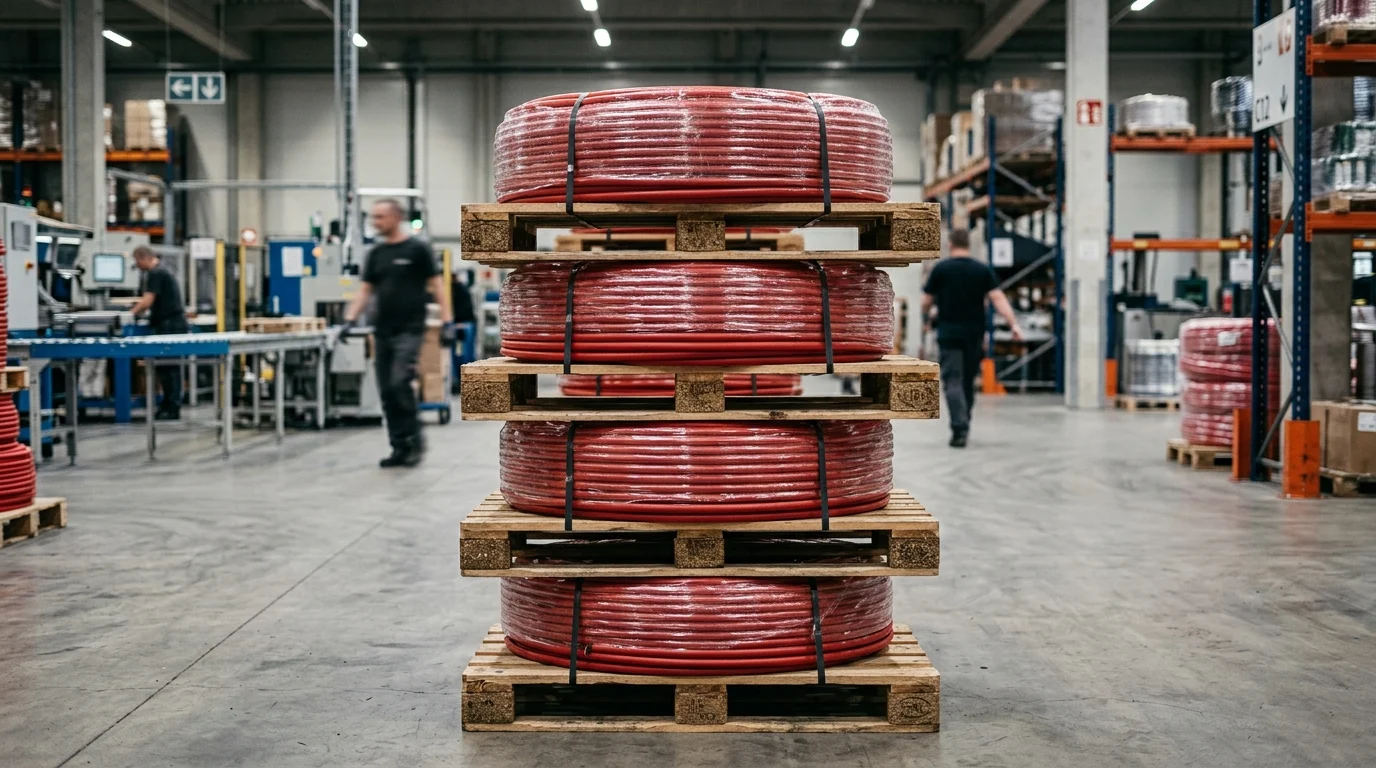
Commercial terms are just as critical as technical capabilities. Minimum Order Quantities (MOQs) for custom PE-RT orders generally start around 20,000 to 30,000 meters, which roughly equates to a 20FT container when combined with associated fittings. Standard coil lengths are typically 200m, 300m, or 500m, depending on the target market’s installation habits.
Private labeling (OEM) is a major requirement for B2B distributors. Suppliers should offer custom inkjet or laser printing on the pipe exterior, displaying the distributor’s brand, standard dimension, pressure rating, and meter marks. Packaging options usually include UV-resistant shrink wrap, and buyers should specify palletization requirements to ensure forklift compatibility and prevent crushing during container transit.
A practical supplier qualification process
A practical qualification process minimizes supply chain risk. Begin by requesting ISO 9001 and ISO 14001 certificates. Next, order a sample batch (e.g., 100 meters) and subject it to independent third-party testing for hydrostatic pressure resistance and dimensional accuracy.
Once samples are approved, conduct a factory audit—either physically or via a third-party inspection agency like SGS or TÜV. Assess the factory’s internal lab testing equipment, such as burst pressure testers and thermal cycling machines. Finally, negotiate a pilot order, establishing clear Service Level Agreements (SLAs) regarding lead times, which typically range from 25 to 35 days for initial OEM production.
Compliance, Logistics, and Risk Control
International trade in construction materials is governed by strict regulatory frameworks. Ensuring compliance and managing logistics effectively are non-negotiable for importers aiming to protect their margins and brand reputation.
A single container of non-compliant or damaged PE-RT pipe can result in severe financial losses, failed building inspections, and costly liability claims. Therefore, rigorous risk control protocols must be integrated into the procurement cycle.
Relevant standards, certifications, and test reports
To guarantee market acceptance, imported PE-RT pipes must comply with recognized international standards. The primary manufacturing standard is ISO 22391 (Plastics piping systems for hot and cold water installations — PE-RT). For underfloor heating applications, adherence to DIN 4726 is mandatory in many regions; this standard dictates that the oxygen permeability must be less than 0.10 g/(m³·d) at 40°C.
Procurement teams should demand valid, verifiable test reports from accredited laboratories. Depending on the target region, localized certifications such as CE (Europe), AENOR (Spain), SKZ (Germany), or NSF (North America for potable water) may be required. Maintaining an updated dossier of these certifications is essential for clearing customs and satisfying local building inspectors.
Shipping, storage, lead times, and packaging checks
Optimizing logistics begins with container loading strategies. A standard 40HQ container can typically hold between 300,000 and 400,000 meters of 16mm PE-RT pipe, depending on coil size and whether the cargo is palletized or floor-loaded. Floor loading maximizes volume but increases unloading labor costs at the destination warehouse.
Storage and handling require specific care. PE-RT is sensitive to prolonged ultraviolet (UV) exposure. Therefore, buyers must ensure that the manufacturer uses opaque, UV-blocking packaging film. Contracts should stipulate that pipes must be stored indoors at the factory prior to shipment. Pre-shipment inspections (PSI) should be mandated to check packaging integrity, correct labeling, and moisture exclusion before the container is sealed.
Traceability, warranty, and after-sales support
Risk mitigation extends beyond the delivery of goods. Full traceability is a critical requirement; every meter of pipe should feature a printed batch code, production date, and extrusion line identifier. In the event of a field failure, this data is vital for isolating the affected batch and determining liability.
Top-tier global suppliers stand behind their products with warranties guaranteeing a 50-year service life under specified operating conditions (e.g., 6 bar at 60°C). Distributors should also verify that the manufacturer holds robust international product liability insurance to cover potential damages resulting from manufacturing defects, thereby protecting the importer from catastrophic financial exposure.
Channel Growth Opportunities for Distributors
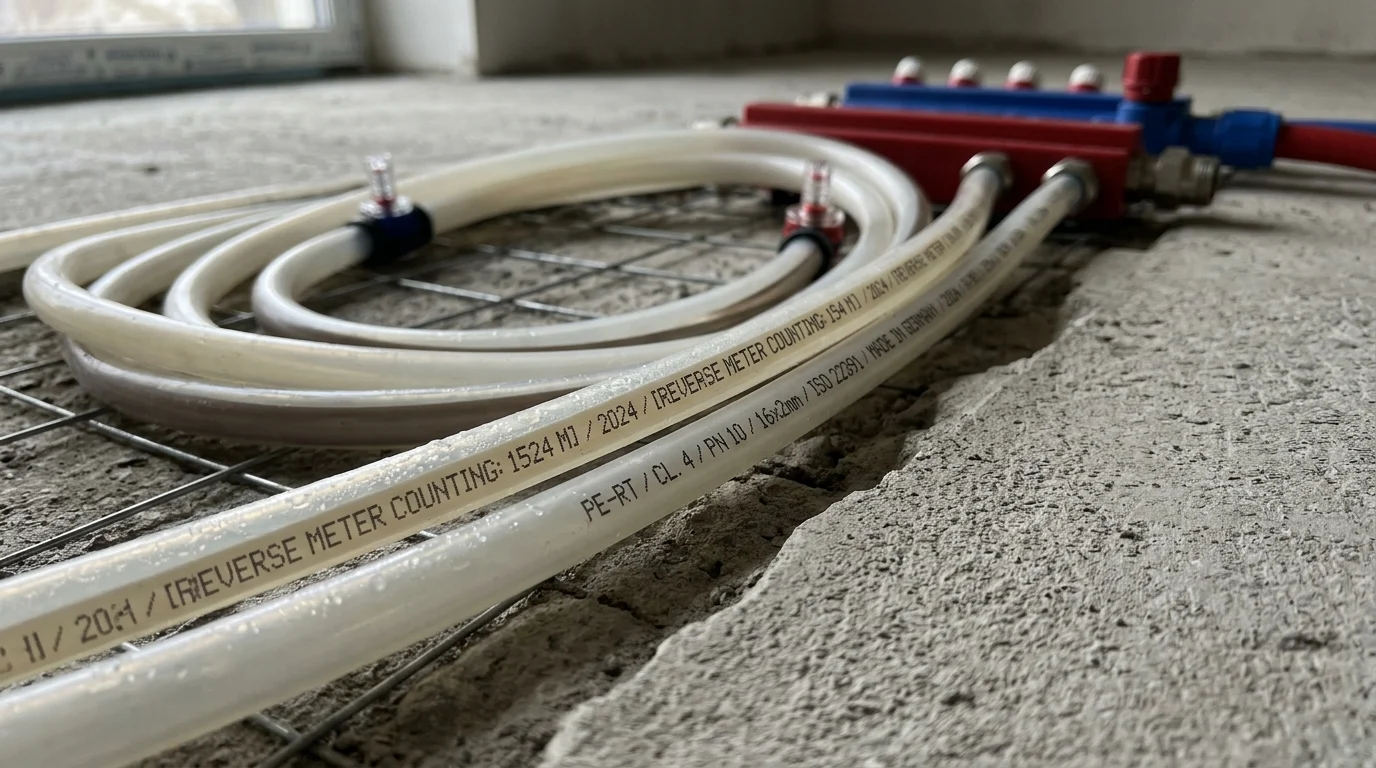
For B2B wholesalers and distributors, PE-RT piping represents more than just a commodity; it is a strategic category that can drive significant channel growth. By understanding application trends and optimizing the product mix, distributors can capture higher margins and increase customer lifetime value.
Success in this space requires moving beyond competing solely on the price per meter and instead focusing on providing comprehensive, ready-to-install system solutions.
High-potential applications and regional markets
The addressable market for PE-RT is expanding rapidly across various climatic zones. In cold-weather regions like Northern Europe and North America, high-volume applications include residential underfloor heating, commercial snow-melting systems for driveways, and industrial floor heating for logistics warehouses.
Simultaneously, emerging markets in Eastern Europe, Central Asia, and parts of South America are modernizing their residential construction standards, shifting from localized electric heating to centralized hydronic systems. Distributors who position PE-RT as a premium yet cost-effective upgrade in these developing markets can establish early dominance and secure long-term contractor loyalty.
Margin growth through product bundling
Selling PE-RT pipe in isolation yields standard wholesale margins, but bundling transforms profitability. Distributors achieve margin growth by supplying the entire hydronic ecosystem. By sourcing pipes alongside brass manifolds, plastic valves, PP compression fittings, and PPR quick-push fittings, wholesalers can offer complete “boiler-to-floor” packages.
| Product Category | Typical Standalone Gross Margin | Margin When Bundled as a System |
Key Takeaways
- Wholesale sourcing and supply-chain implications for PE-RT pipes
- Specifications, compliance, and commercial terms buyers should validate
- Actionable recommendations for distributors and procurement teams
Frequently Asked Questions
What makes PE-RT pipes popular for floor heating?
They combine flexibility, heat resistance, and lower system cost. PE-RT works well in low-temperature hydronic systems, installs quickly in long coils, and supports energy-efficient floor heating designs.
How does PE-RT compare with PEX for underfloor heating?
PE-RT is often more cost-effective and can be thermally fused, reducing fitting costs. It also offers strong flexibility for easier installation, while still meeting typical floor heating temperature requirements.
What PE-RT pipe specifications should buyers check before ordering?
Confirm size, pressure rating, temperature rating, and whether an EVOH oxygen barrier is included. For floor heating, common sizes are 16×2.0mm and 20×2.0mm, with bend radius and technical data sheets also verified.
Can PE-RT pipes be used beyond floor heating?
Yes. Depending on grade and system design, PE-RT can also be used for hot and cold water distribution, radiator connections, and snow-melting systems, helping distributors simplify inventory.
Where can global buyers source PE-RT pipes and fittings reliably?
Manufacturers like Donsen supply PE-RT pipes, fittings, and related plastic piping products for heating and plumbing projects, with export experience, multiple production bases, and application-focused product support.