Introduction
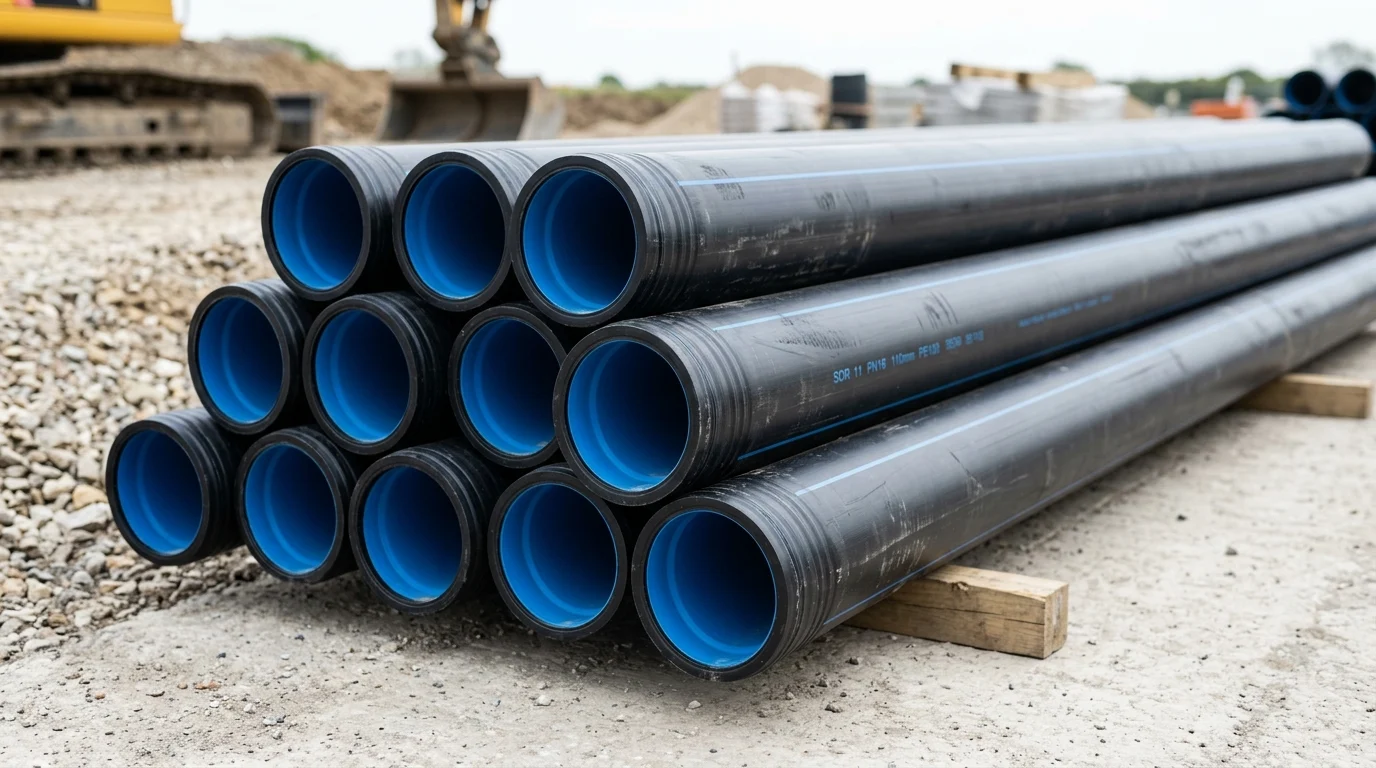
Choosing the right polyethylene pipe depends on more than diameter and cost. Material grade determines strength, crack resistance, and long-term durability, while pressure ratings indicate how the pipe will perform under sustained operating loads. Together, these factors shape where PE pipes are best used, from potable water and gas distribution to irrigation, sewer force mains, and industrial systems. This article explains the main PE material classifications, how pressure ratings are defined, and how both influence application selection, so readers can compare options more confidently and match pipe specifications to real service conditions.
Why PE Pipes Matter in Modern Utilities
Polyethylene (PE) pipes have fundamentally transformed underground infrastructure networks over the past three decades. By replacing rigid, corrosion-prone materials with flexible, high-density polymer alternatives, utility operators have mitigated systemic vulnerabilities in water and gas distribution networks.
Lifecycle Cost and Installation Speed
The economic advantage of PE piping extends far beyond the initial material procurement phase. When evaluated over a standard 50- to 100-year design life, PE pipelines yield dramatically lower lifecycle costs compared to legacy materials. The inherent flexibility of the polymer permits the use of trenchless installation techniques, such as Horizontal Directional Drilling (HDD) and pipe bursting. These methods eliminate the need for extensive open-cut excavation, routinely reducing installation costs by 20% to 30% in dense urban environments and significantly compressing project timelines.
Where PE Pipes Gain Share vs. Metal and PVC
In comparative failure analyses, PE pipelines consistently outperform traditional infrastructure materials. While cast iron and ductile iron systems frequently exhibit failure rates of 15 to 20 breaks per 100 miles annually due to soil corrosivity and ground shifts, modern PE systems average between 0.5 and 2.0 breaks per 100 miles. Unlike PVC, which can become brittle under UV exposure or extreme cold, PE maintains high impact resistance at temperatures as low as -40°C. Furthermore, PE is completely immune to tuberculation and galvanic corrosion, which steadily degrade the internal diameter and flow capacity of steel and iron pipes over their operational lifespan.
PE Pipe Material Grades Explained
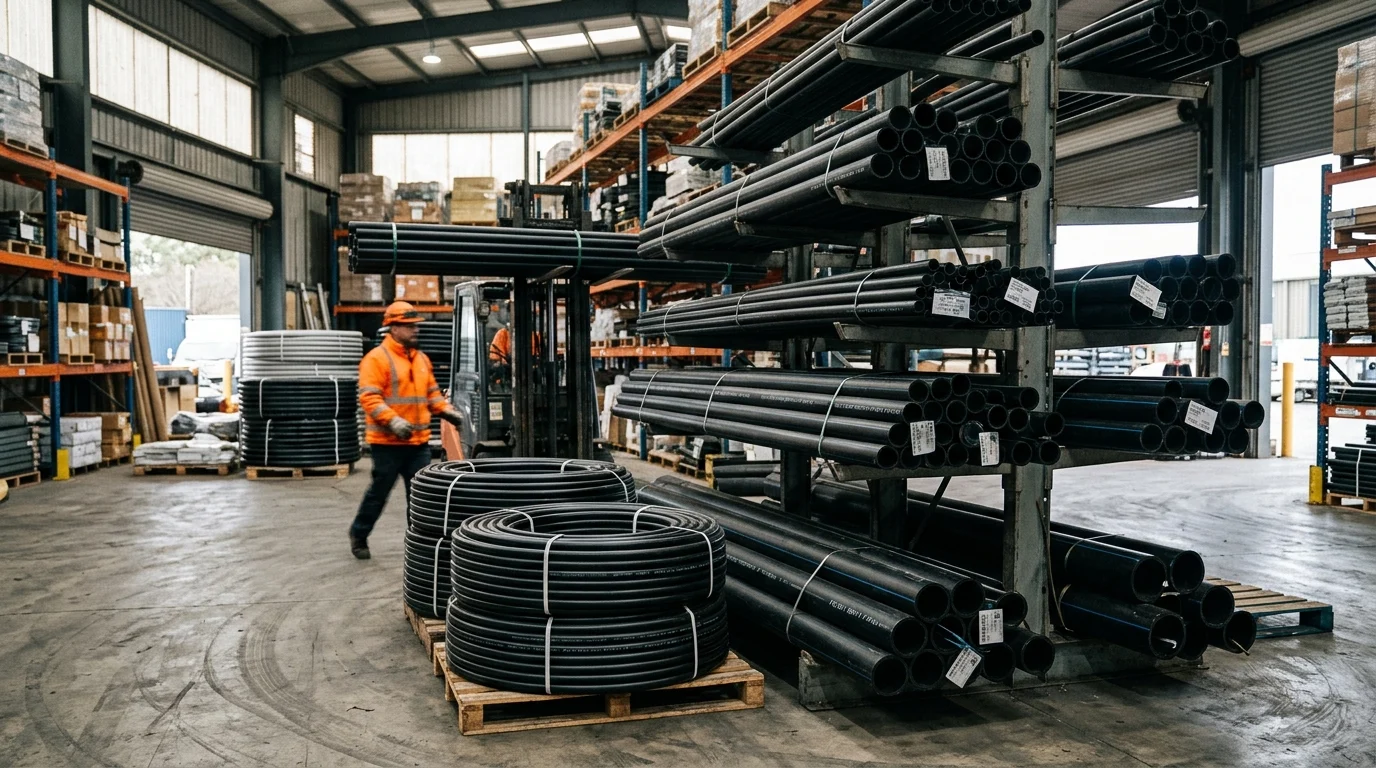
The performance characteristics of PE pipes are dictated by the underlying molecular architecture of the polymer resin. Industry standardization has categorized these resins into distinct grades based on their long-term hydrostatic strength and structural resilience under continuous stress.
Resin Classification, MRS, and Long-Term Strength
The foundational metric for PE pipe resin is the Minimum Required Strength (MRS). Established through rigorous hydrostatic pressure testing at 20°C for an extrapolated period of 50 years, the MRS classification indicates the long-term stress the material can withstand without rupturing. PE80 resins possess an MRS of 8.0 MPa, while the more advanced PE100 resins achieve an MRS of 10.0 MPa. This 25% increase in tensile strength allows PE100 pipes to operate at higher internal pressures or, conversely, to be manufactured with thinner walls for the exact same pressure rating, thereby increasing the internal flow area and optimizing hydraulic efficiency.
PE80 vs. PE100 vs. PE100-RC
The evolution from PE80 to PE100, and more recently to PE100-RC (Resistance to Crack), marks significant advancements in polymer engineering. PE100-RC specifically addresses Slow Crack Growth (SCG), a primary failure mode in buried pipes subjected to point loads like rocks or debris. Where standard PE100 requires fine sand bedding to prevent SCG, PE100-RC is engineered to withstand over 8,760 hours of accelerated notch testing, compared to just 500 hours for standard PE100.
| Material Grade | Minimum Required Strength (MRS) | Accelerated SCG Resistance | Typical Application |
|---|---|---|---|
| PE80 | 8.0 MPa | > 165 hours | Low-pressure gas, small diam. water |
| PE100 | 10.0 MPa | > 500 hours | High-pressure water mains, industrial |
| PE100-RC | 10.0 MPa | > 8,760 hours | Trenchless installation, no sand bedding |
How to Select the Right Grade
Specifying the correct material grade requires balancing hydraulic requirements with installation realities. For small-diameter service lines where extreme flexibility is paramount for maneuverability, PE80 remains highly viable. However, for transmission mains exceeding 110 mm in diameter, PE100 is the industry standard due to its superior strength-to-weight ratio. When project specifications mandate trenchless installation methods or utilize excavated native soil as backfill (eliminating imported sand bedding), engineers must specify PE100-RC to mitigate the risk of premature failure from localized stress concentrations.
Pressure Ratings, SDR, and Operating Conditions
Ensuring the structural integrity of a PE pipeline requires precise alignment between the pipe’s geometric dimensions, the material’s inherent strength, and the anticipated operational stresses of the utility network.
PN, SDR, Wall Thickness, and Diameter
The pressure capacity of a PE pipe is universally defined by its Standard Dimension Ratio (SDR), which represents the ratio of the nominal outside diameter to the nominal wall thickness. A lower SDR indicates a thicker wall and a higher pressure rating. The Nominal Pressure (PN) rating is derived from the SDR, the material’s MRS, and a design safety factor (typically C=1.25 for water systems and C=2.0 for volatile gas systems).
| SDR | Wall Thickness Category | PN Rating (PE100, C=1.25) | PN Rating (PE80, C=1.25) |
|---|---|---|---|
| SDR 11 | Heavy Wall | PN 16 (16 bar) | PN 12.5 (12.5 bar) |
| SDR 13.6 | Medium-Heavy | PN 12.5 (12.5 bar) | PN 10 (10 bar) |
| SDR 17 | Medium Wall | PN 10 (10 bar) | PN 8 (8 bar) |
| SDR 21 | Thin Wall | PN 8 (8 bar) | PN 6 (6 bar) |
Key Factors That Affect Pressure Derating
Standard PN ratings are calculated assuming a continuous operating temperature of 20°C. When PE pipes transport fluids at elevated temperatures, the polymer softens, necessitating the application of a pressure derating factor. For instance, a PE100 pipe operating at 30°C requires a derating multiplier of 0.87, and at 40°C, the factor drops to 0.74. Consequently, a PN16 rated pipe operating continuously at 40°C has a maximum allowable operating pressure of just 11.8 bar. Other derating factors must be applied for the transport of specific chemical compounds or liquid hydrocarbons, which can permeate and plasticize the PE matrix over time.
How to Match PE Pipe to Service Requirements
Matching pipe specifications to service requirements involves calculating the Maximum Allowable Operating Pressure (MAOP) while rigorously accounting for dynamic hydraulic events. Engineers must factor in surge pressures (water hammer) generated by rapid valve closures or sudden pump failures. Because PE is a viscoelastic material, it can safely absorb short-term surge pressures up to 1.5 times its nominal PN rating. However, persistent cyclic fatigue must be modeled accurately; systems subjected to high-frequency pressure fluctuations may require specifying an SDR one step lower (thicker wall) than steady-state calculations would otherwise suggest.
Applications, Joining Methods, and Compliance
The chemical and physical versatility of polyethylene allows it to be formulated and manufactured to meet the stringent regulatory and operational demands of highly diverse industrial sectors.
Application Needs Across Water, Gas, Sewer, Mining, and Irrigation
In municipal water networks, PE pipes must carry certifications such as NSF/ANSI 61 or WRAS to guarantee they do not leach volatile organic compounds into potable supplies. For natural gas distribution, pipes are typically manufactured with yellow or orange striping and must comply with standards like ASTM D2513, ensuring absolute zero-leakage performance under ground subsidence. In the mining sector, where pipelines transport highly abrasive mineral slurries, PE offers exceptional wear characteristics; empirical data demonstrates that PE can outlast steel pipe by up to 20% in specific high-velocity slurry transport applications. Agricultural irrigation systems leverage lower-pressure PE grades for their UV stability and ease of deployment across vast, uneven terrains.
PE Pipe Joining Methods Compared
The integrity of a PE pipeline is heavily reliant on the quality of its joints. Butt fusion is the most prevalent method for pipes over 90 mm in diameter, utilizing controlled heat and pressure to create a monolithic joint that is structurally stronger than the parent pipe. The cooling phase is critical, generally requiring 1 to 2 minutes of cooling time per millimeter of wall thickness before clamping pressure can be safely released. Electrofusion, which utilizes fittings with embedded heating coils, is preferred for in-trench repairs and complex tie-ins where butt fusion equipment cannot physically fit. Mechanical compression fittings are generally restricted to smaller diameter service lines (below 63 mm) due to the risk of pull-out under high longitudinal stress.
Standards, Testing, and Quality Control
Quality control in PE pipe manufacturing is governed by rigorous international standards, including ISO 4427 for water and ISO 4437 for gas applications. Compliance requires extensive batch testing at the extrusion facility. A critical quality metric is the Oxidation Induction Time (OIT), which measures the thermal stability and anti-oxidant depletion rate of the pipe. Standard specifications mandate an OIT of greater than 20 minutes when tested at 200°C. Additional mandatory tests include dimensional verification, longitudinal reversion (heat shrinkage, which must remain under 3%), and hydrostatic strength validation at elevated temperatures.
How to Choose PE Pipes
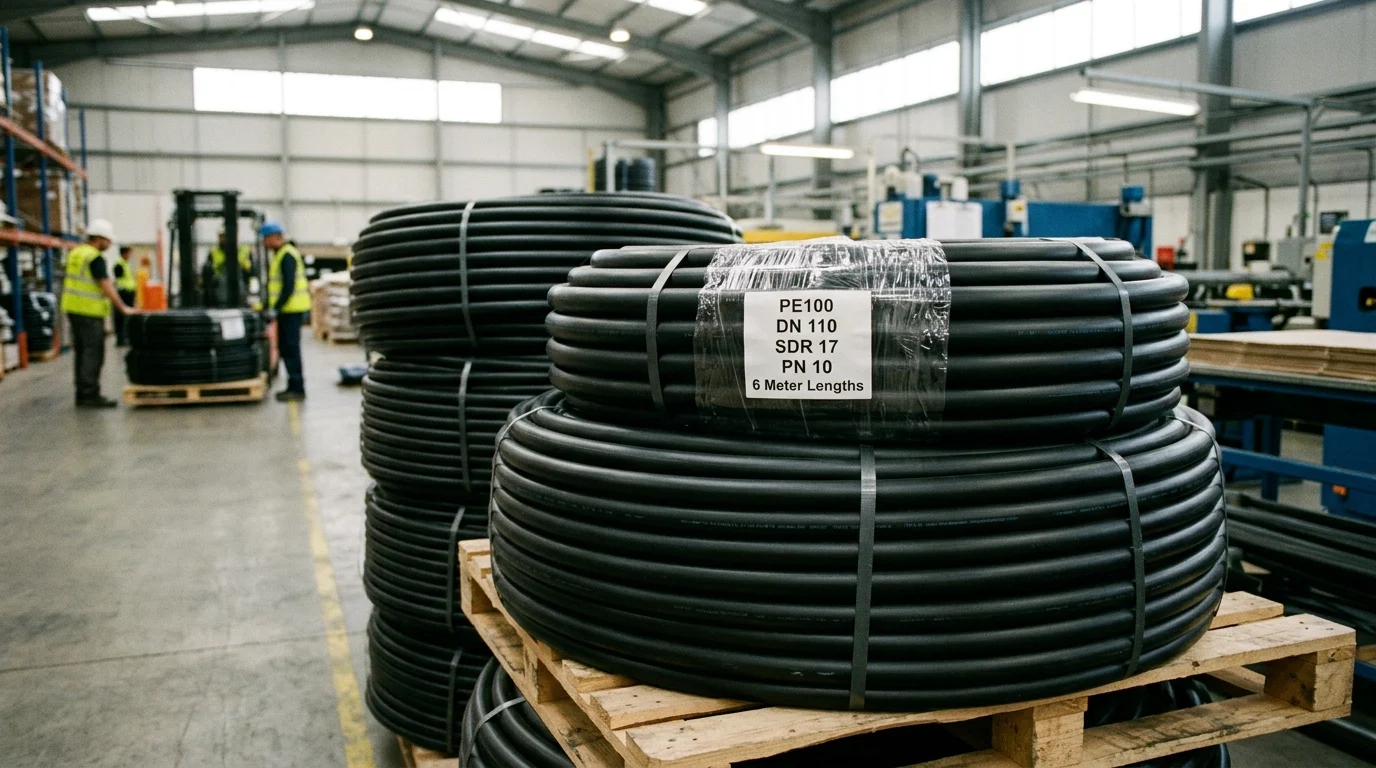
Procuring the correct PE piping system is not merely a matter of selecting a diameter and a pressure rating; it requires a comprehensive evaluation of material science, environmental conditions, and manufacturing quality controls.
Selection Criteria for Performance and Durability
When evaluating PE pipes for long-term durability, UV resistance is a non-negotiable criterion for any above-ground application. Pipes must contain between 2.0% and 2.5% well-dispersed carbon black to prevent photo-oxidative degradation from prolonged sunlight exposure. Furthermore, buyers must evaluate the resin’s resistance to Rapid Crack Propagation (RCP). In critical gas transmission lines, RCP can cause a pipeline to split over hundreds of meters in a matter of seconds. Procuring resins with documented high critical pressures (Pc) for RCP ensures these catastrophic failure modes are engineered out of the system entirely.
Procurement and Inspection Checkpoints
Effective procurement demands rigorous inspection checkpoints prior to site delivery. Buyers must verify dimensional tolerances, particularly ovality, which should strictly remain below 2% for pipes intended for butt fusion; excessive ovality leads to joint misalignment and compromised welds. Full material traceability is essential, requiring mill test certificates detailing the specific resin batch, OIT values, and hydrostatic test results. From a supply chain perspective, buyers must also account for manufacturing minimum order quantities (MOQs). While standard SDR 11 and SDR 17 water pipes are often held in stock, specialized co-extruded RC pipes or non-standard diameters frequently require MOQs exceeding 1,000 meters, which must be factored into project lead times.
Key Takeaways
- The most important conclusions and rationale for PE pipes
- Specs, compliance, and risk checks worth validating before you commit
- Practical next steps and caveats readers can apply immediately
Frequently Asked Questions
What is the difference between PE80 and PE100 pipes?
PE100 has higher long-term strength than PE80, so it can handle higher pressure or use thinner walls at the same rating. PE80 is often used for smaller, lower-pressure service lines.
When should PE100-RC be selected?
Choose PE100-RC for trenchless installation, rocky ground, or projects using native backfill instead of sand bedding. It offers much better resistance to slow crack growth under point loads.
How does SDR affect PE pipe pressure rating?
A lower SDR means a thicker wall relative to diameter, which generally gives a higher pressure rating. Always match SDR, material grade, and operating conditions during selection.
Why are PE pipes widely used for water and irrigation systems?
PE pipes resist corrosion, stay flexible, and install quickly, including trenchless methods. This makes them practical for water supply and irrigation networks that need durability and lower maintenance.
Can Donsen supply PE pipes and fittings for complete projects?
Yes. Donsen provides PE pipes, fittings, plastic valves, and related pipeline solutions for water supply, irrigation, drainage, and other application-specific systems.