Mastering CPVC Chemical Resistance for Industrial Water Systems

You need reliable solutions for aggressive fluids in industrial water systems. CPVC pipes and fittings offer superior chemical resistance, making them an excellent choice. This material’s inherent properties ensure long-term performance and safety in demanding environments. A trusted CPVC pipes and fittings manufacturer provides these durable products. When you choose an industrial CPVC piping system, you invest in robust infrastructure. Look for a chemical resistant pipe fittings supplier that guarantees quality. A reputable CPVC fittings factory China often produces high-standard components. Always select a WRAS NSF certified CPVC supplier for assured compliance and safety.
Key Takeaways
- CPVC pipes resist many harsh chemicals. This makes them good for industrial water systems.
- CPVC’s special structure helps it fight off chemical attacks. It has more chlorine atoms than PVC.
- CPVC works well in many industries. These include metal plating and wastewater treatment.
- Always check temperature and pressure limits. This keeps CPVC systems working safely.
- Look for certifications like NSF/ANSI 61. These ensure CPVC products are safe and high quality.
Understanding CPVC’s Superior Chemical Resistance for Industrial Water Systems
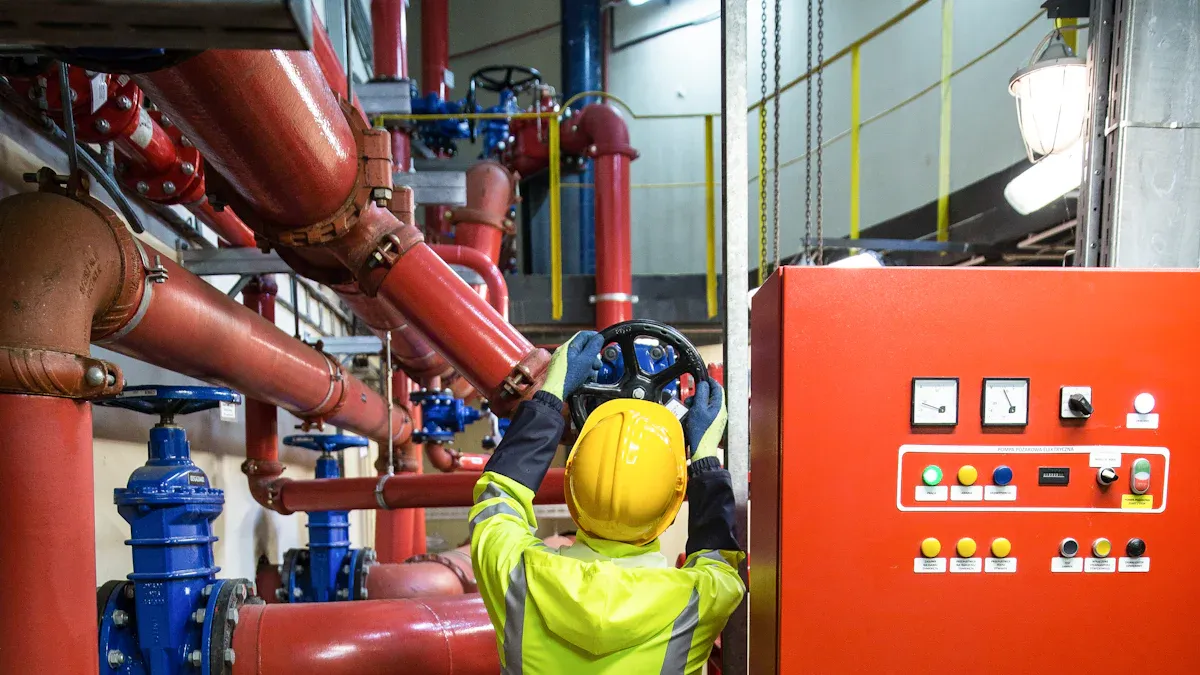
You need to understand why CPVC offers such strong chemical resistance. This knowledge helps you make informed decisions for your industrial water systems. CPVC’s unique properties make it a top choice for handling aggressive fluids.
The Science Behind CPVC’s Enhanced Chemical Inertness
CPVC’s chemical inertness comes from its molecular structure. About 40% of its carbon backbone’s bonding sites contain chlorine atoms. These large chlorine atoms act as a protective shield. They safeguard the carbon chain from chemical attack. This structure prevents aggressive chemicals from degrading the material.
The chlorination process significantly enhances CPVC’s resistance. This process increases the chlorine content from about 56% in PVC to approximately 63–69%. This higher chlorine level changes the polymer’s molecular structure. It leads to increased rigidity and reduced permeability. It also greatly improves resistance to oxidation and corrosion. The added chlorine creates a barrier. This barrier stops aggressive chemicals and disinfectants from permeating the material. Unlike other plastics, CPVC does not rely on sacrificial antioxidant additives. Its large chlorine atoms physically block oxidants and radicals. This ensures consistent resistance over time.

Key Chemical Resistance Advantages in Diverse Industrial Applications
CPVC’s chemical resistance provides significant operational advantages across many industries. You can use it in various demanding environments.
- Metal Finishing/Plating Industry: CPVC resists strong acids like sulfuric acid. It also handles high-pH caustics, even at high temperatures. This makes it a viable alternative to metal.
- Chlor-Alkali Industry: CPVC manages highly corrosive chemicals. These include sulfuric acid, sodium hydroxide, and sodium hypochlorite. You find it in steam condensate systems and chlorine drying towers.
- Wastewater Treatment: CPVC piping safely handles harsh chemicals. These include sulfuric, hydrochloric, and nitric acids. It also works with bases like caustic (NaOH).
- Pulp and Paper Industry: CPVC piping is ideal for pulp and bleaching operations. It also handles weak black liquor and green liquor.
- Food and Beverage Plants: CPVC resists corrosion and high temperatures. This makes it suitable for equipment that undergoes frequent cleaning with harsh chemicals.
Using CPVC also brings important cost savings and efficiency gains. You experience lower installation costs. Your process efficiency improves. You also see significantly reduced downtime and maintenance over the system’s lifetime. CPVC’s mechanical strength and durability minimize maintenance costs. Its lightweight nature simplifies transportation and installation. This reduces labor costs and downtime during project implementation. You also get unobstructed flow and maintained water quality. CPVC resists rust, corrosion, scaling, and biological growth.
Temperature and Pressure Considerations for Optimal Chemical Resistance
You must consider temperature and pressure for optimal chemical resistance. These factors directly influence CPVC’s performance. Higher temperatures can increase the reactivity of chemicals. This can potentially affect the material’s long-term integrity. Similarly, excessive pressure can stress the piping system.
Always consult the manufacturer’s guidelines. These guidelines provide specific temperature and pressure ratings for different chemicals. They ensure your system operates safely and effectively. You maintain the integrity of your industrial water system by adhering to these limits. This prevents premature material degradation. It also ensures the longevity of your CPVC piping.
CPVC Pipes and Fittings Manufacturer’s Guide to Chemical Compatibility
You need to select the right materials for your industrial systems. Understanding CPVC’s chemical compatibility is essential. A reliable CPVC pipes and fittings manufacturer provides detailed guides. These resources help you make informed decisions for your specific applications.
Specific Chemical Resistance for Acids, Bases, and Salts
CPVC offers strong resistance to many common industrial chemicals. For sulfuric acid applications, the quality of the CPVC compound is critical. Low-quality materials can degrade quickly. Proper processing ensures a long service life, often outlasting metal. You will find CPVC demonstrates excellent resistance to all concentrations of hydrochloric acid (HCl) within its normal operating temperature range.
However, you must exercise caution with strong bases. Exposure to sodium hydroxide (NaOH) and potassium hydroxide (KOH) can induce stress cracking in some CPVC valves. FKM seals may fail in these caustic environments. EPDM seals are often recommended for long-term success. Strong bases can also cause degradation in polymers.
CPVC, especially high-quality formulations, exhibits excellent resistance to various salt solutions. This includes brine (sodium chloride) and other corrosive salts like copper sulfate. Plastics are chemically inert to salts. This prevents corrosion and reduces scale buildup. You will find CPVC outperforms metals and other plastics in handling these solutions.
Performance in Demineralized Water and Wastewater Treatment
CPVC is highly effective in wastewater treatment processes. It is chemically inert to most mineral acids, bases, salts, and aliphatic hydrocarbons. This property provides lifetime resistance to corrosive chemicals and water, even at high temperatures. This makes it suitable for aggressive chemicals used in these processes.
You can use CPVC with common wastewater treatment chemicals. Consider these maximum temperatures:
- Chlorine Dioxide: 200°F (93°C)
- Ozone (Aqueous): 200°F (93°C)
- Sodium Hypochlorite: 200°F (93°C)
Handling Oxidizing Agents and Corrosive Industrial Fluids
CPVC exhibits strong resistance to many oxidizing agents. It is particularly effective with oxidizers and sodium hypochlorite solutions. A trusted CPVC pipes and fittings manufacturer confirms its suitability for these demanding fluids.
For hydrogen peroxide, CPVC performs well:
| Chemical | Ambient Temp (73°F) | Max Temp |
|---|---|---|
| Hydrogen Peroxide, 30% | Recommended | 180° F (82° C) |
| Hydrogen Peroxide, 50% | Recommended | 120° F (48° C) |
You can rely on CPVC for many corrosive industrial fluids. Always consult the specific chemical resistance chart from your CPVC pipes and fittings manufacturer. This ensures optimal performance and safety.
Essential Standards and Certifications for Industrial CPVC Systems
You must ensure the reliability and safety of your industrial CPVC systems. Adhering to essential standards and certifications is crucial. These guidelines guarantee product quality and performance. They also ensure compliance with legal and industry requirements.
International and National Standards Governing CPVC Manufacturing
You rely on robust standards for CPVC manufacturing. These standards ensure consistent quality and performance. Several international and national bodies establish these critical benchmarks.
- ASTM D1784 defines properties for plastic piping materials, including CPVC. It sets benchmarks for material performance in pressure applications.
- ASTM F441/F441M specifies requirements for CPVC pipes and fittings. It covers dimensions, appearance, and physical characteristics. This ensures consistency and reliability.
- ASTM F493 addresses adhesives and sealants for CPVC piping. It sets performance requirements for sealing integrity and connection durability.
- ISO 727 guides the design, material selection, and performance testing of CPVC piping systems. This ensures consistency across international borders.
- NSF/ANSI 61 focuses on the safety and health impacts of materials in drinking water systems. It ensures CPVC products suit potable water applications.
- ASTM F442 specifies requirements for CPVC plastic piping systems. It includes material specifications, dimensional standards, and performance testing for integrity and reliability.
- DIN STANDARD establishes guidelines for CPVC piping systems. It covers material specifications, dimensions, testing methods, and quality assurance.
- ASTM D2846 specifically addresses CPVC piping systems for hot and cold water distribution. It provides guidelines for performance, reliability, and safety.
National standards bodies also regulate CPVC product quality. You find these in major industrial countries.
- Saudi Arabian Standard Organization (SASO)
- ASTM International
- NSF International
- Kiwa
- Water Regulations Advisory Scheme (WRAS) (UK)
- British Standards (BSi) (UK)
- EN ISO 15877: Plastics piping systems for hot and cold water installations – Chlorinated poly(vinyl chloride) (PVC-C).
In North America, the National Fire Protection Association (NFPA) sets rigorous codes for fire sprinkler systems. CPVC must comply with these codes. ASTM International material standards are also strictly adhered to. This solidifies North America’s position in the CPVC market.
Other agencies also grant certifications. They often reference results from NSF/ANSI testing.
- National Sanitation Foundation Int’l (NSF) and American National Standards Institute (ANSI) are globally recognized. They set public health, safety, and strict industry standards for materials and applications. This includes CPVC pipes (NSF/ANSI 14 and NSF/ANSI 61 for potable water).
- ASME, ASSE, ASTM, AWWA, CAS, DIN, IAPM, ISO, UL are other agencies.
- ISO, ASTM, UL are global standards bodies. They establish additional criteria for CPVC pipe and fittings beyond potable-water requirements. They cover aspects like mechanical performance, long-term pressure behavior, and material classification.
Importance of Third-Party Certifications for Product Assurance
You gain significant advantages from third-party certifications. These certifications provide product assurance for CPVC pipes and fittings. They ensure quality, safety, and consistent performance.
- Potable Water Systems: NSF/ANSI 61 certification verifies suitability for drinking water applications. This is a requirement by many governmental agencies. It ensures products in contact with drinking water do not leach contaminants.
- Fire Sprinkler Systems: UL 142 approval is important for CPVC pipes and fittings in fire sprinkler systems. Certifications like UL 1821 and NFPA 13 are also essential for industrial fire sprinkler systems.
- Surface Burning Characteristics: UL 723/ASTM E84 certification (25/50 flame spread/smoke developed index) is crucial for materials in return air plenums. It indicates fire safety performance.
- Product Differentiation: Certifications help distinguish between different CPVC products. Not all CPVC piping offers the same hydrostatic pressure ratings or cell classifications.
- Guaranteed Quality and Compliance: Third-party certifications ensure CPVC fittings meet industry regulations and quality standards.
These certifications also ensure consistent quality and performance over time.
- NSF 61 Certification ensures the product is safe for installation in potable water systems. It validates its safety for drinking water.
- KIWA Water Research Certification confirms compliance with assessments of microbial growth potential. This applies to materials in contact with treated water, ensuring hygiene over time.
- KIMAB Certification highlights adherence to advanced material research standards. It demonstrates robustness and resistance to external factors. This contributes to the longevity and reliability of plumbing systems.
- ISO Certification reflects a commitment to international quality norms. It covers quality management systems. This ensures consistent meeting of customer and regulatory requirements.
- BIS (IS 15778:2007) Certification defines requirements, test methods, and marking for CPVC pipes. This applies to hot and cold water distribution. It assures consumers of safety, durability, and quality in water supply systems up to 82°C.
- GRIHA, IGBC Green Pro, and GEM ASSOCHAM Certifications emphasize the product’s contribution to sustainable and eco-friendly building practices. They align with green building parameters, reduced environmental impact, and enhanced energy efficiency. This indicates long-term environmental performance.
Adherence to Local Building Codes and Industry Regulations
You must navigate diverse regional and national regulatory requirements. Manufacturers ensure compliance for CPVC products. They develop comprehensive strategies to meet these varied demands.
Manufacturers develop a comprehensive international compliance database. This guides global product specifications. This is especially important when expanding into new markets where NSF certification alone may not suffice.
Consider these requirements:
- North American Requirements:
- NSF/ANSI 61 serves as the baseline health effect standard.
- Plumbing codes (UPC, IPC) require NSF certification.
- State-specific additional requirements exist, such as California’s Proposition 65.
- CSA B137.6 in Canada complements NSF standards.
- European Union Regulations:
- The KTW-BWGL certificate is required in Germany (BAM Federal Institute).
- WRAS approval is necessary in the United Kingdom.
- ACS certification applies in France.
- Pan-European acceptance of NSF occurs in some applications.
- Asian Market Approvals:
- China’s GB/T 17219 standard often has NSF recognition.
- Japan’s JIS standards require JWWA certification.
- Singapore’s PUB requirements accept NSF.
- India’s BIS certification aligns with NSF.
Manufacturers also maintain rigorous documentation.
- They keep current certification copies for each market.
- They provide translations of key certification elements.
- They keep test reports accessible for authorities.
- They update documentation when standards change.
A comprehensive testing protocol further ensures compliance.
- Migration Testing: This evaluates chemical leaching. Manufacturers immerse CPVC samples in test waters with different pH levels (5.0, 7.0, 9.0) and temperatures (23°C, 50°C, 70°C) for specified periods (24-72 hours). They then analyze for regulated contaminants.
- Material Formulation Review: Manufacturers disclose complete formulations. This includes base resin, stabilizer systems, impact modifiers, processing aids, lubricants, colorants, and potential reaction products.
- Performance Verification Testing:
- Hydrostatic Strength Testing: This includes short-term burst pressure determination, long-term pressure testing (1000+ hours), temperature resistance verification, and cyclic pressure testing for fatigue resistance.
- Accelerated Aging Studies: This involves high-temperature exposure tests, UV resistance evaluation, chemical resistance verification, and joint integrity under thermal cycling.
Quality Assurance: What a CPVC Pipes and Fittings Manufacturer Guarantees
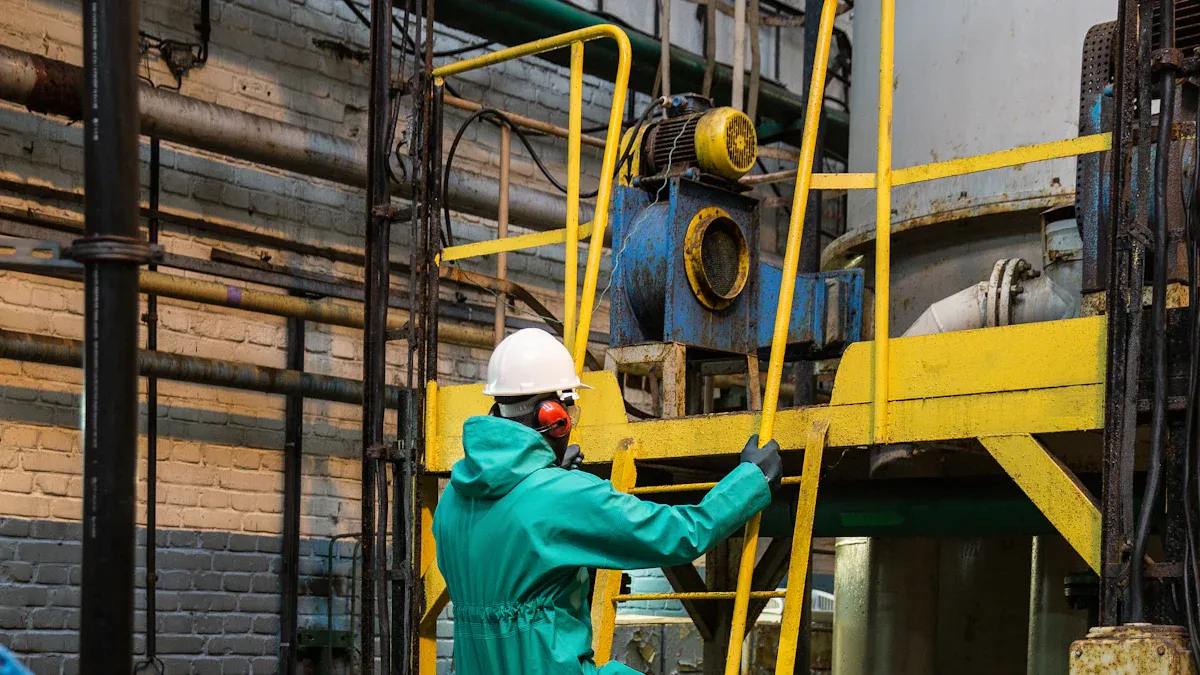
You demand reliability and safety from your industrial water systems. A reputable CPVC pipes and fittings manufacturer ensures these critical aspects through rigorous quality assurance. They guarantee their products meet stringent standards, providing you with confidence in your infrastructure.
Material Specifications and Performance Criteria (e.g., ASTM F442)
You rely on precise material specifications for consistent performance. Standards like ASTM F442 define the requirements for CPVC plastic piping systems. This specification covers material composition, dimensional tolerances, and performance testing. It ensures the CPVC you receive possesses the necessary strength and durability for industrial applications. A dedicated CPVC pipes and fittings manufacturer adheres strictly to these criteria. They guarantee their products withstand the demands of your operating environment. This commitment to specifications means you get a product engineered for long-term success.
Health and Safety Standards for Potable Water Systems (e.g., NSF/ANSI 61)
You need assurance that your potable water systems are safe. Health and safety standards, such as NSF/ANSI 61, are paramount. These certifications confirm that CPVC products do not leach harmful contaminants into drinking water.
| Standard | Purpose | Testing Focus | Required for Drinking Water? |
|---|---|---|---|
| NSF/ANSI 61 | Health Effects | Contaminant leaching | Yes |
| NSF/ANSI 14 | Material Performance | Physical properties, dimensions | Yes |
| NSF/ANSI 372 | Lead Content | Lead content verification | Yes (in many jurisdictions) |
| NSF PW-1 | Comprehensive | Combined health & performance | Yes (alternative to 61 & 14) |
Manufacturers conduct extensive testing to meet these standards.
- Extraction Testing Process: CPVC samples are exposed to different water types (high-purity, aggressive, and air exposure) for specific periods at controlled temperatures. This simulates real-world conditions.
- Contaminant Analysis: After extraction, water samples are analyzed for various contaminants. These include volatile organic compounds (VOCs), semi-volatile organic compounds (plasticizers, stabilizers), and metals (lead, cadmium, mercury). Sophisticated equipment like gas chromatographs and mass spectrometers perform this analysis.
- Long-Term Performance Testing: This involves accelerated aging tests, heat aging, and UV exposure testing. Manufacturers also test multiple production batches to ensure consistent quality and compliance over time.
Testing Protocols for Industrial Process Piping Applications
You require robust testing for industrial process piping. Manufacturers implement comprehensive protocols to ensure CPVC performs reliably in demanding industrial settings. These tests go beyond basic material specifications. They include pressure cycle testing, chemical resistance evaluations under various temperatures, and impact resistance assessments. A diligent CPVC pipes and fittings manufacturer verifies product integrity through these rigorous procedures. This ensures the piping system maintains its performance and safety, even with aggressive fluids and fluctuating conditions.
Navigating Export Compliance for CPVC Pipes & Fittings
You must understand export compliance when you ship CPVC pipes and fittings internationally. This ensures smooth global trade operations. Navigating these regulations requires careful attention to detail.
Understanding Harmonized System (HS) Codes for Global Trade
You use Harmonized System (HS) codes to classify products for international trade. These codes are a standardized numerical method. They help customs authorities worldwide identify products. Correctly assigning HS codes prevents delays and ensures proper tariffs apply. You must accurately classify your CPVC products. This streamlines customs clearance and avoids potential penalties.
Required Documentation for International Shipments
You need specific documentation for international shipments. This ensures your CPVC products reach their destination without issues. Manufacturers often require specific information on export compliance forms. They need these forms and approvals before shipping products internationally. For example, some manufacturers necessitate collecting information to fill out an export compliance form. They then submit this form for approval. This approval process typically takes 3 to 5 business days.
For international shipments, specific documentation like certificates of origin or material safety data sheets are not explicitly mentioned as required for CPVC products themselves. However, certain products, such as adhesives and resins, may be hazardous. For these, you should refer to the Safety Data Sheets. Additionally, IPPC Pallets & Crates are often required for international orders. You also prepare necessary documents such as technical datasheets, certification documents, and shipping documents. These facilitate the export process.
Compliance with Destination Country Regulations and Standards
You must comply with the specific import regulations of each destination country. Manufacturers ensure CPVC material composition complies with international standards like ASTM D1785 and ISO 4422. A Global Trade Compliance team helps develop, implement, and enforce policies. This team ensures adherence to US and local import regulatory requirements. They also identify ‘dual use’ items that may require export licenses to specific countries. This team adheres to destination controls, including economic sanctions against certain nations. For example, Indian PVC pipe manufacturers must adhere to Bureau of Indian Standards (BIS) like IS 4985:2016 and IS 9537:1983. They also comply with the importing nation’s regulations and standards, such as ASTM or ISO standards.
Global Reach: A CPVC Pipes and Fittings Manufacturer’s Export Checklist
You want to expand your market globally. Exporting CPVC pipes and fittings requires careful planning. You must navigate international trade rules. This checklist helps you ensure a smooth export process.
Researching Import Regulations and Product Approvals
You must understand import regulations for each target country. Regulations for CPVC pipes and fittings vary by country. Various agencies govern these rules. These include food safety, environmental, or health authorities. Compliance requirements encompass aspects such as labeling, usage limits, and sourcing guidelines. Adherence to international standards is crucial for successful market entry. Obtaining international standards certifications, like ASTM or ISO, enhances market credibility. This also facilitates access to global markets. You ensure your products meet local requirements.
Leveraging Trade Agreements and Understanding Tariffs
You can gain a competitive edge by leveraging trade agreements. These agreements reduce or eliminate tariffs. This makes your CPVC products more affordable for international buyers. You must understand the specific tariffs applied to CPVC pipes and fittings. Researching these costs helps you price your products competitively. You also avoid unexpected expenses. A knowledgeable CPVC pipes and fittings manufacturer often has expertise in this area.
Ensuring Proper Labeling and Environmental Compliance
You must ensure your products have proper labeling. Each country has specific labeling requirements. These include language, content, and format. Incorrect labeling can lead to customs delays or rejection. You also need to comply with environmental regulations. Many countries have strict rules about product materials and manufacturing processes. You demonstrate your commitment to sustainability. This helps you build trust with international partners.
You gain unmatched chemical resistance with CPVC pipes and fittings. This ensures your industrial water systems remain strong and durable. Adhering to strict industry standards and meticulous export compliance is vital. This allows for successful global deployment. By understanding these critical aspects, you confidently select and implement CPVC solutions. You build robust and reliable water infrastructure for your operations.
FAQ
What makes CPVC more chemically resistant than PVC?
CPVC contains more chlorine atoms than PVC. These extra atoms shield the polymer’s carbon chain. This structure prevents chemical attack. It makes CPVC more resistant to aggressive fluids and higher temperatures.
Can CPVC handle all types of industrial chemicals?
CPVC resists many industrial chemicals. This includes acids, bases, and salts. However, you must always check specific chemical compatibility charts. Some strong oxidizing agents or solvents may require caution.
How do temperature and pressure impact CPVC’s chemical resistance?
Higher temperatures can increase chemical reactivity. This affects CPVC’s long-term integrity. Excessive pressure also stresses the system. Always follow manufacturer guidelines for temperature and pressure limits. This ensures optimal performance.
What key certifications ensure CPVC product quality?
Look for certifications like NSF/ANSI 61 for potable water safety. UL 142 or NFPA 13 are important for fire sprinkler systems. ASTM standards ensure material specifications. These certifications guarantee product quality and compliance.
Is CPVC safe for drinking water systems?
Yes, CPVC is safe for drinking water systems. Certifications like NSF/ANSI 61 confirm this. These standards ensure CPVC products do not leach harmful contaminants. They meet strict health and safety requirements.