Commercial Case for PP-R Piping
Polypropylene Random Copolymer (PP-R) has systematically displaced legacy metallic piping in commercial and industrial plumbing, particularly for demanding hot water distribution. Engineered to withstand sustained elevated temperatures and aggressive water chemistry, PP-R offers a unique combination of chemical inertness, high mechanical strength, and thermal efficiency. The transition from traditional copper or galvanized steel to advanced thermoplastic solutions is primarily driven by the need to eliminate scaling, mitigate corrosion, and reduce long-term maintenance liabilities in large-scale building projects.
For facility managers, mechanical engineers, and procurement specialists, specifying the correct PP-R system involves navigating a matrix of material grades, pressure ratings, and architectural configurations. The commercial viability of PP-R piping hinges not only on its favorable initial material costs but also on its extended lifecycle. When correctly specified and installed, commercial PP-R systems drastically lower the total cost of ownership while meeting strict modern building codes for energy efficiency and potable water safety.
Hot Water System Requirements
Commercial and institutional hot water systems operate under punishing conditions that rapidly degrade inferior materials. A standard commercial domestic hot water (DHW) return system often requires continuous circulation at temperatures between 60°C and 65°C (140°F to 149°F) to prevent Legionella proliferation, with periodic thermal shock treatments pushing temperatures up to 70°C or even 80°C. Standard piping materials face accelerated oxidation and pitting under these constant high-temperature, high-oxygen environments.
PP-R is explicitly engineered to handle these thermal loads without structural degradation. Under standard operating conditions of 70°C and a continuous internal pressure of 10 bar (145 psi), premium PP-R piping is rated for a minimum functional lifespan of 50 years. Furthermore, the material can safely tolerate short-term malfunction temperatures peaking at 95°C (203°F) without catastrophic failure. Unlike metallic pipes, PP-R does not react with dissolved minerals or chlorine derivatives typically found in municipal water supplies, ensuring that the internal bore remains smooth and free of flow-restricting scale buildup over its entire operational life.
Performance and Installation Benefits
The most distinct advantage of PP-R piping lies in its joining methodology: heat fusion welding. By uniformly heating the exterior of the pipe and the interior of the fitting, the polymer chains intermingle, creating a monolithic joint upon cooling. This completely eliminates the need for mechanical connections, solder, fluxes, or chemical solvents. Consequently, fusion joints achieve the exact same structural integrity and pressure rating as the pipe itself, eliminating the weak points inherent in threaded or glued systems.
From a labor perspective, the installation of PP-R can yield significant time savings. Utilizing automated or semi-automated socket and butt fusion equipment, skilled contractors can execute joints up to 30% to 50% faster than comparable copper brazing or steel welding processes. Additionally, PP-R is exceptionally lightweight—with a density of approximately 0.90 g/cm³, it is roughly one-ninth the weight of copper. This reduced weight lowers shipping costs, minimizes job site fatigue, and requires less heavy-lifting equipment for large-diameter risers. Finally, the theft value of PP-R is virtually zero, eliminating the site security risks commonly associated with bulk copper storage.
PP-R Materials and Specification Basics
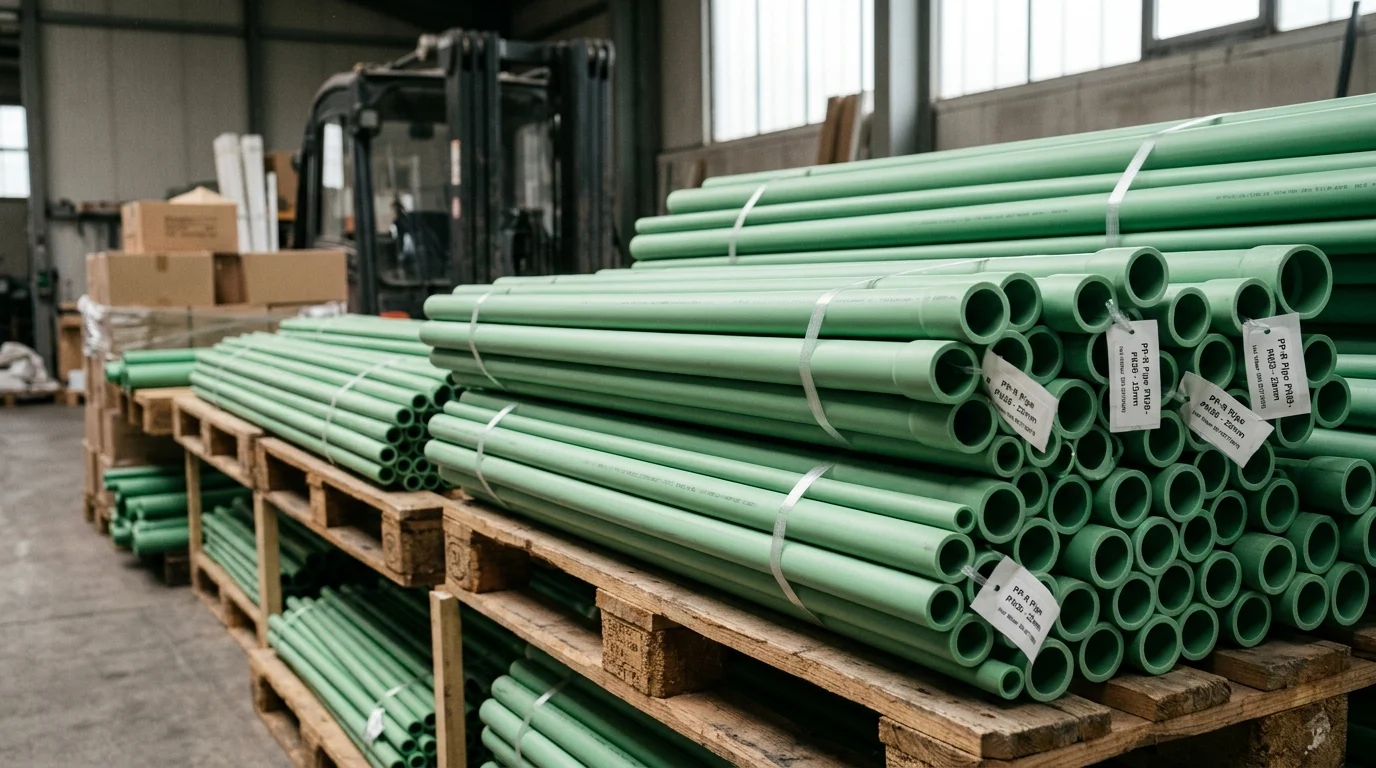
Procuring the correct thermoplastic system requires a precise understanding of polymer classifications, dimensional ratios, and auxiliary components. PP-R is not a monolithic product category; it encompasses several generations of polymer science and composite architectures designed for specific thermal and mechanical loads.
PP-R, PP-RCT, and Multilayer Pipe Types
Standard PP-R (often designated as Type 3 polypropylene) is the baseline material, featuring a random distribution of ethylene molecules within the polypropylene chain to enhance impact strength and flexibility. However, modern commercial applications increasingly rely on PP-RCT (Polypropylene Random Copolymer with modified Crystallinity and Temperature resistance, or Type 4). PP-RCT features an advanced crystalline structure that yields higher pressure ratings at elevated temperatures, allowing engineers to specify thinner pipe walls for the same operating conditions, thereby increasing internal flow capacity by up to 17%.
For hot water systems, multilayer composite pipes are highly recommended. These pipes typically feature a middle layer reinforced with glass fibers (faser composite) or an integrated aluminum foil barrier. The fiberglass-reinforced architecture is particularly dominant in hot water risers and distribution lines because it restricts the natural thermal expansion of the plastic by up to 75% compared to monolayer PP-R. The aluminum-layered variants serve a dual purpose: they restrict thermal expansion while also providing a 100% oxygen barrier, which is critical for closed-loop hydronic heating applications to prevent the corrosion of ferrous boiler components.
Pressure Ratings, Temperature Limits, and SDR Classes
The pressure-bearing capacity of PP-R pipes is defined by the Standard Dimension Ratio (SDR), which is the ratio of the pipe’s nominal outside diameter to its minimum wall thickness. A lower SDR indicates a thicker wall and a higher pressure rating. In commercial procurement, specifying the correct SDR is the most critical safeguard against premature system rupture under thermal load.
For cold water applications, SDR 11 (PN 10) is generally sufficient. However, for continuous commercial hot water delivery, engineers must specify SDR 7.4 (PN 16) or SDR 6 (PN 20) to maintain adequate hydrostatic strength at 70°C. When utilizing advanced PP-RCT materials, an SDR 9 pipe can often safely replace an SDR 7.4 standard PP-R pipe, yielding material cost savings and improved flow dynamics.
| Application | Recommended Material | Standard Dimension Ratio (SDR) | Nominal Pressure (PN) at 20°C | Continuous Temp Limit |
|---|---|---|---|---|
| Chilled / Cold Water | Standard PP-R | SDR 11 | PN 10 | 20°C – 40°C |
| DHW Distribution | Fiber-Reinforced PP-R | SDR 7.4 | PN 16 | 70°C |
| High-Temp / High-Pressure | PP-RCT (Faser) | SDR 9 or SDR 7.4 | PN 16 / PN 20 | 80°C |
| Hydronic Heating | Aluminum-Composite PP-R | SDR 6 | PN 20 | 80°C |
Fittings, Valves, and Transition Adapters
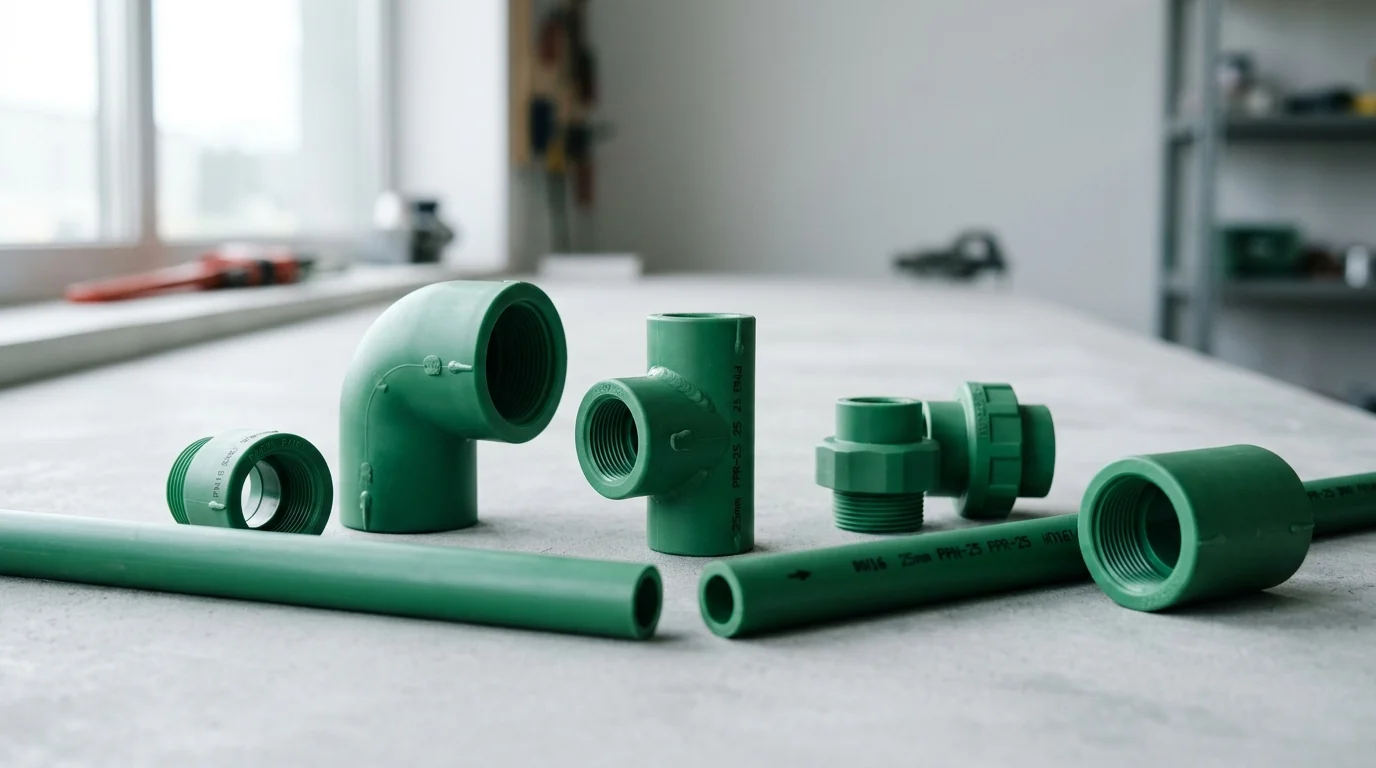
A complete PP-R ecosystem relies on a vast catalog of engineered fittings, ranging from simple elbows and tees to complex manifold assemblies. For pipe diameters up to 110mm or 125mm, socket fusion is the standard joining method. For larger diameters—often reaching up to 630mm for central plant distribution—butt fusion or electrofusion is required to ensure consistent joint penetration.
Transitioning from PP-R to metallic fixtures, pumps, or legacy piping requires specialized transition adapters. These adapters feature a thermoplastic fusion socket on one end and a mechanically locked, threaded metallic insert on the other. High-quality transition fittings utilize Dezincification Resistant (DZR) brass or 316L stainless steel inserts. Procurement teams must scrutinize these components, as the interface between the polymer and the metal is a common failure point if the manufacturer uses low-grade brass or relies on simple friction fits rather than deep, anti-rotation mechanical locking designs.
Technical Comparison Criteria
Evaluating PP-R against alternative piping materials requires a rigorous comparison of thermal dynamics, mechanical properties, and long-term behavioral characteristics. Hot water systems introduce constant thermal cycling, meaning the physical behavior of the pipe under varying temperatures dictates the overall system design, from the spacing of hangers to the routing of expansion loops.
PP-R vs Alternative Piping Materials
When compared to traditional copper, PP-R offers superior thermal retention. Standard PP-R has a thermal conductivity of approximately 0.24 W/mK, acting as a natural insulator. In contrast, copper has a thermal conductivity of roughly 400 W/mK, leading to rapid heat loss and requiring significantly thicker external insulation to meet energy codes. Against CPVC (Chlorinated Polyvinyl Chloride), PP-R provides far superior impact resistance, particularly at lower ambient temperatures where CPVC becomes notoriously brittle and prone to shattering.
Cross-linked Polyethylene (PEX) is another common competitor. While PEX is highly flexible and excellent for small-diameter residential applications, it is generally limited to diameters under 50mm (2 inches) and requires mechanical crimp or expansion fittings that reduce the internal bore and restrict flow. PP-R, available in diameters up to 630mm, is scaled for heavy commercial use, and its fusion joints maintain 100% of the pipe’s internal diameter, ensuring minimal pressure drop across the system.
| Property | PP-R (Fiber-Reinforced) | Copper (Type L) | CPVC (Schedule 80) | PEX (Type A) |
|---|---|---|---|---|
| Thermal Conductivity | 0.24 W/mK | 400 W/mK | 0.14 W/mK | 0.38 W/mK |
| Joining Method | Heat Fusion | Brazing/Press | Solvent Cement | Mechanical/Crimp |
| Max Commercial Dia. | 630mm | 200mm+ | 600mm | 75mm (Typical) |
| Scaling Resistance | Excellent | Poor | Good | Excellent |
Thermal Expansion and System Design
The most significant engineering challenge when specifying thermoplastics for hot water is managing linear thermal expansion. All polymers expand and contract with temperature fluctuations much more than metals. Standard monolayer PP-R has a high coefficient of linear expansion, typically around 0.15 mm/mK. In a 50-meter run subjected to a 50°C temperature increase, a standard PP-R pipe will expand by a massive 375mm.
This is precisely why fiber-reinforced (faser) PP-R is mandated for commercial hot water systems. The integration of extruded glass fibers reduces the linear expansion coefficient to approximately 0.035 mm/mK. Under the exact same 50-meter, 50°C delta scenario, the reinforced pipe will only expand by 87.5mm. This dramatic reduction simplifies system design, reduces the footprint required for expansion management, and mitigates the risk of pipes bowing or buckling within wall cavities.
Insulation, Supports, Expansion Loops, and Routing
Proper routing and support are critical to the structural integrity of a PP-R hot water system. While the intrinsic thermal resistance of PP-R (0.24 W/mK) reduces the thickness of elastomeric or fiberglass insulation required by ASHRAE or local energy codes, insulation is still mandatory to prevent energy loss and protect workers from burn hazards on high-temperature lines.
Support bracket spacing must be strictly calculated based on the pipe diameter, SDR, and operating temperature. Because heated thermoplastics soften slightly, improper spacing leads to sagging. For a 50mm (2-inch) fiber-reinforced PP-R pipe operating at 70°C, support brackets are typically required every 1.5 to 1.8 meters. If standard monolayer PP-R were used, that spacing would need to shrink to roughly 1.0 meter, drastically increasing hardware and labor costs.
To accommodate the calculated thermal expansion, engineers must design specific directional changes, L-bends, or U-shaped expansion loops. Fixed points (anchors) and sliding points (guides) dictate the direction of the thermal movement, forcing the expansion into the engineered loops where the intrinsic flexibility of the polymer safely absorbs the stress without transferring damaging shear forces to the fusion joints or building structure.
Quality, Compliance, and Supplier Verification
The global proliferation of PP-R manufacturing has led to severe disparities in product quality. Because the heat fusion process relies on strict molecular compatibility, mixing substandard pipes with premium fittings—or utilizing poorly extruded materials—can result in catastrophic system failures. Rigorous supplier verification and adherence to international compliance frameworks are non-negotiable for institutional procurement.
Standards, Certifications, and Test Reports
Legitimate PP-R systems must be tested and certified against recognized global standards. The primary manufacturing and dimensional standards include EN ISO 15874, DIN 8077/8078 (German standards widely adopted globally), and ASTM F2389 for North American markets. These standards dictate the minimum hydrostatic strength, dimensional tolerances, and thermal stability of the pipes.
For hot water systems interacting with human consumption (DHW), hygienic certifications are equally critical. Procurement teams must demand valid, up-to-date certificates from independent testing laboratories such as NSF International (NSF/ANSI 14 and 61), WRAS (UK), DVGW (Germany), or SKZ. These certifications guarantee that the polymer matrix and colorants do not leach volatile organic compounds (VOCs), heavy metals, or toxic microplastics into the potable water supply under high-temperature conditions.
Raw Material Traceability
The mechanical integrity of a PP-R pipe is fundamentally tied to the purity of its raw materials. Industry-leading manufacturers exclusively utilize virgin, pre-colored PP-R granules from elite petrochemical suppliers such as Borealis, Hyosung, or SABIC. These premium resins guarantee a consistent Melt Flow Index (MFI), ensuring that pipes and fittings melt uniformly during the fusion process.
A critical checkpoint in supplier verification is the manufacturer’s policy on regrind or recycled material. While some standards allow for a small percentage of clean, in-house regrind, premium commercial hot water specifications should strictly mandate < 5% regrind, with many top-tier manufacturers guaranteeing 0% regrind in their high-pressure hot water lines. Contaminated or highly degraded recycled plastics introduce microscopic stress concentrators into the pipe wall, drastically reducing the Hydrostatic Design Basis (HDB) and shortening the lifespan of the system.
Low-Cost Sourcing Risks
Procurement teams chasing the absolute lowest per-meter cost face severe operational risks. To artificially lower prices, unscrupulous manufacturers frequently adulterate the virgin PP-R resin with heavy calcium carbonate (chalk) fillers. While this reduces polymer volume, it destroys the pipe’s impact resistance and elasticity, resulting in highly brittle pipes that can shatter during transport or installation.
Low-cost sourcing can lead to defect rates exceeding 15% during initial hydrostatic pressure testing on site. More dangerously, substandard PP-R may pass initial cold-water pressure tests but suffer premature oxidative degradation and rupture when subjected to sustained 80°C hot water over a period of 3 to 5 years. Remediating a failed hot water riser concealed within a commercial building shaft often costs ten to twenty times the original value of the piping material, entirely negating any upfront procurement savings.
Selection Process for PP-R Pipes
Specifying the optimal PP-R system requires a methodical alignment of engineering requirements, budget constraints, and supply chain logistics. A structured selection process ensures that the chosen product will perform reliably over its intended half-century lifespan while delivering measurable value during installation.
Step-by-Step Specification Workflow
The specification workflow begins with a comprehensive hydraulic and thermal analysis of the proposed hot water system. Engineers must define the peak continuous operating temperature, the maximum system pressure (including pump head and static height), and the required flow rates. Based on these parameters, the appropriate material grade (PP-R vs. PP-RCT) and Standard Dimension Ratio (SDR) are selected.
Next, the physical architecture of the pipe is determined. For nearly all commercial hot water applications, fiberglass-reinforced (faser) pipes should be specified for long straight runs to control expansion, while standard monolayer fittings are utilized for the connections. Finally, a comprehensive Bill of Materials (BOM) is generated, accounting for total linear meterage, fitting counts, specialized transition adapters, and the specific fusion welding equipment required for the pipe diameters specified.
Balancing Upfront Price and Lifecycle Value
While the raw material cost of premium PP-R is generally higher than basic CPVC, it typically sits 30% to 40% lower than commercial-grade Type L or Type K copper. However, the true financial advantage of PP-R is realized through lifecycle cost analysis (LCCA).
Labor savings during installation, derived from rapid heat fusion and lightweight handling, often reduce total mechanical contractor bids by 15% to 25%. Over a 50-year operational lifecycle, the return on investment compounds. The absolute elimination of internal scaling maintains peak pump efficiency, reducing electrical consumption. Furthermore, the absence of pitting and corrosion eliminates the need for episodic pipe patching, chemical anti-corrosion water treatments, and catastrophic leak remediation, driving the long-term maintenance costs near zero.
Final Selection Criteria
The final selection of a PP-R supplier should be formalized through a rigid evaluation matrix. Commercial buyers must verify Minimum Order Quantities (MOQs), which typically range from 3,000 to 5,000 meters per diameter for direct factory production, though localized distribution networks can accommodate smaller immediate requirements.
Lead times are a critical factor; custom extrusions or large-diameter fittings may require 3 to 5 weeks of production time plus international shipping transit. Finally, commercial warranties must be heavily scrutinized. Tier-one PP-R manufacturers confidently offer 10 to 25-year comprehensive system warranties that cover both the replacement cost of defective materials and the consequential damages associated with water leaks, provided the system was installed by factory-certified personnel and subjected to documented hydrostatic pressure testing prior to commissioning.
Key Takeaways
- Confirm the PP-R pipe and fitting pressure class against the system’s real operating temperature, circulation pressure, and thermal shock requirements before procurement.
- Use heat fusion correctly because it creates a continuous, leak-resistant joint with the same structural integrity as the pipe.
- Choose PP-R for hot water systems where corrosion resistance, scale prevention, and long-term flow stability are critical.
- Account for PP-R’s low density of about 0.90 g/cm³ to reduce handling, shipping, and installation burdens on large projects.
- Specify compatible fittings such as elbows, tees, reducers, unions, adaptors, and transition fittings to match the full system layout.
- Work with an experienced supplier such as Donsen when projects require broad fitting choices, export support, and application-specific plastic piping solutions.
Frequently Asked Questions
What makes PP-R suitable for commercial hot water systems?
PP-R resists corrosion, scaling, and aggressive water chemistry while handling sustained elevated temperatures. Properly specified systems can support continuous hot water service around 70°C at 10 bar and offer long service life in demanding building applications.
How should I choose the right PP-R pipe pressure rating?
Base the selection on operating temperature, continuous pressure, circulation conditions, and possible thermal shock events. For hot water, confirm the pipe’s PN or service class rating matches the system design and local plumbing code requirements.
Are PP-R fusion joints reliable for hot water distribution?
Yes. Heat fusion creates a monolithic joint where the pipe and fitting become one continuous material. When installed correctly, the joint has the same pressure integrity as the pipe and avoids solder, solvents, or threaded weak points.
Which PP-R fittings are commonly needed in a hot water project?
Typical fittings include couplings, elbows, tees, reducers, unions, male and female adaptors, plugs, and valve connections. Donsen supplies broad PP-R fitting options, including stainless steel and copper transition solutions for mixed-material systems.
How does PP-R compare with copper or galvanized steel?
PP-R is much lighter than copper, resists internal scale buildup, and does not corrode like metal piping. It can also reduce installation time because fusion welding is often faster than brazing or steel welding.