Why PP Compression Fittings Matter in B2B Water Systems
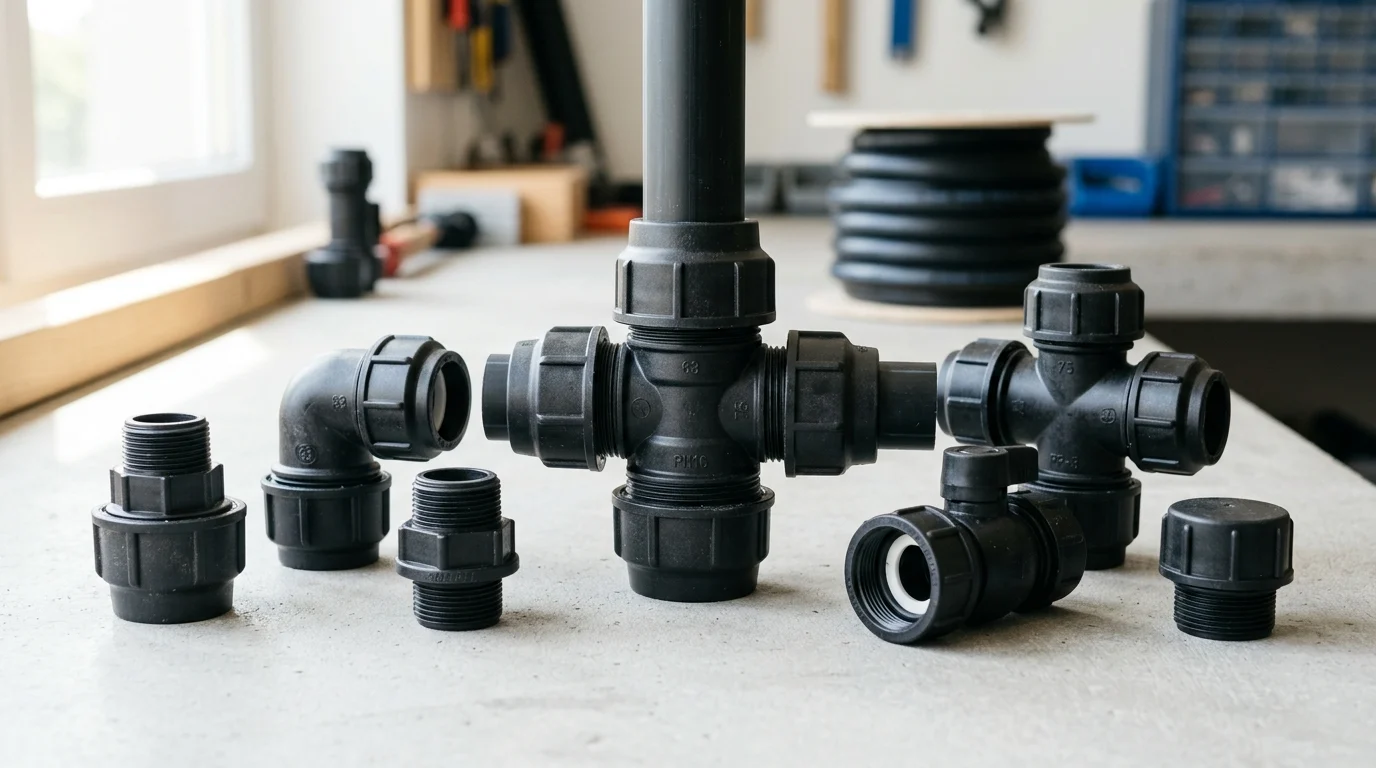
Polypropylene (PP) compression fittings have fundamentally transformed fluid management within commercial, agricultural, and municipal infrastructure. For B2B wholesale buyers and distributors, these components represent a critical category that bridges the gap between high-performance durability and rapid deployment. Unlike traditional joining methods that require specialized equipment, PP compression fittings rely on mechanical seals to ensure leak-proof connections across high-density polyethylene (HDPE) and other compatible piping systems.
As global infrastructure upgrades accelerate, procurement teams are shifting toward modular, mechanical joining solutions. The transition from legacy materials to advanced thermoplastics is driven by the need to optimize project timelines, mitigate environmental degradation, and lower total lifecycle costs. Understanding the strategic value of these fittings is essential for distributors aiming to capture market share in the competitive water supply sector.
How they reduce installation time and labor costs
The primary operational advantage of PP compression fittings lies in their engineered simplicity. By utilizing a quick-push or mechanical tightening mechanism, these fittings eliminate the need for heat fusion welding, specialized crimping tools, or chemical solvents. Installers simply prepare the pipe, insert it through the fitting’s nut and clinching ring, and tighten the assembly to secure the connection. This straightforward process drastically lowers the barrier to entry for installation crews.
Field data indicates that transitioning to mechanical compression fittings can yield a 30% to 50% reduction in installation time compared to electrofusion or traditional threading methods. For large-scale municipal or agricultural projects involving thousands of connection points, this reduction in labor hours translates directly into substantial financial savings and accelerated project delivery.
Which applications drive the strongest demand
Demand for these components is heavily concentrated in sectors requiring robust, adaptable, and easily modifiable fluid transport networks. Agricultural irrigation systems are a massive driver, as the fittings allow for rapid reconfiguration of drip lines and sprinkler networks without permanent pipe destruction. Furthermore, municipal water distribution networks rely on these fittings for swift emergency repairs and lateral service connections.
Industrial fluid transport also represents a growing market segment. High-grade PP compression fittings are routinely specified for mining operations, telecommunications cable ducting, and temporary bypass lines. Their ability to consistently handle operating pressures up to PN16 (16 bar) at ambient temperatures makes them indispensable for heavy-duty applications where system integrity is non-negotiable.
Key Technical Specifications Buyers Should Review
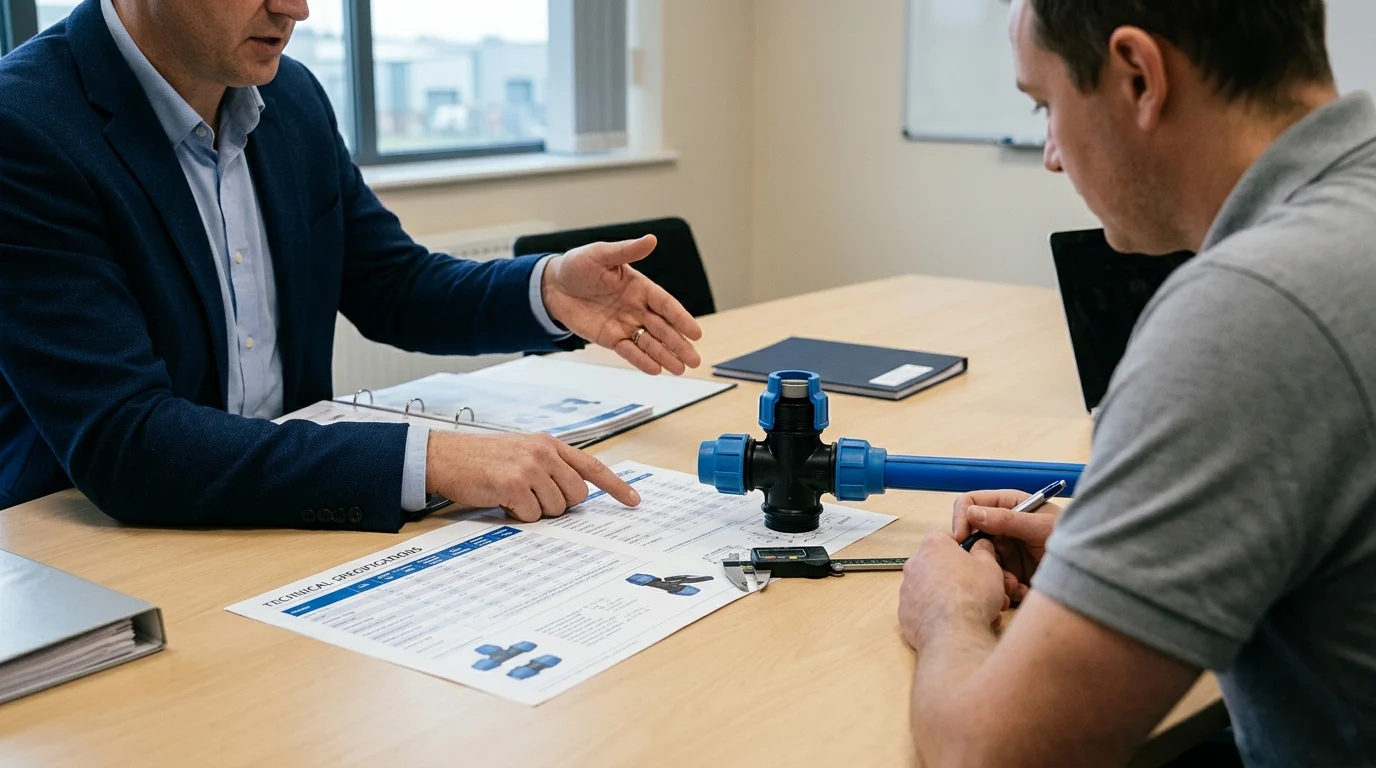
Procurement teams must rigorously assess technical specifications to ensure the fittings they import meet the exact demands of their target markets. A superficial evaluation of PP fittings can lead to catastrophic system failures, costly product recalls, and severe damage to a distributor’s reputation. Buyers must scrutinize the chemical composition, pressure ratings, and structural design of every component.
Material grades, pressure ratings, and sealing components
High-performance PP compression fittings are typically manufactured from premium polypropylene block copolymers (PP-B), which offer exceptional impact resistance and dimensional stability. The sealing mechanism is equally critical; standard applications utilize Nitrile Butadiene Rubber (NBR) O-rings, while potable water or elevated temperature systems often specify Ethylene Propylene Diene Monomer (EPDM) seals. The clinching ring, responsible for gripping the pipe and preventing pull-out, is generally molded from polyacetal (POM) for maximum tensile strength.
Pressure ratings are a definitive metric for B2B buyers. Standard wholesale assortments must include fittings rated at PN10 (10 bar) for basic irrigation and PN16 (16 bar) for municipal water supply at a baseline temperature of 20°C. Buyers should also verify the UV stabilization of the black PP bodies, ensuring the fittings can withstand prolonged exposure to direct sunlight in above-ground agricultural deployments.
How PP compression fittings compare with metal alternatives
When evaluating material substitutions, the advantages of PP compression fittings over traditional metal counterparts become highly apparent. Metal fittings, particularly brass and galvanized steel, have historically dominated the market but suffer from critical vulnerabilities, including galvanic corrosion, scale buildup, and volatile raw material costs.
| Feature / Metric | PP Compression Fittings | Brass / Metal Fittings |
|---|---|---|
| Weight Profile | Up to 80% lighter | Heavy, increasing freight costs |
| Corrosion Resistance | Excellent (Immune to rust/scale) | Susceptible to galvanic corrosion |
| Installation Tooling | Manual tightening / basic wrenches | Threading machines, heavy wrenches |
| Average Cost per Unit | Low to Moderate (Stable pricing) | High (Subject to copper/zinc markets) |
| Target Lifespan | 50+ years under standard conditions | 20-30 years depending on water chemistry |
How to Evaluate Suppliers and Product Quality
Sourcing reliable piping components requires a systematic approach to vendor vetting. B2B buyers cannot rely solely on marketing claims; they must validate a manufacturer’s claims through rigorous documentation, factory audits, and quality control track records. Evaluating a supplier’s operational maturity ensures long-term procurement stability and minimizes supply chain disruptions.
Required certifications, testing, and traceability
Compliance with international drinking water and mechanical standards is non-negotiable for distributors targeting municipal contracts. Buyers must request valid certifications such as WRAS (UK), DVGW (Germany), or NSF (USA) if the fittings are intended for potable water. Furthermore, the manufacturing facility should operate under an ISO 9001-certified quality management system to guarantee batch-to-batch consistency.
Testing protocols should be thoroughly reviewed during the sourcing phase. Leading manufacturers subject their PP compression fittings to rigorous internal testing, including hydrostatic pressure tests at 1.5x the nominal pressure rating, pull-out resistance evaluations, and thermal cycling. Traceability is also paramount; each fitting should feature molded markings detailing the manufacturer, material grade, pressure rating, and production date to facilitate root-cause analysis in the event of a field failure.
How to assess factory capability and MOQ flexibility
Beyond baseline quality, a supplier’s physical manufacturing infrastructure dictates their ability to scale with your business. Importers should assess the number of injection molding machines, the integration of automated assembly lines, and the facility’s overall output capacity. A robust factory setup ensures that large-volume orders can be fulfilled within standard 30- to 45-day lead times without compromising dimensional tolerances.
Minimum Order Quantity (MOQ) flexibility is a crucial negotiation point. While standard wholesale SKUs might require MOQs of 3,000 to 5,000 pieces per size, highly specialized or custom-branded fittings often demand higher thresholds. Buyers should seek suppliers who offer mixed-container options, allowing distributors to test new, larger-diameter fittings (e.g., 90mm or 110mm) alongside high-velocity smaller SKUs without overcommitting capital.
Logistics, Pricing, and Channel Strategy
For international distributors and bulk importers, the true landed cost of PP compression fittings is heavily influenced by logistics, packaging density, and channel strategy. Optimizing the physical movement of these goods and structuring a coherent pricing model are essential steps to maintaining healthy gross margins in a highly commoditized market.
Carton design, palletization, and SKU planning
Maximizing container utilization is critical for offsetting global freight volatility. Buyers should collaborate with suppliers to optimize carton dimensions and pallet configurations. Fittings should be pre-packed in UV-resistant polybags within heavy-duty, five-ply corrugated master cartons. For high-volume importers, a standard 40-foot High Cube (40HQ) container should efficiently accommodate approximately 65 to 68 cubic meters (CBM) of product.
SKU planning requires a data-driven approach. Distributors must balance their inventory between fast-moving standard sizes (16mm to 32mm) used in residential and light irrigation, and the lower-velocity, higher-margin commercial sizes (40mm to 110mm). Proper palletization—ensuring cartons are shrink-wrapped and edge-protected—minimizes transit damage and accelerates warehouse receiving processes.
Pricing models, assortment strategy, and after-sales support
Developing a competitive channel strategy requires alignment with the manufacturer’s pricing models. Volume-based tier pricing allows distributors to scale their margins as they consolidate their purchasing power. Additionally, reliable after-sales support, including marketing collateral, technical specification sheets, and a clear warranty replacement policy, empowers the distributor’s sales force to win competitive bids.
| Fitting Diameter (mm) | Application Focus | Appx. Pcs per Carton | Target Margin Profile |
|---|---|---|---|
| 16mm – 25mm | Drip irrigation, residential | 200 – 400 | Low margin, high volume |
| 32mm – 50mm | Branch lines, commercial | 50 – 150 | Medium margin, steady flow |
| 63mm – 75mm | Agricultural mains | 20 – 40 | High margin, project-based |
| 90mm – 110mm | Municipal infrastructure | 5 – 12 | Premium margin, technical sales |
How to Select the Right PP Compression Fittings Program

Finalizing a procurement program for PP compression fittings involves moving beyond theoretical evaluations and executing a structured onboarding process. Selecting the right manufacturing partner is not merely a transactional decision; it is a strategic alignment that impacts product availability, brand reputation, and long-term profitability.
Practical supplier selection and product approval steps
A structured product approval process mitigates the risk of catastrophic supply chain errors. Buyers should initiate the relationship by requesting pre-production samples for independent laboratory testing and field evaluation by trusted contractors. Once the samples clear technical scrutiny, a pilot order (typically a 20-foot container) should be placed to assess the supplier’s adherence to packaging standards, commercial documentation accuracy, and delivery timelines.
During this phase, procurement managers must establish clear Service Level Agreements (SLAs) regarding quality. Top-tier manufacturers typically maintain a defect rate of less than 0.1%. Establishing a clear protocol for reporting and resolving non-conformities ensures that any manufacturing anomalies are addressed before they impact the distributor’s end-users.
Why scalable manufacturers with broad portfolios add value
Partnering with established, scalable manufacturers provides distributors with a significant competitive advantage. Manufacturers with decades of industry experience and multiple production bases offer unparalleled supply chain resilience. This scale allows them to absorb raw material price shocks and maintain consistent lead times even during peak global demand seasons.
Furthermore, suppliers with broad portfolios covering not only PP compression fittings but also complementary systems—such as PPR, PVC, PE-RT pipes, and plastic valves—enable buyers to consolidate their vendor base. This “one-stop-shop” capability reduces administrative overhead, simplifies mixed-container logistics, and ensures seamless compatibility across complex, multi-material water supply projects.
Key Takeaways
- Wholesale sourcing and supply-chain implications for PP compression fittings
- Specifications, compliance, and commercial terms buyers should validate
- Actionable recommendations for distributors and procurement teams
Frequently Asked Questions
What makes PP compression fittings suitable for modern water supply systems?
They provide fast, leak-tight connections without welding or solvents, reducing labor and downtime in municipal, commercial, and irrigation projects.
Which pipe types are commonly used with PP compression fittings?
They are mainly used with HDPE pipes and similar compatible PE piping in water supply and irrigation systems.
What pressure rating should buyers check before ordering?
For typical projects, verify PN10 for basic irrigation and PN16 for municipal water supply at 20°C.
Why choose PP compression fittings over metal fittings?
PP fittings are lighter, corrosion-resistant, and easier to install, helping lower freight, maintenance, and replacement costs.
Can Donsen supply PP compression fittings for export and varied applications?
Yes. Donsen manufactures PP compression fittings and related piping products for residential, commercial, irrigation, and drainage