Introduction
PVC pipe is widely used in water supply systems because it combines low weight, corrosion resistance, and dependable pressure performance, but its real-world behavior depends on more than those headline advantages. This article explains how PVC handles continuous internal pressure, changing temperatures, chemical exposure, and external soil loads, while also noting the limits that affect long-term reliability. By the end, you will understand the key service conditions that influence lifespan, why proper derating and installation matter, and where PVC fits best compared with other piping materials in municipal and commercial water networks.
PVC Pipe Performance in Water Supply Systems
Polyvinyl chloride has fundamentally reshaped the landscape of municipal and commercial fluid transport. Understanding the foundational elements of how a PVC pipe operates under continuous hydrostatic pressure is essential for engineers and project managers tasked with designing resilient infrastructure. Unlike legacy metallic systems, rigid polymer networks rely on a specific balance of tensile strength, flexural modulus, and chemical inertness to maintain continuous operational integrity over decades of active service. This material provides a highly optimized matrix that resists degradation while maintaining structural stability under varying hydraulic loads.
Key service conditions that affect performance
The operational lifespan and structural reliability of a water distribution network depend heavily on the environmental and hydraulic conditions it faces. Temperature serves as a primary performance variable; standard polyvinyl chloride maintains its optimal pressure ratings at or below 73.4°F (23°C). As fluid or ambient temperatures rise toward the material’s maximum continuous service limit of 140°F (60°C), the internal hydrostatic design basis (HDB) decreases. For instance, operating a system at 110°F (43°C) requires applying a derating factor of 0.50 to the maximum pressure capacity, ensuring the polymer matrix does not yield under thermal stress.
Beyond temperature limits, external loading and soil mechanics play a critical role in subterranean applications. While the material is inherently rigid, it is classified as a flexible conduit in geotechnical engineering terms, meaning it relies on side-soil support to resist vertical earth loads. Proper trench embedment can limit diametric deflection to the industry-standard safety threshold of 5%. Furthermore, ultraviolet (UV) exposure during above-ground storage can impact structural metrics. Prolonged exposure to direct sunlight without protective wrapping can reduce impact strength by 10% to 25% over a two-year period, although internal pressure capacity and tensile strength typically remain unaffected.
Why PVC remains a common choice
Despite the emergence of newer specialized polymers, PVC remains a dominant choice globally due to its exceptional hydraulic efficiency and economic predictability. Its exceptionally smooth interior wall yields a Hazen-Williams C-factor of 150, which remains constant throughout its lifecycle because the polymer does not support internal scale build-up or biological tuberculation. This hydraulic smoothness translates to significantly lower friction loss, allowing engineers to specify smaller pump sizes and reduce ongoing energy consumption by up to 20% compared to rougher metallic alternatives.
Additionally, the material’s inherent resistance to galvanic and electrolytic corrosion eliminates the need for expensive cathodic protection systems or internal cementitious linings. When evaluating lifecycle costs, the elimination of these secondary protective measures, combined with a baseline material acquisition cost that is often 30% to 50% lower than ductile iron, creates a compelling economic argument. This balance of low initial capital expenditure and minimized long-term maintenance requirements solidifies its position as an industry standard for potable fluid delivery.
Technical Properties of PVC Pipe
Transitioning from environmental conditions to specific manufacturing metrics, the technical properties of a PVC plumbing pipe dictate its suitability for particular engineering applications. Standardization of dimensions, pressure limits, and chemical tolerances ensures predictable behavior across varied infrastructure projects. Evaluating these technical parameters is crucial for matching the physical conduit to the hydraulic demands of the network.
Pressure rating, diameter, and wall thickness
The structural capacity of these conduits is defined primarily by their wall thickness and outside diameter, generally categorized using the Standard Dimension Ratio (SDR) or Schedule methodologies. The SDR system maintains a constant ratio between the outside diameter and the minimum wall thickness, ensuring that a specific SDR value provides the exact same pressure rating regardless of the pipe’s physical size. Conversely, the Schedule system (such as Schedule 40 and Schedule 80) features fixed wall thicknesses that result in varying pressure ratings as the pipe diameter increases. In municipal fluid delivery, SDR classifications are heavily favored for their consistent hydrostatic performance.
| Standard Dimension Ratio (SDR) | Pressure Class (psi) at 73.4°F | Typical Application |
|---|---|---|
| SDR 13.5 | 315 | High-pressure transmission mains |
| SDR 21 | 200 | Standard municipal water distribution |
| SDR 26 | 160 | Low-pressure lateral lines |
| SDR 32.5 | 125 | Gravity-fed or low-stress systems |
Corrosion resistance and water quality compatibility
A defining characteristic of this polymer is its absolute immunity to oxidative corrosion, a common failure point in ferrous networks. Because the material is an electrical insulator, it cannot participate in the galvanic cell reactions that rapidly degrade metal infrastructure in aggressive soils. This chemical inertness extends to a wide pH tolerance, allowing the material to safely transport fluids ranging from highly acidic (pH 2) to highly alkaline (pH 12) without structural degradation or leaching.
In the context of water quality compatibility, this resistance ensures that the transported fluid remains uncontaminated by oxidized byproducts. Tuberculation, the formation of iron oxide mounds that restrict flow and harbor bacteria in metal systems, is entirely non-existent. Consequently, disinfectant residuals, such as free chlorine or chloramines used in municipal treatment, are not consumed by reactions with the pipe wall, maintaining higher water quality metrics through to the end-user tap.
Standards, testing, and specifications
Rigorous industry standards govern the manufacturing and testing of these materials to ensure public safety and infrastructural reliability. In North America, the American Water Works Association (AWWA) C900 standard is the primary specification for distribution pipes ranging from 4 inches to 60 inches in diameter. This standard requires adherence to strict dimensional tolerances and mandates comprehensive quality assurance protocols, including hydrostatic proof testing.
Testing specifications are exceptionally stringent to account for pressure surges and long-term fatigue. For example, ASTM D1785 and ASTM D2241 outline the testing methodologies for Schedule and SDR pipes, respectively. A critical quality control measure is the quick burst test, which requires the material to withstand internal hydrostatic pressures up to 3.2 times its designated working pressure for a duration of 60 to 70 seconds without rupturing. Compliance with these standardized metrics provides engineers with the statistical confidence required for century-long infrastructure planning.
PVC Pipe vs Other Water Supply Materials
Material selection in civil engineering requires a systematic comparison of available technologies against the specific demands of the proposed infrastructure. Evaluating polyvinyl chloride against traditional metallic options and alternative polymers reveals distinct operational advantages and inherent limitations. Understanding these comparative metrics ensures that procurement decisions align with both immediate project constraints and long-term utility goals.
PVC vs ductile iron and HDPE
Ductile iron has historically served as the backbone of municipal fluid networks, prized for its extreme tensile strength and ability to withstand massive external loads. However, ductile iron is susceptible to internal and external corrosion, requiring polyethylene encasements and cement linings that degrade over time. Polyvinyl chloride offers a corrosion-proof alternative that weighs approximately 20% of a comparable ductile iron segment, drastically reducing heavy machinery requirements during deployment.
High-Density Polyethylene (HDPE) is another modern alternative, known for its flexibility and seamless heat-fused joints. While HDPE excels in trenchless installations and seismic zones due to its high strain tolerance, it generally requires a thicker wall to achieve the same pressure rating as rigid polyvinyl chloride. This thicker wall reduces the internal cross-sectional area, meaning engineers must often specify a larger nominal outer diameter of HDPE to match the volumetric flow rate of a rigid polymer counterpart.
Main performance trade-offs
The main performance trade-offs center around surge pressure tolerance, installation environment, and joint mechanics. Rigid polyvinyl chloride is highly resilient to steady-state internal pressure but is more sensitive to cyclic fatigue caused by rapid hydraulic transients (water hammer) than ductile iron. Engineers must design networks to limit fluid velocity changes to less than 2 feet per second to mitigate transient pressure spikes that could overstress the polymer matrix over decades of operation.
Joint integrity presents another critical trade-off. Ductile iron utilizes push-on elastomeric gaskets that allow for minor deflection, while HDPE relies on butt-fusion welding that creates a monolithic, leak-free pipeline but requires specialized heating equipment and extended cooling times. Rigid polymer networks typically utilize bell-and-spigot elastomeric joints for larger diameters, offering rapid assembly and immediate pressurization, though they lack the longitudinal thrust restraint of fused HDPE joints, necessitating concrete thrust blocks at directional changes.
Comparison criteria for selection
To facilitate objective material selection, engineers evaluate a matrix of physical and operational criteria. The following table highlights the baseline differences between the most common infrastructure materials utilized in pressurized fluid transport.
| Material | Hazen-Williams C-Factor | Density (g/cm³) | Typical Lifespan (Years) | Primary Joining Method |
|---|---|---|---|---|
| Polyvinyl Chloride (Rigid) | 150 | 1.40 – 1.45 | 100+ | Bell & Spigot / Solvent Cement |
| High-Density Polyethylene (HDPE) | 150 | 0.94 – 0.96 | 50 – 100 | Heat Fusion |
| Ductile Iron (Cement Lined) | 140 (Initial) | 7.15 | 50 – 75 | Push-on Gasketed Joints |
| Copper (Type L) | 130 | 8.94 | 50+ | Soldering / Brazing |
Installation and Compliance Considerations
Optimal PVC pipe performance in the field is heavily contingent upon rigorous adherence to installation protocols and supply chain compliance. Even the highest-grade extruded polymers can fail prematurely if subjected to improper joining techniques, poor trench preparation, or sourcing from uncertified manufacturing facilities. Consequently, execution and compliance form the bridge between theoretical engineering design and practical, long-term functionality.
Installation, joining, and handling practices
Installation and joining practices vary significantly depending on the nominal diameter and the required pressure class. For diameters up to 4 inches, solvent cementing is the standard joining method. This chemical welding process requires precise application of primers and cements, followed by specific curing intervals. At ambient temperatures between 60°F and 100°F (15°C to 38°C), a standard joint requires roughly 24 hours of undisturbed cure time before it can be subjected to its full hydrostatic test pressure. Failure to observe these curing intervals is a leading cause of joint blowouts during initial commissioning.
For larger municipal mains, elastomeric gasketed joints (bell and spigot) are universally preferred. These joints allow for thermal expansion and contraction, accommodating up to 1 inch of linear movement per segment. Proper handling during installation is equally critical; although the material is highly durable, point loading from rocks or debris in the trench bed can create stress concentrations. Installers must provide a uniform bedding of granular material, compacted to at least 85% Standard Proctor density, to ensure the conduit maintains its structural geometry under backfill loads.
Potable water certifications and traceability
In any system designed for human consumption, chemical leaching and material safety are paramount regulatory concerns. Products utilized in these networks must secure rigorous third-party certifications, most notably NSF/ANSI/CAN 61, which evaluates the health effects of drinking water system components. This standard dictates strict extraction testing protocols to ensure that volatile organic compounds (VOCs) and heavy metals do not leach into the fluid stream at concentrations exceeding public health thresholds.
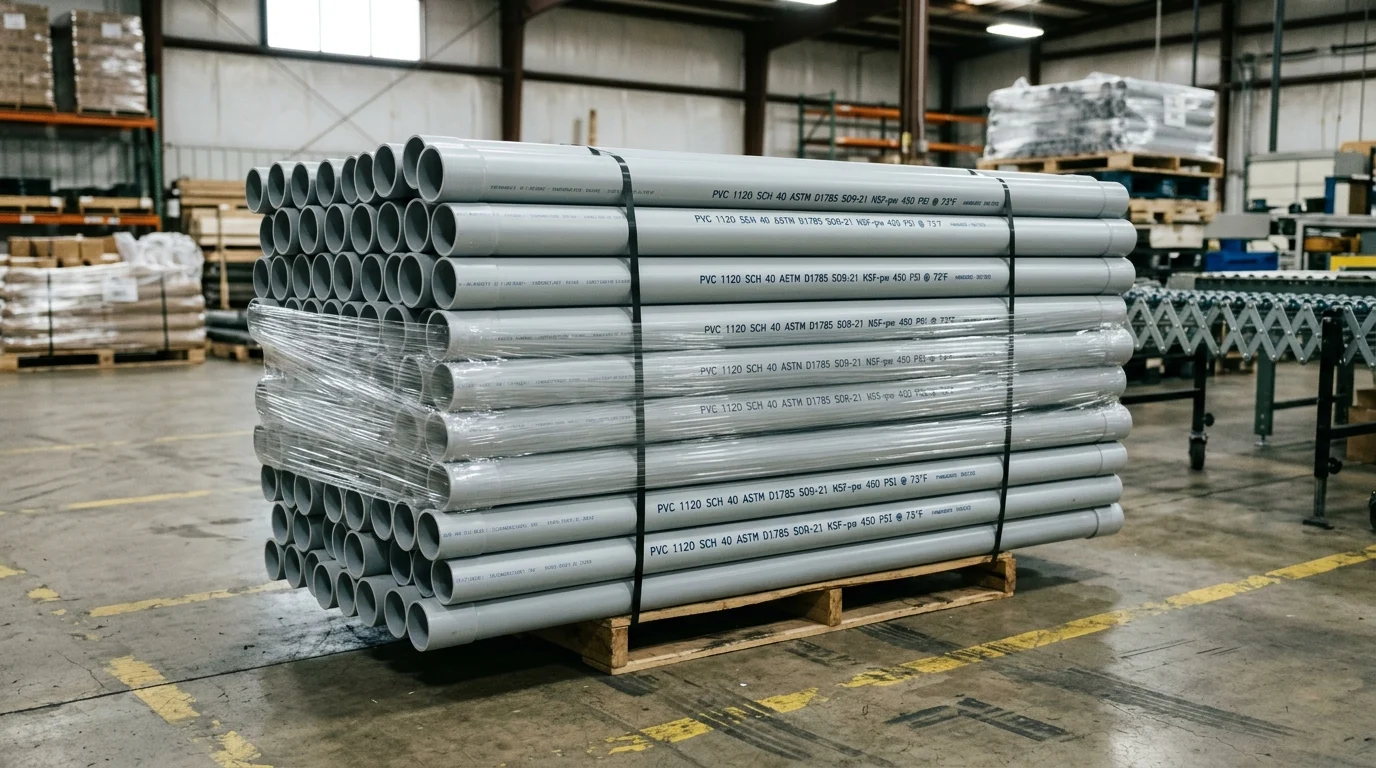
Traceability is enforced through continuous factory marking requirements. Under the Safe Drinking Water Act, any component in contact with potable supplies must contain less than 0.25% weighted average lead content. Certified conduits are continuously printed with a print line that includes the manufacturer’s name, nominal size, pressure rating, production date, and the specific certification marks (e.g., NSF-pw). This traceability allows utility operators to verify compliance instantly in the field and provides a clear chain of custody in the event of a material audit.
Sourcing, logistics, and supplier quality
The reliability of an infrastructure project is deeply intertwined with the quality control systems of the chosen supplier. Commercial procurement requires vetting manufacturers against international quality management standards, particularly ISO 9001. Top-tier extrusion facilities utilize automated gravimetric feeding systems and continuous ultrasonic wall thickness monitoring to achieve defect rates well below the industry benchmark of 0.1%.
Logistics and sourcing scale also dictate project feasibility. Municipal-scale manufacturing operates on significant economies of scale, often requiring Minimum Order Quantities (MOQs) of 10,000 linear feet for custom lengths or specific color-coded extrusions (such as purple for reclaimed water or blue for potable). Project managers must balance these MOQs against local inventory availability, factoring in lead times that can range from 4 to 12 weeks depending on resin availability and seasonal construction demand.
When to Choose PVC Pipe
Determining the appropriate material for a fluid transport network requires synthesizing environmental variables, hydraulic demands, and capital budget constraints. While highly versatile, rigid polymer conduits are not a universal panacea; their deployment must be strategically aligned with the specific operational parameters they are best equipped to handle. Establishing a standardized decision framework ensures optimal asset allocation.
Project conditions where PVC is a strong fit
Certain environmental and project conditions make rigid polymer networks the overwhelmingly superior choice. In regions characterized by highly aggressive soil conditions—specifically those with soil resistivity measurements below 2,000 ohm-cm, high chloride concentrations, or stray direct currents from nearby transit systems—metallic conduits face rapid degradation. In these scenarios, the electrochemical immunity of the polymer entirely negates the risk of external corrosion, extending the asset’s functional life from a precarious 40 years to a predictable 100-plus years.
Furthermore, this material is an exceptionally strong fit for municipal distribution mains and transmission lines up to 24 inches in diameter. Within this dimensional bracket, the ratio of material cost to structural performance is highly optimized. Projects that demand rapid installation schedules in congested urban corridors also benefit from the material’s lightweight nature, which allows smaller excavation crews to maneuver and assemble 20-foot segments without the need for heavy, specialized lifting cranes.
A practical decision framework
A practical decision framework for material selection should center on Total Cost of Ownership (TCO) rather than strictly focusing on initial procurement bids. Engineers must calculate the combined expenses of material acquisition, specialized labor, heavy machinery rental, and projected maintenance over a 50-year horizon. Typically, deploying a rigid polymer system yields a 30% to 40% reduction in upfront installation and labor costs compared to cement-lined ductile iron.
To finalize the decision, project managers should apply a three-step validation process: First, verify that the maximum anticipated fluid temperature will not exceed 140°F (60°C). Second, ensure that the network design mitigates severe transient pressure spikes or cyclical water hammer that could induce long-term fatigue. Finally, confirm that the installation environment allows for proper trenching and side-soil compaction. If these three criteria are satisfied, polyvinyl chloride represents the most hydraulically efficient and economically viable solution for modern water supply infrastructure.
Further reading:
Key Takeaways
- The most important conclusions and rationale for PVC Pipe
- Specs, compliance, and risk checks worth validating before you commit
- Practical next steps and caveats readers can apply immediately
Frequently Asked Questions
What makes PVC pipe a good choice for water supply systems?
PVC offers smooth flow, strong corrosion resistance, and lower lifecycle cost. Its Hazen-Williams C-factor of 150 helps reduce friction loss and pumping energy.
How does temperature affect PVC pipe pressure performance?
Pressure capacity drops as temperature rises. At about 110°F (43°C), apply a 0.50 derating factor, and keep continuous service within the material’s rated limits.
Which PVC pressure class is commonly used for municipal water lines?
SDR 21 is widely used for standard municipal water distribution, typically rated around 200 psi at 73.4°F (23°C). Always confirm local code and design requirements.
Does PVC pipe resist corrosion better than metal pipes?
Yes. PVC does not suffer galvanic or electrolytic corrosion, so it avoids rust-related scaling and usually does not need cathodic protection or internal linings.
How can buyers evaluate PVC pipe quality from Donsen?
Check the pipe’s SDR or Schedule rating, pressure class, temperature limits, and application suitability. On Donsen.com, compare product specifications to match your project’s water supply conditions.