How does a PVC valve work?

PVC valves play a crucial role in controlling the flow of liquids and gases across various industries. Their simple yet effective mechanism allows for precise regulation of flow. Common applications include plumbing, agriculture, chemical processing, and manufacturing, where these valves ensure durability and efficiency in fluid management.
Key Takeaways
- PVC valves are essential for controlling the flow of liquids and gases in various industries, ensuring durability and efficiency.
- Regular maintenance, including monthly inspections and quarterly operational checks, is crucial for optimal performance and longevity of PVC valves.
- Choosing the right type of PVC valve, such as ball or butterfly valves, can enhance system efficiency and reduce costs in applications like plumbing and chemical processing.
Components of a PVC Valve
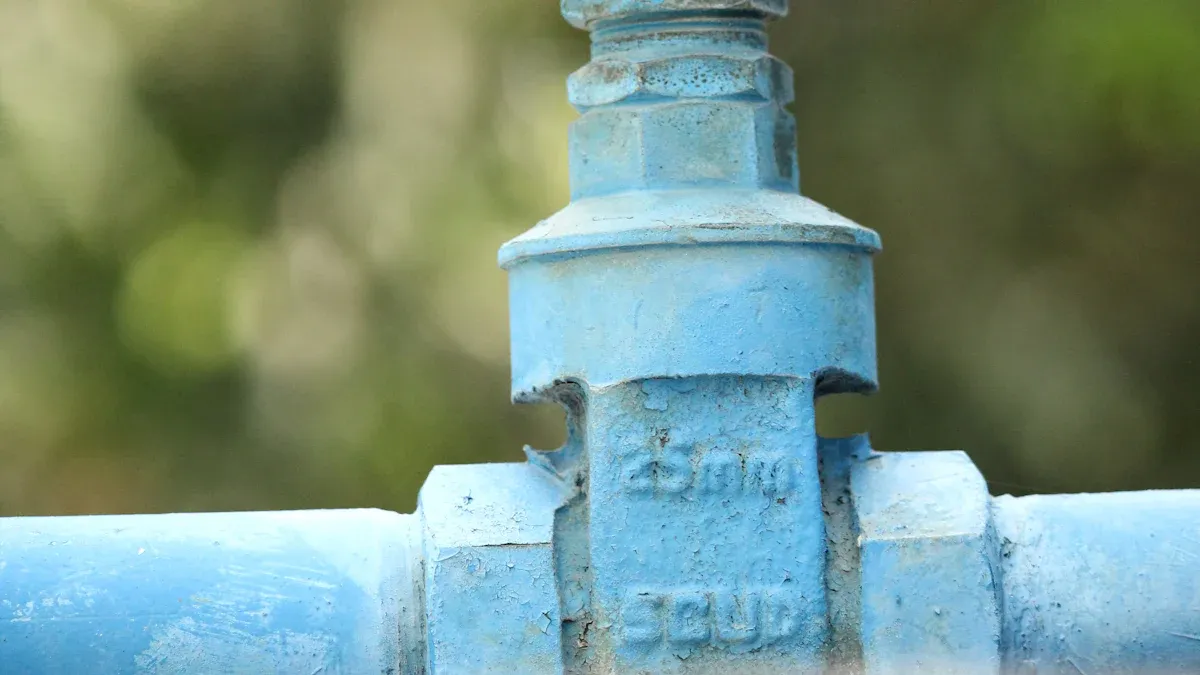
A PVC valve consists of several key components that work together to control fluid flow effectively. Understanding these components is essential for anyone looking to utilize PVC valves in their systems. Below is a detailed overview of the main components found in a standard PVC valve:
| Component | Description |
|---|---|
| Valve Body | The main structure that houses all components, designed to withstand pressure and chemical exposure. |
| Ball Valve Ball | The central element that controls flow, featuring a bore for unrestricted passage. |
| Stem Mechanism | Connects the handle to the ball, facilitating movement. |
| PVC Ball Valve Seats | Sealing rings that ensure a leak-proof interface between the ball and the body. |
| Purpose of Packing | Prevents leakage around the valve stem. |
| Plastic Handle | Ergonomic handle for manual operation, made from UV-resistant materials. |
| Actuated PVC Ball Valves | Integrates actuators for automatic operation, enhancing control and safety. |
The valve body serves as the foundation, providing structural integrity and housing all internal components. The ball valve ball is pivotal for flow control, rotating to either open or close the passage. The stem mechanism connects the handle to the ball, allowing for smooth operation.
Sealing is critical in preventing leaks. The PVC ball valve seats, typically made from durable materials, create a tight seal against the ball. This design ensures that even under pressure, the valve maintains its integrity. The packing around the stem further enhances this seal, preventing any leakage during operation.
The handle, often made from UV-resistant plastic, allows for easy manual operation. In more advanced systems, actuated PVC ball valves incorporate actuators, enabling automatic control. This feature is particularly beneficial in applications requiring precise flow regulation.
Chemical resistance is vital for the longevity of PVC valve components. PVC valves can withstand various chemicals without corroding, unlike metal valves. However, users must select the appropriate PVC material based on the chemicals the valve will encounter to avoid internal degradation.
Regular maintenance of these components is essential for optimal performance. A visual inspection should occur monthly to check for cracks or leaks. Operational checks should happen quarterly to ensure smooth functionality. Keeping a log of inspections helps track performance over time.
Mechanism of Operation
The operation of a PVC valve relies on a straightforward yet effective mechanism that regulates the flow of liquids and gases. Understanding this mechanism is crucial for users who want to optimize their fluid control systems.
When the valve handle is turned, it directly affects the position of the internal ball. This ball features a bore that aligns with the flow path when the valve is open. Conversely, when the handle is turned to a perpendicular position, the ball rotates 90 degrees, blocking the bore and stopping the flow. The following table summarizes the positions and their effects on fluid flow:
| Position | Description | Effect on Flow |
|---|---|---|
| Open Position | Handle is parallel to the pipe, ball’s bore aligns with the flow path. | Unrestricted passage of fluid. |
| Closed Position | Handle is perpendicular to the pipe, ball rotates 90°. | Blocks the bore, stopping flow. |
| Sealing Mechanism | PTFE seats provide chemical resistance and low friction. | Ensures a tight seal under pressure. |
The internal components of the valve work together to facilitate this operation. The rotary ball aligns with the flow path to either allow or block fluid passage. The valve stem plays a critical role by turning the ball to open or close the valve. Additionally, the seats create a reliable seal when the valve is closed, preventing leaks.
Temperature also significantly impacts the mechanism of operation in PVC valves. As temperatures rise, thermal expansion can cause components to increase in size, potentially leading to misalignment. Conversely, cold temperatures can cause contraction, increasing rigidity and raising the risk of cracking. The following table illustrates these effects:
| Temperature Condition | Effect on PVC Components | Implications for Valve Operation |
|---|---|---|
| Heat | Thermal expansion | Increased size, potential misalignment |
| Cold | Contraction | Reduced size, increased rigidity, risk of cracking |
| Extreme Cold | Increased stiffness | Difficulty in operation, potential for leakage |
PVC valves typically withstand a maximum working pressure of approximately 150 PSI at 73°F (23°C). However, performance may decrease at higher temperatures. This pressure rating ensures that the valve can handle various applications without compromising safety or functionality.
Types of PVC Valves
PVC valves come in various types, each designed for specific applications and functionalities. Understanding these types helps users select the right valve for their needs. Here are some of the most common types of PVC valves used in plumbing and industrial systems:
- PVC True Union Valve (Socket): This valve allows for easy removal and maintenance without disrupting the piping system. It features two union ends that facilitate quick disassembly.
- PVC Threaded Valve: This type connects to pipes using threaded fittings, making installation straightforward. It is ideal for applications where frequent adjustments are necessary.
- PVC Ball Valve: Known for its reliability, this valve provides excellent flow control. It features a spherical disc that rotates to open or close the flow path.
The functionality of different PVC valves varies significantly. For instance, ball valves and butterfly valves serve distinct purposes. The following table summarizes their key features:
| Feature | Ball Valve | Butterfly Valve |
|---|---|---|
| Flow Control | Suitable for ON/OFF control. Not recommended for throttling applications | Suitable for ON/OFF control. Preset locking angles; excellent for throttling applications |
| Flow Regulation | Can be used for on/off control and proportional control with a V-port ball | Can be used for on/off control and proportional control |
| Flow Restriction | Full port ball valves; no pressure drop | Disc restricts flow, creating turbulence and pressure drop |
Among these types, PVC butterfly valves are particularly noted for their economical features. They offer low initial costs and savings on maintenance, making them a popular choice in water treatment plants. Similarly, PVC ball valves are cost-effective, being cheaper than brass alternatives and easier to install. Their design reduces labor costs, making them a financially viable option for many applications.
Understanding the various types of PVC valves allows users to make informed decisions based on their specific requirements.
Applications of PVC Valves
PVC valves find extensive use across multiple industries due to their durability and resistance to corrosion. Here are some key applications:
- Water Treatment Facilities: PVC valves play a vital role in managing water quality. They are used for:
- Chemical Dosing: These valves control the dosing of chlorine, fluoride, and coagulants with high accuracy.
- Backwashing Filters: They manage backflow prevention and filter regeneration cycles effectively.
- Flow Regulation: PVC valves regulate flow between treatment stages, ensuring consistent water quality.
- Resistance: They withstand chlorinated water and common disinfectants, making them ideal for purification systems.
- Usage: PVC valves are prevalent in both municipal and industrial water purification systems.
- Agricultural Irrigation Systems: PVC valves are commonly used in irrigation due to their ability to handle higher pressure applications. However, it is crucial to protect them from UV exposure, as prolonged sunlight can make PVC brittle. Many systems prefer polyethylene tubing for its flexibility and durability.
- Chemical Processing: In the chemical industry, PVC valves are essential for safety. Their strong resistance to corrosion prevents leaks and contamination, which is critical for worker safety. If valves lack corrosion resistance, they can pose significant safety risks.
- Municipal Plumbing: Nearly three-quarters (74%) of water utilities approve the use of PVC piping applications, highlighting their importance in plumbing systems.
These applications demonstrate the versatility and reliability of PVC valves in various sectors.
Advantages of PVC Valves
PVC valves offer numerous advantages over traditional metal valves, making them a popular choice in various applications. Here are some key benefits:
- Corrosion Resistance: PVC valves are immune to galvanic corrosion, unlike metal valves, which are prone to electrochemical reactions. This resistance extends their lifespan, especially in corrosive environments.
- Cost-Effectiveness: PVC valves generally have lower initial purchase prices compared to metal alternatives. Their lightweight nature reduces installation and labor costs, making them an economical choice for many projects.
- Durability: PVC valves can withstand harsh chemicals, including acids and alkalis, without degrading. This durability leads to lower maintenance demands due to a low failure rate.
- Environmental Impact: PVC valves have a lifespan exceeding 50 years, which reduces waste generation. Their lightweight construction and energy-efficient operation contribute to a lower carbon footprint. However, proper disposal methods are crucial to minimize environmental harm.
The following table summarizes the corrosion resistance of PVC and metal valves:
| Feature | PVC Valves | Metal Valves |
|---|---|---|
| Corrosion Resistance | Immune to galvanic corrosion | Prone to corrosion due to electrochemical reactions |
| Chemical Resistance | Inert to acids, alkalis, and chlorinated solutions | Requires expensive alloys for similar resistance |
| Lifespan in Corrosive Environments | Longer lifespan at lower cost | Can fail from pitting or crevice corrosion |
PVC valves are versatile and efficient in fluid control systems. Their simple operation and various types make them suitable for many applications. Users should understand how these valves work to enhance system efficiency. Key benefits include:
| Benefit | Description |
|---|---|
| Durability | PVC valves are known for their long-lasting performance in various conditions. |
| Corrosion Resistance | They do not rust or corrode, making them suitable for transporting chemicals. |
| Low Maintenance Costs | Their resistance to corrosion leads to reduced maintenance over time. |
By selecting the right type and ensuring proper installation, users can maximize the effectiveness of their fluid management systems.
FAQ
What is the lifespan of a PVC valve?
PVC valves typically last over 50 years with proper maintenance and usage.
Can PVC valves handle high temperatures?
PVC valves can withstand temperatures up to 140°F (60°C) but may degrade at higher levels.
Are PVC valves suitable for drinking water systems?
Yes, many PVC valves meet safety standards for potable water applications.