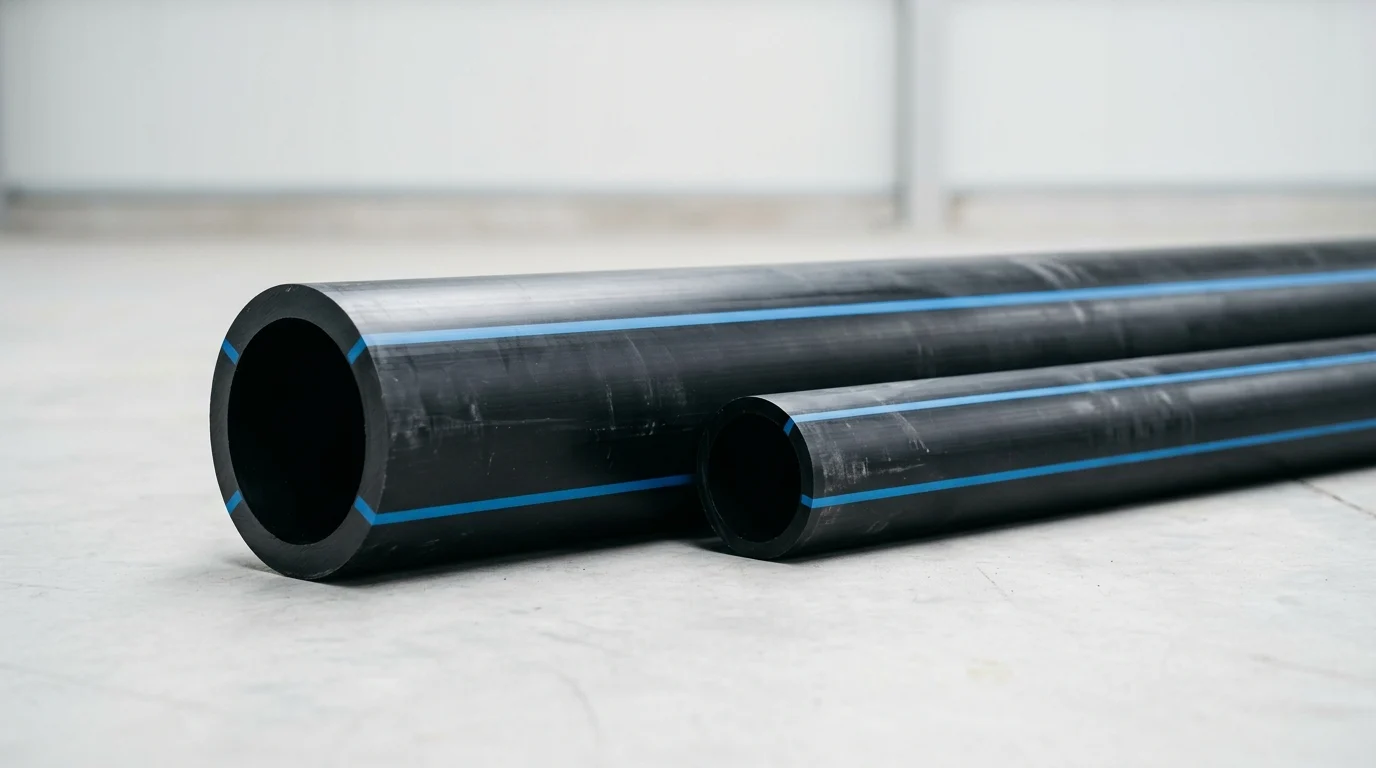
Why PE Pipes and PP Fittings Matter in Commercial Irrigation
Commercial agricultural and garden irrigation systems demand highly resilient infrastructure to maintain consistent water delivery across vast acreage. In modern B2B procurement, the shift toward polymer-based solutions has fundamentally altered how distributors and project managers specify pipeline materials. Polyethylene (PE) pipes paired with Polypropylene (PP) fittings currently represent the industry standard for both micro-drip networks and high-volume sprinkler systems.
The primary advantage of these thermoplastic systems lies in their exceptional resistance to environmental stress, chemical fertilizers, and variable hydraulic pressures. By replacing traditional metal or rigid PVC systems with advanced PE pipes, agricultural operators significantly reduce installation labor, minimize leak points, and achieve a lower total cost of ownership over the project lifecycle.
How PE pipes improve irrigation performance and service life
Polyethylene (PE) pipes have become the dominant material for agricultural water conveyance due to their superior flexibility and environmental stress crack resistance (ESCR). Unlike rigid alternatives, PE pipes can adapt to uneven terrain, reducing the need for extensive ground leveling and numerous directional fittings. This flexibility allows the pipe to absorb water hammer shocks and thermal expansion without catastrophic failure.
Furthermore, modern PE pipes designed for outdoor irrigation are compounded with UV stabilizers, typically ensuring a service life exceeding 50 years under standard operating conditions. High-density variants can comfortably handle continuous operating pressures up to PN16 (16 bar), making them highly suitable for both low-pressure drip lines and high-pressure main feeder lines.
Where PP fittings complement PE pipe systems
While PE pipes form the extensive network of an irrigation system, PP fittings serve as the critical connection nodes. Polypropylene compression fittings are specifically engineered to complement PE pipes, offering a robust, leak-proof seal without the need for complex electrofusion or butt-welding equipment in the field. This mechanical connection method drastically accelerates installation timelines for agricultural contractors.
PP fittings—including couplers, elbows, tees, and transition valves—are highly resistant to agricultural chemicals and liquid fertilizers. A high-quality PP compression fitting rated for PN16 ensures that the junction points do not become the weak link in the irrigation network, maintaining uniform pressure integrity across the entire agricultural grid.
What Specifications Buyers Should Compare
Procurement teams must carefully evaluate technical specifications to ensure the selected piping systems align with the hydraulic and environmental demands of the target market. Sourcing generic pipes without analyzing material grades and dimensional standards often leads to premature system failure, increased maintenance costs, and compromised crop yields.
How to evaluate PE grades, pressure ratings, diameters, and wall thickness
The foundation of PE pipe selection begins with the material grade. Buyers must differentiate between PE80 and PE100 resins; PE100 offers a higher density and superior hydrostatic strength, allowing for thinner walls at the same pressure rating (SDR—Standard Dimension Ratio). A higher SDR number indicates a thinner wall relative to the pipe diameter.
For commercial irrigation, outer diameters typically range from 16mm for micro-irrigation laterals up to 110mm or larger for main water distribution headers. Buyers should verify that wall thickness tolerances strictly adhere to ISO 4427 standards to guarantee compatibility with standard compression fittings.
How PE pipes compare with PP pipe options
Although PE pipes are the standard for main lines and laterals due to their flexibility, PP pipes and fittings are sometimes evaluated for specific rigid applications, such as pump house manifolds or above-ground valve stations. Understanding the specific performance boundaries between these two polymers is essential for distributors building a comprehensive catalog.
| Specification / Feature | PE (Polyethylene) Pipes | PP (Polypropylene) Pipes/Fittings |
|---|---|---|
| Flexibility | High (Supplied in coils) | Low to Moderate (Rigid lengths) |
| Temperature Tolerance | -40°C to 60°C | 0°C to 95°C |
| Primary Application | Underground mains, field laterals | Quick-connect fittings, hot water, manifolds |
| Connection Method | Butt fusion, electrofusion, compression | Threaded, compression, socket fusion |
| UV Resistance | Excellent (with 2-3% Carbon Black) | Good (requires specific UV stabilizers) |
What comparison criteria distributors should use
Distributors evaluating different manufacturers must look beyond basic dimensions and assess the specific compounding of the raw materials. A critical specification for above-ground irrigation is the carbon black content, which should ideally sit between 2.0% and 2.5% to provide maximum UV stabilization without compromising the pipe’s structural integrity.
Additionally, buyers should compare the pressure derating factors at elevated temperatures. In hot agricultural climates where ambient temperatures exceed 40°C, a pipe nominally rated for PN10 may effectively operate at a lower pressure threshold, requiring procurement teams to over-specify the pressure rating to compensate for thermal softening.
How to Assess PE Pipe Suppliers
Selecting a reliable manufacturing partner is as critical as choosing the right pipe material. For large-scale agricultural projects and wholesale distribution, buyers require suppliers capable of delivering consistent quality at high volumes. Assessing a supplier involves evaluating their technological infrastructure, commercial flexibility, and the breadth of their product ecosystem.
What supplier qualification criteria matter most
A comprehensive supplier audit should prioritize manufacturing capacity and legacy expertise. Buyers should seek manufacturers with a proven track record, ideally possessing over 20 years of experience in polymer extrusion and injection molding. The presence of advanced, automated extrusion lines equipped with ultrasonic thickness gauges ensures consistent dimensional accuracy across massive production runs.
Furthermore, facility certifications such as ISO 9001 (Quality Management) and ISO 14001 (Environmental Management) are non-negotiable baselines. Buyers should also verify the supplier’s laboratory capabilities, ensuring they possess in-house testing equipment for hydrostatic pressure, melt flow index (MFI), and tensile strength.
How MOQ, private label, and packaging options affect purchasing
For volume buyers, minimum order quantities (MOQs) and customization capabilities heavily influence cash flow and brand strategy. Standard MOQs for PE irrigation pipes typically hover around 5,000 meters per specification, or a consolidated 1x20ft container for mixed sizes. Suppliers offering flexible MOQs during initial trial orders provide significant value to importers testing new markets.
Private labeling is another crucial factor for regional distributors. The ability to apply custom inkjet or laser printing on the pipe surface—displaying the distributor’s brand, pressure rating, and manufacturing date—enhances brand visibility. Additionally, customized coil lengths (e.g., 100m, 200m, or 500m) tailored to specific agricultural contractor preferences can provide a distinct competitive advantage.
Why a broad PE and PP product range adds value
Procuring PE pipes and PP fittings from distinct manufacturers introduces compatibility risks and complicates the supply chain. A supplier that manufactures both the extrusion products (PE pipes) and the injection-molded components (PP compression fittings, plastic valves) ensures tight dimensional tolerances and seamless integration.
Consolidating procurement with a single, broad-range manufacturer also optimizes freight economics. Buyers can mix pipes, quick-push fittings, and irrigation valves within the same shipping container, reducing administrative overhead and minimizing the risk of mismatched components arriving at the installation site.
What Compliance and Logistics Factors Affect Cross-Border Sourcing
Cross-border procurement of agricultural piping systems involves navigating complex logistics and stringent regulatory frameworks. The bulky nature of coiled pipes demands strategic freight planning, while the critical role of water infrastructure requires rigorous compliance with international material standards to prevent costly border rejections or field failures.
What certifications, testing, and traceability buyers should verify
Irrigation infrastructure must meet strict international standards to ensure safety and durability. Buyers must verify compliance with ISO 4427 (Plastics piping systems for water supply) and request third-party laboratory test reports. Traceability is equally critical; high-quality pipes feature sequential meter markings and batch codes to trace the product back to the specific resin lot and production shift.
If the irrigation system intersects with potable water networks, additional certifications such as WRAS (UK), NSF (USA), or CE marking may be required to prove the materials do not leach harmful chemicals. Importers must align the supplier’s certification portfolio with the destination country’s customs and agricultural department requirements.
How packaging, palletization, and container loading affect shipments
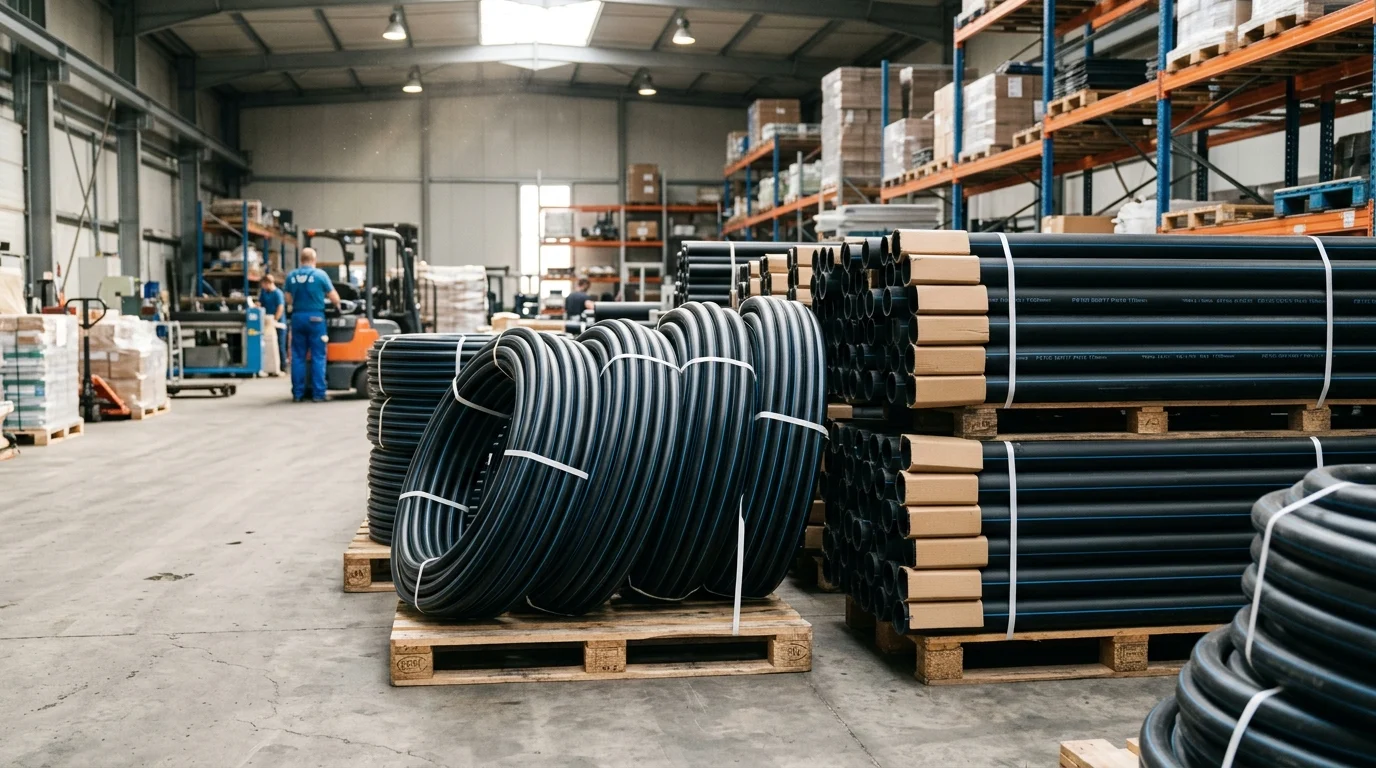
The bulky nature of PE pipes makes freight optimization a critical factor in landing costs. Smaller diameter pipes (16mm to 63mm) are typically wound into coils, while larger diameters (75mm and above) are shipped in straight lengths of 5.8 or 11.8 meters to fit standard shipping containers. Strategic nesting—inserting smaller coils inside larger ones—can drastically improve container utilization.
| Pipe Diameter | Form Factor | Estimated Quantity per 40HQ Container | Typical Application |
|---|---|---|---|
| 16mm | 500m Coils | ~150,000 meters | Drip irrigation laterals |
| 32mm | 200m Coils | ~60,000 meters | Sub-main distribution |
| 63mm | 100m Coils | ~18,000 meters | Main sprinkler lines |
| 110mm | 5.8m Lengths | ~4,500 meters | High-volume headers |
What quality controls to apply before, during, and after production
Stringent quality control (QC) protocols prevent costly field failures. Pre-production QC involves verifying the raw material’s Melt Flow Rate (MFR) and Oxidation Induction Time (OIT), which should exceed 20 minutes to guarantee long-term thermal stability. During production, continuous laser micrometer monitoring ensures wall thickness remains within the specified SDR tolerances.
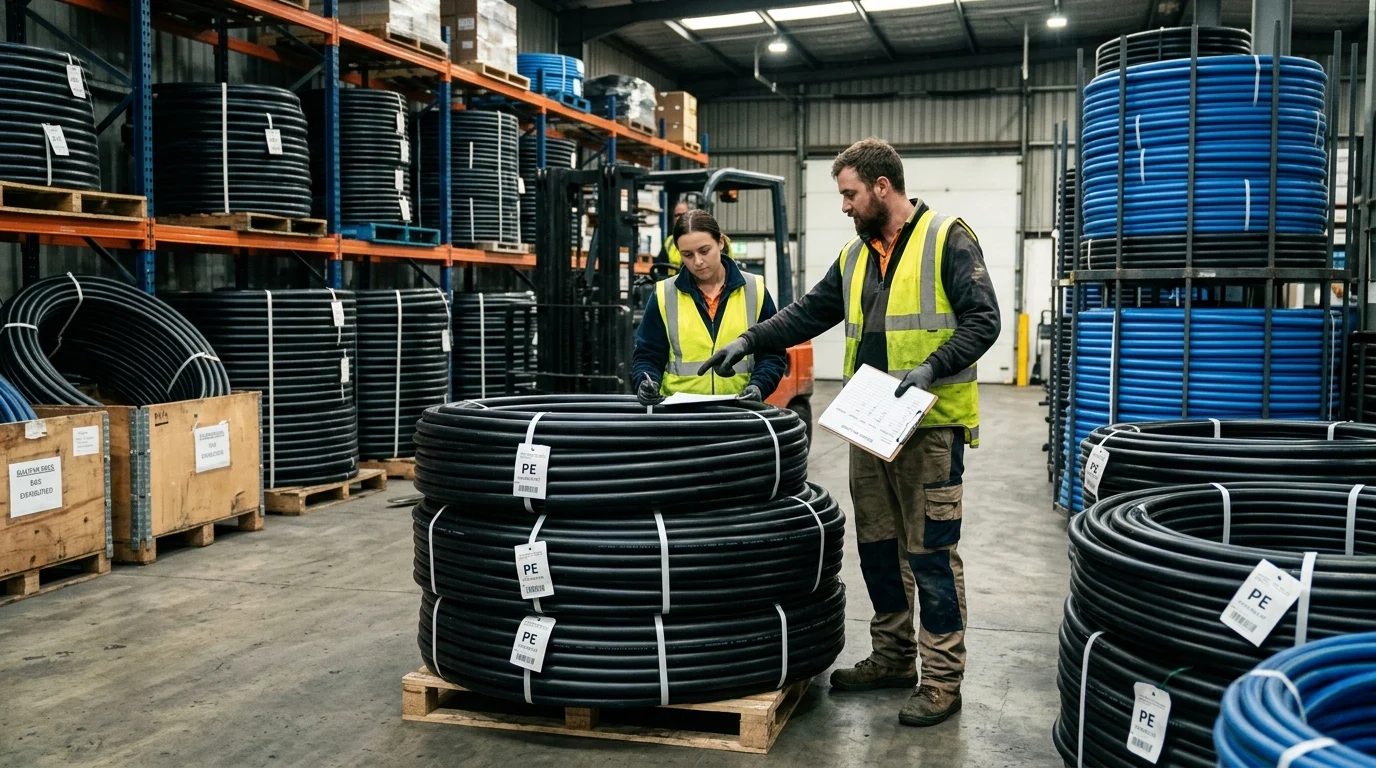
Post-production, buyers should mandate pre-shipment inspections (PSI) that include burst testing and hydrostatic pressure holding tests at elevated temperatures (e.g., 80°C for 165 hours). Verifying packaging integrity—ensuring coils are tightly strapped with UV-resistant bands to prevent unspooling during transit—is the final step before container loading.
How Buyers Should Make the Final Sourcing Decision
The final procurement decision requires a holistic evaluation of the supplier’s technical competence, commercial terms, and logistical efficiency. Wholesale buyers must move beyond simple per-meter cost comparisons to analyze the total value delivered, ensuring the chosen PE pipes and PP fittings meet the rigorous demands of modern agricultural environments.
What sourcing process helps match products to application needs
A systematic sourcing approach begins with mapping the specific demands of the target application. Procurement teams must define the maximum operating pressure, environmental UV exposure, and expected installation methods. By matching these parameters to the supplier’s technical data sheets, buyers can avoid both under-specifying (which leads to blowouts) and over-specifying (which unnecessarily inflates costs).
Distributors should also evaluate the supplier’s defect rate history. In large-scale irrigation projects, replacing a ruptured main line is immensely expensive in terms of labor and crop damage. Partnering with a manufacturer that guarantees a defect rate of less than 0.1% provides essential peace of mind and protects the distributor’s reputation in the market.
How to balance price, compliance, lead time, and supplier reliability
Volume buyers must weigh the immediate unit price against broader supply chain variables. A supplier offering rock-bottom prices may offset those savings through poor container optimization, delayed lead times, or inferior raw materials. Typical lead times for a 40HQ container of custom-extruded PE pipes range from 15 to 30 days; delays beyond this can cause contractors to miss narrow agricultural planting windows.
Ultimately, the optimal sourcing decision balances competitive pricing with verifiable compliance, robust packaging, and consistent communication. By prioritizing manufacturers with deep expertise in both PE extrusion and PP fitting injection molding, B2B buyers can secure a reliable, long-term supply chain that supports the profitable expansion of their irrigation product portfolios.
Key Takeaways
- Wholesale sourcing and supply-chain implications for PE pipes
- Specifications, compliance, and commercial terms buyers should validate
- Actionable recommendations for distributors and procurement teams
Frequently Asked Questions
Why are PE pipes preferred for garden and agricultural irrigation systems?
PE pipes are flexible, UV-stabilized, and resistant to fertilizers and pressure fluctuations. They work well for both drip lines and sprinkler mains while reducing leak risks and installation labor.
How do PP compression fittings benefit PE irrigation pipe installations?
PP compression fittings create fast, leak-proof connections without field welding. They are practical for couplers, elbows, tees, and valve connections in agricultural PE pipe systems.
What PE pipe specifications should buyers compare first?
Check PE grade, pressure rating, diameter, SDR, and compliance with ISO 4427. For irrigation, buyers often compare PE80 vs PE100 and confirm compatibility with standard compression fittings.
When should PE100 be chosen over PE80 for irrigation projects?
Choose PE100 when higher strength or thinner walls at the same pressure rating are needed. It is often preferred for commercial mains and larger irrigation networks requiring efficient hydraulic performance.
Can Donsen supply both PE pipes and matching irrigation fittings?
Yes. Donsen offers PE pipes, PP compression fittings, plastic valves, and related fittings for irrigation, helping buyers source compatible pipeline components from one manufacturer.