Introduction
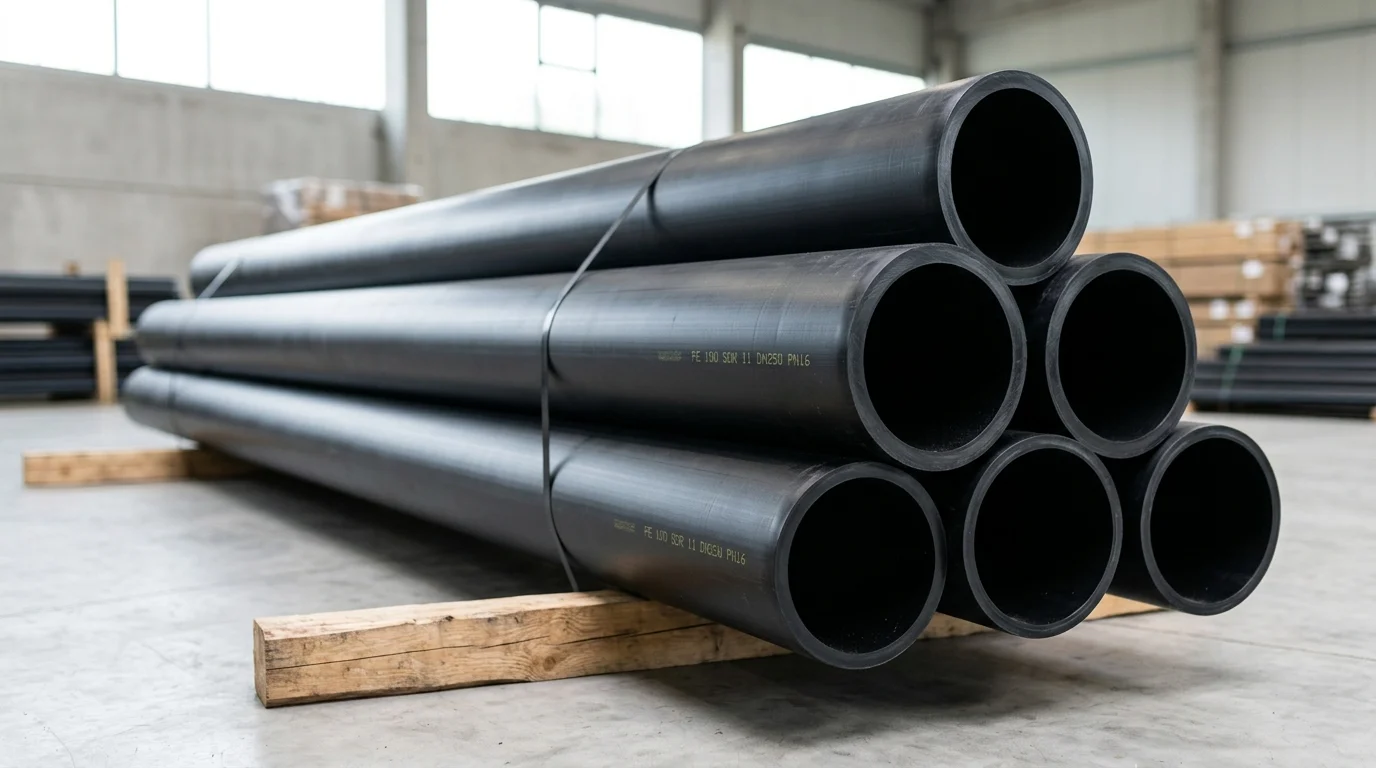
Choosing the right piping system has a direct impact on irrigation efficiency, maintenance costs, and long-term field performance. PE pipes are widely used in agriculture because they combine low leakage, chemical resistance, flexibility, and reliable flow under demanding outdoor conditions. This guide explains what PE pipes are, where they fit in irrigation networks, and how their properties affect water delivery, pressure loss, installation, and service life. It also helps readers compare PE options, understand key technical considerations, and make better decisions for farms, orchards, greenhouses, and other agricultural applications.
Why PE Pipes Are a Strategic Choice for Agricultural Irrigation
Polyethylene (PE) pipes have fundamentally transformed agricultural water management, offering a highly reliable conduit for modern irrigation networks. As global agriculture accounts for roughly 70% of total freshwater withdrawals, the mandate for efficient, leak-free distribution systems has never been more critical. PE pipes provide a robust solution to water loss, chemical degradation, and environmental stress, making them the default material for commercial farming operations upgrading their infrastructure.
Irrigation efficiency, durability, and flexibility
The primary advantage of PE piping lies in its exceptional combination of hydraulic efficiency, long-term durability, and physical flexibility. The smooth internal bore of a PE pipe yields a Hazen-Williams friction factor (C-value) of approximately 150, which significantly reduces pressure loss and minimizes the energy required for pumping water across expansive fields. Unlike rigid alternatives, PE pipes are highly flexible, boasting a permissible bend radius of 20 to 25 times the pipe’s outside diameter. This flexibility allows the piping to navigate undulating agricultural terrain without requiring excessive elbows or directional fittings.
Durability is another defining characteristic. High-quality PE pipes are engineered to deliver a service life exceeding 50 years under standard operating conditions. They are inherently resistant to the fertilizers, herbicides, and pesticides commonly injected into agricultural water streams (fertigation), ensuring that the pipe’s structural integrity is not compromised by chemical corrosion.
Best-fit agricultural irrigation applications
PE pipes are highly adaptable to a variety of modern irrigation techniques, particularly those requiring precise flow control. They serve as the primary sub-main and lateral lines in drip irrigation systems, where operating pressures typically range from 1.0 to 3.0 bar. The material’s puncture resistance and ability to hold secure connections make it ideal for integrating drip emitters and micro-sprinklers.
Beyond micro-irrigation, larger-diameter PE pipes are routinely deployed as the mainline delivery infrastructure for center-pivot and linear-move sprinkler systems. Their resistance to water hammer—capable of withstanding transient pressure surges up to 1.5 times their nominal pressure rating—makes them exceptionally well-suited for systems with frequent pump cycling and automated valve operations.
Key PE Pipe Specifications for Agricultural Irrigation
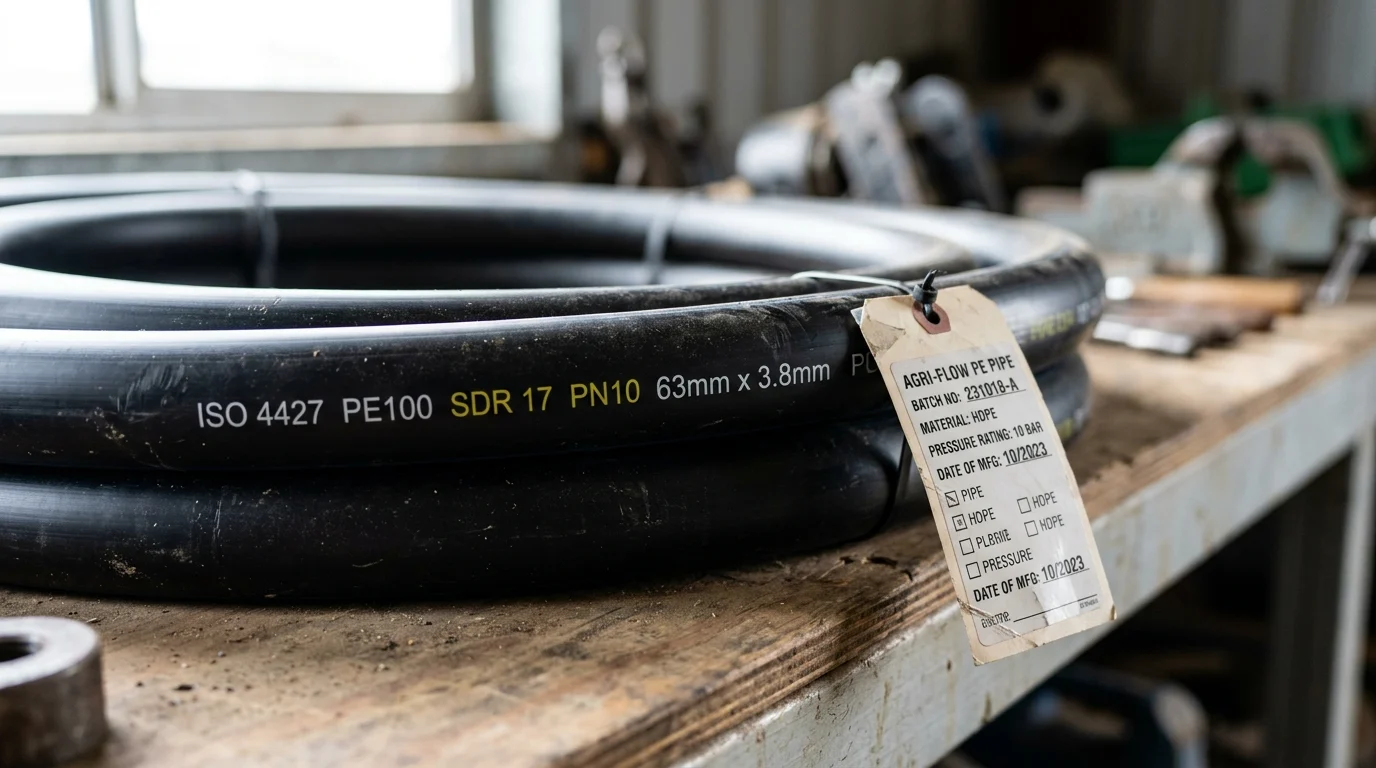
Selecting the appropriate PE pipe requires a thorough understanding of its technical specifications. Buyers must align the physical and hydraulic properties of the pipe with the agronomic and engineering demands of their specific irrigation project.
Pipe grades, pressure ratings, and dimensions
Agricultural PE pipes are primarily manufactured in two high-density grades: PE80 and PE100. PE100 is the modern standard, offering a Minimum Required Strength (MRS) of 10.0 MPa, compared to the 8.0 MPa of PE80. This higher strength allows PE100 pipes to achieve identical pressure ratings with thinner walls, effectively increasing the internal diameter and improving flow capacity.
Pressure ratings are denoted by their Nominal Pressure (PN) class, typically ranging from PN4 (4 bar) for low-pressure drip laterals to PN16 (16 bar) for high-capacity mainlines. The relationship between the pipe’s outside diameter and its wall thickness is expressed as the Standard Dimension Ratio (SDR). A lower SDR indicates a thicker wall and a higher pressure rating; for example, an SDR 11 pipe can handle higher pressures than an SDR 17 pipe of the same diameter. Agricultural project dimensions generally utilize 16mm to 32mm pipes for field laterals, scaling up to 110mm or larger for main distribution headers.
PE pipes vs other irrigation pipe materials
When evaluated against traditional materials like Polyvinyl Chloride (PVC) or galvanized steel, PE pipes demonstrate superior resilience in dynamic agricultural environments. While PVC is rigid and prone to cracking under heavy impact or freezing conditions, PE remains ductile at temperatures as low as -40°C, drastically reducing the risk of winter burst damage.
Furthermore, PE pipes are supplied in continuous coils, which significantly reduces the number of mechanical joints required over long distances. Since joints are the most common points of failure and leakage in any irrigation system, this continuous length gives PE a distinct hydraulic and maintenance advantage over stick-pipe materials like PVC and metal.
Material comparison table for buyers
The following table highlights the comparative specifications between PE, PVC, and Galvanized Steel to assist buyers in material selection:
| Feature / Material | Polyethylene (PE100) | Polyvinyl Chloride (uPVC) | Galvanized Steel |
|---|---|---|---|
| Typical Lifespan | 50+ Years | 30 – 50 Years | 15 – 25 Years |
| Flexibility | High (Coiled delivery) | Rigid (Stick delivery) | Rigid (Stick delivery) |
| Surge Pressure Tolerance | 1.5x Nominal Pressure | 1.2x Nominal Pressure | High |
| Corrosion Resistance | Excellent (Inert) | High | Poor (Prone to rust) |
| Installation Speed | Fast (Fewer joints) | Moderate (Solvent/Gasket) | Slow (Threaded/Welded) |
How to Assess PE Pipe Quality and Compliance
Procuring PE pipes for large-scale agricultural projects demands rigorous quality assurance. Substandard piping can lead to catastrophic blowouts, uneven water distribution, and premature system failure, ultimately impacting crop yields.
Standards, testing, and certifications
High-quality PE pipes must comply with recognized international standards to guarantee performance. Buyers should mandate compliance with ISO 4427 or ASTM D3035/F714, which govern the dimensions, tolerances, and performance requirements for polyethylene piping systems.
Laboratory testing is a critical component of compliance. Reputable manufacturers subject their pipes to hydrostatic strength testing, which typically involves sustaining internal pressure at elevated temperatures (e.g., 80°C for 1,000 hours) without rupturing. Additional tests, such as the Melt Mass-Flow Rate (MFR) test, ensure that the polymer maintains the correct viscosity during extrusion, preventing weak spots in the finished pipe wall.
Raw material quality and UV resistance
The longevity of an agricultural pipe network, especially surface-laid laterals, is heavily dependent on the quality of the raw resin and its resistance to ultraviolet (UV) degradation. Standard PE is naturally susceptible to UV damage, which causes embrittlement over time.
To combat this, agricultural PE pipes must be compounded with carbon black. Industry standards dictate a carbon black content of 2.0% to 2.5% by weight, uniformly dispersed throughout the polymer matrix. This additive acts as a UV stabilizer, allowing the pipe to be exposed to direct sunlight for decades without compromising its pressure rating. Buyers should strictly avoid pipes manufactured with high percentages of unregulated recycled scrap, as impurities can drastically reduce the pipe’s impact resistance and lifespan.
Supplier evaluation criteria
Evaluating pipe manufacturers requires looking beyond unit pricing to assess their production capabilities and quality control frameworks. A reliable supplier should hold ISO 9001 certification for quality management and provide verifiable batch traceability, allowing any defect to be traced back to the specific resin lot and extrusion shift.
Commercial buyers should also inquire about Minimum Order Quantities (MOQs) and defect rates. A standard MOQ for custom-extruded agricultural PE pipe often sits around 5,000 meters, depending on the diameter. Top-tier manufacturers typically maintain a strict defect rate of less than 0.5% and provide comprehensive warranty terms that cover both material replacement and associated labor costs in the event of a failure.
Installation, Maintenance, and Cost Considerations
The total cost of ownership for an irrigation network is significantly influenced by installation efficiency and long-term maintenance requirements. PE pipes offer distinct logistical and financial advantages across the project lifecycle.
Selection, installation, and joining methods
Proper installation and joining techniques are critical to maintaining a leak-free system. For smaller diameters (up to 110mm), mechanical compression fittings are standard, requiring no specialized tools and allowing for rapid field assembly. These fittings are particularly useful for temporary or seasonal irrigation setups.
For permanent mainlines and larger diameters, thermal fusion is the preferred method. Butt fusion involves heating the pipe ends to approximately 200°C to 220°C and pressing them together under controlled force, creating a monolithic joint that is stronger than the pipe itself. Electrofusion, which uses fittings embedded with heating coils, is also utilized for complex junctions or repairs in tight trenches. Both fusion methods ensure zero-leakage connections, entirely eliminating the water loss associated with gasketed or threaded joints.
Transport, coil length, terrain, and fitting compatibility
Logistics and site-specific conditions dictate optimal delivery and deployment strategies. Because PE pipe is highly flexible, diameters up to 110mm are typically transported in continuous coils ranging from 100 meters to 500 meters in length. This drastically reduces shipping volumes and handling time compared to rigid 6-meter pipe segments.
When deploying coiled PE pipe across agricultural terrain, the material naturally conforms to the topography. This eliminates the need for extensive trench grading and frequent angular fittings. However, installers must account for thermal expansion and contraction; PE pipe expands roughly 0.2mm per meter for every 1°C increase in temperature. Installing the pipe in a slight “snake” pattern within the trench allows for this movement without placing undue stress on the fittings.
Cost comparison across material, installation, and maintenance
While the upfront material cost of PE may sometimes exceed that of basic PVC, the total installed cost and long-term maintenance profile make it highly economical. The reduction in mechanical joints lowers both fitting costs and labor hours during installation.
| Cost Category | PE Pipe System (Estimated Impact) | Traditional Rigid System (Estimated Impact) |
|---|---|---|
| Material Cost (per meter) | $0.80 – $2.50 (Diameter dependent) | $0.60 – $2.00 |
| Fittings & Joint Cost | Low (Continuous coils, thermal fusion) | High (Elbows, couplers every 6m) |
| Installation Labor | Reduced by 30-40% (Faster deployment) | Baseline |
| Annual Maintenance | Minimal (Leak-free joints, no rust) | Moderate (Gasket replacements, leak repairs) |
| Lifecycle Value (50 Yrs) | Excellent (Lowest total cost of ownership) | Moderate (Higher replacement frequency) |
How to Choose the Right PE Pipes for Your Project
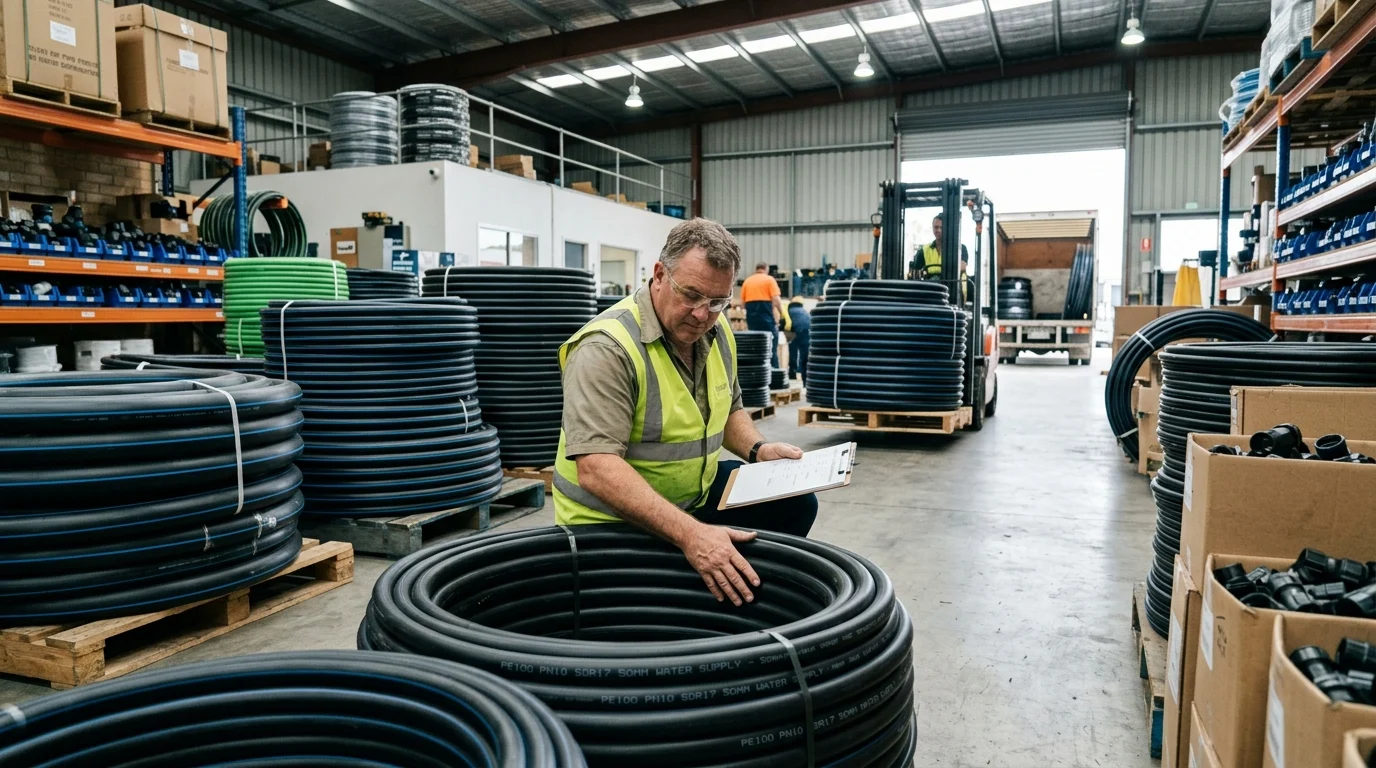
Successfully integrating PE pipes into an agricultural operation requires a systematic approach to procurement. Buyers must synthesize hydraulic calculations, environmental factors, and budget constraints to specify the optimal piping architecture.
Decision framework for matching specifications to needs
Project planners should utilize a standardized decision framework to match PE specifications to field requirements. The first step is calculating the maximum volumetric flow rate and determining the acceptable friction loss. Engineering best practices dictate sizing the pipe to maintain water flow velocities between 0.5 m/s and 1.5 m/s; velocities exceeding 2.0 m/s can induce severe water hammer and excessive energy consumption at the pump.
Next, operational pressure must be mapped against environmental conditions. If the irrigation lines are laid on the surface in hot climates, the pipe’s pressure rating must be adjusted using a temperature derating factor. For example, a PE100 pipe rated for PN10 at 20°C will have its maximum operating pressure derated by a factor of roughly 0.8 when surface temperatures reach 30°C, effectively reducing its safe operating limit to 8 bar.
Common procurement and project planning mistakes
Despite the advantages of PE pipes, procurement and planning errors can compromise system performance. A frequent mistake is under-sizing the pipe diameter to save on initial material costs. This false economy leads to exponentially higher friction losses, forcing operators to install larger, more energy-intensive pumps that inflate electricity costs over the system’s lifespan.
Another common oversight is failing to verify compatibility between the PE pipe’s SDR and the selected mechanical fittings. Fittings are designed for specific wall thicknesses; using an SDR 11 fitting on an SDR 17 pipe will result in an improper seal and inevitable blowouts under pressure. Buyers must ensure that the procurement manifest explicitly matches pipe grades, dimensions, and connection hardware before authorizing production.
Key Takeaways
- The most important conclusions and rationale for PE Pipes
- Specs, compliance, and risk checks worth validating before you commit
- Practical next steps and caveats readers can apply immediately
Frequently Asked Questions
What PE pipe grade is best for agricultural irrigation?
PE100 is usually preferred because it offers higher strength than PE80, allowing thinner walls, better flow capacity, and reliable pressure performance for mainlines and sub-mains.
Which PE pipe pressure rating should I choose for irrigation?
Use PN4–PN6 for low-pressure drip laterals, PN8–PN10 for sub-mains, and PN12.5–PN16 for high-capacity mainlines or systems with pump cycling.
Why are PE pipes better than PVC for farm irrigation?
PE pipes are flexible, impact-resistant, and supplied in long coils, reducing joints and leak risks. They also handle freezing conditions and uneven terrain better than rigid PVC.
Can PE pipes handle fertilizers and chemicals in fertigation?
Yes. Quality PE pipes resist common fertilizers, herbicides, and pesticides used in irrigation water, helping maintain long-term pipe strength and leak-free operation.
Does Donsen supply PE pipes and fittings for irrigation projects?
Yes. Donsen manufactures PE pipes, plastic valves, and fittings for irrigation and water supply, with export experience to 100+ countries and application-specific pipeline solutions.