Comparing CPVC and PPR Pipes for High-Temperature Hot Water Systems
In high-temperature applications, selecting the right piping material is crucial. CPVC pipes offer excellent temperature resistance, making them suitable for hot water systems. On the other hand, PPR pipes also demonstrate strong performance under heat. When evaluating CPVC vs PPR pipe temperature tolerance, both materials have their advantages. However, one must consider factors such as installation methods and long-term durability. For those seeking the best CPVC pipe valves for hot water, understanding these differences can lead to more informed decisions. Additionally, insulation tips for hot water pipes can enhance system efficiency. A common question is, can CPVC handle 90°C hot water? This question remains vital for optimal performance.
Key Takeaways
- CPVC pipes can handle temperatures up to 200°F (93°C), making them suitable for high-temperature hot water systems.
- PPR pipes excel in pressure handling, maintaining higher ratings at elevated temperatures compared to CPVC.
- Use proper installation techniques for CPVC, including solvent cementing and ensuring alignment to prevent failures.
- PPR pipes offer a longer lifespan of over 50 years, while CPVC typically lasts 20 to 30 years under normal conditions.
- Consider the specific needs of your hot water system when choosing between CPVC and PPR pipes for optimal performance.
Temperature Resistance
CPVC Pipes Temperature Ratings
CPVC pipes exhibit impressive temperature resistance, making them a preferred choice for high-temperature applications. According to manufacturer specifications, CPVC can safely operate at a maximum continuous service temperature of 180 °F (82 °C). This rating confirms its suitability for hot water lines and various industrial applications.
Additionally, CPVC pipes can withstand short-term temperatures up to 200 °F (93 °C). This capability allows them to handle sudden temperature spikes without failure, making them ideal for environments where hot water distribution is critical.
| Material | Maximum Continuous Operating Temperature | Maximum Short-Term Temperature |
|---|---|---|
| CPVC | 180 °F (82 °C) | 200 °F (93 °C) |
PPR Pipes Temperature Ratings
PPR pipes also demonstrate strong temperature resistance, with the ability to withstand temperatures up to 95 °C (203 °F). However, performance may decline if exposed to temperatures significantly higher than this maximum. In laboratory testing, CPVC typically handles higher temperatures compared to PPR.
| Pipe Material | Maximum Operating Temperature |
|---|---|
| PPR | 70 °C (158 °F) |
| CPVC | 93 °C (200 °F) |
This data indicates that while PPR pipes are suitable for moderate temperature applications, CPVC pipes are more appropriate for environments requiring higher thermal resistance.
Pressure Handling
CPVC Pipes Pressure Capabilities
CPVC pipes demonstrate notable pressure handling capabilities, particularly at lower temperatures. According to ASTM standards, CPVC fittings typically manage pressures ranging from 10 to 15 bar. However, as temperatures rise, the pressure handling capability of CPVC pipes decreases significantly. For instance, a CPVC pipe rated for 400 psi at 73°F may only support 100 psi at 200°F. This reduction occurs due to the softening of the material at elevated temperatures, which diminishes its strength.
Engineers must apply derating factors when operating CPVC pipes outside the specified temperature range. This ensures safe operation and compliance with industry standards.
PPR Pipes Pressure Capabilities
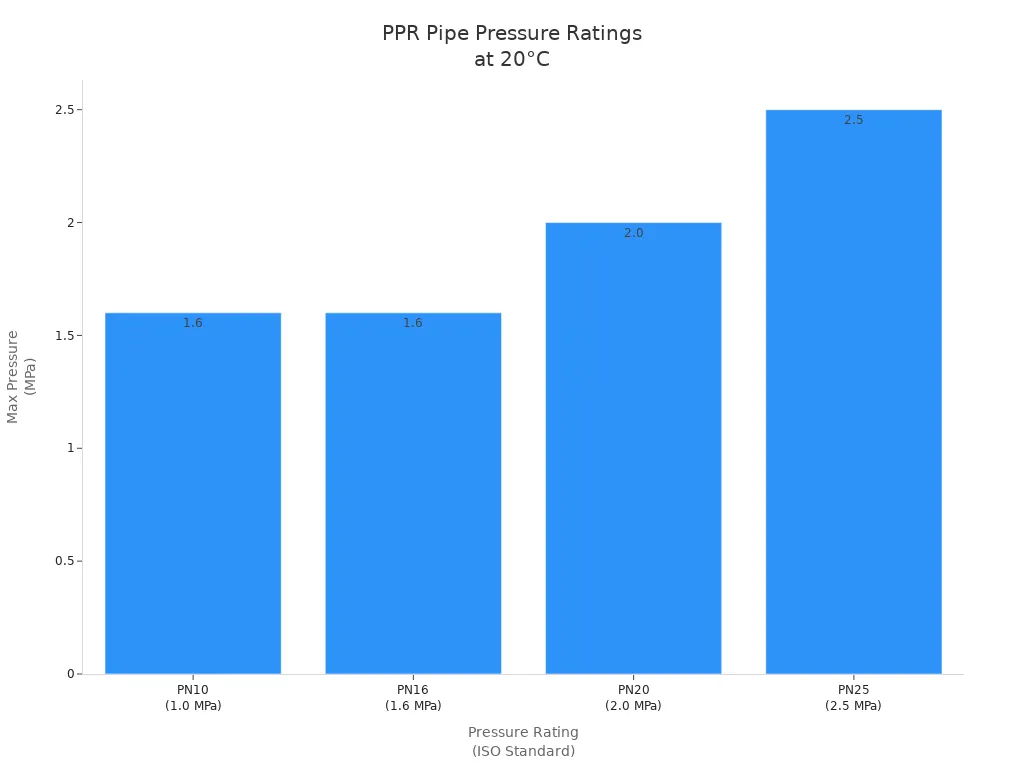
PPR pipes also exhibit strong pressure handling capabilities, making them suitable for various applications. The pressure ratings for PPR pipes at different temperature levels are outlined in the table below:
| Pressure Rating | Maximum Pressure (at 20°C) | Application Examples |
|---|---|---|
| PN10 (1.0 MPa) | 1.6 MPa (16 bar) | Cold water distribution, irrigation, low-pressure heating |
| PN16 (1.6 MPa) | 1.6 MPa (16 bar) | Domestic hot water, underfloor heating, standard plumbing |
| PN20 (2.0 MPa) | 2.0 MPa (20 bar) | Industrial hot water, high-rise buildings, compressed air |
| PN25 (2.5 MPa) | 2.5 MPa (25 bar) | Heavy-duty industrial, high-pressure systems, chemical processing |
At 20°C, PN20 pipes can handle pressures up to 2.0 MPa. However, at 80°C, the same pipe’s pressure rating drops to approximately 0.8 MPa. This indicates that while PPR pipes maintain higher pressure ratings compared to CPVC pipes, their performance also diminishes with increasing temperature.
Installation Methods
CPVC Pipes Installation Techniques
Installing CPVC pipes requires careful attention to detail to ensure a reliable hot water system. Here are some common installation techniques:
- Cutting and Joining: Use a pipe cutter for clean cuts. Ensure that the ends are smooth to facilitate proper joining.
- Solvent Cementing: Apply solvent cement to both the pipe and fitting. Hold the joint together for a few seconds to allow the cement to set.
- Support and Alignment: Properly support the pipes to prevent sagging. Use brackets or hangers to maintain alignment and reduce stress on joints.
However, installers should be aware of common challenges associated with CPVC pipes. The table below outlines these challenges:
| Challenge | Description |
|---|---|
| Exposure to UV light | CPVC pipes are vulnerable to UV damage if not protected, leading to potential degradation. |
| Extreme temperature changes | Rapid fluctuations can weaken the material, causing it to crack under high temperatures. |
| Improper storage | Storing in extreme conditions can make CPVC brittle, increasing the risk of breakage during use. |
| Physical impact | Dropping or striking can cause cracks, especially if the material is cold or weakened over time. |
PPR Pipes Installation Techniques
PPR pipes utilize a different installation method that emphasizes heat fusion. The following steps outline the recommended techniques:
- Heating and Fusion: Heat the pipe and fitting to around 260°C (500°F). Ensure proper alignment before joining to create a strong bond.
- Pipe Alignment and Support: Accurate alignment is crucial. Use supports to prevent sagging and stress on joints, which can lead to leaks.
- Testing and Inspection: Conduct pressure tests after installation to check for leaks. This step ensures the reliability of the system and confirms that all joints are secure.
By following these installation methods, professionals can ensure that both CPVC and PPR pipes perform optimally in high-temperature hot water systems.
Long-Term Performance
Durability of CPVC Pipes
CPVC pipes demonstrate a commendable lifespan in high-temperature hot water systems. Field studies indicate that these pipes typically last between 20 to 30 years. Under ideal conditions, CPVC fittings can endure for 50 to 75 years. In residential plumbing, they often achieve their longest lifespans due to moderate temperatures and pressures. Generally, CPVC pipes maintain a minimum lifespan of 50 years under normal operating conditions.
However, several factors can affect their durability:
- Improper installation can lead to premature failures.
- Chemical incompatibility with certain substances may cause degradation.
- Natural aging of the material can weaken pipes over time.
CPVC pipes are particularly vulnerable to rapid temperature fluctuations, which can lead to cracking and other failures.
Durability of PPR Pipes
PPR pipes exhibit impressive durability, with a service life exceeding 50 years under normal conditions. Their molecular structure remains stable, contributing to their resistance to aging, brittleness, and deformation. PPR piping systems are known for their high resistance to temperature, pressure, and chemicals, making them suitable for high-temperature hot water systems.
Despite their strengths, PPR pipes are not without weaknesses:
- They may experience reduced impact resistance over time.
- High temperatures can lead to wall thinning, compromising structural integrity.
- Operating above recommended temperature ratings significantly decreases their lifespan.
The reliability of joints in PPR pipes is noteworthy. Their fused joints create a monolithic system that is less prone to leaks compared to CPVC pipes, which rely on glued joints that can fail over time.
| Pipe Type | Average Lifespan | Common Causes of Failure |
|---|---|---|
| CPVC | 20-30 years | Improper installation, chemical incompatibility, natural degradation |
| PPR | 50+ years | Reduced impact resistance, wall thinning, high-temperature operation |
Chemical Resistance
CPVC Pipes Chemical Compatibility
CPVC pipes exhibit strong chemical resistance, particularly in high-temperature hot water systems. They effectively resist various chemicals, which is crucial for maintaining system integrity. Key chemical compatibilities include:
- Chlorine
- Disinfectants
These properties allow CPVC pipes to withstand the harsh conditions often found in municipal water supplies. However, it is essential to note that both CPVC and PPR pipes can experience accelerated degradation when exposed to incompatible chemicals, especially at temperatures exceeding 60°C. The degradation rates can double with every 10°C increase in temperature, leading to faster chemical aging in hot water systems. Notably, CPVC maintains better chemical resistance at elevated temperatures compared to PPR, which is vital for long-term durability.
PPR Pipes Chemical Compatibility
PPR pipes also demonstrate impressive chemical resistance, making them suitable for high-temperature applications. They can withstand a variety of chemicals, including:
- Dilute and moderately concentrated acids such as hydrochloric acid, sulfuric acid, and acetic acid.
- Common bases like sodium hydroxide and potassium hydroxide.
This resistance ensures the integrity of the piping system in high-temperature hot water applications. The table below summarizes the operational temperatures for both pipe types:
| Pipe Type | Continuous Operation Temperature | Peak Tolerance |
|---|---|---|
| PPR | 70°C | 95°C |
| CPVC | 60°C | 82°C |
PPR pipes exhibit long-term resistance to low and medium concentrations of many common acids and bases. This characteristic enhances their reliability in various applications, ensuring they perform well under demanding conditions.
In summary, both CPVC and PPR pipes offer unique advantages for high-temperature hot water systems. Key findings include:
- PPR pipes withstand continuous temperatures up to 70°C, while CPVC is rated for 60°C.
- PPR maintains better pressure ratings at elevated temperatures compared to CPVC, which loses capacity more rapidly.
- The heat fusion welding method used in PPR creates stronger joints than CPVC’s solvent cement joints.
Given these factors, PPR pipes emerge as the more suitable choice for high-temperature applications. Their durability and superior jointing method enhance long-term performance. However, CPVC remains a strong contender due to its higher temperature tolerance and chemical resistance. Ultimately, the decision should consider installation methods and the specific requirements of the hot water system.
FAQ
What is the main difference between CPVC and PPR pipes?
CPVC pipes excel in high-temperature resistance, while PPR pipes offer superior pressure handling. CPVC can withstand temperatures up to 200°F (93°C), whereas PPR is rated for 203°F (95°C) but has lower continuous operating temperatures.
Can CPVC pipes be used for drinking water?
Yes, CPVC pipes are safe for drinking water. They meet various health and safety standards, including NSF certification, ensuring they do not leach harmful substances into the water supply.
How long do CPVC and PPR pipes last?
CPVC pipes typically last between 20 to 30 years, while PPR pipes can exceed 50 years under normal conditions. Proper installation and maintenance can enhance their longevity.
Are there specific installation tools required for CPVC and PPR pipes?
Yes, CPVC pipes require a pipe cutter and solvent cement for joining. PPR pipes need a fusion machine to heat and join the pipes effectively. Proper tools ensure reliable installations.
What factors should I consider when choosing between CPVC and PPR pipes?
Consider temperature resistance, pressure handling, installation methods, and long-term performance. Evaluate the specific requirements of your hot water system to make an informed decision.