Introduction
Leakage is possible with PVC ball valves, but it usually points to a specific issue rather than an inherent flaw in the valve itself. Seal wear, damaged seats, trapped debris, pressure or temperature limits, and installation errors can all compromise performance over time. Understanding where leaks occur—through the valve, around the stem, or at threaded or solvent-welded connections—helps narrow the cause quickly. This article explains the most common reasons a PVC ball valve leaks, how operating conditions affect sealing reliability, and what to check before deciding whether the valve can be repaired, adjusted, or replaced.
Why PVC Ball Valves Leak in Service
Thermoplastic piping systems are foundational to modern fluid handling, yet operators frequently encounter a persistent challenge: maintaining absolute seal integrity. A standard PVC ball valve is engineered to provide reliable flow control, typically rated for maximum continuous operating temperatures of 140°F (60°C) and pressures up to 150 PSI at 73°F (23°C). Despite these robust specifications, leakage remains a primary failure mode in both commercial and industrial applications.
Understanding the mechanics behind valve leakage requires analyzing the interplay between the valve’s structural materials and the dynamic forces of the system. Polyvinyl chloride is rigid and chemically resistant, but the internal sealing mechanisms—comprising elastomeric O-rings and polytetrafluoroethylene (PTFE) seats—are susceptible to deformation, degradation, and mechanical stress over time.
Common Causes of Leakage
The most frequent point of failure in thermoplastic valves occurs at the elastomeric seals. O-rings, typically manufactured from EPDM or FPM/FKM, endure constant friction against the spherical ball during actuation. Over thousands of cycles, this friction induces abrasive wear. Furthermore, particulate matter suspended in the fluid stream can score the PTFE seats, creating micro-channels that bypass the primary seal and result in internal pass-through leakage.
Improper installation practices also account for a significant percentage of external leaks. When threaded connections are over-torqued beyond the industry standard of hand-tight plus one-half turn, the resulting mechanical stress can induce micro-fractures in the valve body. Conversely, insufficient structural support for adjacent piping transfers excessive bending moments directly to the valve body, distorting the internal geometry and compromising the seal alignment.
Why Small Leaks Still Matter
While a minor weep at the valve stem or union nut may appear inconsequential, the cumulative impact is substantial. A leak rate of just one drip per second results in approximately 8.6 gallons of fluid lost per day. In industrial environments handling aggressive chemicals or precise dosing requirements, this volumetric loss alters chemical concentrations, decreases system pressure efficiency, and introduces severe environmental and occupational safety hazards. Furthermore, external fluid accumulation accelerates the degradation of adjacent metallic supports and electrical conduits.
Operating Conditions and Design Factors
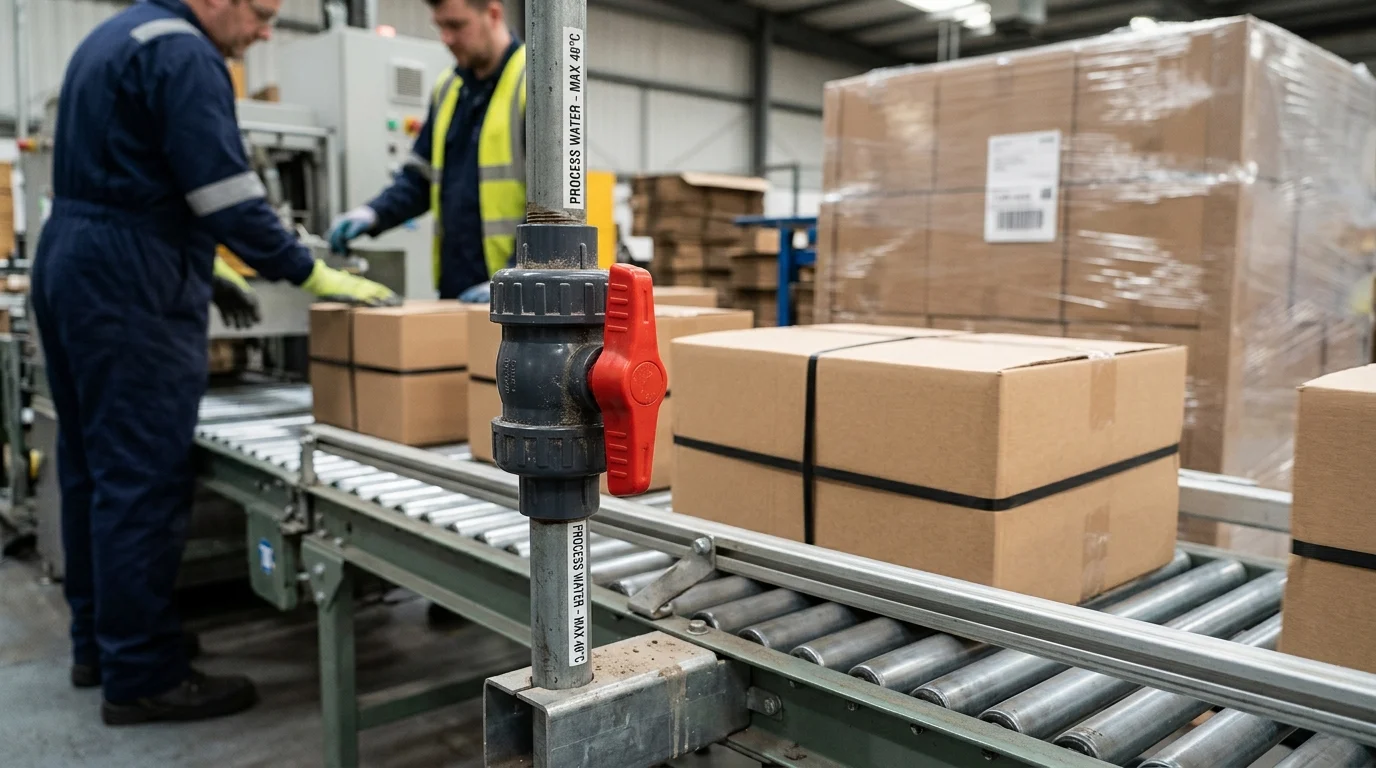
The operational lifespan and seal integrity of a valve are directly dictated by the specific environmental and hydrodynamic conditions to which it is subjected. Engineers must calculate the derating curve of PVC, as the material’s pressure-handling capacity decreases as temperatures increase. Operating a system at the margins of these derated specifications exponentially increases the probability of seal failure.
Key Conditions That Increase Leak Risk
Hydraulic shock, commonly known as water hammer, is a primary catalyst for sudden valve leakage. When flow is abruptly halted, kinetic energy converts into a high-pressure shockwave that can momentarily exceed 200 PSI, violently impacting the closed ball and displacing the O-rings from their machined grooves. Systems lacking surge arrestors or utilizing fast-acting pneumatic actuators are particularly vulnerable to this phenomenon.
Environmental exposure also degrades valve integrity. Ultraviolet radiation causes photo-oxidation in unprotected PVC, leading to polymer chain scission. This embrittlement reduces the material’s impact resistance by up to 20% over prolonged exposure, making the valve body highly susceptible to cracking under standard operational vibrations or thermal expansion cycles.
How to Compare Valve Designs
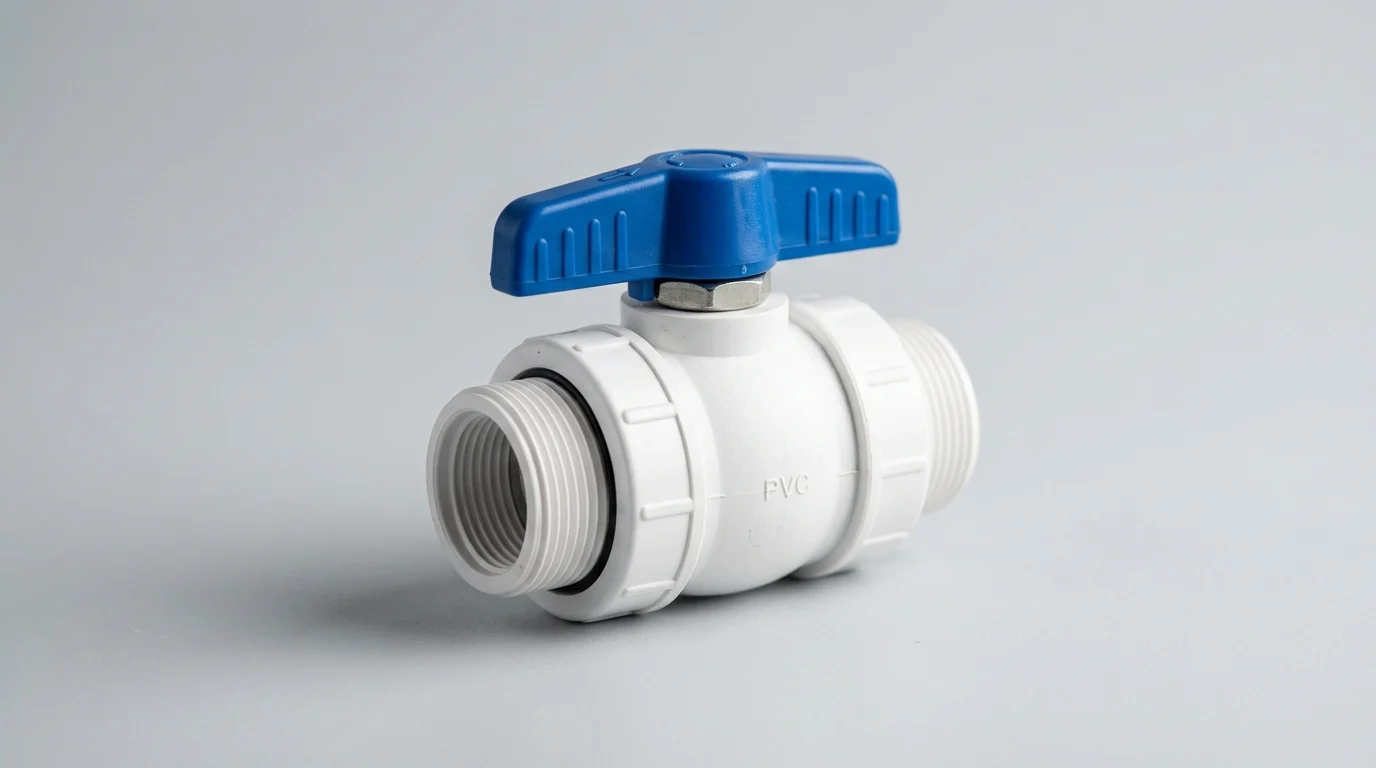
Selecting the correct valve architecture is critical for mitigating leak risks. Compact, single-piece valves feature a sealed body that cannot be disassembled, meaning any internal seal failure necessitates a complete cut-out and replacement. In contrast, true union designs utilize threaded union nuts on both ends, allowing the central valve body to be removed from the pipeline for seal replacement without disrupting the fixed piping.
| Valve Design | Maintenance Profile | Max Pressure Rating @ 73°F | Typical Industrial Application |
|---|---|---|---|
| Compact (Single-Piece) | Non-repairable; replace entire unit | 150 PSI | Low-pressure cooling lines, water treatment |
| True Union | Fully repairable in-line | 235 PSI | Chemical processing, automated dosing systems |
| Multi-Port (3-Way) | Complex internal seating | 150 PSI | Flow diversion, mixing applications |
Prevention, Inspection, and Repair
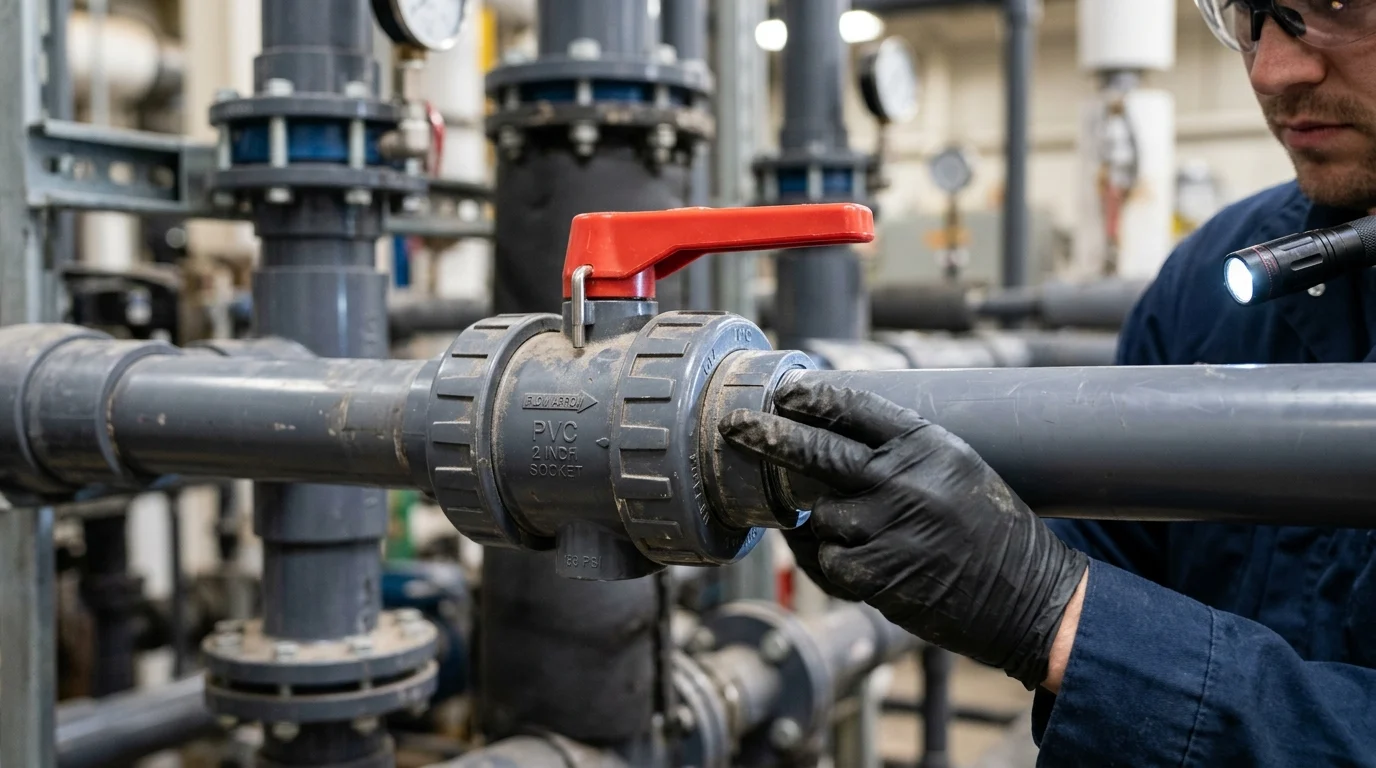
Proactive maintenance protocols are essential for extending the lifecycle of thermoplastic fluid control systems. Industry data indicates that preventative maintenance strategies cost roughly 15% to 20% of the capital required for reactive emergency repairs, factoring in system downtime and fluid loss. Establishing a routine inspection schedule allows facilities to identify and rectify minor seal degradation before it cascades into catastrophic failure.
Inspection and Troubleshooting Steps
Effective troubleshooting begins with isolating the leak origin. External weeping around the stem often indicates a compromised stem O-ring or a loose packing gland. Technicians should visually inspect the exterior for crystalline deposits or salt buildup, which are early indicators of slow chemical evaporation through micro-leaks. For union connections, verifying that the union nuts have not backed off due to harmonic vibration is a critical first step.
Hydrostatic pressure testing is the definitive method for validating internal seal integrity. During scheduled downtime, the valve is subjected to static fluid pressure—typically 1.5 times the standard operating pressure, provided it does not exceed the valve’s maximum rated capacity. Pressure gauges positioned downstream will immediately indicate pass-through leakage if the PTFE seats are worn or if the ball has suffered abrasive scoring.
When to Repair or Replace a Valve
The decision to repair versus replace depends on the valve’s design and the extent of internal damage. For true union configurations, replacing EPDM O-rings and PTFE seats is a standard operational expense that restores full functionality. However, technicians must closely inspect the spherical ball during disassembly. If abrasive media has caused surface scoring exceeding 0.1 mm in depth, new soft seals will fail to conform to the damaged geometry, and the entire valve body must be replaced.
Ultimately, chronic leakage often signals a mismatch between the valve specification and the system demands.
Key Takeaways
- The most important conclusions and rationale for PVC ball valve
- Specs, compliance, and risk checks worth validating before you commit
- Practical next steps and caveats readers can apply immediately
Frequently Asked Questions
Can a PVC ball valve leak even when it is new?
Yes. New valves can leak from over-torqued threads, poor pipe alignment, damaged seats, or debris inside the line. Check installation and flush the system before use.
Where do PVC ball valves usually leak?
Most leaks appear at the stem, union nuts, threaded ends, or through the closed ball internally. Inspect O-rings, PTFE seats, and body threads first.
What operating conditions make a PVC ball valve leak more often?
High temperature, pressure near the valve limit, water hammer, UV exposure, and frequent cycling all raise leak risk. Keep service within rated conditions and add surge protection if needed.
Can a small leak from a PVC ball valve be ignored?
No. Even a slow drip can waste fluid, reduce pressure, and create safety or corrosion problems. Repair or replace the valve as soon as leakage is confirmed.
Which PVC ball valve design is easier to fix if it leaks?
A true union PVC ball valve is usually easier to service because you can remove the valve body and replace seals without cutting the pipe. Compact valves are typically replaced whole.