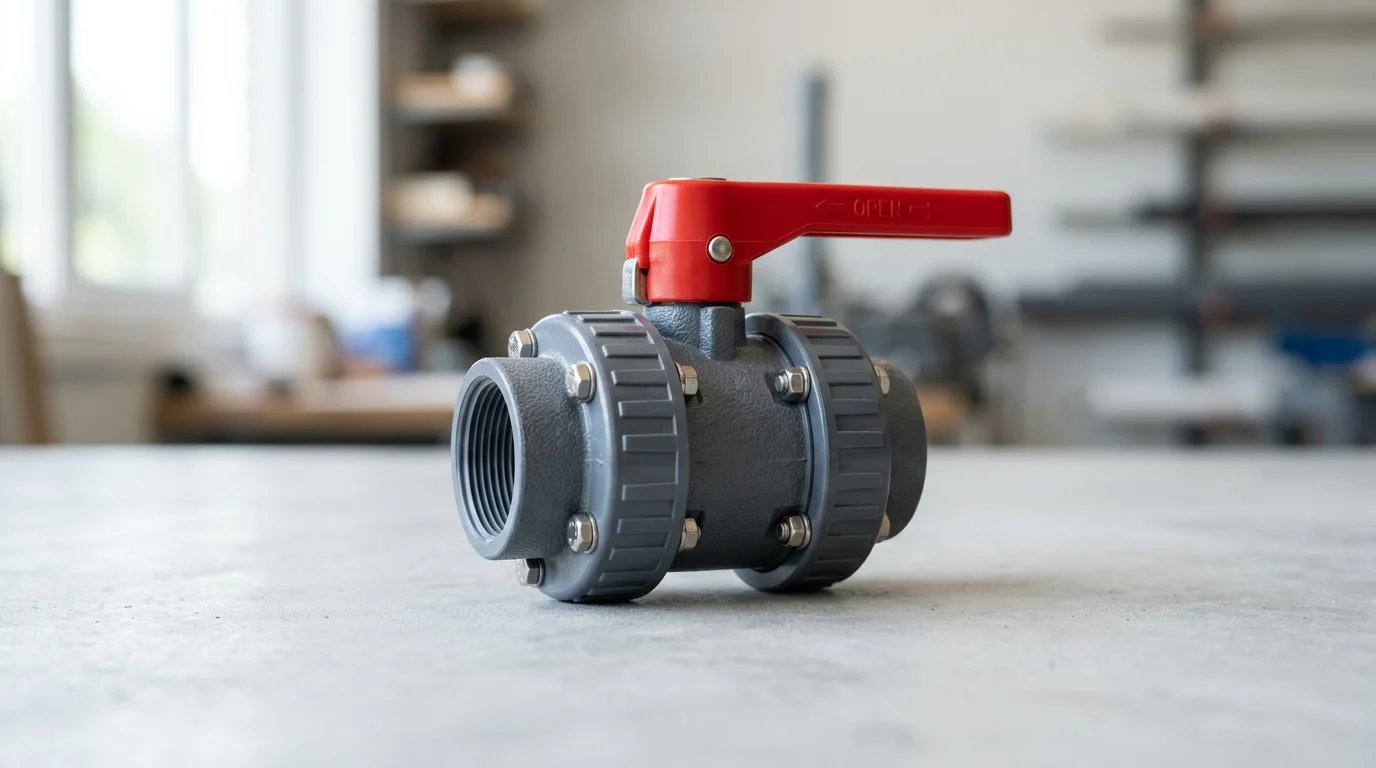
Introduction
PVC ball valves may look interchangeable, but their service life, pressure tolerance, and chemical resistance can differ substantially. Quality depends on more than the PVC label: resin purity, additive packages, molding accuracy, seal materials, and assembly standards all affect how a valve performs in real operating conditions. For buyers, installers, and maintenance teams, those differences influence leak risk, durability in sunlight or corrosive environments, and total replacement cost over time. This article explains the main factors that separate higher-grade PVC ball valves from lower-cost alternatives, so you can evaluate products more accurately and choose a valve that matches the demands of your system.
Why PVC ball valves vary in quality
The assumption that all polyvinyl chloride fluid control components offer identical performance is a costly procurement misconception. While the base polymer remains standard across the industry, specific compounding formulations, molding techniques, and assembly protocols dictate whether a valve will survive a decade of industrial use or fail prematurely under pressure.
Industrial buyers must recognize that the chemical matrix of a valve is highly variable. The inclusion of UV stabilizers, antioxidants, and titanium dioxide directly influences the material’s resistance to environmental degradation. Valves lacking these critical additives become brittle when exposed to direct sunlight or harsh ambient conditions, leading to catastrophic pipeline failures.
Manufacturing factors that affect performance
Injection molding precision and material purity serve as the primary baseline indicators of component integrity. Top-tier manufacturers utilize 100% virgin PVC resin, whereas lower-cost alternatives frequently incorporate regrind material to reduce overhead. Exceeding a 15% regrind ratio significantly compromises the structural matrix, reducing the material’s impact resistance by up to 25% and increasing the likelihood of micro-fractures under stress.
Furthermore, state-of-the-art manufacturing facilities maintain strict dimensional tolerances of ±0.05 mm during the injection molding process. This level of precision requires advanced mold cooling channels and optimized gate designs to prevent warping. Such accuracy ensures that PVC ball valves assemble with perfect concentricity, preventing uneven wear on internal components and eliminating bypass leakage around the ball sphere.
Design details that influence sealing and durability
Beyond the polymer resin, internal architecture dictates lifecycle longevity and operational efficiency. The integration of dual O-ring stem seals and CNC-machined polytetrafluoroethylene (PTFE) seats separates industrial-grade units from basic residential commodities. A blowout-proof stem design is essential to prevent the stem from being ejected during sudden pressure spikes or water hammer events.
Operating torque is another critical design detail influenced by internal geometry. High-quality valves maintain an operating torque below 5 N·m, which prevents excessive strain on automated actuators and reduces manual operator fatigue.
| Specification | Commercial Grade | Industrial Grade |
|---|---|---|
| Resin Composition | Up to 25% Regrind | 100% Virgin PVC |
| Machining Tolerance | ±0.20 mm | ±0.05 mm |
| Seat Material | Standard EPDM / TPE | CNC-Machined PTFE |
| Expected Cycle Life | < 2,500 actuations | > 10,000 actuations |
Specifications buyers should compare
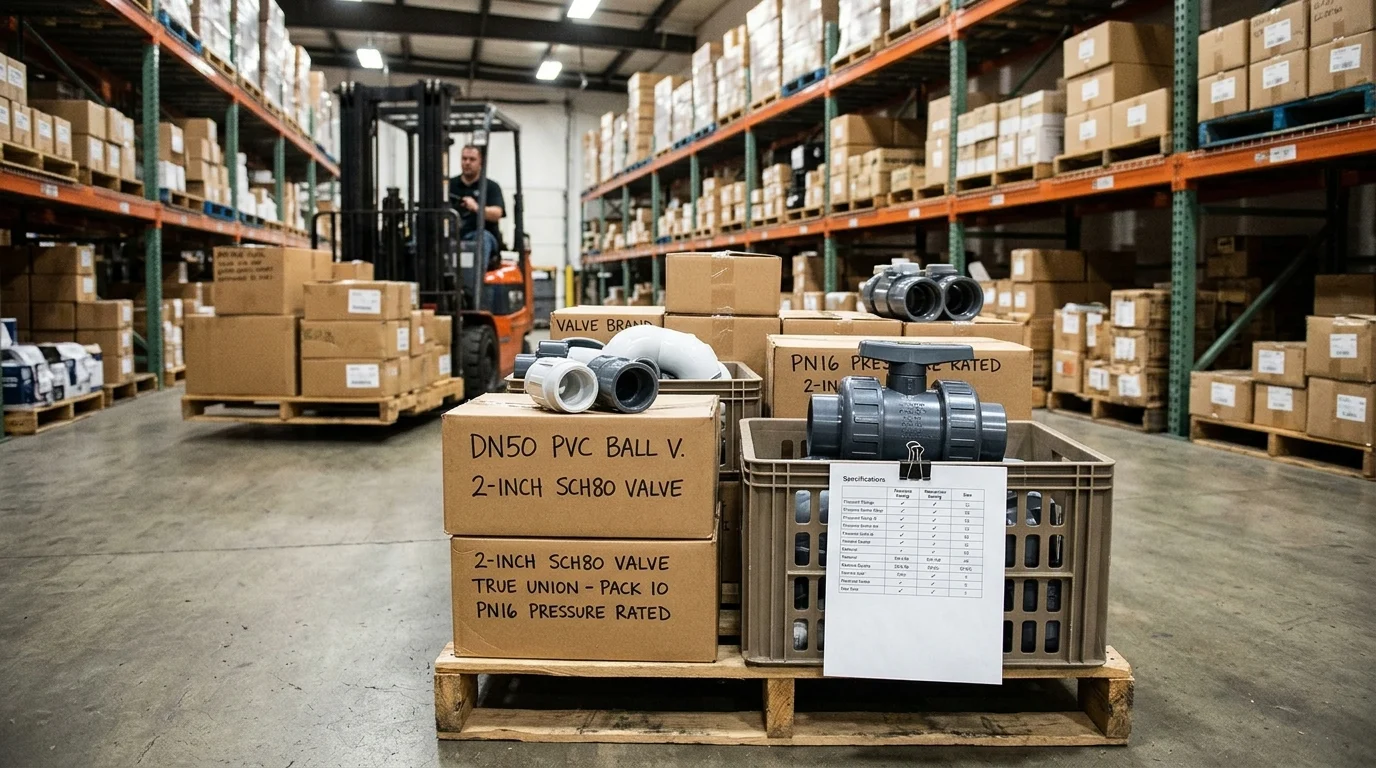
Procurement engineers must scrutinize specification sheets to differentiate between valves suitable for light irrigation and those engineered for harsh chemical dosing. Relying solely on nominal pipe size (NPS) or outer diameter is insufficient for ensuring long-term system compatibility.
The physical configuration—whether compact, single union, or true union—also plays a major role in maintenance planning. True union designs allow the central valve body to be removed from the pipeline without cutting the pipe, a critical requirement for continuous process facilities where downtime is penalized heavily.
Technical, compliance, and testing criteria
Stringent compliance with international standards serves as a non-negotiable benchmark for quality assurance. High-grade valves conform to ASTM D2466 or D2467 for dimensional accuracy and bear NSF/ANSI 61 certification for potable water safety. Facilities producing expert-grade components subject their designs to rigorous cycle testing, demanding over 10,000 actuations without a drop in sealing efficacy.
Rigorous batch testing should also include hydrostatic pressure testing. Reputable manufacturers test their assembled valves at 1.5 times the maximum rated working pressure for a minimum of one hour. This protocol ensures the integrity of the ultrasonic welds, threading, and internal elastomeric seals before the product is cleared for export.
Pressure ratings and chemical compatibility
Pressure ratings are highly dependent on operating temperatures, a variable frequently overlooked during initial sourcing. A standard Schedule 80 PVC valve may boast a PN16 rating, equating to a 232 psi capacity at an ambient 73°F (23°C). However, standard PVC experiences a drastic derating curve as thermal loads increase.
At 140°F (60°C), the pressure capacity of PVC drops by up to 78%, rendering a 232 psi valve safe only up to approximately 50 psi. Buyers must also verify compatibility charts for specific media. While PVC handles 70% sulfuric acid and 12.5% sodium hypochlorite exceptionally well, it degrades rapidly in the presence of aromatic hydrocarbons, requiring a shift to CPVC or entirely different materials.
How to choose the right PVC ball valve supplier
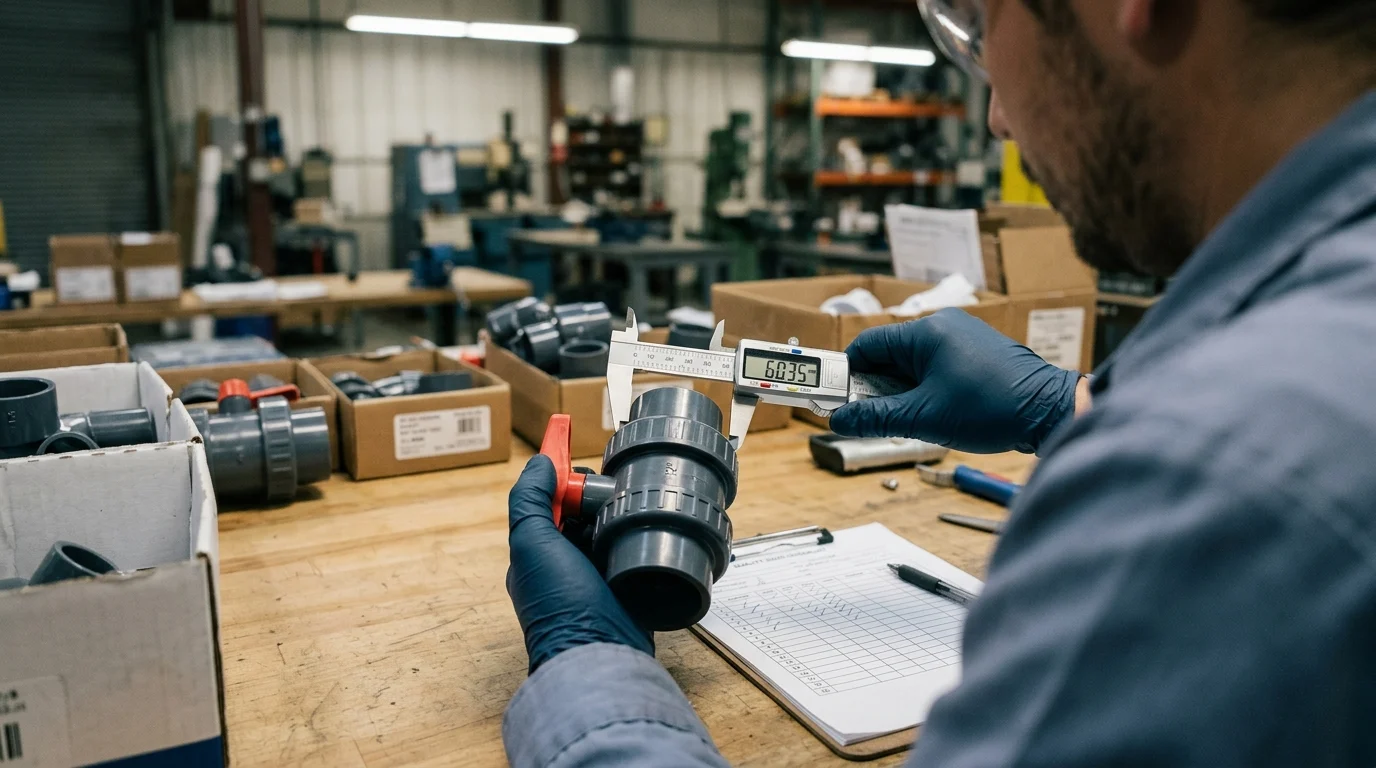
Identifying a manufacturing partner capable of delivering consistent quality requires a systematic auditing approach. The supplier selection process must prioritize long-term operational stability and rigorous quality control over immediate capital expenditure reductions.
Relying on a single sample is a common pitfall; expert buyers evaluate a supplier’s capacity to maintain tight tolerances across millions of units. This requires deep visibility into their supply chain, tooling maintenance schedules, and raw material sourcing practices.
Sourcing and inspection steps to reduce risk
Mitigating supply chain risk begins with requesting comprehensive Material Test Reports (MTRs) and verifying active ISO 9001:2015 certifications. Professional buyers implement strict Acceptable Quality Limit (AQL) parameters during pre-shipment inspections. Specifying an AQL of 1.5 for major defects—such as improper seating torque or external molding flash—ensures that non-compliant batches are rejected.
Additionally, verifying the manufacturer’s in-house testing capabilities provides a reliable indicator of their commitment to defect reduction. Leading factories utilize automated pneumatic leak detection lines, testing 100% of their output at 0.6 MPa to identify microscopic seal failures that manual water testing might miss.
Balancing cost, reliability, and application fit
Strategic sourcing requires aligning the valve’s tier with the intended application to optimize the total cost of ownership (TCO). While a standard utility valve may cost $2, an industrial-grade true union valve can exceed $15. However, the true union design allows for rapid in-line maintenance, saving hundreds of dollars in downtime and labor during a routine seat replacement.
Buyers must also navigate logistical constraints such as Minimum Order Quantities (MOQs) and lead times.
Key Takeaways
- The most important conclusions and rationale for PVC ball valves
- Specs, compliance, and risk checks worth validating before you commit
- Practical next steps and caveats readers can apply immediately
Frequently Asked Questions
Are all PVC ball valves the same quality?
No. Quality varies by resin purity, molding accuracy, seat material, and seal design. Industrial-grade valves usually use virgin PVC, PTFE seats, and tighter tolerances.
What should I check on a PVC ball valve datasheet?
Check resin type, pressure rating at your operating temperature, seat and seal materials, cycle life, standards compliance, and whether it is compact, single union, or true union.
Why does virgin PVC matter in ball valves?
Virgin PVC offers better strength and impact resistance. High regrind content can increase brittleness, micro-fractures, and early failure under pressure or outdoor exposure.
When is a true union PVC ball valve the better choice?
Choose true union valves when you need easy maintenance. They let you remove the valve body without cutting pipe, reducing downtime in service-intensive systems.
Do pressure ratings stay the same at higher temperatures?
No. PVC pressure capacity drops as temperature rises. For example, a valve rated 232 psi at 73°F may be safe for only about 50 psi at 140°F, so always verify derating.