Advantages of PPR Stainless Steel Fittings for B2B Applications
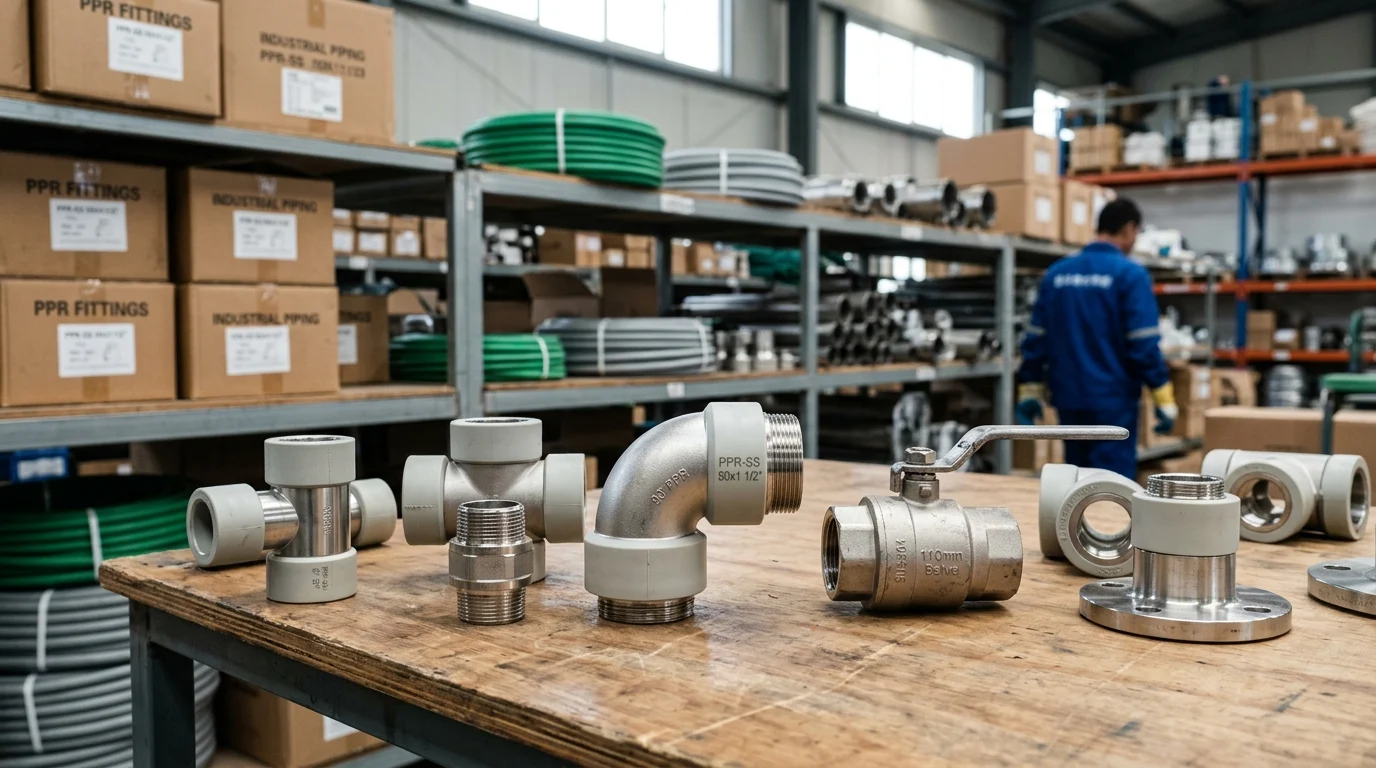
Why PPR stainless steel fittings are gaining traction in B2B procurement
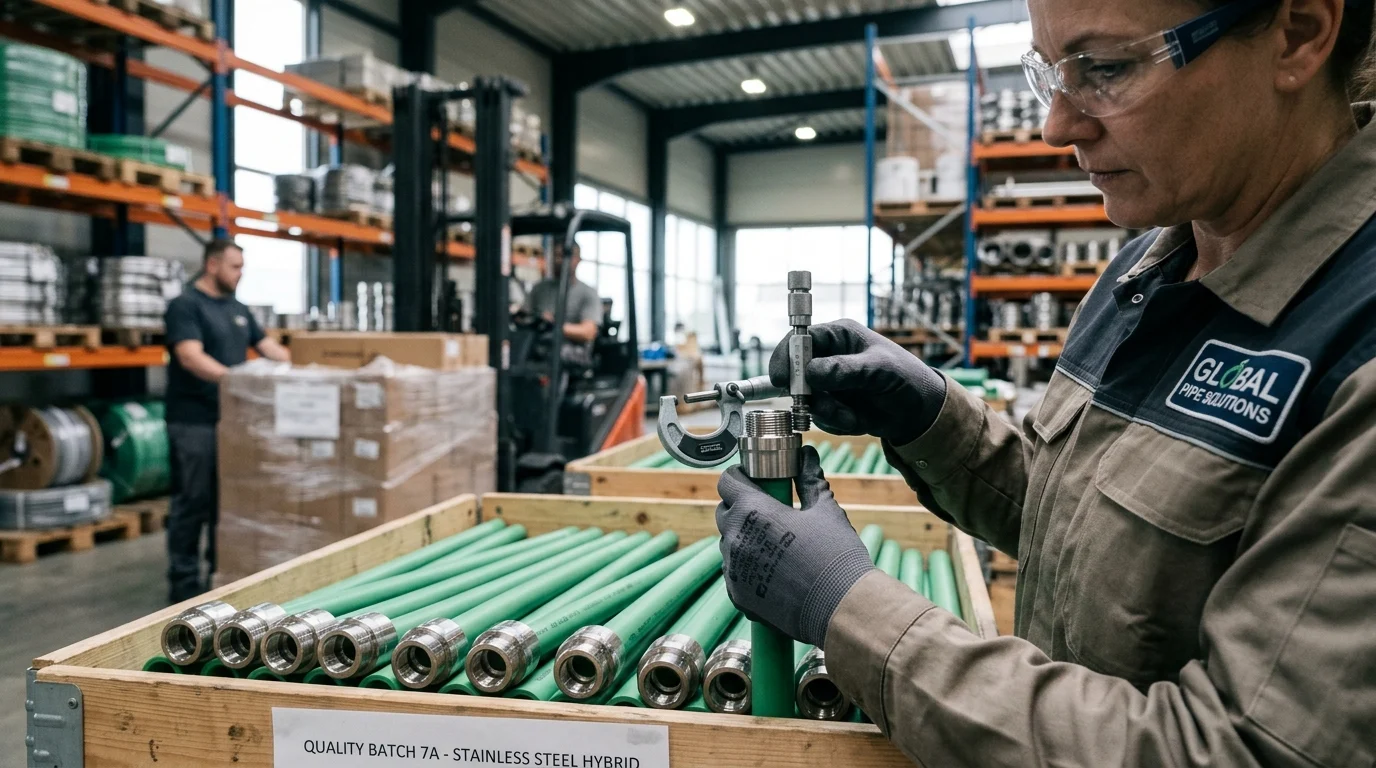
The global plumbing supply chain is shifting as commercial builders and industrial contractors demand higher durability from hybrid piping systems. Wholesale buyers and procurement teams increasingly turn to PPR stainless steel fittings to replace traditional brass-insert components. This transition is driven by the urgent need to mitigate heavy metal leaching, particularly lead, in potable water systems while maintaining the structural integrity required for high-pressure applications.
For distributors and importers, this shift represents a strategic commercial opportunity. Transitioning catalog offerings toward stainless steel hybrid fittings allows B2B suppliers to align with stricter global environmental and health regulations. Furthermore, as copper and brass raw material costs remain volatile, stainless steel provides a more stable pricing matrix, enabling procurement managers to forecast costs accurately and protect supply chain margins over long-term contracts.
Market demand for corrosion-resistant hybrid piping components
Industrial and commercial sectors are rapidly scaling their demand for piping solutions that combine the chemical inertness of plastics with the mechanical strength of metals. Buyers prioritize PPR stainless steel fittings because they offer superior resistance to scaling and corrosion compared to their brass counterparts. This hybrid design is crucial in regions with aggressive water chemistry or high chloride content, where traditional metal fittings degrade prematurely, leading to costly maintenance and system failures.
Impact on margins, differentiation, and service life
From a commercial perspective, stocking stainless steel hybrid fittings allows distributors to differentiate their portfolios in a highly commoditized market. Because these components offer an extended service life—often exceeding 50 years under standard operating conditions—distributors can position them as premium solutions. This premium positioning protects profit margins from the aggressive price wars typically seen with standard all-plastic or low-grade brass fittings, yielding higher lifecycle value for both the supplier and the end-contractor.
Common applications in plumbing, HVAC, industrial water, and buildings
These hybrid fittings are engineered for versatility across rigorous environments. In commercial building plumbing, they ensure safe, lead-free potable water delivery. In HVAC systems, they provide the necessary thermal stability for hot and chilled water circulation without succumbing to thermal fatigue. Additionally, industrial water processing facilities rely on them for transporting mildly aggressive fluids, where the stainless steel threaded inserts prevent chemical degradation and ensure secure mechanical joints.
What defines PPR stainless steel fittings
At their core, PPR stainless steel fittings are advanced hybrid components manufactured by overmolding Polypropylene Random Copolymer (PPR) around a precision-machined stainless steel threaded insert. This manufacturing process requires sophisticated injection molding technology to ensure a seamless, leak-proof bond between the thermoplastic body and the metallic core. The resulting fitting leverages the thermofusion capabilities of PPR for pipe connections while offering robust, wear-resistant metal threads for connecting valves, pumps, and sanitary fixtures.
Understanding the technical definition of these products is critical for procurement teams assessing factory capabilities. A true high-quality hybrid fitting is not simply a plastic shell glued to a metal piece; it utilizes anti-rotation grooves and specialized knurling on the stainless steel insert. These mechanical interlocks prevent the metal core from twisting or pulling out of the plastic body when contractors apply high torque during installation, ensuring long-term structural reliability.
Core construction and performance attributes
The primary performance attribute of these fittings is their synergistic construction. The PPR outer body provides excellent thermal insulation, chemical resistance, and acoustic dampening, while the stainless steel insert delivers uncompromising thread strength and hygiene. This dual-material construction effectively eliminates the risk of galvanic corrosion, a common issue when dissimilar metals are joined in traditional piping networks.
Specifications, pressure ratings, temperature ranges, and connection types
Industrial buyers must evaluate fittings based on strict technical specifications. Standard high-quality hybrid fittings are typically rated for nominal pressures of PN20 or PN25, making them suitable for high-rise building water columns. They operate efficiently in continuous temperature ranges up to 70°C, with short-term tolerances up to 95°C. Connection types usually feature male or female BSP (British Standard Pipe) or NPT (National Pipe Thread) threads, depending on the target export market.
Stainless steel grades and manufacturing details buyers should review
Procurement teams must rigorously verify the grade of the stainless steel used in the inserts. Grade 304 stainless steel is the standard for most potable water and HVAC applications, offering excellent baseline corrosion resistance. However, for industrial settings, coastal regions, or medical facilities, buyers should specify Grade 316L, which contains molybdenum for superior resistance to pitting and chloride-induced corrosion.
How PPR stainless steel fittings compare with alternative materials
When evaluating piping components for large-scale infrastructure or wholesale distribution, procurement managers must weigh the merits of hybrid stainless steel fittings against legacy materials. Historically, brass has been the default material for threaded inserts in PPR fittings. However, regulatory pressures regarding lead content and the unpredictable price fluctuations of copper alloys have forced buyers to reconsider their material strategies.
Comparing PPR stainless steel fittings to alternatives like all-plastic PPR, galvanized steel, and CPVC reveals distinct operational advantages. While all-plastic threads are inexpensive, they are highly susceptible to cross-threading and deformation under torque, rendering them unsuitable for high-stress mechanical connections. Galvanized steel, though strong, is prone to internal rusting and scale buildup over time, reducing flow rates and compromising water quality.
Comparison with brass, all-plastic PPR, galvanized steel, and CPVC
| Material Type | Mechanical Strength | Corrosion Resistance | Cost Volatility | Primary Drawback |
|---|---|---|---|---|
| PPR + Stainless Steel | High | Excellent | Low | Higher initial unit cost |
| PPR + Brass | High | Good (varies by alloy) | High | Potential lead leaching |
| All-Plastic PPR | Low | Excellent | Low | Thread stripping under torque |
| Galvanized Steel | Very High | Poor (long-term) | Moderate | Rust and scale accumulation |
Performance trade-offs in corrosion resistance, thermal stability, and installation
Performance-wise, stainless steel inserts offer unmatched corrosion resistance, completely eliminating the “dezincification” problem that plagues standard brass fittings in aggressive water. Thermally, both brass and stainless steel expand at different rates than PPR, but superior injection molding in stainless steel fittings accommodates this thermal cycling without micro-cracking. During installation, stainless steel threads withstand heavy wrench torque and repetitive coupling, whereas CPVC or all-plastic threads often strip or crack under similar stress.
Commercial trade-offs in cost, lifecycle value, and channel fit
While the upfront procurement cost of stainless steel hybrid fittings may be marginally higher than low-grade brass or all-plastic alternatives, the lifecycle value is significantly greater. Distributors benefit from reduced warranty claims and product returns. For commercial channels targeting eco-certified green buildings or hospital projects, the non-toxic, lead-free nature of stainless steel is a mandatory requirement, justifying the premium and ensuring better channel fit for high-value tenders.
Technical and quality criteria to verify before sourcing
Sourcing high-quality hybrid fittings requires a rigorous technical vetting process. Because the reliability of the fitting depends entirely on the bond between the metal and the plastic, procurement teams cannot rely on visual inspections alone. Buyers must partner with manufacturers that utilize advanced injection molding machines equipped with precise temperature and pressure controls to prevent micro-voids at the metal-plastic interface.
Furthermore, verifying quality means delving into the manufacturer’s raw material supply chain. The PPR resin must be sourced from reputable petrochemical suppliers to ensure high molecular weight and thermal stability, while the stainless steel must come with verifiable metallurgical certificates. Cutting corners on either material compromises the hydrostatic integrity of the final product, leading to catastrophic leaks in pressurized systems.
Material consistency, steel grade, thread accuracy, and sealing integrity
Buyers must enforce strict tolerances on thread accuracy to ensure compatibility with international plumbing fixtures. Threads must be CNC-machined rather than cast to guarantee sealing integrity. Additionally, material consistency is vital; the stainless steel must be genuinely 304 or 316 grade, not a cheaper 200-series alloy that will rust upon exposure to moisture.
Test reports, leakage validation, traceability, and batch control
A reliable supplier must provide comprehensive test reports, including hydrostatic pressure tests and thermal cycling evaluations (e.g., alternating between 20°C and 95°C for thousands of cycles). Batch control and traceability are equally critical; each production run should be stamped with a date code, allowing buyers to isolate and recall specific batches if post-installation leakage validation reveals systemic flaws.
Factory capability, customization options, and QA systems
Assessing factory capability involves reviewing their Quality Assurance (QA) systems, preferably ISO 9001 certification. Buyers should look for factories equipped with in-house testing laboratories capable of conducting burst pressure and melt mass-flow rate (MFR) tests. Additionally, capable factories offer customization options, such as specific thread lengths, custom hex-nut designs for easier wrenching, and bespoke PPR colors to match regional market preferences.
MOQ, packaging, and logistics considerations
Effective supply chain management for piping components hinges on optimizing order volumes, packaging, and freight logistics. For wholesale importers, balancing Minimum Order Quantities (MOQ) with inventory turnover is a constant challenge. Because PPR stainless steel fittings are often heavier and more expensive than all-plastic variants, procurement teams must carefully plan their container loads to maximize freight efficiency without overstocking slow-moving SKUs.
Packaging also plays a critical role in preserving product quality during transit. The stainless steel threads must be protected from physical impact and marine moisture during ocean freight. Standardized, robust packaging not only prevents damage but also streamlines warehouse receiving and distribution operations for the importing wholesaler.
MOQ planning by SKU mix, size range, and customization level
Suppliers typically enforce different MOQs based on the fitting size and customization. Standard sizes (e.g., 20mm x 1/2″ or 25mm x 3/4″) usually require higher volume commitments due to mass production runs, while larger industrial sizes (e.g., 63mm x 2″) may have lower MOQs. Buyers should negotiate mixed-SKU containers to fulfill MOQ requirements across a broad size range, especially when requesting private-label embossing.
Export packaging, labeling, palletization, and mixed-SKU handling
Proper export packaging involves placing fittings in sealed plastic inner bags to prevent dust and moisture ingress, followed by double-corrugated outer cartons. Cartons must be clearly labeled with barcodes, SKU numbers, and thread specifications for efficient warehouse scanning. Palletization using fumigated wood or plastic pallets, securely shrink-wrapped and strapped, is mandatory to handle the dense weight of mixed-SKU metal-hybrid shipments.
Lead times, container efficiency, damage prevention, and reorder planning
Procurement managers must factor in production lead times, which typically range from 30 to 45 days for standard orders. To optimize container efficiency, buyers should mix heavy metal-threaded fittings with lightweight all-plastic pipes to reach the container’s volume capacity without exceeding maritime weight limits. Strategic reorder planning, factoring in transit times and seasonal construction peaks, prevents stockouts of critical sizes.
Compliance, certification, and market-entry requirements
Navigating the regulatory landscape is a primary concern for importers of plumbing materials. Products intended for potable water applications are subject to stringent national and international standards. A failure to provide the correct certifications can result in shipments being detained at customs or rejected by commercial contractors and municipal water authorities.
Therefore, B2B buyers must prioritize suppliers who proactively maintain updated certifications from recognized testing bodies. The compliance framework not only guarantees public health safety by confirming the absence of toxic leaching but also validates the mechanical endurance of the fittings under localized municipal water pressures.
Potable water safety, material standards, pressure testing, and certifications
Market entry often dictates specific certifications: NSF/ANSI 61 for North America, WRAS for the UK, DVGW for Germany, or WaterMark for Australia. These certifications mandate rigorous pressure testing and material safety evaluations. The stainless steel must be proven lead-free, and the PPR resin must pass migration tests to ensure no harmful volatile organic compounds (VOCs) leach into the drinking water.
Supplier audits, sample approval, and contractual quality controls
Before committing to mass production, importers should conduct third-party supplier audits (e.g., SGS or TÜV) to verify factory compliance. The sample approval process must be stringent, requiring buyers to independently test the thread tolerances and burst pressures of pre-production samples. Contractual quality controls should be established, stipulating acceptable defect rates and financial penalties for non-compliance.
Distributor, tender, and after-sales support requirements
To successfully penetrate commercial markets, distributors require extensive backing from manufacturers. This includes technical data sheets, compliance certificates, and warranty documentation necessary for public infrastructure tenders. Furthermore, robust after-sales support, including root-cause analysis for any field failures and swift replacement policies, is essential for maintaining the distributor’s reputation in the market.
Buyer framework for selecting the right supplier

Selecting a manufacturing partner for hybrid piping components requires a structured, multi-tiered evaluation framework. Given the technical complexity of overmolding metal and plastic, buyers cannot rely solely on the lowest quote. A supplier’s ability to consistently deliver high-tolerance parts directly impacts the importer’s brand equity and bottom line.
A robust procurement framework moves from initial specification matching to rigorous factory vetting, culminating in controlled pilot runs. This systematic approach filters out trading companies and low-tier manufacturers, ensuring that buyers partner with specialized factories that possess the engineering acumen required for premium PPR stainless steel fittings.
Specification alignment, sample validation, factory review, and pilot orders
The process begins with strict specification alignment, ensuring the supplier can meet exact thread standards and pressure ratings. Next, sample validation involves cutting the fittings in half to inspect the depth of the metal insert and the quality of the plastic bond. Following a successful factory review focusing on injection molding machinery and QA protocols, buyers should execute a small pilot order to test production consistency and logistics execution before scaling up.
Supplier scorecard: pricing, technical support, customization, compliance, and delivery
Procurement teams should utilize a supplier scorecard to objectively evaluate partners. Key metrics include pricing stability, responsiveness of technical support, ability to execute custom molds or private labeling, adherence to international compliance standards, and on-time delivery performance. A balanced scorecard ensures that the chosen supplier offers the best overall value rather than just the cheapest unit price.
When PPR stainless steel fittings are the best fit by application and market
This framework helps buyers identify exactly when to deploy these fittings. They are the optimal choice for markets with strict lead-free regulations, luxury commercial real estate projects demanding 50-year warranties, and industrial applications requiring chemical resistance combined with high mechanical strength. Understanding this market fit allows distributors to target their sales efforts efficiently.
FAQ
Importers and wholesale distributors frequently encounter specific operational and technical questions when transitioning their inventory to stainless steel hybrid fittings. Addressing these common queries helps streamline the procurement process and clarifies expectations between buyers and overseas manufacturers.
Clear answers to these frequently asked questions enable procurement teams to draft better purchasing contracts, set realistic inventory plans, and implement effective quality control measures upon cargo arrival.
Typical MOQ for standard and private-label orders
For standard, unbranded orders, factories typically require an MOQ of 3,000 to 5,000 pieces per size for smaller fittings (20mm-32mm). For private-label orders requiring custom embossing on the plastic body or laser etching on the metal, the MOQ often increases to 10,000 pieces per size to offset the costs of custom mold inserts and setup time.
How to verify stainless steel grade and long-term performance
Buyers can verify the stainless steel grade (304 vs. 316) using a handheld X-ray Fluorescence (XRF) spectrometer during pre-shipment inspections. Long-term performance is verified by requesting the manufacturer’s accelerated aging test reports, specifically thermal cycling tests and prolonged hydrostatic pressure tests conducted at elevated temperatures (e.g., 1,000 hours at 95°C).
Which certifications and test documents importers usually request
Importers typically request the raw material Certificate of Analysis (CoA) for both the PPR resin and the stainless steel. Additionally, they require third-party laboratory test reports conforming to ISO 15874 standards, and regional potable water safety certificates (such as WRAS, NSF, or CE declarations of conformity) to ensure immediate market readiness and regulatory compliance.
Key Takeaways
- Wholesale sourcing and supply-chain implications for PPR stainless steel fittings
- Specifications, compliance, and commercial terms buyers should validate
- Actionable recommendations for distributors and procurement teams